


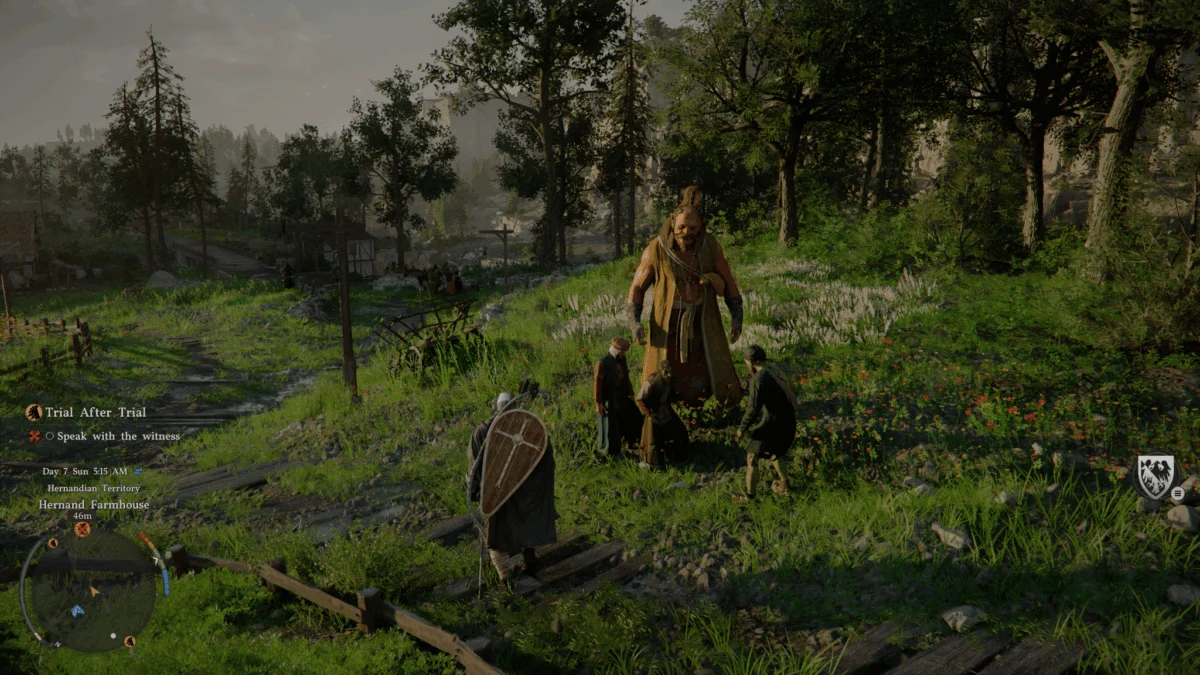
Pearl Abyss has officially released Crimson Desert, a sprawling open-world action RPG that represents a significant departure from the developer’s MMORPG roots while retaining the complex, interconnected systems for which the studio is known. Built on the proprietary Blackspace Engine, the title has undergone an extensive development cycle, transitioning from its initial conception as a prequel to Black Desert Online into a standalone single-player epic. Following a rigorous review period involving over 110 hours of gameplay, it has become evident that Crimson Desert is one of the most ambitious titles in the modern era, blending elements of high fantasy, physics-based simulation, and deep management mechanics. While the title presents a steep learning curve and occasional technical friction, its commitment to a systemic "living world" sets a new benchmark for the genre.

Narrative Structure and the Continent of Pywell
The narrative of Crimson Desert follows Kliff, a member of the Greymanes—a mercenary group from the rugged land of Pywell. The story begins in the wake of a devastating defeat at the hands of a rival faction known as the Black Bears. This event serves as the catalyst for the primary campaign, as Kliff is tasked with traversing the continent to locate his displaced comrades and rebuild the Greymane army.

Pywell is divided into several distinct provinces, each offering a unique ecological and cultural profile. Players begin their journey in the western province of Hernand, a region dense with side quests and factional lore that can easily occupy fifty hours of playtime before the main narrative progresses. The map extends to the snow-capped northern peaks, the humid boglands of the south, and the titular Crimson Desert in the northeast.

Critically, the narrative has been described as a "yin and yang" experience. While the world-building and character designs are visually arresting, the storytelling often utilizes "the power of the cutscene" to dictate outcomes, occasionally overriding player agency during boss encounters. However, the depth of the world is found in its secondary content. Beyond the main campaign, the game features hundreds of faction quests and regional challenges that flesh out the sociopolitical climate of Pywell.

Systemic Gameplay and the Axiom Force
At the core of Crimson Desert’s innovation is its reliance on physics-based systems rather than traditional scripted interactions. This is most prominent in the implementation of the "Axiom Force," a magical gauntlet-style ability that allows Kliff to manifest energy tendrils to manipulate objects in the environment. This mechanic is central to the game’s complex puzzles, requiring players to grasp, move, and "palm strike" objects into place using a physics engine that governs weight and momentum.

The movement system draws clear inspiration from contemporary open-world leaders like The Legend of Zelda: Breath of the Wild. Kliff possesses magical wings for gliding, a stamina-based climbing mechanic, and the ability to roll through the air. However, unlike its predecessors, Crimson Desert emphasizes a sense of "heaviness." Kliff’s movements are heavily influenced by momentum, making traversal a skill-based endeavor rather than a simple directional input.

Character progression is notably different from traditional RPGs. Crimson Desert eschews a standard leveling system in favor of "Ancient Artifacts" found through exploration and puzzle-solving. These artifacts are used to upgrade base statistics—Health, Stamina, and Spirit—or to unlock specific combat skills. Spirit, in particular, acts as a resource for magical maneuvers, including recovery dodges and double jumps, creating a tactical layer to both exploration and combat.

Combat Mechanics and Technical Sophistication
The combat in Crimson Desert is a sophisticated blend of hack-and-slash and technical brawling. While the game offers a lock-on system, the most effective players utilize free-form movement to manage large groups of enemies. The control scheme is dense, utilizing nearly every button combination on a standard controller to execute specific moves, including front-facing "diamond cutters," German suplexes, and running lariats.

A key mechanic in high-level encounters is the "stun meter." By landing consecutive hits or parrying enemy projectiles through a time-slowing "trance" state, players can incapacitate bosses, opening a window for high-damage combos. This systemic approach allows for creative solutions; for example, large-scale bosses can be climbed and dismantled using the environment, rewarding players who think outside the constraints of traditional "Souls-like" combat.

Technical benchmarks for the title are high. Developed on the Blackspace Engine, the game features industry-leading lighting, draw distances, and character animations. On high-end PC hardware (such as the AMD 7900XTX), the game achieves 4K resolution at "Ultra" settings with an average of 85 FPS using FSR 3.1.5. Performance on handheld devices, such as the ASUS ROG Ally X, remains stable at 900p, suggesting that Pearl Abyss has successfully optimized the engine for a wide range of hardware specifications.

Economic Simulation and Camp Management
Beyond combat, Crimson Desert features a robust economic and resource management simulation. As Kliff gathers his comrades, the Greymane camp evolves into a functional base of operations. Players can assign mercenaries to various tasks, such as guarding nobles for silver, assisting farmers for food resources, or gathering raw materials.

The resource grind is significant and integral to survival. High-level boss fights require extensive preparation, including the crafting of "Palmer Pills" for mid-battle revival and the cooking of high-quality meals for health restoration. The crafting system requires players to physically interact with the world—chopping trees results in logs that must be further processed into fine timber, while ore must be mined from specific deposits on cliff faces.

The game also features a comprehensive trading system managed by a merchant guild. Players can package goods and transport them via horse-drawn carts across the map. This system introduces a risk-reward element, as carts can break on rough terrain or be intercepted by bandits, requiring the player to pay repair fees and recover scattered cargo. This level of simulation extends to the game’s wildlife; players can tame wild horses, level them up through five tiers of proficiency, and even customize pets with functional armor.

Chronology of Development and Post-Launch Roadmap
The development of Crimson Desert has been a focal point of industry discussion since its announcement in 2019. Originally intended for a 2021 release, Pearl Abyss made the strategic decision to delay the title indefinitely to ensure it met the technical requirements of its ambitious engine.

Timeline of Key Events:
- 2019: Official reveal at G-Star as an MMORPG prequel to Black Desert.
- 2020: Shift in direction to a single-player, narrative-driven action RPG.
- 2021-2023: Extended development period and internal engine upgrades to the Blackspace Engine.
- August 2024: Extensive gameplay demonstration at Gamescom, showcasing boss mechanics.
- March 2026: Official global launch across PC and console platforms.
In response to early feedback from the critical review period, Pearl Abyss has demonstrated a high level of agility. One of the most significant changes during the pre-launch window was the overhaul of the inventory system. Initially launching with only twenty slots and no long-term storage, a day-one patch increased starting capacity to fifty slots and introduced faction-based upgrades that can expand the inventory to over two hundred slots. The developers have also committed to a post-launch roadmap that includes the implementation of a permanent storage system at the Greymane camp.

Broader Implications for the Gaming Industry
The release of Crimson Desert signifies a potential shift in how "Triple-A" open-world games are constructed. By prioritizing systemic simulation over scripted content, Pearl Abyss has created a world that feels reactive and unpredictable. This "everything-simulated" approach—where puzzle doors work off actual power structures and characters follow real-time schedules—mirrors the design philosophy seen in titles like Red Dead Redemption 2, but applies it to a high-fantasy setting with much faster combat.

The success of Crimson Desert also cements Pearl Abyss’s position as a premier global developer. Transitioning from the service-heavy model of an MMO to a prestige single-player experience is a move few studios have successfully navigated. The title’s ability to maintain high graphical fidelity while simulating complex physics across a massive map suggests that the Blackspace Engine may become a significant competitor to established engines like Unreal Engine 5.

In conclusion, Crimson Desert is a monumental achievement in scope and technical ambition. While its complexity may prove daunting to casual players, and its narrative occasionally falters under the weight of its own systems, the sheer volume of content and the depth of its simulation offer a rewarding experience for those willing to master its intricacies. As the title moves into its post-launch phase, the continued support from Pearl Abyss will be crucial in refining the "warts" of this massive, systemic masterpiece.