


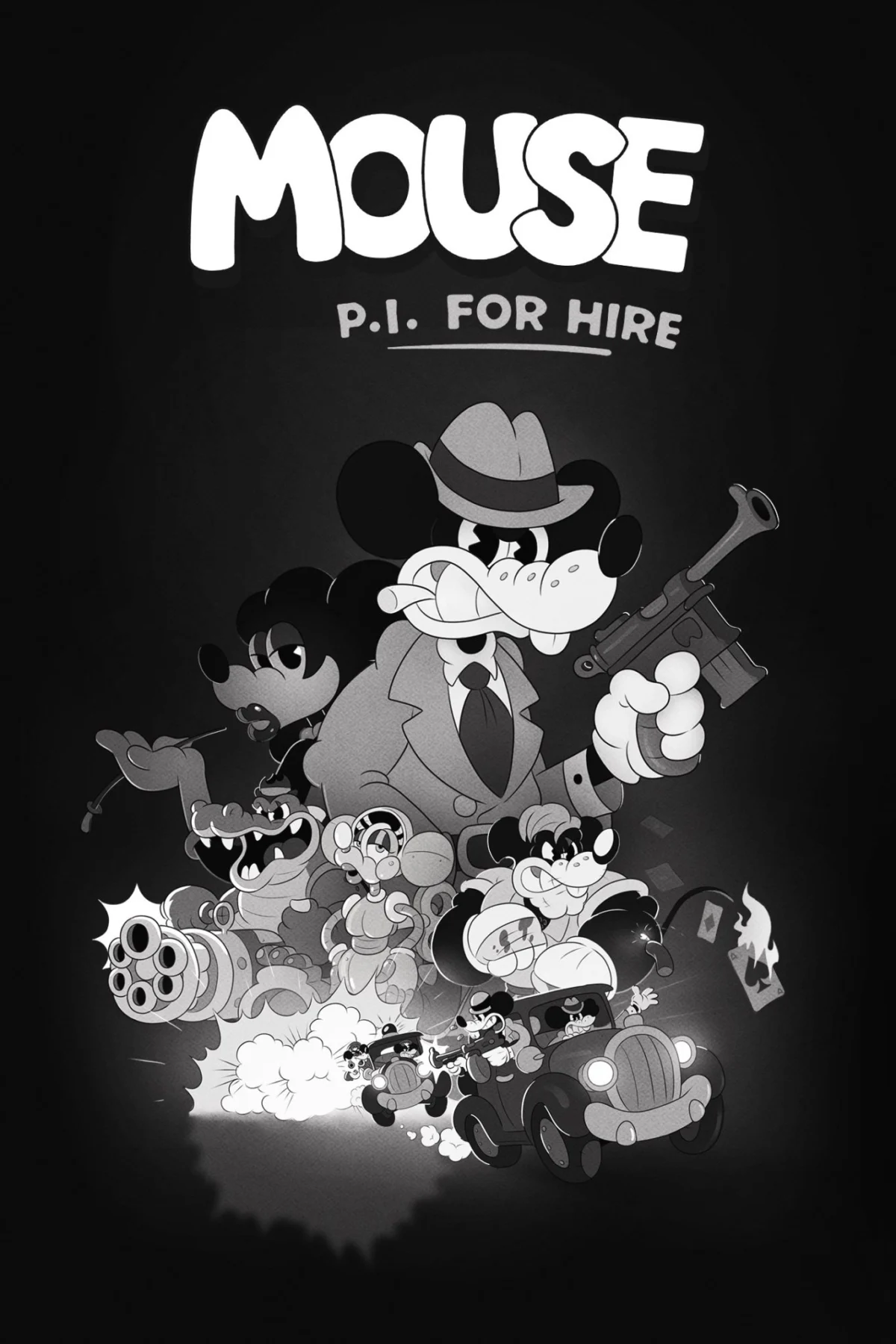
Fumi Games has officially released its highly anticipated noir-inspired first-person shooter, marking a significant milestone in the evolution of independent game development and the utilization of classic animation aesthetics. Set in the sprawling, monochrome metropolis of Mouseburg, the title follows the exploits of Detective Jack Pepper, a cynical private investigator navigating a world defined by social stratification, organized crime, and systemic corruption. Initially conceived during the period surrounding the expiration of early 20th-century animation copyrights, the project has transitioned from a viral concept into a mechanically dense and narratively complex experience that balances high-octane "boomer shooter" combat with sophisticated environmental storytelling.
The Narrative Framework of Mouseburg
The narrative core of the title revolves around three primary, intertwining investigations that Jack Pepper must navigate simultaneously. These cases serve as the catalyst for exploring the socio-political landscape of Mouseburg, a city inhabited by anthropomorphic rodents where biological species dictate social standing. The primary conflict involves a high-profile homicide investigation—referred to in the underworld as a "rubbing out"—involving a young woman whose associates seek justice outside the purview of the corrupt local police force.

Parallel to this murder mystery is the disappearance of a veteran soldier turned stage magician, a personal acquaintance of Pepper from his time in service. This thread leads the player into a subculture of "magicians" capable of reality-bending feats, introducing supernatural elements to the otherwise gritty noir setting. The third case involves the systematic kidnapping of shrews, the city’s most marginalized demographic. Through these narrative arcs, Fumi Games addresses heavy themes including class warfare, systemic racism, and the dehumanizing effects of industrialization.
The world-building establishes a rigid hierarchy: Mice represent the general citizenry and middle class, while Rats often occupy roles as heavy labor, hired muscle, or members of the ruling elite. Shrews, conversely, are depicted as the underclass, suffering from extreme poverty and exploitation. This social commentary is further heightened by the presence of a "Nazi-coded" political faction, whose rise to power threatens to destabilize the already fragile peace within the city.
A Chronology of Development and Release
The journey of the title from a technical demonstration to a full-scale commercial release spans several years of iterative development.

- Early 2023: Initial teasers for the project went viral, capitalizing on the "rubber hose" animation style popularized by 1930s cartoons. The project was initially viewed as a novelty title centered on the public domain status of early animation icons.
- 2024-2025: Fumi Games expanded the scope of the project, moving away from simple parody toward a dedicated narrative-driven shooter. The studio secured high-profile talent, including veteran voice actor Troy Baker, to provide gravitas to the protagonist.
- Late 2025: Technical showcases demonstrated the integration of hand-drawn 2D character sprites within a 3D environment built on the Unity Engine, a technique often referred to as "2.5D" in modern game design.
- April 2026: The official launch of the game on PC and major console platforms, accompanied by a comprehensive optimization patch for high-performance handheld devices.
Gameplay Mechanics and Combat Systems
The gameplay of the title is heavily influenced by the "boomer shooter" genre, specifically the fast-paced, arena-style combat popularized by titles like DOOM and Quake. However, it incorporates modern progression systems and environmental interaction to distinguish itself from its predecessors.
Arsenal and Upgrades
Detective Jack Pepper utilizes a diverse array of period-appropriate and fantastical weaponry. This includes standard-issue pistols, high-capacity machine guns, and devastating "cannons." A central mechanic involves the collection of blueprints hidden throughout the environment. These blueprints are brought to Tammy, a young engineering prodigy who serves as Pepper’s surrogate daughter and technical support. Tammy provides weapon modifications, such as alternate fire modes, which are essential for managing increasingly difficult enemy encounters in the latter half of the campaign.
Mobility and Platforming
Pepper is characterized as an "acro-rat," possessing mobility options that enhance both combat and exploration. Players eventually unlock a double-jump ability and a "tail-copter" maneuver, the latter allowing for slow, controlled descents. These mechanics are integrated into the level design, requiring players to navigate complex vertical environments in locations ranging from a grand Opera House to voodoo-inspired bogs and underwater facilities.

Economic and Minigame Systems
The game employs a "cheese-fueled" economy, where "cheddar" (cash) is the primary currency. Currency is acquired through environmental looting and defeated enemies. Players can spend their earnings on various collectibles, including:
- Baseball-inspired Card Game: A strategic minigame that offers a diversion from the primary combat loop.
- Newspapers and Comics: Narrative items that provide additional context regarding the world’s lore and current events.
- Lock-picking: A tail-based minigame used to bypass security doors, though some critics have noted its repetitive nature over the ten-hour campaign.
Technical Performance and Aesthetic Direction
The most striking feature of the title is its visual fidelity. Fumi Games utilized the Unity Engine to create a high-contrast, black-and-white world that mimics the aesthetic of early 20th-century cinema. Every character is hand-drawn, utilizing the "bouncy" animation style characteristic of the Fleischer Studios era.
Technical analysis reveals a highly optimized experience across multiple hardware configurations. On high-end PC hardware (utilizing components such as the AMD Ryzen 5800x and Radeon 7900xt), the game maintains a stable 120 frames per second (fps) at 4K resolution. On handheld devices, specifically the Xbox Ally X, the game achieves a locked 60 fps even on lower wattage settings (13W), indicating a high degree of scalability.

Despite the polished presentation, some technical anomalies have been reported in the final levels of the game. These include localized frame-rate slowdowns and occasional texture-loading issues. Fumi Games has acknowledged these reports, stating that post-launch patches are currently in development to address performance bottlenecks in the game’s climactic sequences.
Official Responses and Industry Impact
In a statement released alongside the game’s launch, Fumi Games emphasized their commitment to blending nostalgic art styles with contemporary gameplay sensibilities. "Our goal was to create a world that felt both familiar and deeply unsettling," the studio lead remarked. "By using the visual language of 1930s animation to tell a story of noir-inspired corruption and class struggle, we wanted to challenge the player’s expectations of what this aesthetic can represent."
Industry analysts have noted that the success of the title represents a growing trend in the "indie-plus" sector, where small teams produce high-fidelity titles that rival AAA productions in terms of art direction and voice acting. The inclusion of Troy Baker as Jack Pepper has been cited as a significant factor in the game’s narrative weight, providing a weary, soulful performance that grounds the more "pun-heavy" aspects of the script.

Broader Implications and Future Outlook
The release of the title carries broader implications for the use of public domain imagery in interactive media. It demonstrates that while a project may start as a response to copyright changes, its long-term viability depends on the depth of its mechanics and the quality of its writing.
Furthermore, the game’s exploration of mature themes through a cartoonish lens follows the precedent set by titles such as Cuphead and Bendy and the Ink Machine, yet it pushes further into the realm of political satire and social critique. The portrayal of Mouseburg as a city on the brink of collapse—driven by greed, prejudice, and the pursuit of "the big ol’ bone"—serves as a poignant reflection of historical and contemporary societal anxieties.
As Fumi Games looks toward the future, the foundation laid by this title suggests potential for expansions or sequels within the same universe. With a robust engine, a distinct visual identity, and a compelling protagonist, the franchise is well-positioned to become a staple of the modern shooter landscape. For now, the title stands as a testament to the creative possibilities that emerge when classical artistry meets modern technical prowess.