


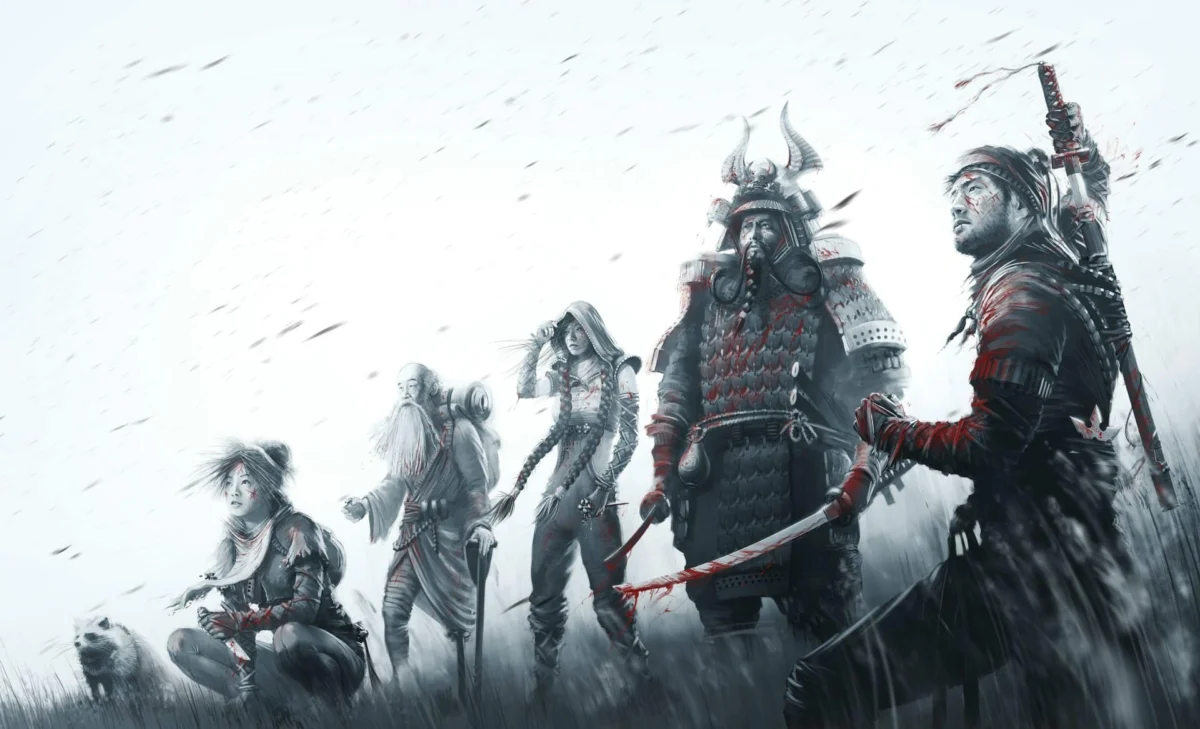
The arrival of Shadow Tactics: Blades of the Shogun on the Nintendo Switch 2 marks a significant milestone for the real-time tactics genre, bringing one of the most critically acclaimed stealth titles of the last decade to Nintendo’s latest hardware. Originally developed by the now-defunct Mimimi Games and released in 2016, the title redefined the "Commandos-like" subgenre, blending intricate environmental puzzles with a rich Edo-period Japanese aesthetic. This new iteration for the Switch 2 aims to provide a definitive portable experience, incorporating hardware-specific features that address long-standing control challenges inherent in translating PC-centric strategy games to consoles.

The Legacy of Mimimi Games and the Stealth Revival
To understand the importance of this port, one must look at the trajectory of its developer, Mimimi Games. Founded in 2011, the Munich-based studio became the primary torchbearer for real-time tactics (RTT). Before their closure in late 2023, the studio produced a trilogy of genre-defining hits: Shadow Tactics: Blades of the Shogun (2016), Desperados III (2020), and Shadow Gambit: The Cursed Crew (2023).
Shadow Tactics was the catalyst for this revival. Set during the early Edo period, the game follows a group of five specialists working for a new Shogun to maintain peace against a mysterious warlord known as Kage-sama. The game’s success—boasting a 96% positive rating on Steam and high critical scores—proved that there was still a massive appetite for high-stakes, isometric stealth. The decision to bring this title to the Switch 2, alongside its 2021 standalone expansion Aiko’s Choice, serves as both a tribute to Mimimi’s craftsmanship and a strategic move to bolster the Switch 2’s library of sophisticated strategy titles.

Technical Performance and Hardware Integration
The transition to Nintendo Switch 2 hardware brings several technical refinements, though the port maintains a conservative approach to performance. The title operates at a locked 30 frames per second (FPS), a decision that may surprise some given the increased graphical power of the new console. However, industry analysts suggest that for the RTT genre, stability is prioritized over high frame rates. In a game where success depends on observing vision cones and timing guard patrols, a consistent frame rate is more critical than the fluidity required by action-heavy shooters.
The most notable hardware-specific addition is the "Mouse Mode" utilizing the Joycon 2. For years, console ports of strategy games struggled with the imprecision of analog sticks for cursor movement. The Switch 2’s updated Joycon technology allows for a high-accuracy cursor mode that mimics the feel of a PC mouse. This is achieved through enhanced gyroscopic sensors and the Joycon 2’s revised ergonomic layout. While initial reports indicate that the small form factor of the Joycon may cause hand fatigue during extended sessions—particularly for users with larger hands—the precision it offers for "painting" paths and selecting targets is a significant upgrade over previous console iterations.

Furthermore, the Switch 2’s NVMe-based storage solution drastically reduces loading times. In Shadow Tactics, "quick-saving" and "quick-loading" are core gameplay loops, as players often experiment with different tactical approaches that result in frequent failure. On older hardware, these load cycles could disrupt the flow of play; on the Switch 2, the reload process is nearly instantaneous, encouraging the "trial and error" philosophy that Mimimi Games intended.
Core Gameplay Mechanics: The Five-Specialist Dynamic
At its heart, Shadow Tactics is a sandbox of lethal puzzles. The game provides players with five distinct characters, each possessing unique skill sets that must be synchronized to bypass overwhelming enemy forces.

- Hayato: An agile shinobi equipped with a shuriken for silent, ranged kills and a grappling hook for vertical traversal. His ability to move bodies quickly is essential for maintaining stealth.
- Mugen: A powerful samurai who can engage multiple enemies at once with his "Sword Wind" technique. He is the only character capable of defeating enemy Samurai in direct combat, though his heavy armor limits his mobility.
- Aiko: A master of disguise who can blend into the environment by wearing civilian clothing. She uses sneezing powder to temporarily reduce enemy vision cones, creating openings for her teammates.
- Yuki: A young thief who specializes in traps and decoys. Her wooden whistle can lure guards away from their posts, leading them directly into her deadly floor traps.
- Takuma: An elderly marksman with a prosthetic leg, providing long-range sniper support. He also carries a pet tanuki, Kuma, which can be used to distract groups of enemies.
The Switch 2 edition includes all 13 main campaign missions, which vary from snowy mountain passes and fortified castles to vibrant forest villages. The level design is non-linear, allowing players to choose between non-lethal ghost runs or methodical eliminations.
Aiko’s Choice: Expanding the Narrative
The Switch 2 release also highlights Aiko’s Choice, the standalone expansion that focuses on the kunoichi Aiko and her past. Consisting of three main missions and three shorter interlude missions, the expansion is integrated into the software ecosystem as a separate but complementary experience.

Set during the events of the main game, Aiko’s Choice increases the difficulty significantly, assuming the player has already mastered the mechanics of the base campaign. The expansion introduces more complex guard patterns and environmental hazards, pushing the tactical limits of the five-man squad. For the Switch 2 port, this content is priced at a $20 premium, while the base game carries a $40 MSRP, positioning the total package as a premium "Legacy Collection" for the platform.
Market Context and Pricing Analysis
The pricing strategy for Shadow Tactics on the Switch 2 has drawn attention from industry observers. At a combined $60 for the full experience, the game enters the market at a higher price point than its current value on other platforms like PC or previous-gen consoles, where it is frequently discounted.

However, the value proposition lies in the portability and the specific hardware optimizations. Nintendo’s ecosystem has historically supported "premium ports" of older titles, as the handheld format offers a unique way to play long-form strategy games. The inclusion of the new control scheme and the technical stability of the Switch 2 hardware are intended to justify the "new release" pricing for a title that is nearly a decade old.
Chronology of the Shadow Tactics Franchise
- December 2016: Shadow Tactics: Blades of the Shogun launches on PC, revitalizing the real-time tactics genre.
- August 2017: The game is ported to PlayStation 4 and Xbox One, introducing the first iteration of gamepad controls.
- December 2021: Aiko’s Choice is released as a standalone expansion, concluding the narrative arcs of the main cast.
- August 2023: Mimimi Games releases Shadow Gambit: The Cursed Crew and subsequently announces the studio’s closure, citing the rising costs and personal toll of ambitious game development.
- March 2026: Shadow Tactics: Blades of the Shogun launches on the Nintendo Switch 2, bringing the franchise to a new generation of handheld players.
Broader Impact on the Tactics Genre
The release of Shadow Tactics on the Switch 2 comes at a time when the real-time tactics genre is at a crossroads. With the closure of Mimimi Games, the industry lost its most prolific developer of "stealth strategy." The continued porting and support of their library are essential for preserving these mechanics for future developers.

The Switch 2 port serves as a technical benchmark for how isometric strategy games can leverage modern handheld hardware. If the Joycon 2’s "Mouse Mode" proves successful and gains wider adoption among players, it could pave the way for other PC-centric genres—such as traditional Real-Time Strategy (RTS) or complex Management Sims—to find a more permanent home on console hardware.
In conclusion, Shadow Tactics: Blades of the Shogun on the Nintendo Switch 2 is more than a simple port; it is a meticulously adapted version of a modern classic. While the 30 FPS cap and the premium pricing may be points of contention, the sheer quality of the level design, the depth of the tactical systems, and the innovation of the new control scheme make it a significant addition to the Switch 2 library. For both returning veterans and newcomers to the Edo-period shadows, this version offers a compelling argument for the enduring relevance of tactical stealth.