


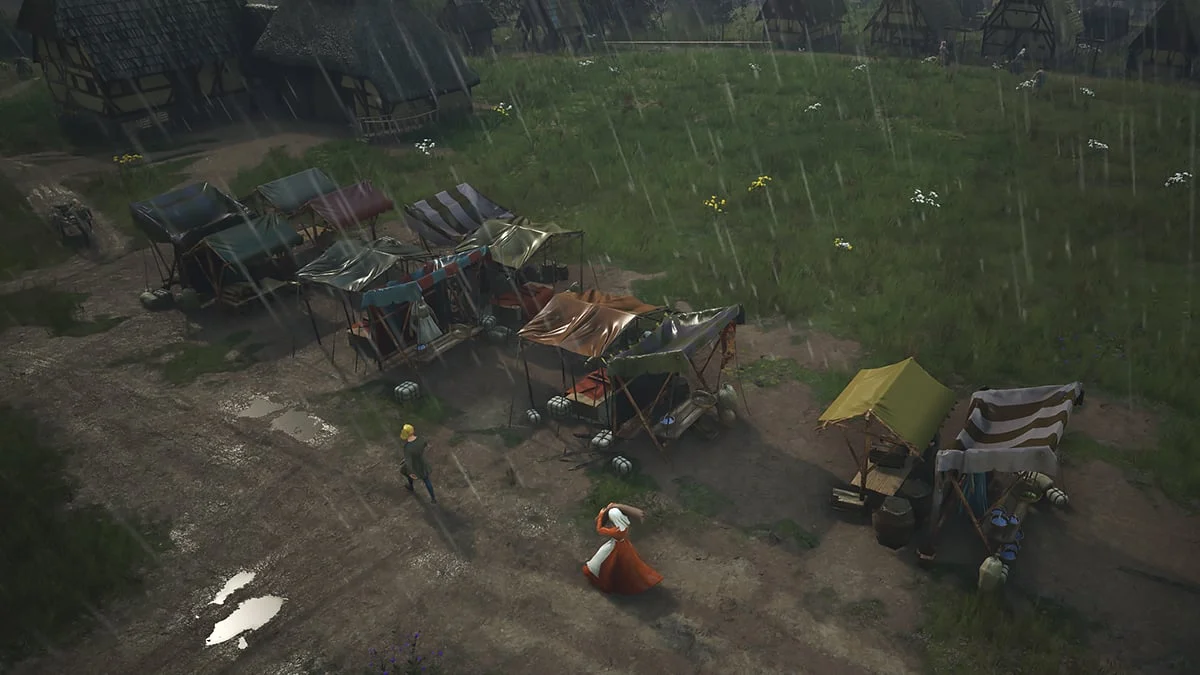
The intricate world of Manor Lords, a critically acclaimed medieval city-builder and real-time strategy game, immerses players in the challenging task of forging a thriving settlement from the wilderness. While the game is celebrated for its stunning visual fidelity, realistic economic systems, and deep strategic layers, one particular element frequently presents a perplexing logistical puzzle for aspiring lords and ladies: the persistent presence of exposed supplies and resources that seemingly defy efficient collection and storage. These abandoned piles of goods, often left behind after the demolition of structures or found scattered across the landscape, are not merely aesthetic blemishes; they represent critical impediments to development, susceptible to environmental degradation and actively blocking the construction of new buildings. This article delves into the mechanics behind these lingering resources, explores the frustrations they cause, and provides detailed strategies for their swift and orderly relocation, ensuring the smooth expansion and prosperity of any medieval manor.
The Lingering Enigma of Uncollected Resources
Upon embarking on the journey to establish a new settlement in Manor Lords, players quickly become accustomed to the constant ebb and flow of resources. Timber is felled, berries are gathered, and hides are processed, all contributing to the nascent economy. However, as the settlement grows and evolves, requiring the strategic demolition of old structures or the re-zoning of land, players inevitably encounter the phenomenon of orphaned resources. Piles of planks, stacks of logs, or crates of general goods remain stubbornly in place, even when a state-of-the-art storehouse stands nearby and numerous idle villagers are available. This often leads to a perplexing scenario where the very materials needed for progress become obstacles to it, generating a common point of frustration within the player community.
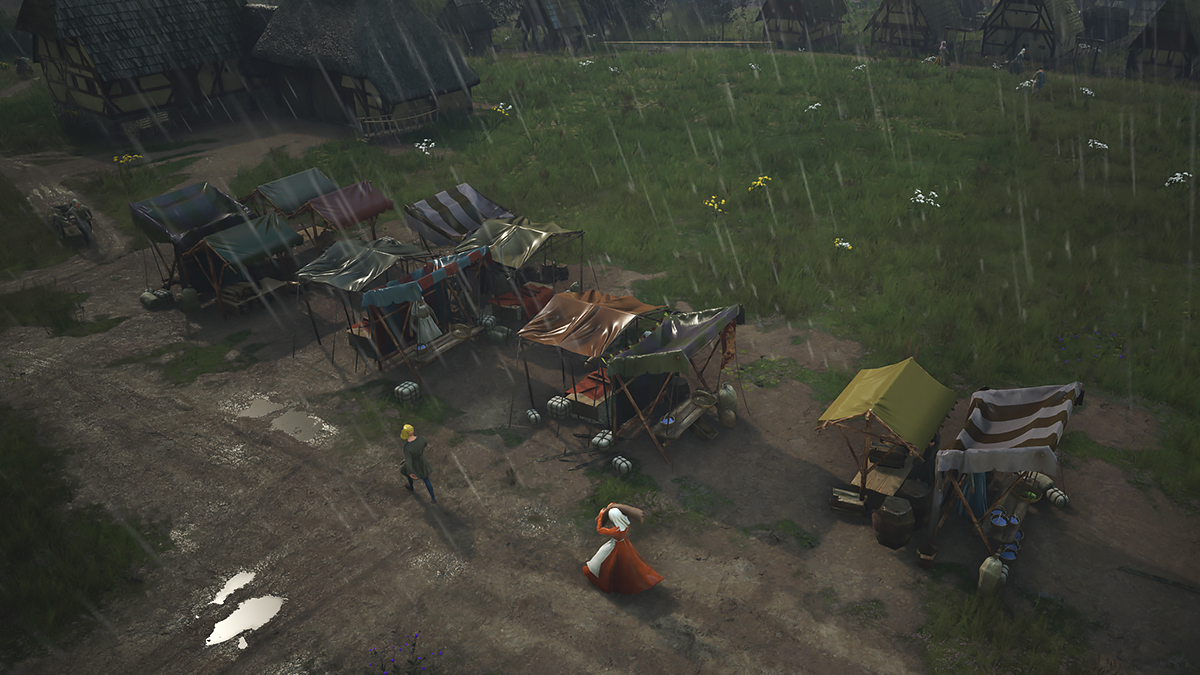
The implications of these uncollected resources extend beyond mere inconvenience. Manor Lords prides itself on a degree of realism, and this extends to its environmental mechanics. Exposed goods left to the elements are vulnerable to decay, particularly during adverse weather conditions such as prolonged rain or the harsh chill of winter. This gradual degradation can lead to significant material losses, effectively wasting valuable resources and the labor expended to acquire them. Furthermore, these physical impediments directly block construction efforts. Attempting to place a new building on a site littered with stray logs or forgotten supplies will often be met with a red outline and an unhelpful "obstruction" message, forcing players into a waiting game that can stall crucial development timelines. The game’s emphasis on efficiency and strategic planning means that such bottlenecks can have cascading negative effects on a settlement’s growth trajectory and economic stability.
Background: The Design Philosophy of Resource Management in Manor Lords
Manor Lords, developed by Slavic Magic and published by Hooded Horse, launched into early access to widespread acclaim, lauded for its ambitious blend of city-building, tactical combat, and resource management. A core tenet of its design philosophy is a commitment to a grounded, realistic simulation of medieval life and logistics. Unlike many city-builders where resources might instantly teleport or despawn upon completion of a task, Manor Lords aims for a more tangible representation of goods. Resources have physical presence, requiring villagers to actively transport them using appropriate tools and vehicles, such as oxen for heavy timber.
This design choice contributes significantly to the game’s immersive quality, making the player feel genuinely responsible for the logistical chains that underpin their burgeoning manor. However, it also introduces complexities. The system is designed to simulate the challenges of medieval logistics, where the movement of goods was a labor-intensive and time-consuming endeavor. Villagers are not omniscient automatons; they operate based on a hierarchy of tasks and proximity, and their efficiency is directly tied to available tools (like oxen), infrastructure (roads), and designated storage capacities. The "piles of supplies" issue is, in essence, a manifestation of this realistic logistical model, challenging players to understand and optimize the underlying AI and resource flow rather than expecting instantaneous solutions. The early access nature of the game also implies ongoing refinement, with developer Slavic Magic actively gathering player feedback on such mechanics to balance realism with playability.
The Player’s Journey: From Initial Setup to Logistical Headaches
A typical player’s journey in Manor Lords often begins with a focus on immediate survival and basic resource acquisition. Initial priorities include establishing a logging camp for timber, a hunting cabin for food, and a forester’s lodge for replanting. As the settlement expands, players construct homes (burgage plots), farms, and specialized workshops. During this initial phase, resources are generally handled smoothly by the burgeoning workforce. However, as the town matures, the need for optimization arises. Perhaps a logging camp needs to be moved closer to a new forest, or an old granary is replaced by a larger one in a more central location. It is in these moments of restructuring and demolition that the uncollected resource problem most frequently surfaces.
The visual cue of an abandoned log or a stack of planks, often accompanied by the "exposed goods" warning icon in the info bar at the top of the screen, triggers a sense of urgency. Players instinctively expect their idle villagers, the "unassigned" workforce, to spring into action and clear these obstructions. After all, the resources are valuable, and their current location is problematic. Yet, often, these villagers continue with other tasks, or simply wander aimlessly, while the critical supplies remain. This disconnect between player expectation (that idle villagers will prioritize cleanup) and the game’s internal task prioritization system forms the core of the frustration. The logical assumption is that assigning more workers to the relevant storage building (Storehouse, Granary, Logging Camp) would instantly resolve the issue, but even this often yields slower results than desired, prompting players to seek more direct intervention.
Deep Dive into Game Mechanics: Understanding Villager AI and Resource Prioritization
To effectively manage exposed goods, it is crucial to understand the underlying mechanics that govern villager behavior and resource movement in Manor Lords.
-
Villager Roles and Task Prioritization: Villagers in Manor Lords are broadly categorized into assigned workers and unassigned laborers. Assigned workers prioritize tasks specific to their workplaces (e.g., farmers farm, loggers fell trees). Unassigned laborers, often referred to as the "general workforce," handle miscellaneous tasks such as construction, road building, and the crucial job of hauling resources to storage. However, even within the unassigned pool, there’s an internal priority system that isn’t always transparent. Hauling exposed goods might not always be at the top of the list, especially if other construction projects are active or if the distance to storage is significant.
-
The Role of Storage Buildings: Different resources require different storage facilities:
- Storehouse: Primarily for manufactured goods, processed materials (planks, leather, iron parts), and general consumables (tools, clothes).
- Granary: Specifically for food items (berries, bread, meat, grain).
- Logging Camp: Acts as both a production building for timber and a temporary storage/collection point for raw logs. Processed timber (planks) goes to the Storehouse.
The efficiency of these buildings depends on the number of workers assigned and their proximity to both the resource source and the destination.
-
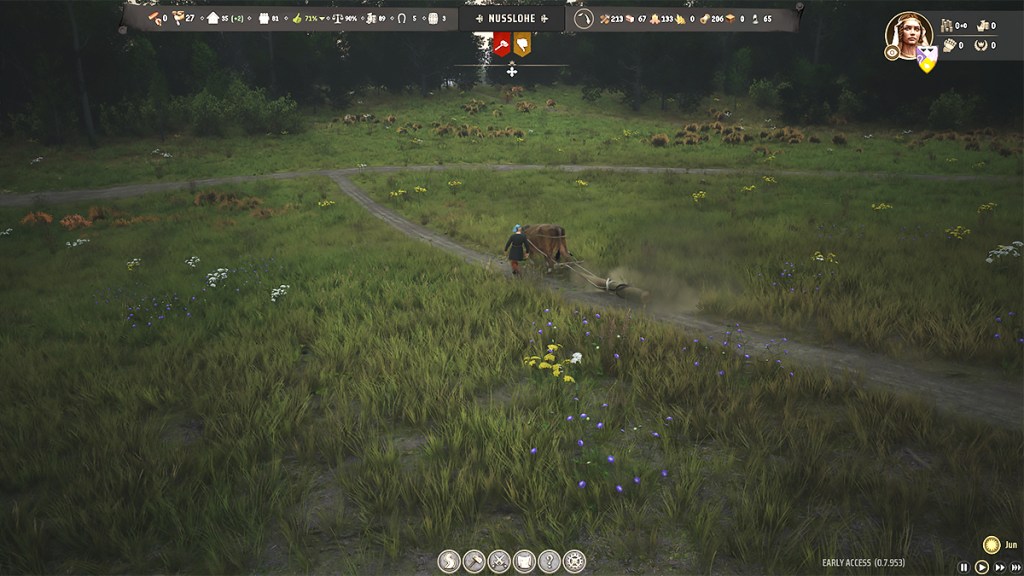
Oxen and Heavy Transport: For heavy resources like logs, the presence of an ox is paramount. Oxen are essential draft animals used by logging camps, sawpits, and for heavy construction. If all available oxen are tied up with existing logging operations or construction projects, the movement of abandoned logs will be severely hampered, regardless of how many idle villagers are available. This creates a bottleneck that players must actively manage.
-
Road Networks and Accessibility: While often overlooked, a well-developed road network is fundamental to efficient resource movement. Villagers and oxen move significantly faster on established roads than on open terrain. A distant pile of supplies, even with available labor, will take longer to collect if no direct road connects it to the relevant storage facility. Conversely, a robust network reduces travel time, improving overall logistical throughput.
-
Environmental Degradation: The game’s dynamic weather system directly impacts exposed goods. During periods of rain, snow, or simply prolonged exposure, resources can deteriorate. Timber might rot, food might spoil, and other materials could become unusable. This mechanic adds a layer of urgency to clearing abandoned items, as procrastination can lead to tangible economic losses.
Official Stance and Early Access Development
While specific developer statements on the "exposed goods" issue are not widely published, the design implicitly communicates a philosophy. Slavic Magic, the sole developer, has consistently aimed for a high degree of simulation and player agency. The current mechanics, though challenging, force players to engage with the logistical intricacies of their settlements rather than relying on automated "magic" solutions. This aligns with the game’s broader design where every resource, every villager, and every building placement carries weight.
As Manor Lords is in early access, it is an evolving product. Player feedback, particularly from forums and community discussions, is actively monitored. It is plausible that future updates might introduce minor quality-of-life improvements, such as clearer UI indicators for hauling priorities or perhaps slightly tweaked AI for unassigned laborers to prioritize exposed goods more aggressively. However, the core challenge of managing physical resources and logistical chains is likely to remain a central pillar of the gameplay experience. The current system, while demanding, encourages strategic foresight and micro-management, aspects that many players find rewarding.
Strategies for Efficient Resource Relocation: A Step-by-Step Guide
Effectively addressing the issue of lingering supplies requires a combination of patience, strategic planning, and targeted micromanagement. Here are the most effective methods:

-
Reinforcing Storage Facilities (General Goods):
- Assign More Workers: For general goods (planks, stone, iron, hides, etc.) that need to go to a Storehouse or food items destined for a Granary, the most straightforward first step is to ensure these buildings are adequately staffed. Navigate to the Storehouse or Granary, and if there are available families, assign more workers. More hands mean more hauling capacity.
- Ensure Road Connectivity: Verify that a clear and efficient road connects the location of the exposed goods to the relevant storage building. Building new road segments or upgrading existing paths can drastically reduce travel time and improve hauling efficiency.
-
Targeted Micro-management: Limiting Work Areas:
This is often the most potent solution for both general goods and logs. It forces your workers to focus their efforts on a specific, problematic area.- For Storehouse/Granary (General Goods):
- Select the Storehouse (for non-food items) or Granary (for food items) that you want to use for collection.
- In the building’s interface, locate the "Limit Work Area" button. This often appears as an icon resembling a circular boundary or a zone.
- Click this button. Your cursor will change, allowing you to draw a designated work zone.
- Carefully draw a small zone that encompasses only the exposed supplies you wish to collect. Ensure the zone is tight around the problematic piles and avoids unnecessary distant areas.
- Workers assigned to that Storehouse or Granary will now prioritize collecting items within that designated zone, effectively overriding their default AI priorities.
- For Logging Camp (Logs/Timber):
- Select an existing Logging Camp. If the logs are very far, consider building a temporary Logging Camp closer to the abandoned timber.
- In the Logging Camp’s interface, find and click the "Limit Work Area" button.
- Draw a small, precise zone around the abandoned logs.
- Loggers and their oxen will then prioritize moving these logs to the Logging Camp’s storage area.
- For Storehouse/Granary (General Goods):
-
The "Un-assign Workers" Trick for Logs:
If limiting the work area for a Logging Camp isn’t immediately effective, particularly if oxen are scarce, this method can often force the issue:- Select an existing Logging Camp that is actively felling trees.
- Temporarily un-assign one or more families from that Logging Camp. This action has two critical effects:
- It frees up the ox (or oxen) that were assigned to that Logging Camp, making them available for general hauling tasks.
- The now unassigned villagers become general laborers. The game’s AI often prioritizes unassigned oxen and laborers to pick up abandoned logs that are blocking construction or are vulnerable to decay.
- Observe if the logs are being moved. Once cleared, you can re-assign the families back to the Logging Camp to resume timber production.
-
Proactive Planning and Prevention:
The best defense against lingering supplies is a good offense:- Strategic Demolition: Before demolishing a structure, consider the resources it will yield and ensure that nearby storage facilities (and workers) are prepared to receive them.
- Road Network First: Prioritize building robust road connections to areas where you anticipate significant resource activity or future demolition.
- Placement of Storage: When expanding, try to place Storehouses, Granaries, and Logging Camps centrally or in easily accessible locations relative to resource production and consumption zones.
-
Post-Cleanup Protocol:
Once the exposed goods have been successfully moved, it is crucial to return to the relevant building (Storehouse, Granary, or Logging Camp) and select the "Clear Work Area" option. Forgetting this step will cause your workers to remain focused solely on that specific area, potentially neglecting other vital tasks or preventing the building from resuming its broader operational duties. This small piece of micromanagement ensures your logistical system returns to normal efficiency.
Broader Impact and Implications for Gameplay
The challenge of managing exposed supplies in Manor Lords is more than just a minor annoyance; it is an integral part of the game’s strategic depth and learning curve.
- Enhancing Strategic Planning: This mechanic forces players to think critically about infrastructure, villager allocation, and the flow of goods from the very beginning. It elevates resource management from a simple click-and-collect task to a complex logistical puzzle that requires foresight and adaptability. Players learn the importance of planning demolition and expansion around existing infrastructure rather than haphazardly.
- Deepening Player Engagement: While initially frustrating, successfully resolving these logistical bottlenecks provides a satisfying sense of accomplishment. It deepens the player’s understanding of the game’s intricate systems, fostering a more profound connection to their virtual manor and its inhabitants. The challenges inherent in the game’s realism contribute to its replayability and long-term appeal.
- Fostering Community Interaction: The shared experience of grappling with "stubborn logs" or "unmoved planks" has naturally led to vibrant community discussions. Players share tips, tricks, and strategies, contributing to a rich ecosystem of knowledge that enhances the overall player experience and provides valuable feedback for the developer.
- Reflecting Early Access Development: The presence of such detailed yet sometimes opaque mechanics is characteristic of an early access title. It highlights the developer’s commitment to a detailed simulation while also leaving room for potential future refinements in UI clarity or AI behavior based on continued player feedback. This iterative development process means that player input on these issues is not just heard, but actively considered for the game’s evolution.
In conclusion, the seemingly simple act of moving discarded resources in Manor Lords unveils a sophisticated layer of logistical simulation. While initially puzzling, understanding villager AI, the role of oxen, and the strategic use of work area limitations transforms a potential source of frustration into an opportunity for strategic mastery. By diligently applying these techniques, players can ensure their medieval settlements operate with maximum efficiency, clearing pathways for new construction and safeguarding valuable resources from the relentless decay of the elements, thereby paving the way for a truly prosperous and well-ordered domain.