


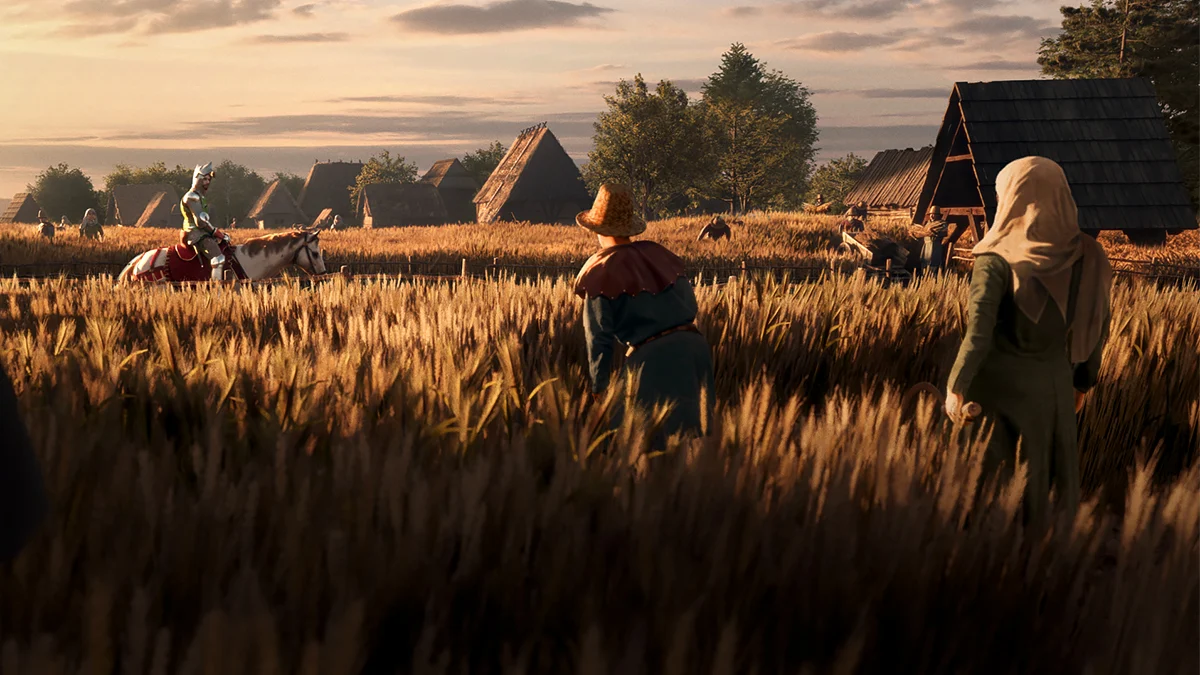
Agriculture constitutes the foundational pillar for survival and prosperity within the intricate medieval simulation of Manor Lords. This activity is not merely an ancillary task but a central determinant of a settlement’s viability, providing essential sustenance for the populace, dictating economic growth, and underpinning social stability. The game’s mechanics underscore the critical importance of agricultural output, which directly influences villager morale, economic resilience, and the capacity to withstand seasonal adversities. Consequently, a comprehensive understanding of crop selection, efficient field management, and the cyclical dynamics of soil fertility is paramount for transitioning a nascent encampment into a flourishing medieval manor.
Background Context: The Medieval Agrarian Model in Digital Form
Manor Lords, a critically acclaimed real-time strategy and city-building title developed by Slavic Magic, distinguishes itself through its commitment to historical realism. At the heart of this simulation lies an agricultural system designed to mirror the challenges and methodologies of medieval farming. Unlike many contemporary city-builders that abstract food production, Manor Lords immerses players in a granular system where environmental factors, labor allocation, and long-term planning are paramount. This design philosophy reflects the historical reality that medieval economies were overwhelmingly agrarian, with the success or failure of harvests directly translating to the survival or decline of communities. The game simulates the precarious balance between human endeavor and natural cycles, demanding strategic foresight to navigate periods of plenty and scarcity. The constant threat of winter, with its cessation of growth and increased demand for stored provisions, serves as a stark reminder of the fragility of medieval life and the absolute necessity of a robust food surplus. The developers have articulated a vision for a game that respects historical precedents, making the agricultural mechanics a key expression of this design ethos and presenting players with authentic dilemmas faced by medieval lords.
Chronology of Cultivation: From Subsistence to Surplus
The journey of a settlement in Manor Lords invariably begins with a pressing need for immediate food security, guided by the cyclical nature of medieval seasons.
Early Game Focus: Wheat and Survival (Spring – Autumn Year 1)
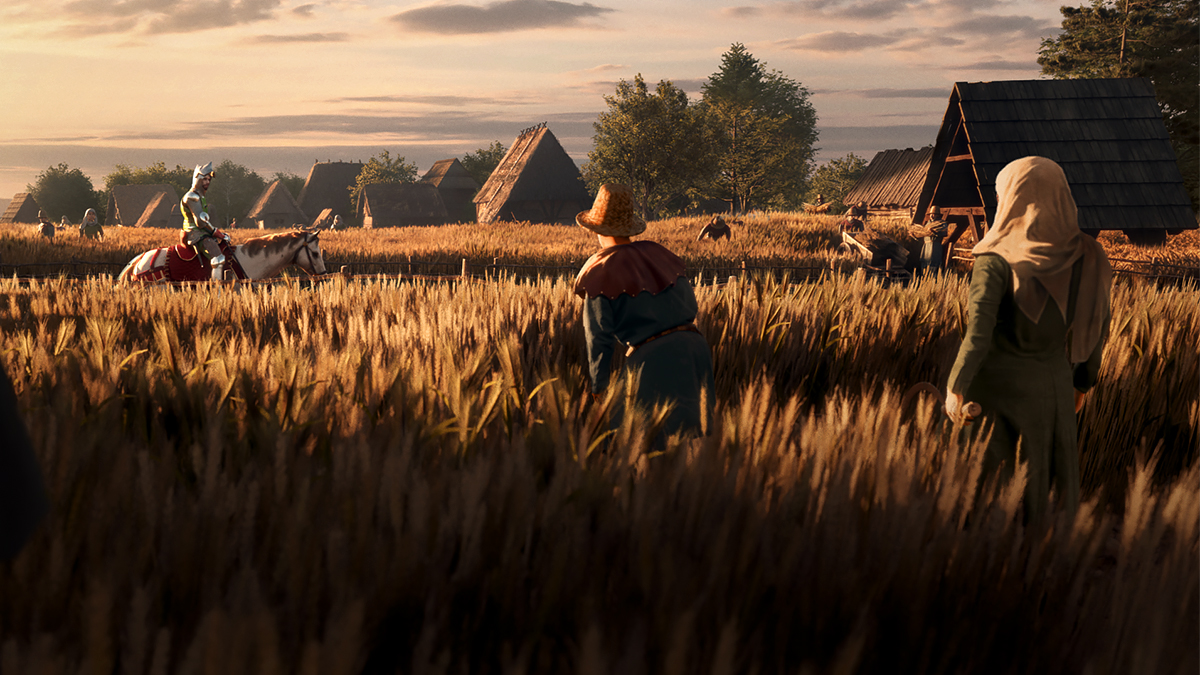
Upon founding a new settlement, the immediate strategic imperative is the cultivation of Wheat, identified in-game by its archaic name, Emmer. This grain is the primary component for bread, the staple food source for villagers. The early spring season marks the commencement of the planting cycle. Players must designate fields on fertile land, guided by the game’s detailed fertility overlay, and assign families to the newly constructed Farmhouse. The summer months see the crops mature, culminating in the crucial autumn harvest. This period is a race against time, as the collected grain must be processed to ensure sufficient provisions before winter’s onset. The initial allocation of labor and resources to establishing wheat fields and a Farmhouse is a critical first step towards self-sufficiency.
Winter Preparation and Processing (Autumn – Winter Year 1)
A successful autumn harvest yields raw grain. This grain then requires further processing to become edible bread. Two key structures become indispensable: the Windmill, which grinds grain into flour, and the Communal Oven, where flour is baked into bread. Establishing these facilities promptly is critical. Without a substantial surplus of bread stored in granaries, villagers face starvation during the non-growing winter months, leading to plummeting morale, disease, and ultimately, the collapse of the settlement. The game enforces a strict no-harvest policy during winter, emphasizing the seasonal bottleneck in food production. Strategic players will ensure these processing chains are operational well before the first snows, stockpiling reserves to mitigate the harshness of the non-productive season.
Diversification and Expansion (Year 2 Onwards)
Once initial food security is established with a consistent Wheat supply, the strategic focus shifts towards diversification. Barley emerges as the next priority, serving as the raw material for ale. Ale production is not merely a luxury; it significantly boosts villager approval and contributes to social stability, transforming basic survival into a more comfortable existence. Beyond sustenance, the cultivation of Flax becomes strategically valuable for producing linen, which can be crafted into clothing or traded for regional wealth. Rye, another grain, offers an alternative to Wheat, often possessing different fertility requirements or resistances that can be exploited for optimized land use. This phased approach to agricultural development underscores the progressive nature of Manor Lords‘ economic simulation, moving from basic needs to a more complex, self-sustaining economy that can support a larger, more specialized population.
Detailed Agricultural Mechanics: Core Components and Strategic Considerations
Success in Manor Lords‘ agrarian system hinges on a thorough understanding of its various components, from crop types to land management techniques.
The Four Pillars of Cultivation: Crop Types
Manor Lords features four distinct crop types, each with unique attributes and strategic applications, demanding careful consideration for optimal land use:
- Emmer (Wheat): This is the foundational crop, directly contributing to the primary food source for the population through bread production. Its cultivation is non-negotiable for early-game survival and continuous population support. Emmer thrives in specific soil conditions, which must be identified using the fertility overlay. Its yield is directly tied to the land’s suitability.
- Barley: Crucial for the production of ale, Barley is vital for maintaining high villager morale. A steady supply of ale prevents discontent and contributes to the overall stability of the settlement, as satisfied citizens are less prone to banditry or emigration. Like Emmer, Barley has specific fertility preferences and contributes to a more advanced economy.
- Flax: Unlike the grains, Flax is not a food source but an industrial crop. It is processed into linen, a key material for clothing production and a valuable commodity for trade. Investing in Flax cultivation can significantly boost a settlement’s economic standing, enabling the acquisition of other resources not readily available locally and providing a pathway to greater regional wealth.
- Rye: Serving as an alternative grain, Rye often exhibits different soil fertility requirements or resilience to environmental factors compared to Emmer. Strategically, Rye can be cultivated in areas less suitable for Wheat, allowing for more efficient land utilization and potentially providing a buffer against monoculture risks or specific localized fertility issues. Its versatility makes it a valuable crop for diversifying agricultural output.
Essential Agricultural Structures
Successful farming relies on a network of interdependent structures that facilitate every stage of the agricultural process:
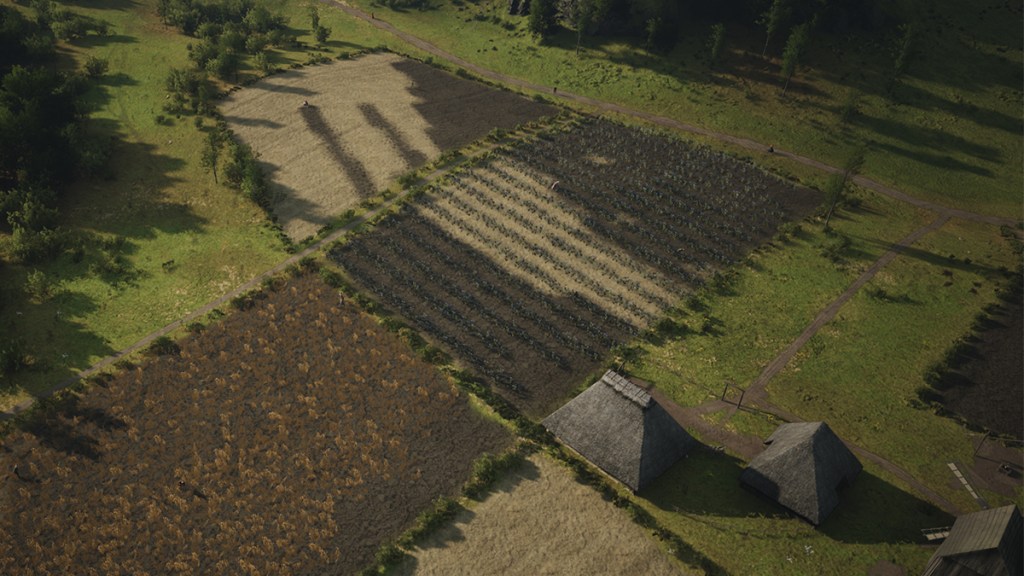
- Farmhouse: This is the primary operational hub for all agricultural activities. Families assigned to a Farmhouse will undertake plowing, planting, harvesting, and transporting crops. Its strategic placement near fertile fields is crucial for minimizing travel time and maximizing efficiency, directly impacting harvest yields.
- Windmill: A vital processing building, the Windmill converts harvested grain (Emmer or Rye) into flour. Without a functioning Windmill, raw grain cannot be turned into edible bread, regardless of harvest size. Its construction is a priority after the first successful grain harvest.
- Communal Oven: The final step in the bread production chain, the Communal Oven utilizes flour to bake bread, which is then distributed to the populace. Multiple ovens may be necessary for larger settlements to meet demand, preventing bottlenecks in the food supply chain.
- Granary: While not exclusively agricultural, the Granary is indispensable for storing harvested crops and processed goods like flour and bread. Proper storage prevents spoilage and ensures a consistent supply through non-growing seasons, acting as a buffer against food shortages.
Understanding Soil Fertility and Its Management
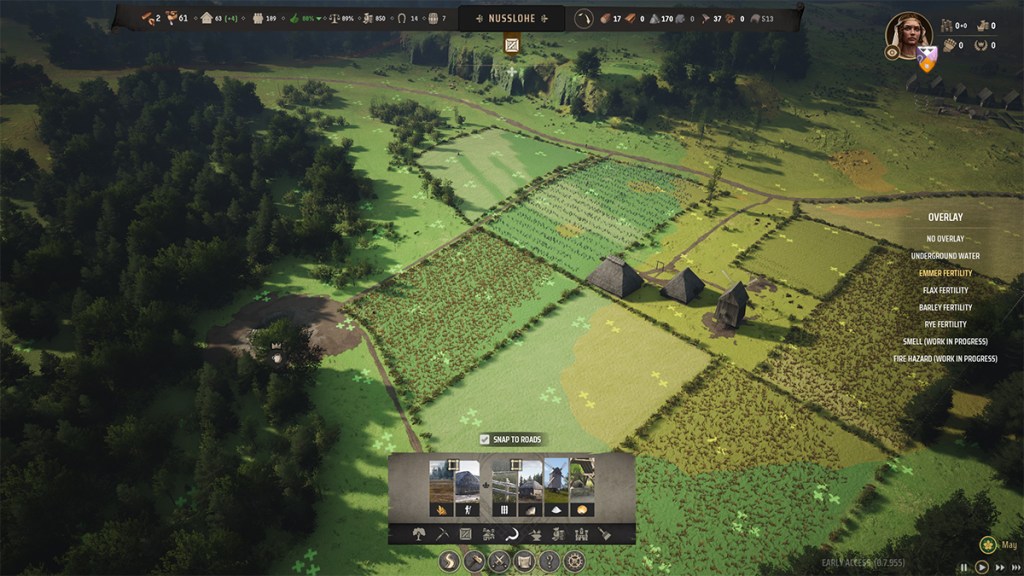
A core mechanic in Manor Lords is the dynamic soil fertility system, which adds a layer of realism and strategic depth. The game provides a dedicated "Farming" tab within the Construction menu, offering a visual overlay for each crop type: Emmer, Flax, Barley, and Rye Fertility. This color-coded map is an essential strategic tool, with bright green indicating highly fertile ground and shades of orange/red denoting unsuitable areas. Ignoring these indicators can lead to significantly reduced yields and wasted labor.
The Dynamics of Degradation and Renewal: The Three-Field System
Soil fertility is not static; it diminishes with continuous cultivation. Each harvest extracts nutrients from the land, progressively reducing its yield potential. To counteract this degradation and ensure long-term productivity, Manor Lords incorporates a realistic crop rotation system, mirroring historical agricultural practices.
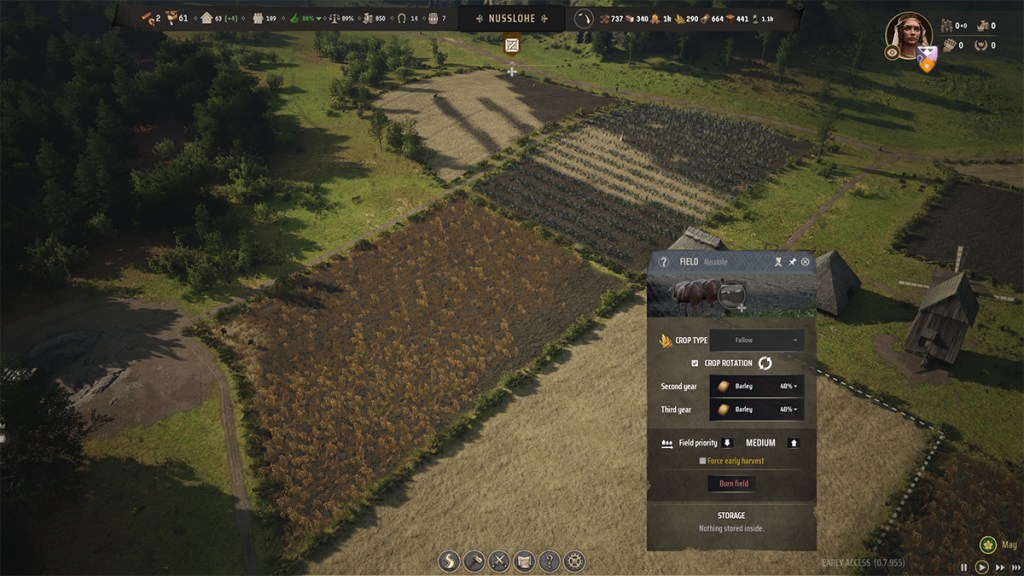
Players are encouraged to implement a three-year crop rotation cycle for each field. This traditional medieval practice typically involves:
- Year 1: Crop Cultivation (e.g., Wheat) – The field is used for a primary grain crop.
- Year 2: Crop Cultivation (e.g., Barley or another rotation) – A different crop, often a spring crop or a legume (though not explicitly detailed for legumes in-game, the principle applies), is planted to utilize different soil nutrients.
- Year 3: Fallow or Pasture – Leaving a field "fallow" for a year allows the soil to naturally replenish its nutrients, significantly restoring its fertility. Alternatively, using the fallow year for pasture, allowing livestock (such as sheep or cattle, if integrated into the settlement’s economy) to graze on the land, can also contribute to fertility restoration through natural fertilization, albeit potentially at a slower rate than a pure fallow period. This system mandates the creation of at least three fields for each desired crop type to ensure continuous production without exhausting the land. For instance, if a player aims for consistent wheat production, three separate wheat fields are necessary: two actively growing in rotation, and one resting.
The Morgen Unit: A Measure of Labor and Land
The game employs the historical unit of "morgen" to measure field sizes. A morgen traditionally represented the amount of land a single man could plow in a morning. In Manor Lords, a single family assigned to a Farmhouse can efficiently manage approximately two-thirds (2/3) of a morgen per year. While the game’s tooltip often advises creating fields of one morgen, strategic planning dictates having multiple, smaller fields to accommodate the labor capacity and the vital crop rotation cycle. A single 1-morgen field dedicated solely to Wheat, while initially sufficient for a small population, will rapidly degrade without rotation, emphasizing the need for multiple plots and a balanced labor force. This detailed measurement underscores the game’s commitment to historical accuracy in its economic modeling.
Strategic Development: Enhancing Agricultural Efficiency
As a settlement grows and Burgage Plots are upgraded, players earn Development Points, which can be invested across various skill trees. One dedicated skill tree specifically targets agricultural enhancements, offering crucial upgrades that can significantly boost farming efficiency and output:
- Heavy Plows: This upgrade improves the efficiency of plowing, potentially allowing families to manage larger plots of land or complete tasks faster, thereby increasing overall productivity. It reduces the labor burden associated with field preparation and can be a significant boost for larger agricultural operations.
- Fertilization: Unlocks methods to accelerate soil fertility recovery, perhaps through the use of manure from livestock or other natural fertilizers. This can shorten fallow periods or mitigate the impact of continuous cultivation, allowing for more intensive farming practices without exhausting the land.
- Advanced Husbandry: While not directly a crop farming upgrade, this often relates to livestock management which can indirectly benefit farming through manure production or improved pasture rotation strategies. It emphasizes the integrated nature of medieval agriculture, where animals and crops often supported each other.
- Field Management Specialization: This could represent a broader category of upgrades that improve crop yields, reduce crop blights, or enhance storage techniques to minimize post-harvest losses. These specialized developments allow players to tailor their agricultural strategy to their settlement’s specific needs and the available land resources, providing meaningful progression beyond basic farming.
Implications and Broader Impact
Mastering agriculture in Manor Lords extends far beyond merely feeding villagers; it has profound implications across the entire spectrum of settlement management.
Economic Vibrancy and Trade
A thriving agricultural sector forms the bedrock of a robust economy in Manor Lords. Surplus grain and processed goods like bread and ale can be traded with neighboring regions, generating regional wealth that is crucial for importing specialized goods, tools, or even mercenaries. The production of Flax and its conversion to linen further enhances trade capabilities, transforming raw agricultural output into high-value tradable commodities. This economic interconnectedness means that successful farming directly fuels the expansion of markets, the establishment of trade routes, and the overall prosperity of the manor, allowing for greater investment in other sectors like industry or military.
Population Growth and Social Stability
Food security is inextricably linked to population growth and villager approval. A consistent and abundant food supply encourages families to settle and grow, providing the necessary labor for further expansion. Conversely, food shortages lead to malnutrition, disease, reduced approval, and ultimately, a declining population. The provision of ale, facilitated by Barley farming, acts as a critical morale booster, reducing discontent and ensuring a happy, productive workforce. Thus, effective agricultural management is not just about resources; it’s about nurturing the very human capital that defines a successful settlement, ensuring its longevity and expansion.
Strategic Autonomy and Resilience
A self-sufficient farming system grants a settlement a high degree of strategic autonomy. Reliance on external trade for staple foods can be precarious, subject to fluctuating prices, supply disruptions, or political instability. By cultivating its own food and essential materials, a manor can weather external shocks more effectively, maintaining stability even in challenging circumstances. This resilience is particularly vital when facing military conflicts or unforeseen environmental events, where local resources become paramount, allowing the lord to focus on defense rather than food scarcity.
Environmental Stewardship and Long-Term Planning
The game’s fertility mechanics subtly educate players on the importance of environmental stewardship. The necessity of crop rotation and fallow periods instills a sense of long-term planning, where immediate gains must be balanced against sustainable land use. Neglecting soil health for short-term yield maximization inevitably leads to long-term decline, mirroring historical ecological lessons about land exhaustion. This aspect adds a layer of depth, transforming farming from a simple resource tap into a complex ecological management challenge, requiring foresight and a balanced approach to resource exploitation.
Conclusion
In Manor Lords, agriculture transcends its basic function as a food source; it is a complex, multi-faceted system that underpins every aspect of medieval settlement management. From the initial struggle for survival against the encroaching winter to the sophisticated economic diversification driven by trade, the cultivation of the land dictates the rhythm and destiny of the manor. Mastering the intricacies of crop types, understanding the dynamic fertility of the soil, implementing judicious crop rotation, and strategically investing in agricultural developments are not merely game mechanics but reflections of historical challenges and successful medieval practices. A player’s ability to transform fertile ground into a sustainable source of sustenance and wealth is the ultimate