


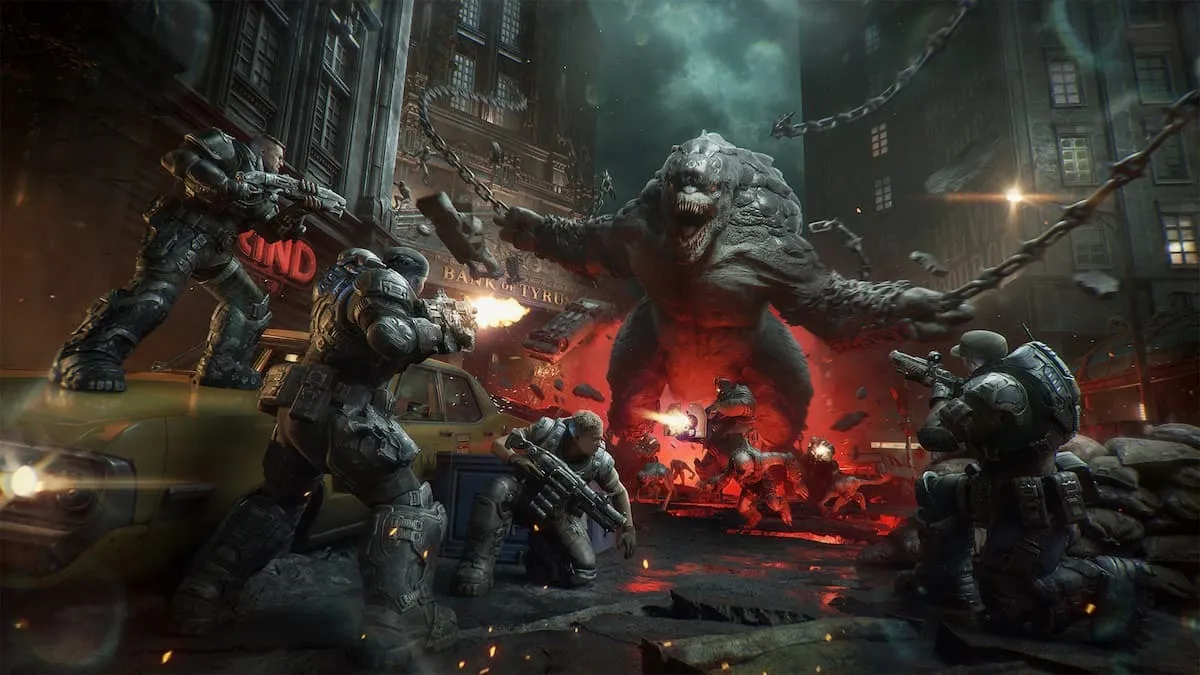
The prospect of a prequel in any established franchise carries inherent risks. Often, such endeavors lean heavily on the crutch of nostalgia, relying on subtle nods and familiar tropes rather than robust narrative development, potentially alienating the very fanbase they aim to please. This apprehension was a significant factor preceding the dive into the review build of Gears of War: E-Day, the latest entry in the long-running third-person shooter series. Questions loomed: Was a return to the genesis of the Locust War on the planet Sera truly necessary? Had the franchise exhausted its narrative potential, leaving nothing more to explore? The immediate answer, based on extensive playtime with the campaign, is a resounding and welcome no. Gears of War: E-Day presents a campaign that stands as arguably the most compelling Gears experience in years, possibly since the acclaimed Gears of War 3. It proves that the franchise, a cornerstone of the Xbox 360 era, still possesses a vital spark and a compelling story to tell.
Writer’s Note: This review focuses exclusively on the campaign, as multiplayer and Horde modes were not accessible during the pre-release period. A comprehensive, scored review encompassing all aspects of Gears of War: E-Day will be published upon full game release.
The Dawn of Terror: A World Engulfed in Unforeseen Horror
E-Day earns its descriptive power, functioning as a stark depiction of "Horrors of War" or the "Fog of War." Its narrative and mission design are anchored in a profoundly terrifying event: the sudden, cataclysmic emergence of a monstrous army from beneath Sera’s surface. This invasion unfolds not as a planned assault, but as a plague, a relentless swarm decimating everything in its path. Players are thrust into the unfolding chaos in real-time, mirroring the widespread confusion and ignorance of the initial hours of the conflict.
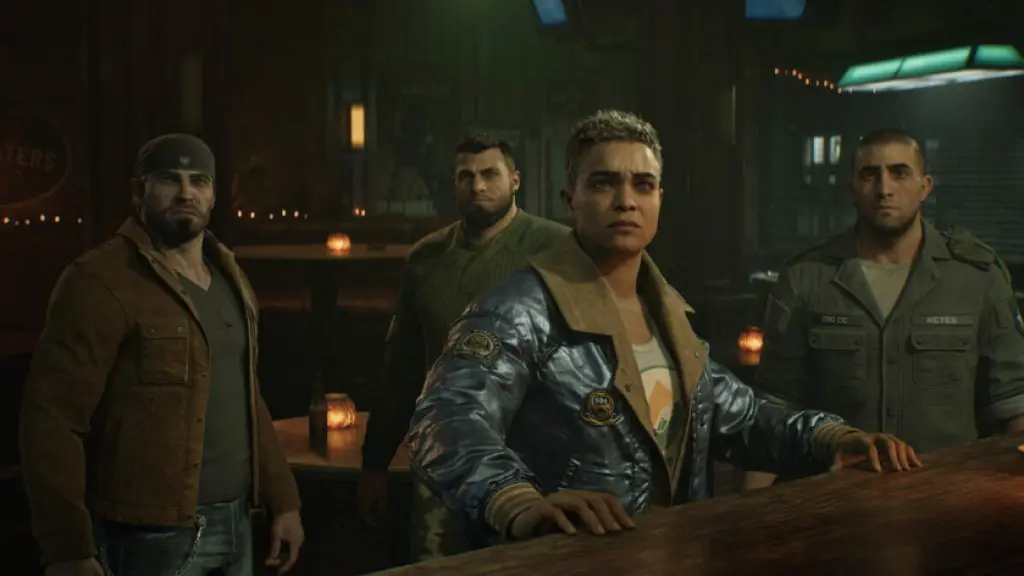
The campaign centers on the formative experiences of series mainstays Marcus Fenix and Dominic Santiago. At this juncture, Dom is grappling with the profound grief stemming from the recent loss of his brother, Carlos, Marcus’s closest friend. They are joined by two new characters, Mags Carter and Lucas Reyes. Mags, a seasoned and hardened veteran, and Reyes, the somewhat green, quipping newcomer, form an unlikely squad out of sheer necessity and shared trauma as their world descends into pandemonium. While the bonds forged within this quartet are significant, the reviewer notes that these nascent connections pale in comparison to the deeply ingrained camaraderie seen in later iterations of Gears squads, featuring characters like Baird, Anya, and Cole Train.
Following decades of internecine conflict among human factions, the Locust emerge with the brutal suddenness of a buzzsaw. Their initial appearance in E-Day is presented as their most terrifying and intimidating yet in the series’ history. Civilian populations are caught in the crossfire, mercilessly mowed down by an enemy that initially appears to be purely feral. However, the Gears quickly begin to uncover a far more complex and sinister nature to the Locust, something far more insidious bubbling beneath the surface. This sense of discovery, of piecing together the terrifying reality as it unfolds, is a core strength of E-Day. The feeling of being utterly in the dark, witnessing military forces scrambling for answers amidst pervasive death and unimaginable loss, creates a potent and unsettling atmosphere.
The missions within E-Day offer a chillingly realistic portrayal of this emergent crisis. The city of Kalona becomes a focal point, rapidly swallowed by the Locust swarm. This depiction evokes visceral memories of the rapid descent into chaos seen in early Resident Evil titles, a comparison that serves as high praise. The Locust are rendered as genuinely unsettling and unnerving adversaries. Despite the familiarity of many enemy types from previous installments, their sadistic nature is palpable, underscoring the sheer horror of humanity’s introduction to an enemy it never knew existed. This sense of raw, unadulterated terror is effectively conveyed.
Throughout the events of E-Day, the narrative emphasizes a grim reality: the Coalition of Ordered Governments (COG) forces are losing, and losing severely. The situation escalates from dire to catastrophic over the course of the campaign, which is notably the longest in the franchise’s history, offering extensive gameplay and a daunting number of enemies. Even as a prequel, the campaign excels in delivering poignant character moments and subtle, yet effective, nods to the broader franchise lore. While the overarching narrative might be distilled to a primal struggle for survival, the execution elevates it beyond a simple "fight and survive" trope.
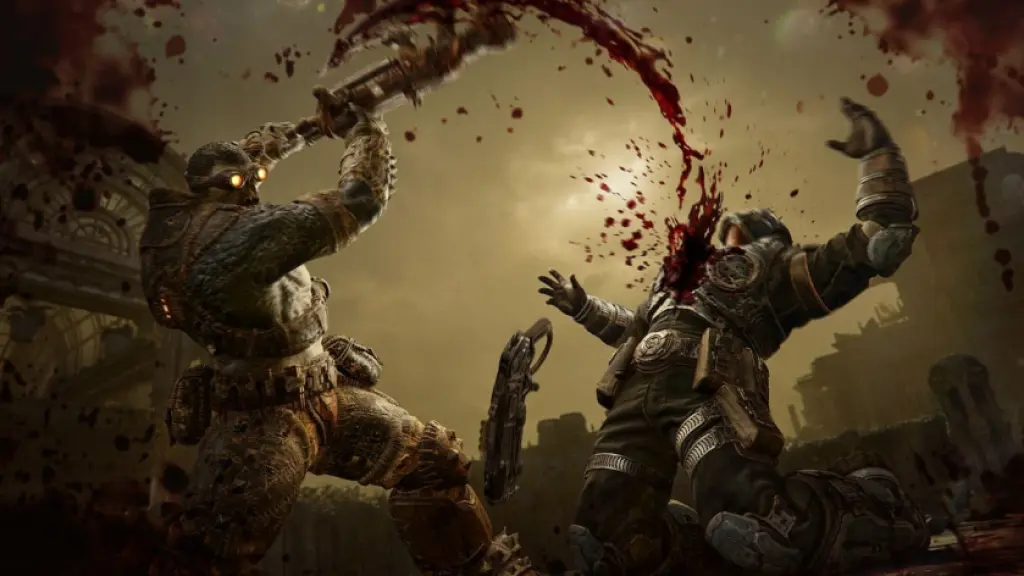
The scenario presented is particularly harrowing: after decades of war where civilians were conditioned to seek shelter underground from aerial bombardments, they now find themselves fleeing into these same subterranean refuges only to confront a new, subterranean threat. This leads to the slaughter of millions. The game illustrates this chilling reality through deeply affecting and harrowing sequences, including graphic depictions of death that underscore the brutal ugliness of war.
Exploration of the beleaguered city of Kalona, assisting survivors where possible, results in a mixed but undeniably emotional experience. The environment is littered with the fallen, civilians flee in terror as Locust erupt from below, and makeshift field hospitals serve as grim testaments to the unfolding tragedy. This narrative arc proves to be one that was unequivocally worth exploring within the Gears of War universe.
As a prequel, E-Day does inevitably grapple with some inherent narrative limitations. The audience possesses foreknowledge of which characters are destined to survive and appear in later games, creating a degree of predictability regarding their fates. Additionally, while some overt "nostalgia" moments are present—such as the origin of the Lancer’s iconic chainsaw bayonet, which is both cool and slightly cringeworthy—they are thankfully not as prevalent or heavy-handed as one might anticipate. The series’ trademark, often over-the-top dialogue, remains intact, with a memorable instance where a Gear likens a new enemy to "a ballsack," underscoring the continuation of the franchise’s distinctive, albeit sometimes crude, humor. Yet, the timeless satisfaction of Marcus Fenix exclaiming "NICE!" after a Perfect Reload remains a consistent and appreciated element.
A Wealth of Content: Evolving Gameplay Mechanics
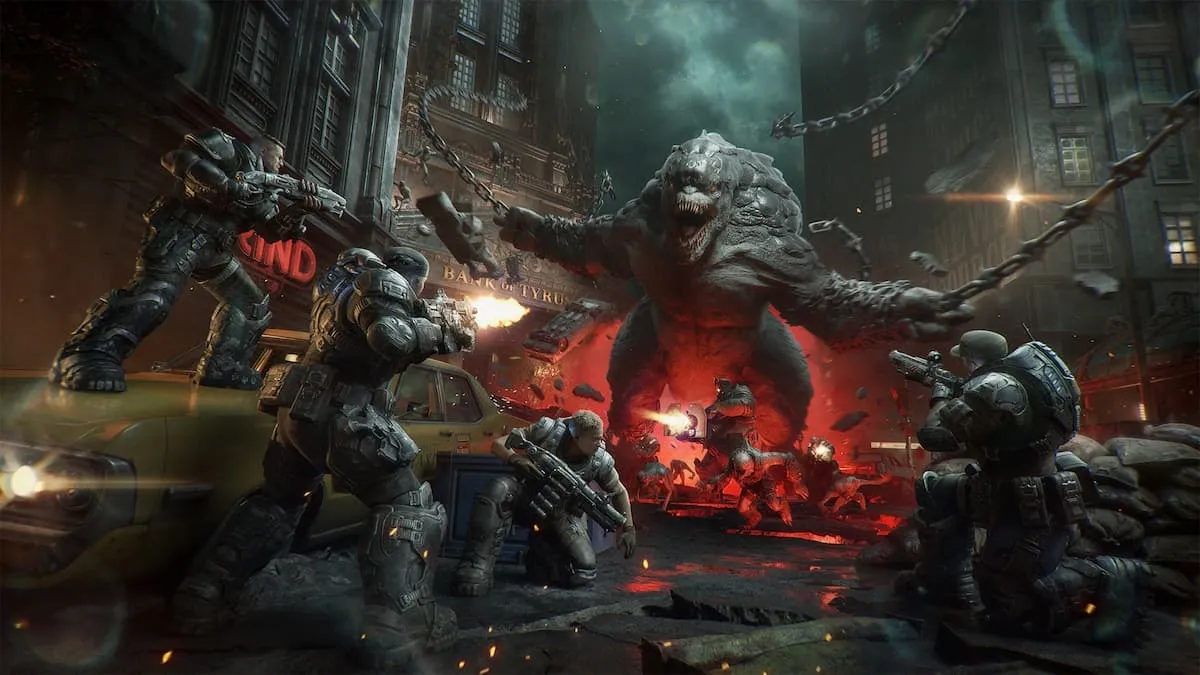
E-Day‘s gameplay offers a welcome diversification from the franchise’s established formula, blending classic linear Gears progression with innovative new elements. The campaign incorporates several open-world segments, allowing players to explore significant portions of Kalona at their own pace, with main story objectives providing a loose guidance. Interspersed throughout are Horde-like scenarios, tasking players with establishing defenses against waves of incoming Locust. The scope of the gameplay expands beyond the city limits in later missions, providing varied environments and tactical challenges.
Navigating the ravaged streets of Kalona presents opportunities for emergent side-quest objectives, such as escorting civilians to safety or rescuing beleaguered COG squads trapped by Locust advances. While players can opt for a direct, linear progression, these optional engagements serve to deepen the player’s understanding of the unimaginable plight faced by the inhabitants of Sera.
Scattered throughout the game are numerous collectibles, readily discoverable thanks to an intuitive map system and subtle audio cues indicating nearby points of interest. These collectibles often unlock narrative tidbits or provide unique weapon mods and armor upgrades. The weapon mods, which can enhance gameplay mechanics such as triggering passive healing on a Perfect Reload or granting a close-quarters damage buff for successful Perfect Reloads, are unfortunately subject to random drops. This randomness, tied to finding "Hard Cases" or completing side quests, can make building a specific playstyle challenging during a first playthrough, though it does encourage exploration and experimentation.
The inclusion of these open-world segments significantly extends the campaign’s length, particularly for players who engage with all available content. While some may find these sections occasionally repetitive, they offer a refreshing departure from Gears‘ traditionally linear corridor shooter design. The dynamic shift between open-world exploration and focused combat sequences helps maintain a lively pacing. Even for players who expedite these segments, the game offers substantial replay value through collectible hunting, increased difficulty settings, and the core four-player co-operative experience, for which the game is fundamentally designed. The addition of a few on-rails vehicle segments further contributes to the overall variety, ensuring that the gameplay remains engaging and avoids becoming monotonous.
A notable departure from previous entries is the implementation of a modernized movement system. Initially met with skepticism, particularly regarding the perceived loss of the classic "hold A to sprint" mechanic and camera proximity, the new system proves to be a significant improvement after extended play. The reviewer finds it difficult to envision returning to the feel of earlier Gears titles, even with the hours invested in Gears 3‘s Horde and multiplayer. While acknowledging that veteran players may prefer established control schemes (multiple options are available), the reviewer personally favors the new system, which allows for fluid cover-to-cover transitions with the ‘A’ button and dedicated sprint functionality via the left stick, offering enhanced freedom of movement.
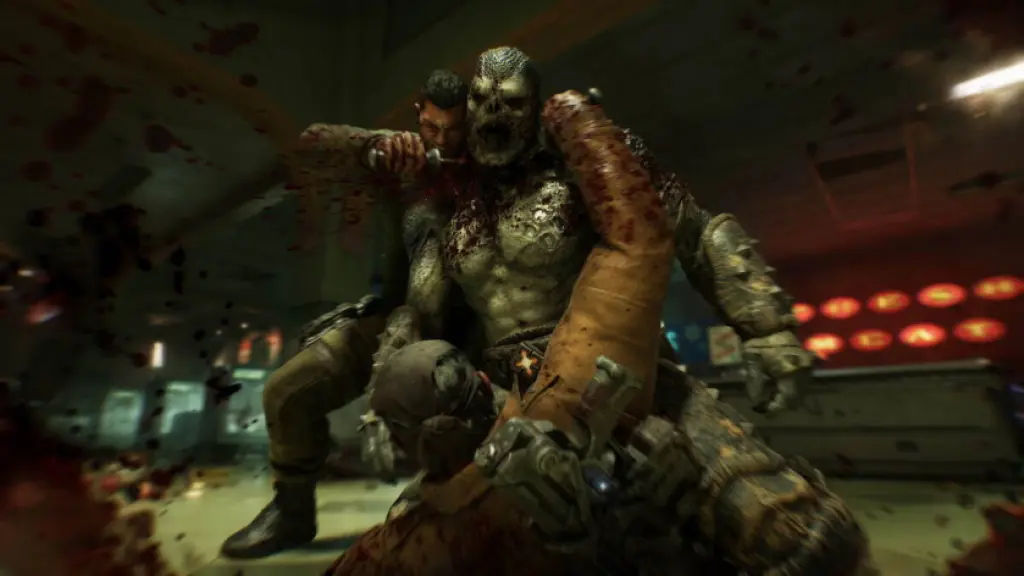
A minor criticism arises from the campaign’s boss encounters, which often devolve into protracted battles against large, damage-absorbing enemies. Many standard combat scenarios are also based on the "eliminate all Locust" objective, which can become frustrating when a single straggler evades detection. The introduction of a radar ping ability, which highlights nearby enemies with a red outline, is a welcome addition, serving as one of several "ultimate" abilities with a significant cooldown, providing tactical utility in managing overwhelming enemy numbers.
Despite the overall polish, some instances of noticeable framerate drops were encountered during the campaign, even when operating in Performance Mode on the Xbox Series X. This is a disappointing observation, particularly given the game’s otherwise visually impressive presentation, which leans into a darkly beautiful aesthetic of blood, gore, and apocalyptic desolation.
In conclusion, the campaign of Gears of War: E-Day has been a profoundly pleasant surprise. Entering with minimal expectations, the experience proved immensely enjoyable. While the long-term reception among the most dedicated Gears purists remains to be seen, this campaign component stands as one of the most satisfying single-player experiences on Xbox in recent memory. It is a testament to the enduring appeal of the franchise and its ability to deliver a gripping narrative and engaging gameplay. The reviewer strongly suggests bringing friends along for the ride, as the game is clearly built for cooperative play and the shared experience of survival.
A copy of this game was provided by the publisher for review. Played on Xbox Series X|S.