


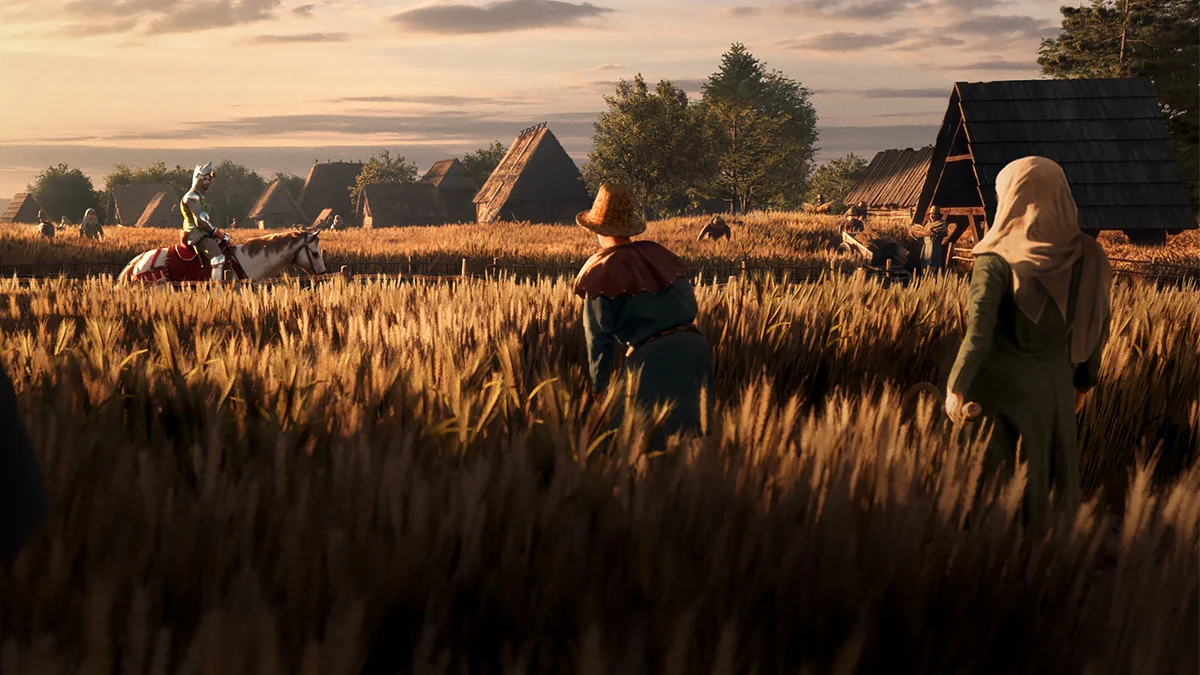
Farming stands as an indispensable cornerstone of any thriving settlement in Manor Lords, offering the fundamental sustenance required for a burgeoning populace and underpinning the very fabric of medieval life, from daily bread to celebratory libations. This intricate system of cultivation is not merely a supplementary activity but a core economic engine that dictates survival, growth, and the overall prosperity of your digital domain. As a city-builder and real-time strategy game with a strong emphasis on historical accuracy and economic simulation, Manor Lords challenges players to meticulously manage resources, with agriculture at the forefront of these demands. Understanding and optimizing your agricultural practices is paramount, particularly in the unforgiving early stages of settlement expansion.
The Foundation of Sustenance: Early Game Farming Priorities
Upon establishing a new settlement, the immediate and most critical objective is to secure a reliable food supply. In this initial phase, Wheat, or Emmer as it is historically designated within the game’s lexicon, must be the primary crop. Wheat is directly convertible into flour and subsequently bread, forming the staple diet of your villagers. The game’s seasonal cycle, which includes a harsh winter with no agricultural output, necessitates careful foresight and planning. To ensure your villagers survive the initial winters, a substantial surplus of grain must be accumulated during the autumn harvest. This surplus acts as a vital buffer against starvation when fields lie dormant under snow.
Beyond raw grain, processing infrastructure is essential. The construction of a Windmill to grind Wheat into flour and a Communal Oven to bake that flour into bread transforms raw agricultural output into a consumable good. These structures not only improve the efficiency of food distribution but also contribute to the overall resilience of your settlement. Once a stable supply of bread is secured, attention can then shift to diversifying agricultural output. Barley emerges as the next strategic crop, serving as the foundational ingredient for ale, a commodity crucial for maintaining villager morale and satisfaction. Ale production, while not a direct food source, significantly impacts a settlement’s approval rating and indirectly supports population growth.
Understanding Crop Varieties and Their Strategic Value
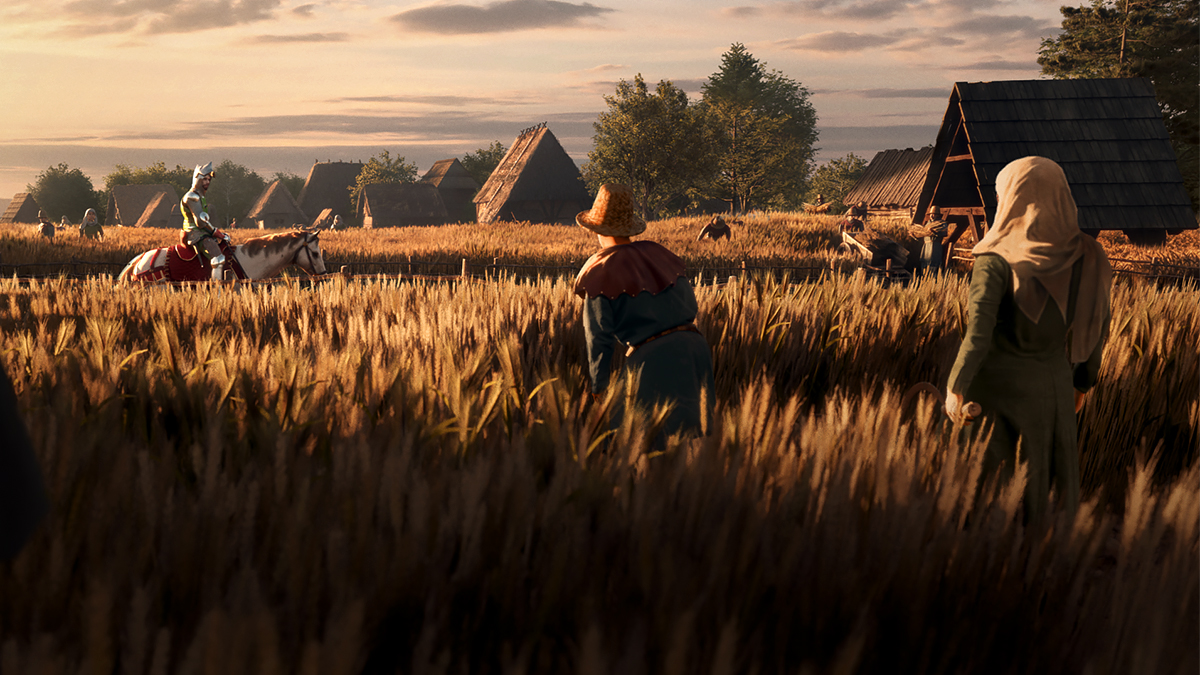
Manor Lords features four distinct crop types, each with specific uses and fertility requirements: Emmer (Wheat), Barley, Flax, and Rye. Mastering their individual characteristics is key to a diversified and resilient agricultural economy.
- Emmer (Wheat): As previously noted, Emmer is synonymous with Wheat and serves as the primary caloric intake for your population. It typically requires highly fertile soil for optimal yields and forms the backbone of your food production chain. Its consistent yield in favorable conditions makes it the go-to crop for ensuring basic survival and early growth.
- Barley: Crucial for the production of ale, Barley plays a vital role in the social and economic stability of your settlement. While not a direct food source, a steady supply of ale boosts villager happiness, which in turn encourages new families to settle and contributes to overall productivity. Barley also thrives in moderately fertile soil, making it a good complement to Wheat fields.
- Flax: Unlike Emmer and Barley, Flax is not a food crop but an industrial one. It is processed into linen, a fundamental material for producing clothing. Clothing, much like ale, contributes to villager satisfaction and is a tradable commodity, offering an avenue for generating regional wealth. Integrating Flax into your crop rotation allows for economic diversification beyond mere subsistence.
- Rye: Rye is often considered a more robust grain compared to Wheat, known for its ability to grow in less fertile or harsher conditions. While its yield might be slightly lower than Wheat in ideal circumstances, its resilience makes it an excellent choice for expanding agriculture into marginal lands or as a backup crop in regions with suboptimal soil fertility for Emmer. Its inclusion can provide a layer of security against localized crop failures or resource depletion.
Essential Agricultural Infrastructure
Efficient farming in Manor Lords extends beyond merely planting seeds; it requires a robust network of supporting structures to process, store, and distribute agricultural goods.
- Farmhouse: This is the foundational building for all field-based agriculture. It houses the farming families who work the fields, managing planting, harvesting, and field maintenance. Upgrading a Farmhouse can often include adding an Ox, significantly increasing the speed and efficiency of plowing and transportation of goods from fields to storage.
- Windmill: A critical processing building, the Windmill converts raw grain (Wheat/Emmer or Rye) into flour. Its placement should consider access to fields and the Communal Oven to minimize transportation times.
- Communal Oven: This structure takes flour from the Windmill and bakes it into bread, the primary consumable food item. Proximity to residential areas and the Windmill optimizes the food supply chain.
- Granary: Essential for storing raw agricultural products such as grain, berries, and vegetables. A well-placed Granary minimizes spoilage and ensures that harvested goods are quickly moved from the fields, preventing losses and facilitating further processing. Proper storage is a core element of preventing resource bottlenecks.
- Malt House: This specialized facility processes Barley into malt, an intermediate product required for brewing ale. Its construction signals a move beyond basic subsistence towards providing luxury goods for your populace.
- Brewery (or Burgage Plot Extension): Utilizing malt from the Malt House, the Brewery produces ale. Often, a Burgage Plot can be upgraded with a "Brewery Extension," allowing a family to produce ale directly from their home, enhancing local production capabilities.
- Storehouse: While the Granary focuses on food items, the Storehouse is for general goods, including processed Flax (linen). Strategic placement of both types of storage buildings is vital for logistics.
Navigating Soil Fertility and Strategic Field Placement
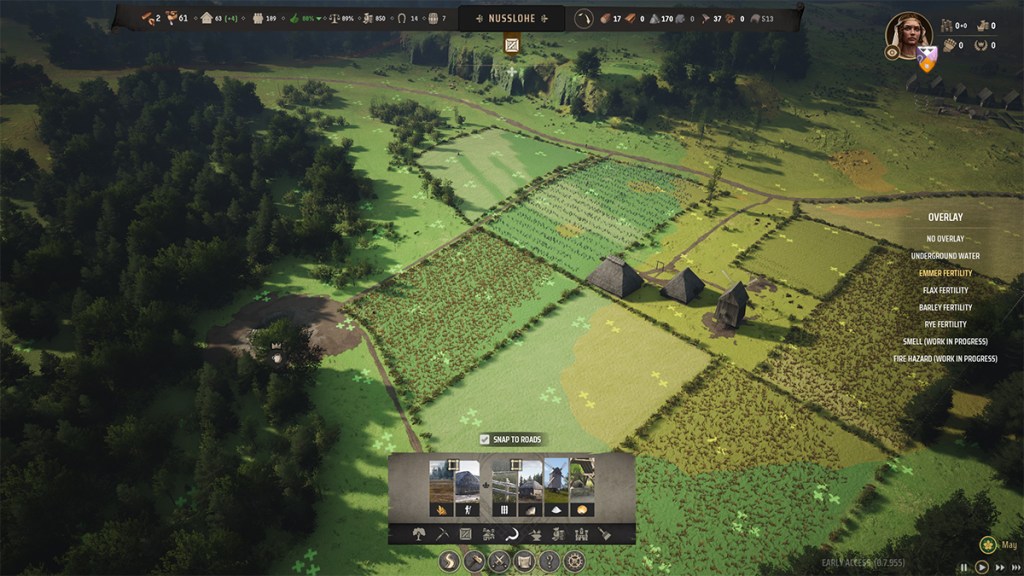
One of the most immersive and strategic elements of Manor Lords‘ farming system is its detailed soil fertility mechanic. The game provides a dedicated "Farming" tab within the Construction menu, offering specific fertility overlays for Emmer, Flax, Barley, and Rye. When activated, these overlays display a color-coded map: bright green indicates highly fertile land, yellow suggests good fertility, orange denotes poor conditions, and red signifies unsuitable terrain.
This visual feedback is crucial for informed decision-making regarding field placement. Planting crops in areas with high fertility for that specific crop will result in significantly better yields and faster growth cycles. Conversely, attempting to grow crops on infertile land will lead to meager harvests and wasted labor. For instance, a region might be highly fertile for Emmer but poor for Flax, necessitating careful consideration of which crops to prioritize in different areas of your territory. Early game settlements should meticulously scout for prime Emmer fertility spots to maximize initial food output. As your settlement expands, you may need to diversify field locations to accommodate the varying needs of Barley, Flax, and Rye, balancing optimal yield with the practicalities of land availability and logistical reach.
The Art of Crop Rotation and Sustainable Land Management
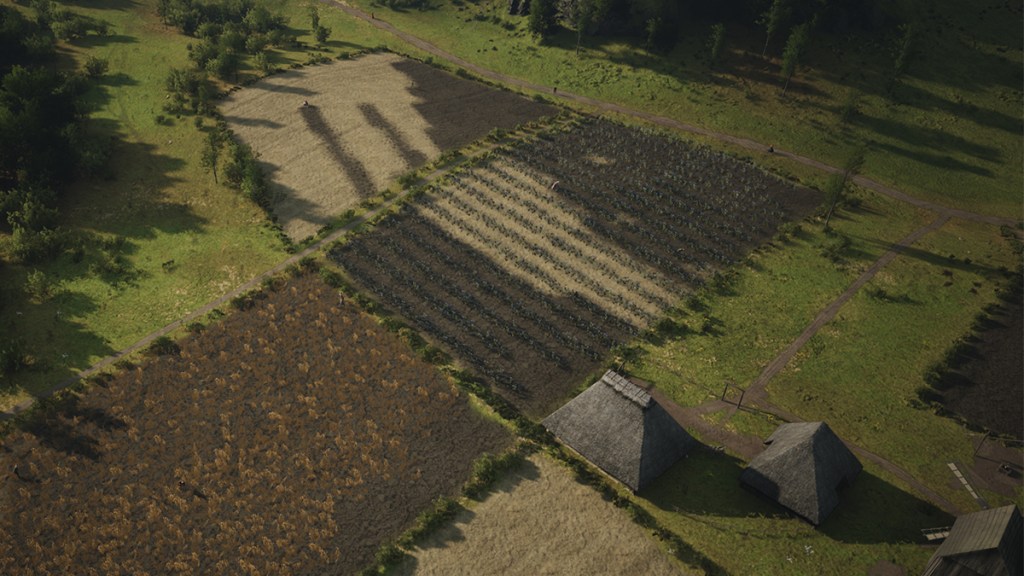
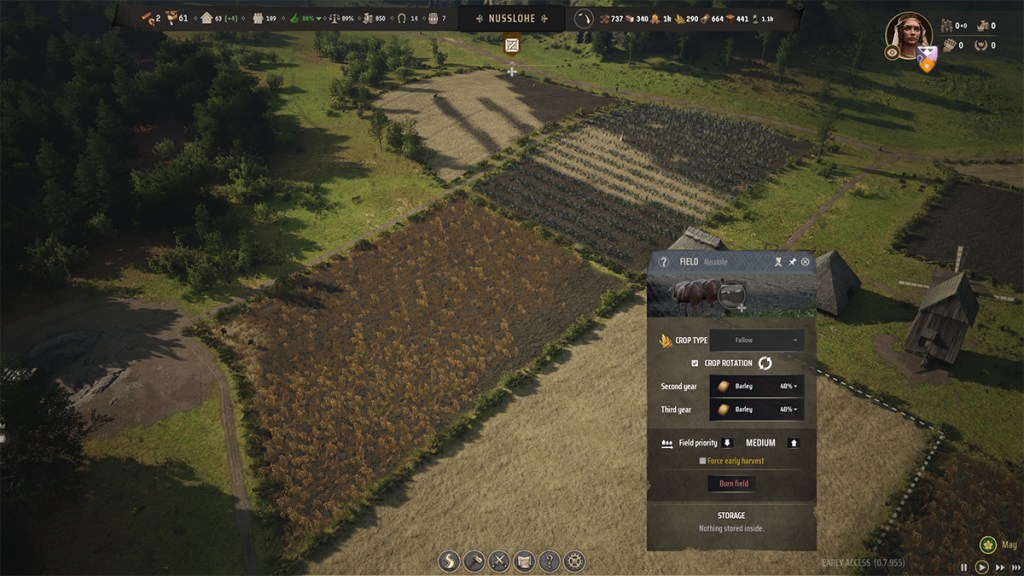
A cornerstone of historical agriculture, and meticulously replicated in Manor Lords, is the concept of crop rotation and fallow periods. Continuous planting of the same crop on a single plot of land will inevitably deplete its soil fertility, leading to diminishing returns over time. To counteract this, players must implement a strategic three-year crop rotation cycle for each field.
Within this cycle, it is highly advisable to allow a field to lie fallow for at least one year. A fallow year allows the soil to naturally replenish its nutrients, restoring a significant portion of its fertility. This practice, while seemingly sacrificing a year’s yield, is a long-term investment in sustainable agriculture, ensuring consistent productivity over many game years. An alternative to a purely fallow year is to designate a field for pasture. This involves grazing livestock (such as sheep or goats) on the field, which, through their droppings, naturally fertilizes the soil. This method not only helps restore fertility but can also integrate animal husbandry into your agricultural cycle, providing additional resources like meat, hides, or wool.
Fields in Manor Lords are measured in morgen, an archaic unit of land measurement historically used in medieval Europe, roughly equivalent to 0.6 to 1 acre. A single family unit in the game can efficiently manage approximately 2/3 of a morgen per year. While a tooltip often suggests making initial fields 1 morgen in size, which can theoretically feed a small town with Wheat, the diminishing returns from soil depletion necessitate a multi-field approach. To effectively implement a three-year crop rotation (e.g., Year 1: Wheat, Year 2: Barley, Year 3: Fallow/Pasture), you will need at least three fields for each crop type you wish to grow sustainably. For example, to ensure a continuous supply of Wheat, you would ideally have three Wheat fields: one growing Wheat, one growing another crop or resting, and one lying fallow or used as pasture, cycling through these states annually. This systematic approach prevents localized famine and supports steady growth.
Advancing Agricultural Efficiency: Development Points and Upgrades
As your settlement progresses and your Burgage Plots are upgraded, you will periodically earn Development Points. These points can be invested into various skill trees, one of which directly impacts agricultural efficiency and output. Strategic allocation of these points can significantly enhance your farming capabilities.
While specific development options may vary, common agricultural upgrades in such games often include:
- Heavy Plow: This upgrade can increase the speed and efficiency of plowing fields, reducing the labor time required for field preparation and allowing farmers to manage larger areas or complete tasks more quickly.
- Fertilization Techniques: Development points in this area might enhance the natural fertility recovery of fallow fields or introduce new methods of enriching soil, such as composting or manuring, further boosting yields.
- Advanced Crop Rotation: This could unlock more sophisticated crop rotation patterns or provide bonuses to specific crop yields when rotated effectively.
- Rich Fields: Certain upgrades might grant a permanent, albeit small, fertility boost to all fields within your territory or specifically to newly created fields, providing a foundational advantage.
- Better Yields/Harvesting Efficiency: General improvements to crop yields or the speed at which crops are harvested can significantly increase the overall food supply, especially as your population grows.
Careful consideration of these development paths is crucial. Investing early in agricultural efficiency can accelerate your settlement’s growth, reduce the risk of famine, and free up labor for other vital industries.
The Interconnected Web: Farming’s Broader Economic and Social Impact
Farming in Manor Lords is not an isolated activity; it forms a critical nexus within a complex web of interconnected systems. A stable and abundant agricultural output directly impacts:
- Economic Stability: Surplus food and processed goods (like linen from Flax) can be traded with neighboring regions, generating regional wealth and allowing for the import of resources your settlement cannot produce. This diversification strengthens your economy and reduces vulnerability.
- Population Growth: A well-fed and content population is a prerequisite for attracting new families to your settlement. Food shortages lead to discontent, emigration, and stagnation, while consistent surpluses foster growth.
- Villager Morale: The availability of both basic food (bread) and luxury goods (ale) directly influences villager morale. High morale translates to higher productivity and a more stable workforce.
- Logistics and Supply Chains: The efficiency of your farming operations dictates the flow of raw materials to processing buildings and finished goods to markets and homes. Bottlenecks in farming directly impact every subsequent step in the supply chain.
- Strategic Planning: The seasonal nature of farming, coupled with the long-term impact of soil fertility, demands strategic foresight. Players must plan multiple years in advance, anticipating needs, managing resources, and adapting to environmental changes.
Challenges and Adaptations in a Dynamic Environment
While meticulous planning can optimize farming, Manor Lords introduces dynamic challenges that require adaptability. Harsh winters can unexpectedly reduce yields, prolonged droughts might stress crops, or blight could devastate a harvest. Furthermore, the game’s combat elements mean that enemy raids can target and destroy vital farm infrastructure or valuable harvests, necessitating defensive planning and rapid recovery strategies. A robust agricultural system, diversified crop types, and strategically distributed fields can help mitigate the impact of such unforeseen events, ensuring the long-term viability of your settlement.
Conclusion: The Enduring Legacy of the Land
Farming in Manor Lords transcends a simple resource gathering mechanic; it is a profound simulation of medieval agrarian life, demanding strategic insight, historical understanding, and meticulous management. From the initial struggle for survival in the first winter to the establishment of a thriving, diversified agricultural economy, the land remains the ultimate arbiter of your settlement’s fate. Mastering crop types, understanding soil fertility, implementing sustainable rotation practices, and strategically upgrading your infrastructure are not merely gameplay tips but fundamental principles for building a lasting medieval dynasty. The vast farmlands stretching to the horizon become not just an aesthetic choice, but a testament to careful planning and a deep appreciation for the vital role agriculture plays in the delicate balance of life and prosperity.