


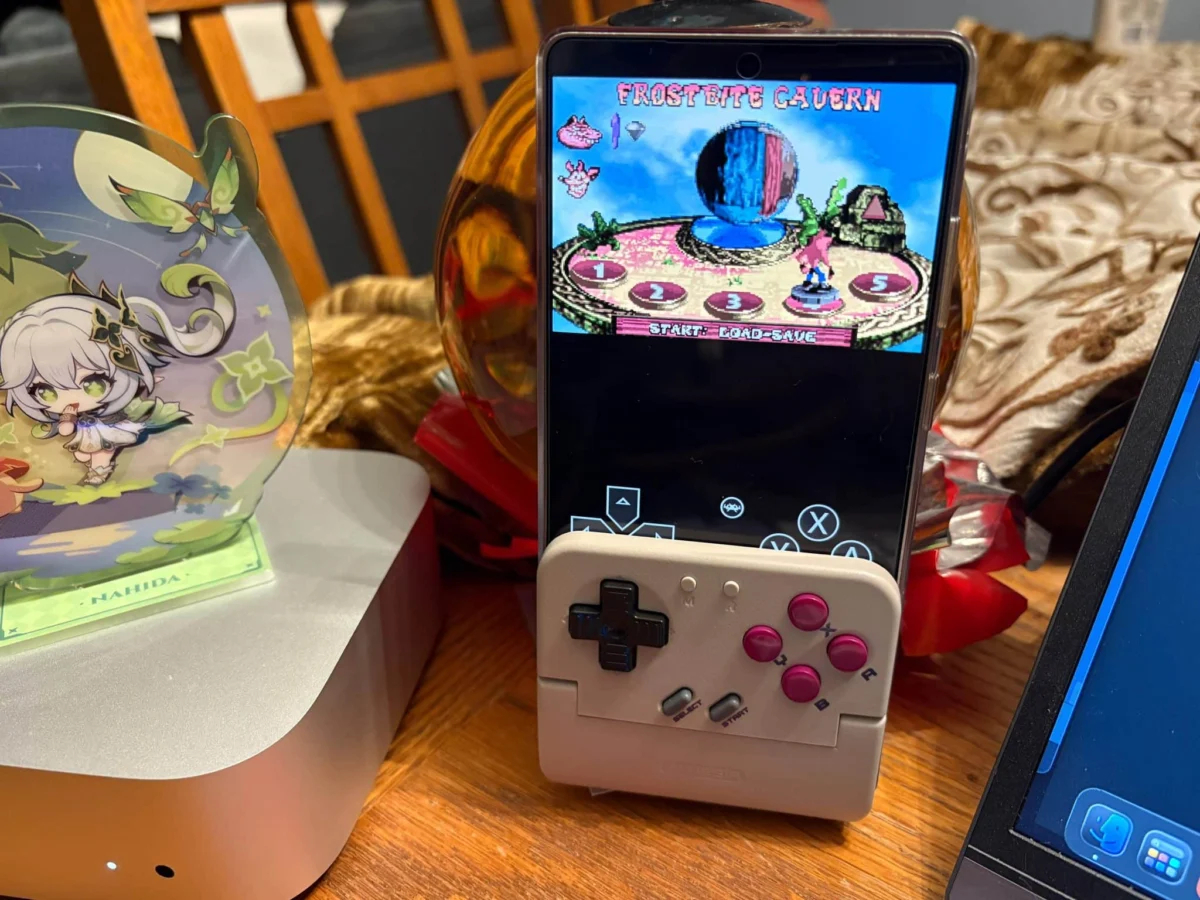
The landscape of mobile gaming hardware has undergone a significant transformation as enthusiasts increasingly seek tactile solutions for digital experiences. GameSir, a prominent manufacturer in the peripheral market, has introduced the Pocket Taco, a compact, retro-inspired controller designed specifically to bridge the gap between modern smartphone technology and classic 2D gaming. While the mobile gaming industry often prioritizes high-fidelity 3D performance and complex analog inputs, the Pocket Taco identifies a distinct niche: the retro emulation community. This segment of the market demands high-precision directional pads and responsive face buttons, features that are frequently compromised in larger, telescopic controllers. The Pocket Taco enters the market as a specialized alternative, emphasizing portability and aesthetic nostalgia without sacrificing the core functionality required for frame-perfect platforming.
Design Philosophy and Aesthetic Inspiration
The GameSir Pocket Taco distinguishes itself through a design language that pays homage to the Famicom era of the 1980s. The unit features a distinctive color palette of plastic-white and deep red, complemented by a classic black directional pad (D-pad). This aesthetic choice is not merely decorative; it signals the device’s intended use-case. By utilizing a membrane-based button architecture, GameSir has opted for a feel that mirrors classic handhelds like the Game Boy and NES, providing a tactile experience that is soft yet responsive, avoiding the loud, "clicky" nature of mechanical switches which some users find distracting in public settings.

The physical form factor utilizes a "clamshell" or "taco-style" folding mechanism. When closed, the device is highly portable, fitting easily into a pocket or a small bag. When deployed, it clips onto the side of a smartphone, effectively turning the mobile device into a dedicated handheld console. The build quality suggests a robust construction, designed to withstand the rigors of travel. However, the security of the phone within the grip relies on the tension of the clamshell, and while testing on flagship devices like the Samsung Galaxy S25 Ultra and iPhone 17 Pro Max showed a stable fit, users are cautioned against extreme movement that might dislodge the hardware.
Technical Specifications and Hardware Integration
In an era where input lag can define the success of a gaming peripheral, the Pocket Taco utilizes a low-latency Bluetooth connection optimized for both Android and iOS ecosystems. To ensure broad compatibility, GameSir has integrated a firmware architecture that allows for rapid updates via a proprietary mobile application. Early reports indicated minor connectivity hurdles with iOS devices, which were subsequently addressed through a mandatory firmware update designed to stabilize Bluetooth handshaking on Apple’s latest operating systems.
One of the standout hardware features is the inclusion of dual-layered shoulder buttons. In addition to the standard L1/R1 and L2/R2 inputs, the device features remappable bumpers. These can be configured through the GameSir app to mirror other buttons or perform macro functions, a necessity for certain titles that require complex input combinations. Furthermore, the device includes a "Home" button function that allows the unit to operate as a standalone wireless controller when not physically attached to a phone, increasing its versatility for tablet or laptop users.

However, the hardware design is not without its limitations. A significant point of contention involves the recessed charging port. Technical analysis reveals that the clearance provided for the USB-C passthrough is insufficient for many standard third-party cables, including the stock cables provided with Samsung’s flagship S-series. This design oversight necessitates that users either utilize specific, slim-profile cables or remove the controller to charge their mobile devices, a friction point that impacts the overall user experience during long gaming sessions.
Software Ecosystem and Emulation Performance
The efficacy of a mobile controller is often determined by its integration with third-party software, particularly front-ends like RetroArch. RetroArch serves as a central hub for various emulation "cores," allowing users to access libraries of games from previous console generations. The Pocket Taco demonstrates seamless integration with this software; testing confirms that the device is immediately recognized as a standard gamepad.
Input calibration within RetroArch is straightforward, and the D-pad’s performance is a highlight for 2D gaming. Unlike the analog-centric sticks found on the GameSir G8 Plus, the Pocket Taco’s D-pad is engineered for precision in four-way and eight-way movement, preventing the "dropped inputs" that often plague generic mobile controllers. This makes it an ideal companion for titles such as Mario Bros. 2 or Crash Bandicoot’s Big Adventure, where directional accuracy is paramount.

The GameSir companion app provides additional layers of customization, including:
- Keyboard Mode: Allows the controller to map inputs to keyboard strokes for games without native controller support.
- Turbo Functions: Enables rapid-fire capabilities for shoot-’em-up (shmup) titles.
- Button Mapping: Permitting the swapping of A/B and X/Y layouts to suit either Nintendo or Xbox-style preferences.
Ergonomics and User Experience
While the Pocket Taco excels in portability, its compact size introduces ergonomic challenges for certain demographics. The unit’s small footprint means that the shoulder buttons are positioned relatively close to the center of the device when attached to larger smartphones. Users with larger hands may find the reach to the R2/L2 triggers somewhat cramped, potentially leading to hand fatigue during extended play.
Furthermore, the protective case provided with the unit has been noted for its lack of security. While aesthetically pleasing, the case does not feature a locking mechanism robust enough to prevent the controller from falling out if subjected to sudden movement or a jolt. This raises concerns regarding the longevity of the device if carried externally via the included wrist strap.

Despite these ergonomic caveats, the performance in-game remains high. The responsiveness of the membrane buttons provides a level of feedback that touchscreens cannot replicate. For modern mobile applications that support gamepads, such as Arknights: Endfield or Doom, the Pocket Taco functions as a standard HID (Human Interface Device). However, the absence of an analog stick limits its utility in modern 3D titles that require 360-degree camera control, reinforcing its status as a specialized tool for 2D and retro-style games.
Chronology of Development and Market Context
The release of the Pocket Taco follows a broader trend in the mobile accessory market toward hyper-specialization. In 2024 and 2025, the market saw a surge in "all-in-one" telescopic controllers like the Backbone One and the Razer Kishi. However, by late 2025, a segment of the community began vocalizing a desire for smaller, more discrete options that didn’t transform the phone into a bulky oversized handheld.
GameSir’s development timeline for the Pocket Taco included a preview phase in early 2026, where early units were distributed to hardware analysts to refine the firmware. The official launch aimed to coincide with the resurgence of interest in retro handhelds, positioning the Pocket Taco as a more affordable and versatile alternative to buying a dedicated emulation device like those produced by Anbernic or Retroid.

Broader Industry Implications and the "Open Android" Conflict
The utility of hardware like the GameSir Pocket Taco is intrinsically linked to the openness of the mobile operating systems they serve. A significant concern looming over the mobile gaming community is the projected shift in Google’s Android policy. Reports indicate that by September 2026, Google intends to implement stricter lockdowns on the Android OS, potentially creating a pipeline that dictates which software can be installed on consumer devices.
This move has sparked the "Keep Android Open" movement, as such restrictions would directly impact the ability of users to install emulation software and third-party front-ends like RetroArch. For a device like the Pocket Taco, which relies heavily on the availability of these applications, a closed ecosystem would significantly diminish its value proposition. Industry analysts suggest that if Google proceeds with these lockdowns, the market for third-party mobile controllers may shift toward specialized Linux-based handhelds, leaving the smartphone accessory market in a state of uncertainty.
Conclusion: A Niche Powerhouse
The GameSir Pocket Taco represents a successful execution of a specific vision: providing a high-quality, tactile interface for 2D gaming in a pocketable format. Its strengths lie in its responsive D-pad, nostalgic design, and robust software support across Android and iOS. While it suffers from minor ergonomic issues for users with larger hands and a frustratingly tight charging port clearance, these drawbacks are often outweighed by its portability and precision.

For enthusiasts who prioritize the 2D gaming experience and wish to utilize their existing high-performance smartphone displays for emulation, the Pocket Taco is a compelling accessory. It stands as a testament to the idea that sometimes, "half a controller" is exactly what the market needs—provided the half that remains is engineered to the highest standard. As the industry moves toward a potential crossroads regarding software freedom in late 2026, the Pocket Taco remains a premier example of how hardware can elevate the mobile gaming experience to mirror the golden age of handheld consoles.