


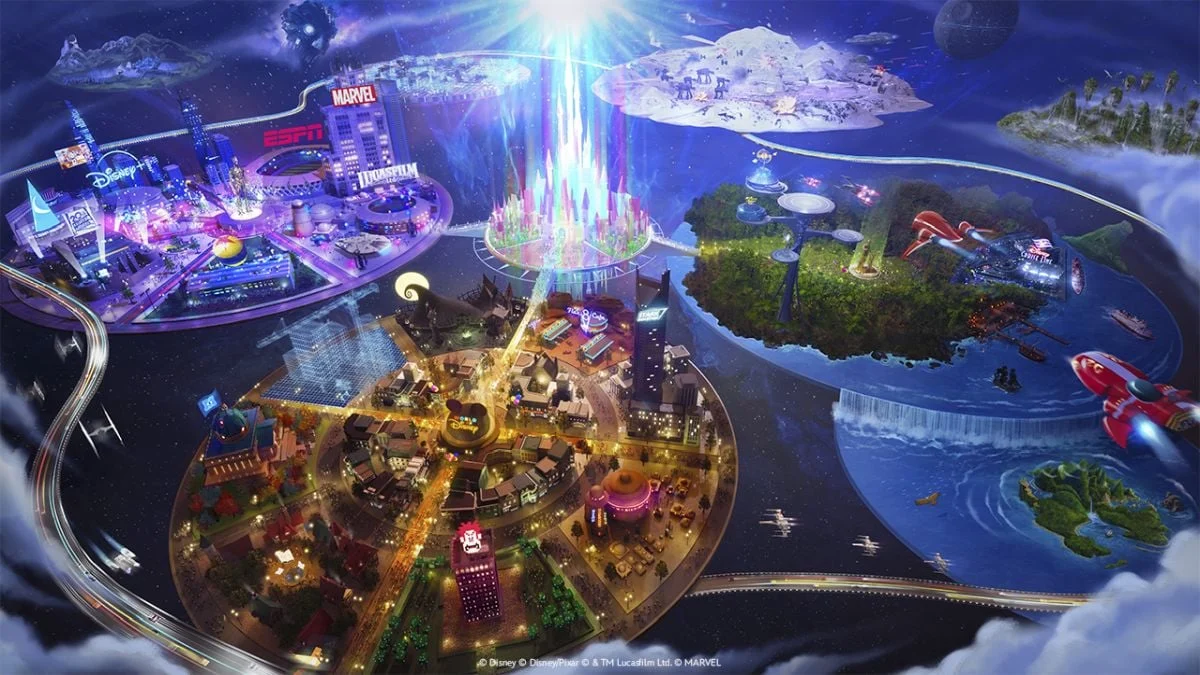
The Walt Disney Company has announced a monumental investment of $1.5 billion into Epic Games, a move poised to reshape the landscape of interactive entertainment. This strategic partnership aims to develop a groundbreaking, persistent universe that will seamlessly blend Disney’s iconic brands and franchises with the vast, interconnected world of Epic Games’ immensely popular title, Fortnite. This ambitious endeavor represents Disney’s most significant foray into the gaming industry to date, signaling a deliberate strategy to engage with a new generation of consumers through immersive digital experiences.
The multiyear project, as detailed in Disney’s official announcement, envisions a "world-class" gaming experience that will also interoperate with Fortnite’s existing pop-culture mash-up ecosystem. This new digital realm is designed to offer unprecedented opportunities for fans to "play, watch, shop, and engage" with beloved characters and narratives from across Disney’s extensive portfolio. The scope of this universe is staggering, encompassing not only classic Disney and Pixar animations but also the expansive universes of Marvel and Star Wars, and even the visually stunning worlds of James Cameron’s Avatar. The entire experience will be underpinned by Epic Games’ cutting-edge Unreal Engine technology, a testament to the technical prowess driving this collaboration. The deal is, however, subject to customary regulatory approvals before it can be fully realized.
This significant financial commitment underscores Disney’s recognition of the burgeoning power of gaming and its potential as a primary medium for storytelling and fan engagement. The company has been steadily increasing its presence in the gaming sector, with recent successes such as Disney Dreamlight Valley, Disney Illusion Island, Marvel Snap, and the critically acclaimed Jedi: Survivor demonstrating a growing appetite for Disney-branded interactive content. This partnership with Epic Games, however, signifies a strategic leap beyond traditional game development, aiming to create a connected digital ecosystem that mirrors the interconnectedness of Disney’s various entertainment divisions.
The synergy between Disney and Epic Games is not entirely novel. Fortnite has previously integrated elements from Marvel and Star Wars through character skins, in-game events, and thematic collaborations, hinting at the potential for deeper integration. This new venture, however, promises to elevate these interactions from episodic crossovers to a fully realized, persistent digital world where the boundaries between different franchises may blur, creating entirely new narrative possibilities and fan experiences.
Disney CEO Bob Iger articulated the vision behind this transformative alliance. "Our exciting new relationship with Epic Games will bring together Disney’s beloved brands and franchises with the hugely popular Fortnite in a transformational new games and entertainment universe," Iger stated in the official release. "This marks Disney’s biggest entry ever into the world of games and offers significant opportunities for growth and expansion. We can’t wait for fans to experience the Disney stories and worlds they love in groundbreaking new ways." His remarks highlight the dual objective of leveraging existing intellectual property while pioneering new forms of digital engagement.
A History of Intertwined Interests
The relationship between Disney and Epic Games, and specifically Fortnite, has a discernible history. Prior to this monumental investment, Fortnite has served as a significant platform for Disney’s intellectual property to reach a massive gaming audience. The inclusion of Marvel superheroes, Star Wars characters, and thematic events within Fortnite has consistently drawn significant player engagement, demonstrating the inherent appeal of these crossovers. These integrations, while successful, have often been limited in scope, serving as temporary activations rather than foundational elements of a persistent world.
Disney’s own ventures into gaming have seen a notable resurgence in recent years. Disney Dreamlight Valley, a life-simulation game, has garnered a dedicated player base by allowing users to interact with a wide array of Disney characters in a charming, customizable world. Similarly, Disney Illusion Island offered a unique platformer experience, while Marvel Snap quickly became a fan favorite in the digital collectible card game genre. The success of titles like Star Wars Jedi: Survivor further solidified Disney’s commitment to producing high-quality, narrative-driven gaming experiences. These individual successes, however, have largely operated within distinct ecosystems, lacking the cross-franchise interoperability envisioned in the new partnership with Epic Games.
Epic Games, meanwhile, has been diligently expanding Fortnite beyond its battle royale origins. The introduction of modes like Fortnite Festival and Rocket Racing signifies a strategic pivot towards creating a more diverse and engaging platform. This evolution positions Fortnite not just as a game, but as a nascent metaverse, capable of hosting a multitude of experiences. However, this period of expansion has not been without its challenges. In the past year, Epic Games, like many in the tech and gaming industries, undertook significant workforce reductions, laying off approximately 16% of its employees. This move, while difficult, was presented as a necessary step to streamline operations and focus on core strategic initiatives. Furthermore, Epic Games has been a vocal advocate for open platforms, engaging in prolonged legal battles with tech giants like Apple and Google over their app store policies, aiming to ensure greater accessibility and control for developers and consumers alike.
The Strategic Imperative of the $1.5 Billion Investment
The $1.5 billion investment is not merely a financial transaction; it represents a profound strategic alignment between two titans of the entertainment and technology sectors. For Disney, this partnership offers a direct pathway into the heart of the gaming industry, a sector that continues to experience exponential growth and influence consumer behavior. The gaming market, valued at over $200 billion globally, presents an unparalleled opportunity for Disney to diversify its revenue streams and deepen its engagement with a demographic that spends a significant portion of its entertainment time in interactive digital spaces.
Epic Games, with its robust Unreal Engine technology and the unparalleled reach of Fortnite, provides the ideal infrastructure for Disney’s ambitious vision. The Unreal Engine is a leading real-time 3D creation tool, powering many of the world’s most visually stunning and technically advanced games. By leveraging this engine, Disney can ensure that its new universe is not only expansive but also visually breathtaking and technically sophisticated. The interoperability with Fortnite is a key element, allowing Disney to tap into a pre-existing, massive player base that is already accustomed to the platform’s social and interactive features.
Tim Sweeney, CEO of Epic Games, highlighted the long-standing relationship and shared vision. "Disney was one of the first companies to believe in the potential of bringing their worlds together with ours in Fortnite, and they use Unreal Engine across their portfolio," Sweeney stated in the announcement. "Now we’re collaborating on something entirely new to build a persistent, open and interoperable ecosystem that will bring together the Disney and Fortnite communities." His statement underscores the mutual trust and shared ambition that underpin this collaboration, emphasizing a future where digital worlds are more interconnected and accessible.
Implications for the Future of Entertainment
The implications of this Disney-Epic Games partnership extend far beyond the immediate creation of a new gaming universe. This move could serve as a significant catalyst for the broader metaverse concept, pushing it from theoretical discussions to tangible realities. By creating a persistent, interconnected digital space where users can engage with beloved franchises in myriad ways, Disney and Epic are setting a new benchmark for what digital entertainment can be.
The "play, watch, shop, and engage" paradigm suggests a holistic digital experience. Fans will not only be able to play games within this universe but also potentially watch exclusive content, purchase digital and physical merchandise, and participate in community events. This integrated approach could redefine how intellectual property is monetized and experienced, blurring the lines between traditional media consumption and interactive engagement.
Furthermore, the emphasis on an "open and interoperable ecosystem" hints at a future where digital assets and experiences are not confined to single platforms. This could pave the way for greater player agency and creativity, allowing for user-generated content and cross-platform compatibility that transcends current limitations. Such an approach aligns with the evolving expectations of digital consumers who value flexibility and ownership in their online experiences.
The investment also signals a significant shift in the gaming industry’s power dynamics. Disney’s substantial financial backing, combined with Epic Games’ technological expertise and market dominance in the social gaming space, creates a formidable entity. This alliance could inspire similar collaborations between major media companies and gaming developers, leading to a wave of new, integrated entertainment experiences.
However, the success of this ambitious venture hinges on several factors. The ability to seamlessly weave together diverse franchises into a cohesive and engaging narrative, while respecting the integrity of each brand, will be crucial. The technical execution of a persistent, interoperable universe at this scale will also present significant challenges. Moreover, the evolving regulatory landscape surrounding digital platforms and data privacy will likely play a role in shaping the long-term trajectory of this partnership.
As this collaboration unfolds, it will be essential to monitor its impact on player engagement, the development of metaverse technologies, and the broader entertainment industry. The $1.5 billion investment by Disney into Epic Games is not just a business deal; it is a bold declaration of intent to shape the future of how we experience stories, interact with characters, and immerse ourselves in digital worlds. The question remains: what new worlds will emerge from this unprecedented union, and how will they redefine our understanding of entertainment in the coming years? The journey to this new universe has just begun, and its potential implications are vast and exciting.