


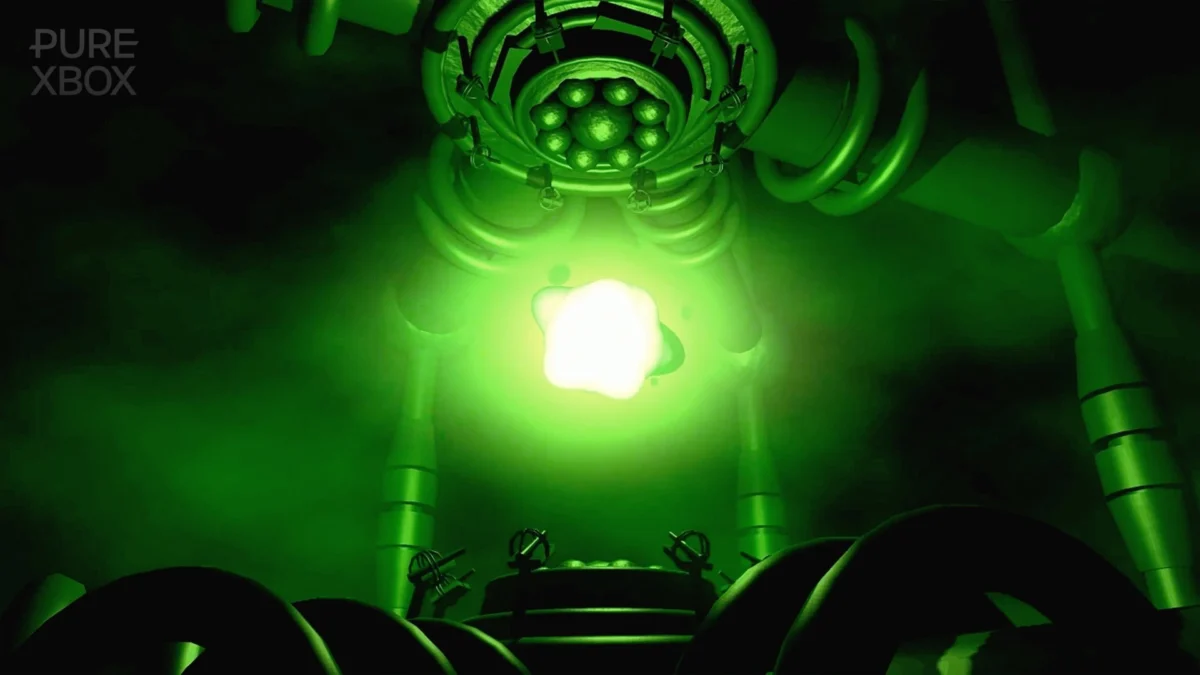
A recent viral discovery by the popular YouTube channel "Boundary Break" has sent ripples through the gaming community, revealing that the iconic "flubber" boot-up sequence of the original Xbox, a staple of early 2000s gaming, was not a pre-rendered video but a meticulously crafted real-time 3D environment. This revelation challenges long-held assumptions about console design and the technical ambitions of Microsoft’s inaugural foray into the console market.
The Genesis of a Revelation: Boundary Break’s Unveiling
The discovery originated from "Boundary Break," a YouTube channel renowned for its unique approach to video game analysis. The channel, operated by its creator, routinely pushes the virtual camera beyond the intended playable areas of games and even system interfaces to expose hidden development secrets, graphical tricks, and the underlying mechanics that power our favorite digital experiences. Their methodology often involves manipulating game engines to free the camera from its programmed constraints, offering a behind-the-scenes look at game development that most players never get to see. Past investigations have uncovered everything from elaborate hidden geometry to placeholder assets and clever shortcuts developers take. One particularly memorable instance involved a "Halo: Combat Evolved" video where, after manipulating the camera at the end of the campaign, it was humorously revealed that Master Chief was wearing a second helmet underneath his primary one, a testament to the layers of abstraction in game design.
This latest "boundary break" focused on the original Xbox’s boot sequence, a short but memorable animation that introduced millions to Microsoft’s console. The channel recently posted a video clip to their X (formerly Twitter) account, which quickly garnered widespread attention, accumulating over 1.2 million views within a short period. The video showcased the original Xbox logo emerging from a pulsating green, viscous liquid—an effect affectionately dubbed "flubber" by fans—but from an entirely new perspective. By breaking the camera free, Boundary Break demonstrated that the entire sequence was being rendered in real-time by the console’s hardware, not played back as a static video file.
Unpacking the Technical Nuance: Real-time vs. Pre-rendered
To fully appreciate the significance of this discovery, it’s crucial to understand the distinction between real-time 3D rendering and pre-rendered video sequences, especially in the context of early 2000s console technology.
Pre-rendered Video: For decades, the industry standard for console boot screens, developer logos, and cinematic intros has been to use pre-rendered video files. These videos are created offline on powerful workstations, often taking hours or even days to render complex scenes. Once complete, they are compressed and stored on the console’s hard drive or game disc. When the console boots up, it simply plays this video file. This approach offers several advantages:
- Consistency: The visual quality is consistent across all consoles, regardless of minor hardware variations or real-time processing loads.
- Resource Efficiency: Playing a video is less CPU/GPU intensive than rendering a complex 3D scene in real-time.
- Simplified Development: Developers don’t need to integrate a full 3D engine into the boot process; they just need a video player.
- Higher Fidelity: Pre-rendering allows for extremely complex lighting, particle effects, and geometry that might be too demanding for real-time hardware, especially two decades ago.
Real-time 3D Rendering: In contrast, real-time 3D rendering involves the console’s CPU and GPU actively generating and displaying 3D graphics on the fly. Every frame is computed and drawn in milliseconds, allowing for dynamic camera movements, interactive elements, and responsiveness. This is the technology that powers gameplay itself.

- Dynamic Possibilities: Real-time rendering allows for dynamic elements, although in the case of the Xbox boot screen, these were not exploited for user interaction. It implies the potential for variations or interactive components if Microsoft had chosen to implement them.
- Showcasing Hardware Power: It is a direct demonstration of the console’s graphical capabilities from the very first moment it powers on.
- Integrated Experience: It suggests a deeper, more integrated approach to the console’s operating system and graphics subsystem, where even the boot process leverages the full rendering pipeline.
The revelation that the Xbox boot screen was real-time means that every time an original Xbox was powered on, its internal hardware—specifically the NVIDIA NV2A GPU (also known as the Xbox GPU) and the Intel Pentium III CPU—was actively processing and drawing the vertices, textures, lighting, and effects that comprised the "flubber" animation. This was a significant engineering feat for its time and stands in stark contrast to the practices of its contemporaries and even many modern consoles.
The Original Xbox: A Technical Powerhouse and Microsoft’s Ambition
The original Xbox launched in North America on November 15, 2001, marking Microsoft’s audacious entry into the highly competitive console market, then dominated by Sony’s PlayStation 2 and Nintendo’s GameCube. Microsoft’s strategy was clear: leverage its immense financial resources and expertise in PC hardware and software to deliver the most powerful console on the market.
Key Hardware Specifications (Original Xbox):
- CPU: 733 MHz Intel Pentium III (customized)
- GPU: 233 MHz NVIDIA NV2A (Xbox GPU), a custom chip based on NVIDIA’s GeForce 3 architecture, highly advanced for its time.
- RAM: 64 MB DDR SDRAM (shared by CPU and GPU), running at 200 MHz.
- Storage: 8 GB hard drive (a first for a console), allowing for game installs, downloadable content, and save files.
At its core, the Xbox was essentially a highly customized PC. This architecture gave it a significant performance advantage over its rivals, particularly in graphical prowess. The NVIDIA GPU was a standout component, capable of advanced pixel shaders and complex lighting effects that were cutting-edge for early 2000s consoles. The inclusion of a hard drive also set it apart, facilitating features like ripped music playback and faster loading times.
Given this context, the decision to implement a real-time 3D boot sequence can be seen as a deliberate statement from Microsoft. It was a subtle yet powerful declaration of the Xbox’s technical superiority and its commitment to pushing the boundaries of console graphics. Rather than simply playing a video, the console was demonstrating its raw rendering capabilities from the very moment of power-on, a "flex" of its hardware muscle to both consumers and competitors. It hinted at the console’s potential for immersive, graphically rich experiences, setting the tone for what players could expect.
The Philosophy Behind the Real-time Boot Sequence
Why would Microsoft engineers opt for such a technically demanding approach for a mere boot screen when a pre-rendered video would have been simpler and less resource-intensive? Several factors might have influenced this decision:
- Technological Showcase: As mentioned, it was a direct demonstration of the console’s powerful hardware. It allowed Microsoft to immediately differentiate the Xbox from its competitors, visually proving its advanced rendering capabilities.
- Engineering Prowess: It showcased Microsoft’s engineering talent and their ability to integrate a full 3D rendering pipeline into the console’s low-level boot process. This was a complex task, requiring careful optimization to ensure a smooth, glitch-free experience every time.
- Future-Proofing/Flexibility: A real-time engine, even for a boot sequence, offers inherent flexibility. While not utilized in the original Xbox’s lifespan, such an architecture could theoretically allow for dynamic boot sequences, personalized intros, or even subtle updates without needing to replace a large video file.
- Aesthetic and Brand Identity: The "flubber" effect itself was unique and memorable, contributing significantly to the Xbox’s early brand identity. Real-time rendering might have allowed for a level of organic fluidity and subtle variations that a compressed video might not perfectly capture, ensuring the visual impact was always pristine.
- Integration with OS: It suggests that the console’s operating system was designed from the ground up to deeply integrate with the graphics hardware, enabling the GPU to be active and utilized even before a game fully loads. This could have implications for overall system responsiveness and efficiency.
It’s also plausible that the engineering team viewed this as an exciting challenge, a way to imbue the console with a distinct technical signature from its very first moments of operation.

Public Reaction and Broader Implications
The response to Boundary Break’s video has been overwhelmingly positive, marked by a blend of nostalgia, awe, and genuine surprise. Social media users expressed sentiments ranging from "this feels like being told the tooth fairy isn’t real" to proclaiming it "the peak of all boundary breaks." This widespread reaction underscores the enduring appeal of uncovering hidden truths about beloved pieces of technology and media.
The revelation taps into a collective sense of wonder about the intricacies of game development and console engineering. For many, the original Xbox boot screen is a potent symbol of their youth and early gaming experiences. To learn that such a fundamental and seemingly simple element was far more complex than imagined adds a new layer to those fond memories. It transforms a passive viewing experience into an active, real-time demonstration of raw hardware power, retroactively enhancing the perception of the console’s capabilities.
This discovery also has broader implications for video game history and preservation. As technology advances, understanding the design philosophies and technical choices made during earlier eras becomes increasingly important. Revelations like this provide invaluable insights into the engineering challenges and creative solutions employed by developers and hardware manufacturers. They remind us that even seemingly minor details can hold significant technical and historical weight. For future generations of historians, enthusiasts, and developers, such "boundary breaks" offer a deeper, more accurate understanding of how these foundational systems truly functioned.
Furthermore, it highlights the continued relevance of gaming archaeology and the work of channels like Boundary Break. In an age where digital media is often ephemeral, the meticulous examination of code, assets, and hardware behavior helps to document and preserve the intricate legacy of video games. These investigations not only entertain but also educate, demystifying complex technical processes and celebrating the ingenuity behind our favorite interactive experiences.
The Enduring Legacy of "Boundary Breaking"
The original Xbox boot-up screen revelation is just one example in a long tradition of "boundary breaking" in gaming. From discovering hidden rooms in classic Atari games to uncovering unused content in modern blockbusters, players and enthusiasts have always been driven to look beyond the surface. This curiosity is fundamental to understanding the creative process, the technical limitations, and the sheer artistry involved in creating virtual worlds.
These investigations serve multiple purposes:
- Historical Documentation: They help document the evolution of game development techniques.
- Educational Value: They provide tangible examples of how games are constructed, offering insights for aspiring developers.
- Community Engagement: They foster a sense of shared discovery and appreciation among gaming enthusiasts.
- Artistic Appreciation: They reveal the "scaffolding" behind the illusion, often deepening appreciation for the developers’ craft.
The original Xbox’s real-time boot sequence now stands as a testament to Microsoft’s ambitious entry into the console market and the impressive capabilities of early 2000s hardware. It underscores a design philosophy that prioritized showcasing raw power and technical integration from the very first moment a player powered on their console. This viral discovery not only reignites nostalgia but also enriches our understanding of gaming history, proving that even after two decades, there are still fascinating secrets waiting to be unearthed within the digital artifacts of our past.