


The gaming landscape kicked off August with a significant new addition to Xbox Game Pass: Beast of Reincarnation. This highly anticipated title officially launched on August 1st, immediately becoming accessible to subscribers of Xbox Game Pass Ultimate and PC Game Pass. However, its debut was marked by a rapid developer response to initial performance hiccups, with an emergency 32GB patch rolled out just six hours post-launch to address reported framerate drops and stutters across both Xbox Series X and Series S consoles. This swift action underscores the evolving dynamics of game launches in the modern era, particularly for titles making a day-one appearance on subscription services.
The Launch of Beast of Reincarnation on Xbox Game Pass
Beast of Reincarnation, a title that had been generating a moderate level of anticipation within the Xbox community, landed on Game Pass as a day-one release, a testament to Microsoft’s continued strategy of bolstering its subscription service with immediate access to new games. This model offers tremendous value to players, allowing them to dive into fresh experiences without an additional purchase, and provides developers with a vast audience from day one. The game’s inclusion was part of the usual monthly Game Pass refresh, drawing immediate attention from a broad player base eager to explore new content. As with many new releases, critical reviews and detailed performance analyses were embargoed until the launch day, ensuring that all information became available concurrently with the game’s public release. This synchronized information rollout is standard practice in the industry, designed to prevent pre-release spoilers and ensure a level playing field for reviewers.
Initial Performance Assessment: Xbox Series X vs. Xbox Series S (Pre-Patch)
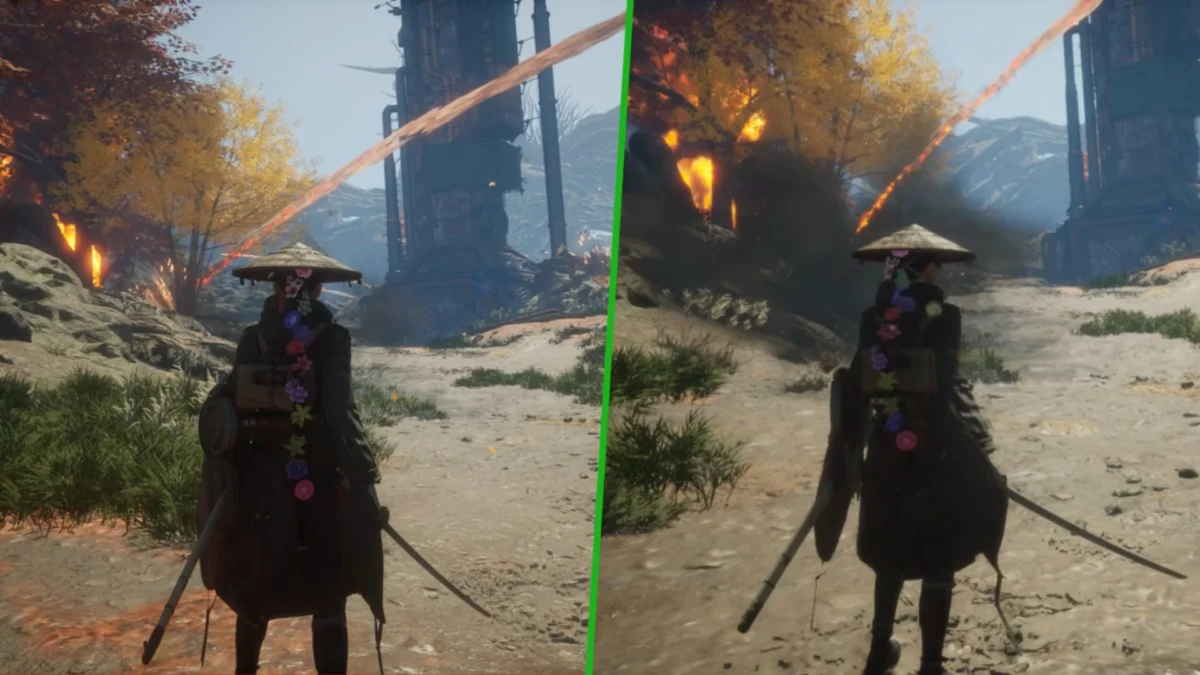
Following the lifting of the review embargo, independent technical analysis channels were quick to publish their findings regarding Beast of Reincarnation‘s performance across Microsoft’s current-generation consoles. Notably, Fuzion Xbox Testing, a prominent YouTube channel specializing in console performance comparisons, promptly released its detailed side-by-side analysis of the Xbox Series X and Xbox Series S versions. It is crucial to note that all initial footage and performance metrics gathered by Fuzion Xbox Testing, and indeed by other early reviewers, were based on the game’s pre-patch build. This distinction is vital for understanding the initial reception and the subsequent improvements.
Xbox Series X Performance Breakdown (Pre-Patch)
On the more powerful Xbox Series X, Beast of Reincarnation aimed for a high fidelity experience, targeting a 4K resolution output at 60 frames per second (FPS) in both its designated Quality and Performance modes. While the precise internal rendering resolutions were not immediately detailed, Fuzion Xbox Testing’s pre-patch analysis revealed discernible differences between these two modes.
In Quality Mode, which typically prioritizes visual richness and graphical detail, the game’s framerate was observed to fluctuate considerably, often ranging between 45 and 60 FPS. While this range is generally playable, the inconsistency can lead to a less smooth experience, particularly during intense action sequences or in visually dense environments. Such fluctuations are often indicative of demanding graphical assets, complex lighting, or unoptimized rendering pipelines that strain the console’s GPU or CPU at certain points.

Conversely, the Performance Mode on Xbox Series X, designed to maintain a consistent high framerate, largely stuck to the coveted 60 FPS mark in the pre-patch footage. This mode usually achieves its stability by making concessions in graphical settings, such as reducing texture quality, shadow detail, or draw distance, or by employing dynamic resolution scaling more aggressively. Despite these potential compromises, both modes were described as looking visually impressive, suggesting that the core art direction and asset quality were strong. Based on this initial pre-patch assessment, the Performance Mode was generally recommended for players prioritizing a smoother gameplay experience, even if it meant a slight reduction in absolute visual fidelity.
Xbox Series S Performance Breakdown (Pre-Patch)
The Xbox Series S, designed as a more affordable, digital-only entry point into the current generation, presented a different set of performance characteristics. On this console, Beast of Reincarnation exhibited a noticeably softer visual presentation compared to its Series X counterpart. This difference in visual clarity is expected, as the Series S typically targets lower resolutions, often 1080p or 1440p, to achieve comparable framerates with the Series X’s higher resolution outputs.
Similar to the Series X, the Series S version also offered both Quality and Performance modes. In Performance Mode, the game largely managed to reach the 60 FPS target, providing a relatively fluid gameplay experience. However, the pre-patch footage for Quality Mode on the Series S mirrored the Series X’s experience, with framerates often bouncing between 45 and 60 FPS. This suggests that the optimizations required for the more demanding Quality Mode were still a work in progress across both console variants, leading to similar patterns of inconsistency despite their vastly different hardware capabilities and target resolutions. The "softness" in visuals on the Series S is a direct consequence of its lower native resolution target, which often results in less sharp textures and details when viewed on larger displays.
The Critical Day-One Patch and Developer Responsiveness
Perhaps the most significant development on launch day was the immediate deployment of an emergency 32GB patch for Beast of Reincarnation. This substantial update, released merely six hours after the game went live, was explicitly designed to address critical FPS drops and persistent stuttering issues that had been reported by early players and observed in initial technical analyses. The sheer size of the patch (32GB) indicates that it likely encompassed a wide range of fixes, potentially including re-optimized assets, shader compilation improvements, memory management enhancements, and general code stability adjustments.
Understanding the Patch’s Impact
The rapid response from the development team behind Beast of Reincarnation highlights a growing trend in the gaming industry: the ability to deploy urgent fixes post-launch. In an era of constant connectivity and digital distribution, developers can monitor player feedback and performance data in real-time, allowing for swift corrective action. For Beast of Reincarnation, the primary issues identified were "pesky stutters" and "FPS drops." Stuttering often occurs when the game engine struggles to load assets quickly enough, compiles shaders on the fly, or experiences sudden spikes in CPU or GPU usage. FPS drops, on the other hand, are more general indicators of the system being overloaded.
The emergency patch’s stated goal was to mitigate these issues. While immediate post-patch comparative footage was not available at the time of this report, the very existence of such a significant and rapid update strongly implies a committed effort to enhance the player experience. A successful patch would mean smoother framerates, reduced visual hitches, and a more consistent gameplay flow, particularly in moments where the pre-patch version struggled. This responsiveness is crucial for a day-one Game Pass title, as first impressions can significantly influence a game’s long-term perception and player retention.
Industry Context: Day-One Patches
Day-one patches have become an almost ubiquitous feature of modern game releases. They serve multiple purposes: fixing bugs discovered late in development, incorporating last-minute optimizations, and, as seen with Beast of Reincarnation, addressing critical performance issues identified during the final stages of testing or immediately after launch. While some players lament the necessity of large patches, they are often a pragmatic solution to the immense complexity of modern game development. The alternative—delaying a game indefinitely until every minor bug is squashed—is often not feasible from a business perspective. Instead, developers aim for a stable core experience at launch and use patches to refine and perfect it. The speed of the Beast of Reincarnation patch, however, sets it apart, demonstrating an exceptionally agile development and publishing pipeline.
Community Reaction and Post-Patch Experience
Prior to the patch, initial complaints regarding performance, particularly stuttering, began to surface within player communities on forums and social media platforms. Such feedback is typical for any game launching with technical hitches. However, the subsequent deployment of the 32GB patch was met with cautious optimism. While concrete, widespread community consensus on the post-patch performance was still forming, the very act of a developer addressing critical issues within hours of launch can significantly bolster player confidence. It signals that player experience is a priority and that feedback is being actively monitored and acted upon. For a game released directly onto a subscription service like Game Pass, a quick resolution to technical problems can mean the difference between widespread adoption and early abandonment.
The Broader Significance: Game Pass and Console Optimization
The case of Beast of Reincarnation offers valuable insights into several contemporary trends in the video game industry.
Game Pass as a Platform for Day-One Releases: Microsoft’s commitment to bringing new titles directly to Game Pass subscribers on launch day is a cornerstone of its strategy. This approach offers immense value to players, democratizing access to new content. However, it also places unique pressures on developers. A day-one Game Pass launch means the game is immediately exposed to millions of players, making first impressions critically important. Performance issues, even if quickly resolved, can generate negative buzz that takes time to overcome. The success of Beast of Reincarnation on Game Pass will ultimately hinge not just on its core gameplay and content, but also on the stability and polish it achieves after the initial launch period.
Optimizing for the Xbox Ecosystem: Series X and Series S: The persistent challenge of optimizing games for both the Xbox Series X and the less powerful Xbox Series S is again highlighted by Beast of Reincarnation‘s launch. While the Series X typically targets native 4K, the Series S often aims for 1080p or 1440p. Balancing visual quality and performance across these two distinct hardware profiles requires considerable development effort. The fact that both consoles experienced similar pre-patch framerate inconsistencies in Quality Mode suggests that certain core optimizations were either incomplete or insufficient for the initial build, requiring a comprehensive update. Developers must carefully manage asset streaming, draw distances, lighting, and post-processing effects to ensure a satisfying experience on both machines, often leading to compromises in visual fidelity on the Series S to maintain a target framerate. The expectation from players is that even the Series S version should run smoothly, albeit at a lower resolution and with some graphical tweaks.
In conclusion, Beast of Reincarnation‘s launch on Xbox Game Pass was a textbook example of a modern game release – eagerly anticipated, immediately accessible, and swiftly refined. The initial performance analysis, provided by channels like Fuzion Xbox Testing, offered a candid look at the pre-patch state, revealing expected differences between the Series X and Series S, alongside shared framerate inconsistencies. However, the rapid deployment of a significant emergency patch just hours after launch stands as a testament to the development team’s dedication to player experience and the agile nature of contemporary game publishing. As players now dive into the post-patch version of Beast of Reincarnation, the focus will shift from initial technical snags to the game’s core gameplay and narrative, solidifying its place within the vast Xbox Game Pass library.