


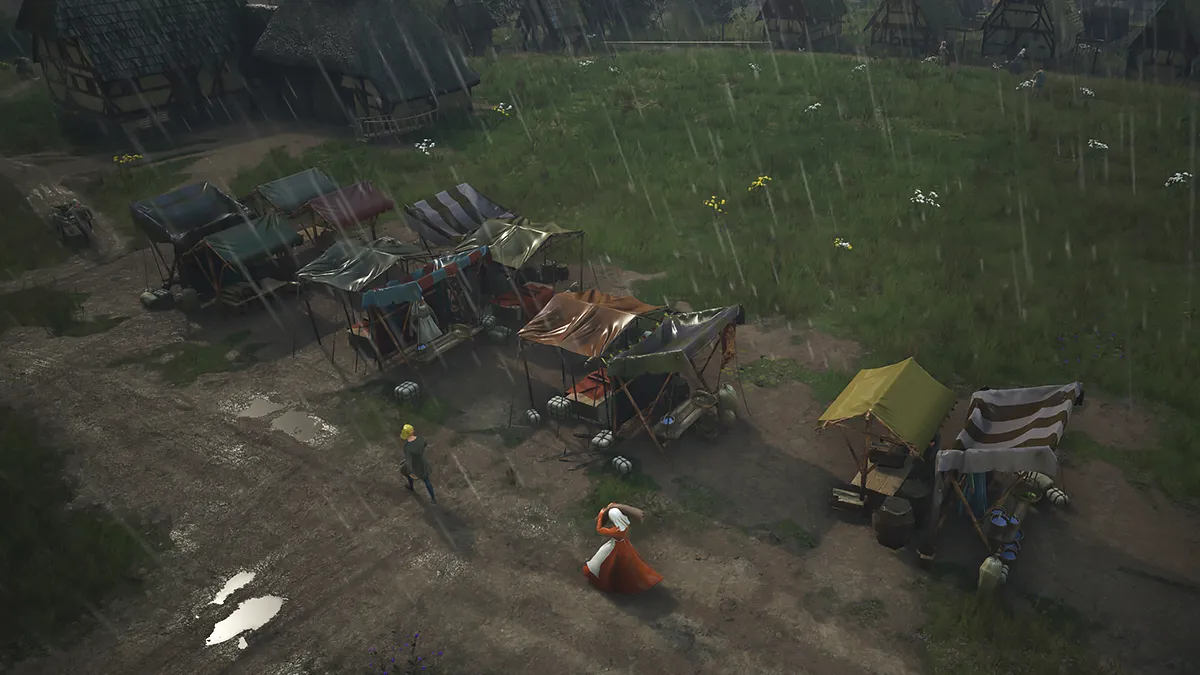
The immersive medieval city-builder and real-time strategy game, Manor Lords, has captivated players with its blend of historical realism, intricate resource management, and engaging tactical combat. Released into Early Access, the game presents a complex tapestry of village building, economic development, and military expansion, all set against a backdrop of feudal Europe. While its strategic depth and attention to detail have garnered widespread acclaim, one particular logistical challenge frequently perplexes new and veteran players alike: the persistent issue of abandoned supplies and materials cluttering the landscape. These seemingly innocuous piles of logs, planks, or other goods, often left behind after the demolition of a structure or simply deposited in inconvenient locations, pose significant impediments to efficient town planning and resource flow. This article delves into the mechanics behind this puzzling phenomenon and outlines advanced strategies for players to effectively manage and clear these exposed resources, thereby enhancing their settlement’s productivity and aesthetic order.
Background: The Intricacies of Manor Lords‘s Resource Economy
Manor Lords distinguishes itself through a granular approach to resource management, where every unit of timber, stone, or food has a physical presence and must be manually transported by villagers. This design choice contributes immensely to the game’s realism, illustrating the tangible effort involved in medieval logistics. However, it also introduces complexities not always present in more abstract city-builders. Resources left unattended in the open are not merely an eyesore; they are subject to environmental degradation, diminishing in value and quantity over time due to exposure to the elements. More critically, these stray items can physically block the construction of new buildings, halting vital development projects and frustrating expansion plans.
The core dilemma arises from a perceived inefficiency in the game’s AI pathing and prioritization system. Players frequently observe idle villagers meandering through their settlements, seemingly oblivious to critical piles of exposed goods, even when a storehouse or granary is conveniently located nearby. This creates a disconnect between the player’s strategic intent (clear the site, build here) and the villagers’ automated actions, leading to bottlenecks and lost productivity. Understanding the underlying logic of worker assignment and transport routes is paramount to overcoming these logistical hurdles.
The Logistical Conundrum: Why Supplies Linger
When a structure is demolished in Manor Lords, its constituent materials—such as timber, stone, or planks—are often left scattered on the ground. Similarly, logging operations, hunting expeditions, or even trade routes can leave individual logs or goods exposed far from designated storage facilities. The game’s interface provides a helpful warning icon at the top of the screen when "exposed goods" are detected, signaling a potential issue. The natural assumption is that assigning villagers to a Storehouse (for manufactured goods and raw materials like planks, stone, hides) or a Granary (for food items) would prompt them to quickly collect and move these items. Yet, this often proves not to be the case, leading to extended periods where resources remain exposed.
This delay can be attributed to several factors inherent in the game’s simulation:

- Worker Prioritization: Villagers assigned to specific workplaces (e.g., a Sawpit, a Tannery) will prioritize their assigned tasks. Unassigned "free" families or those working in general logistics buildings (Storehouse, Granary, Logging Camp) are responsible for transport. However, even these free workers may have internal priorities, potentially fetching resources for a new construction project before clearing debris, or simply being geographically distant from the exposed goods.
- Pathfinding Efficiency: The game’s pathfinding system, while robust, relies on established infrastructure. A long, winding, or unpaved path between the exposed goods and the relevant storage building can significantly increase travel time, effectively reducing the frequency of collection trips.
- Oxen Availability: For heavy resources like logs, the use of oxen is crucial. If all available oxen are currently engaged in other tasks (e.g., transporting timber from a distant logging camp, delivering resources for construction), the movement of new logs will be delayed. Oxen are a shared resource, and their efficient deployment is a cornerstone of early game logistics.
- Quantity vs. Urgency: The game’s AI might not always perceive a small pile of leftover resources as an urgent task if other, larger-scale operations (like supplying a newly built sawpit with logs) are underway.
The consequences of prolonged exposure are two-fold: financial loss due to spoilage/degradation, and strategic blockage, preventing the construction of new essential buildings. This necessitates proactive player intervention to maintain a smooth flow of goods and an orderly settlement.
Strategies for General Goods: Optimizing Storehouse and Granary Operations
For most non-timber resources, including planks, stone, hides, iron ore, and all food items, the designated storage facilities are the Storehouse and the Granary, respectively. When these goods are left exposed, the primary goal is to ensure their swift relocation.
-
Increase Worker Assignments: The most direct approach is to assign more families to the relevant storage building (Storehouse or Granary). Each assigned family will dedicate one villager to working at the building, and the remaining family members (if available) will act as general laborers, often assisting with transport. Increasing the workforce directly translates to more hands available for hauling. However, this must be balanced against the needs of other critical industries. Pulling too many workers from farming, crafting, or timber production can create new bottlenecks elsewhere in the supply chain. A strategic approach might involve temporarily reassigning workers until the immediate clearance task is complete, then returning them to their primary roles.
-
Enhance Road Infrastructure: The importance of a well-planned road network cannot be overstated. Paved roads not only increase the movement speed of villagers and oxen but also provide clear, direct paths for AI pathfinding. Ensure that any area prone to exposed goods (e.g., near construction sites, demolition zones, or trade posts) is well-connected to your central Storehouse and Granary via an efficient road system. Upgrading dirt paths to paved roads, especially for high-traffic routes, can significantly reduce transport times and improve overall logistical efficiency. This fundamental infrastructure investment pays dividends across all aspects of your economy.
-
Targeted Clearance with "Limit Work Area": This is arguably the most powerful tool for expedited clearance of general goods. The "Limit Work Area" function, accessible via the interface of individual buildings, allows players to designate a specific zone where workers from that building will focus their efforts.
- Accessing the Feature: Select your Storehouse or Granary. In its building interface, locate the "Limit Work Area" button (often represented by a square icon or a similar visual cue).
- Defining the Area: Clicking this button will bring up a circular or square overlay on the map. You can adjust its size and position. Carefully place this work area so that it encompasses only the exposed goods you wish to clear, and ideally, also includes the Storehouse/Granary itself if it’s within reasonable range.
- Forcing Prioritization: By limiting the work area, you are effectively telling the assigned workers, "Do not collect resources or transport goods outside this specific zone." This forces them to prioritize the exposed items within that zone, directing their efforts to collect and move them to storage.
- Temporary Measure: It is crucial to remember that this is a temporary, highly targeted solution. Once the exposed goods have been cleared, you must deselect the "Limit Work Area" option (often labeled "Clear Work Area" or simply by clicking the same button again). Failing to do so will severely restrict the Storehouse/Granary’s ability to operate efficiently across your entire settlement, as its workers will ignore all resources outside the defined zone. This can lead to new logistical problems and resource shortages elsewhere.
Strategies for Timber and Raw Logs: Managing Logging Camp Operations
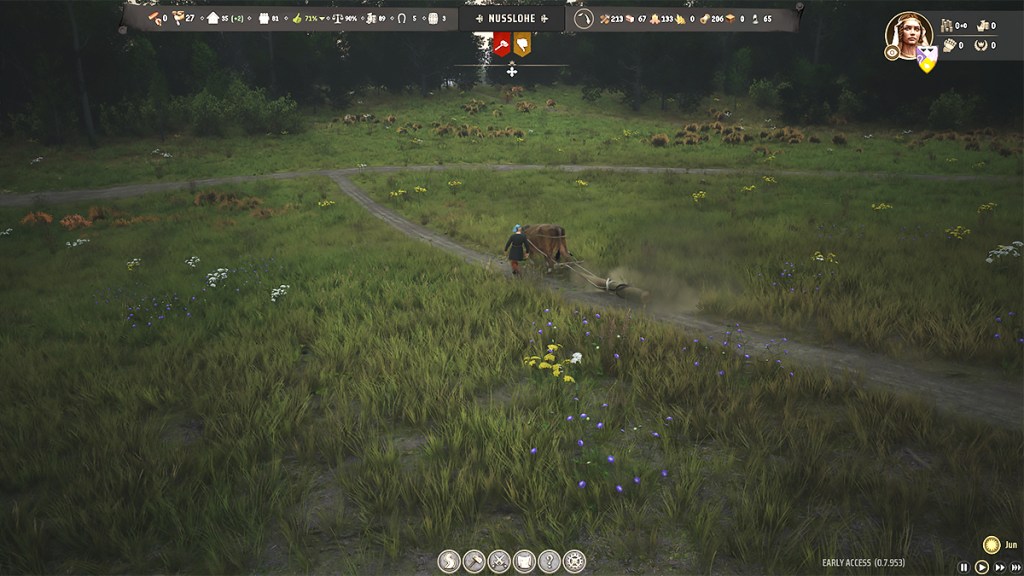
Logs are a unique resource in Manor Lords, fundamental for construction and crafting. Unlike other goods, they are typically stored at a Logging Camp or a Sawpit’s immediate storage, not a general Storehouse. When logs are left exposed—perhaps from a demolished building, a re-zoned forest, or an abandoned logging operation—they also require specific handling.
-
Targeted Clearance with "Limit Work Area" (Logging Camp): Similar to general goods, the "Limit Work Area" function is invaluable for clearing stray logs.
- Accessing and Defining: Select your Logging Camp. Click "Limit Work Area." Position the circular zone to encompass the exposed logs and the Logging Camp itself.
- Forced Collection: Workers assigned to the Logging Camp, along with their associated oxen, will then focus exclusively on collecting and transporting logs within that designated area to the camp’s storage. This is particularly effective for large piles of logs that are blocking critical construction sites.
- Resetting the Area: As with Storehouses and Granaries, remember to "Clear Work Area" once the logs are collected to allow the Logging Camp to resume its broader logging operations.
-
Strategic Deployment of Logging Camps: If a significant number of logs are consistently left far from your existing Logging Camp, consider building a new, temporary Logging Camp closer to the source of the exposed timber.
- Cost-Benefit Analysis: Building a new camp requires an initial investment of timber and a family assignment. However, if the volume of exposed logs is substantial, or if the location is critical for immediate construction, the efficiency gained from a closer camp can outweigh the initial cost.
- Temporary Use: Once the logs are cleared, you can either keep the new camp operational for further logging in the area or demolish it to free up the assigned family and recover some resources.
-
Manipulating Worker Assignments to Free Oxen and Laborers: This is a less intuitive but highly effective trick for log clearance, particularly when oxen are the bottleneck.
- Un-assign Workers from Logging Camps: Temporarily un-assign one or more families from an existing Logging Camp. This action has two immediate effects:
- Frees up Oxen: Any oxen previously tied to that Logging Camp will become "free." Free oxen are then available for general transport tasks, including moving exposed logs.
- Creates Idle Villagers: The un-assigned family members become "idle villagers." Idle villagers are a general labor pool and will often prioritize unassigned transport tasks, such as moving logs to the nearest available storage (which might be another Logging Camp or even a Sawpit if it has space).
- Combined Effect: This dual effect—freeing oxen and increasing the general labor pool—can dramatically expedite the collection of scattered logs.
- Re-assign When Done: Once the logs are cleared, remember to re-assign the families back to their Logging Camps to resume regular timber production. This micro-management is crucial for maintaining overall resource balance.
- Un-assign Workers from Logging Camps: Temporarily un-assign one or more families from an existing Logging Camp. This action has two immediate effects:
The Broader Impact: Efficiency, Economy, and Player Experience
Efficiently managing exposed supplies in Manor Lords extends far beyond merely tidying up the settlement. It has profound implications for the overall health and growth of your medieval manor:
-
Economic Stability: Every lost resource due to weather degradation represents a direct economic loss. Whether it’s planks that could have built more Burgage Plots or food that could have sustained your population, these losses accumulate. Proactive clearance ensures that all valuable resources are safely stored and available for use, contributing to a more robust and stable economy.
-
Accelerated Development and Expansion: Construction sites are the engines of growth. When these sites are blocked by lingering resources, development grinds to a halt. The ability to swiftly clear these obstructions means new buildings can be erected faster, housing more villagers, producing more goods, and expanding your influence more rapidly. This directly impacts your ability to meet settlement level requirements and unlock advanced technologies.
-
Improved Player Experience: Few things are as frustrating in a city-builder as having your carefully laid plans thwarted by unresponsive AI or inexplicable delays. Mastering these logistical strategies empowers players, giving them a greater sense of control and reducing moments of irritation. It transforms a perceived game flaw into a solvable challenge, enhancing the overall enjoyment and strategic depth of Manor Lords.

-
Strategic Foresight: The need for active supply management encourages players to think strategically about their settlement layout from the outset. Planning roads, anticipating demolition needs, and locating storage facilities in optimal positions become critical considerations, fostering a deeper engagement with the game’s core mechanics. For instance, knowing that logs will be left behind after clearing a forest for farmland might prompt a player to build a temporary Logging Camp nearby before the clearing begins, streamlining the process.
Community Engagement and Future Outlook
The challenges of supply management are a frequent topic of discussion within the Manor Lords community. Players actively share tips, tricks, and observations, contributing to a collective understanding of the game’s intricate systems. This collaborative problem-solving is a hallmark of early access titles, where player feedback often influences future development.
As Manor Lords continues its journey through Early Access, it is plausible that the developers, Slavic Magic, will introduce further optimizations to the AI and logistics systems. Potential future updates might include:
- More nuanced AI prioritization for unassigned villagers, perhaps with a dedicated "cleanup" task.
- Enhanced visual cues for blocked construction sites or critical exposed resources.
- Improvements to the "Limit Work Area" interface for more intuitive use.
- Additional options for managing oxen, such as assigning them specifically to transport duties.
However, even with potential future enhancements, the fundamental principles of proactive planning, strategic worker assignment, and intelligent use of the "Limit Work Area" function will remain cornerstone skills for any aspiring lord.
Conclusion: Mastering the Art of Medieval Logistics
In Manor Lords, the seemingly trivial problem of abandoned supplies is, in fact, a microcosm of the larger logistical challenges inherent in managing a medieval settlement. While the game’s realism can sometimes lead to moments of perplexity, it also offers powerful tools for players to assert control over their burgeoning economies. By strategically employing worker assignments, optimizing road networks, and skillfully utilizing the "Limit Work Area" feature for both general goods and timber, players can transform cluttered landscapes into efficient hubs of production and development. Mastering these nuances not only ensures that valuable resources are saved from decay but also guarantees that your grand architectural visions can be realized without delay, paving the way for a prosperous and orderly manor. The path to a thriving dominion in Manor Lords is as much about managing the small details of logistics as it is about grand strategic planning, and efficient supply clearance is a critical step on that journey.