


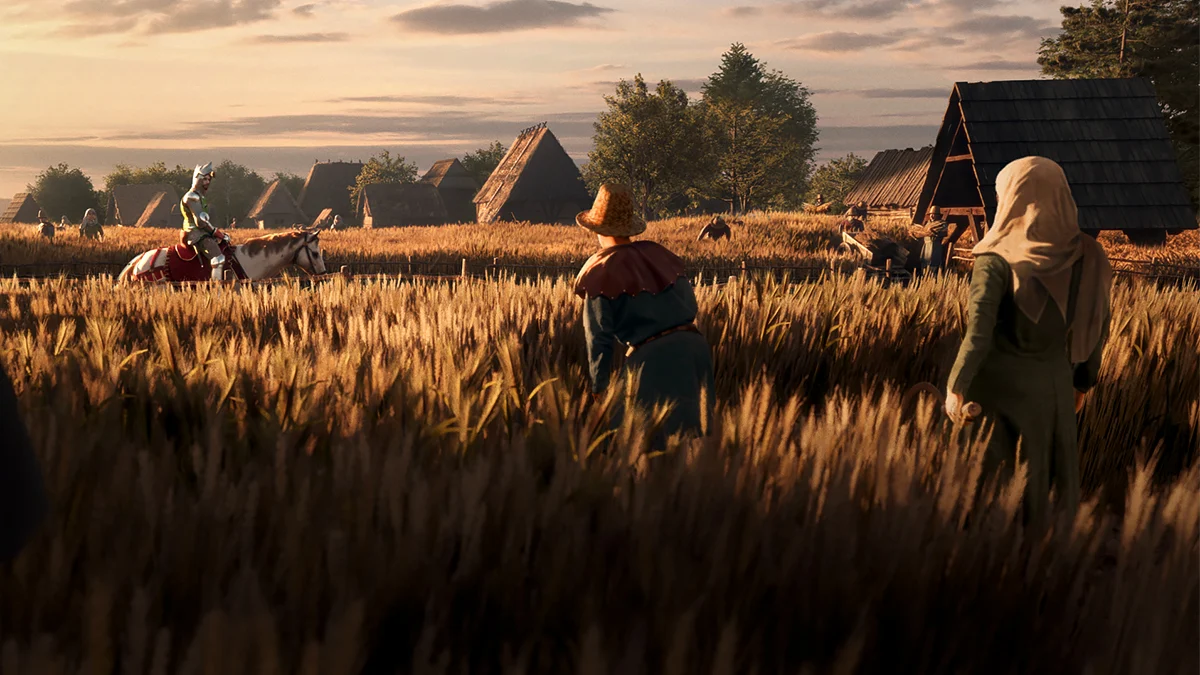
Farming emerges as an indispensable activity from the nascent stages of a settlement in Manor Lords, serving as the foundational pillar for sustained survival and eventual prosperity. Beyond merely provisioning sustenance for digital villagers, an efficient agricultural system fuels economic growth, supports population expansion, and provides the essential resources for the community’s well-being and leisure, including the production of highly valued ale. The strategic management of land, crops, and labor in Manor Lords reflects historical medieval agrarian practices, presenting players with a nuanced challenge that is both historically immersive and strategically deep.
The Foundational Role of Agriculture in Settlement Development
At the core of any thriving medieval settlement lies a robust food supply. In Manor Lords, this reality is starkly presented, especially during the perilous early game phases. Without adequate food reserves, particularly to weather the unforgiving winter months, a burgeoning village can quickly face famine, leading to dwindling morale, disease, and ultimately, the collapse of the settlement. Wheat, or ‘Emmer’ as it is historically designated within the game’s lexicon, stands as the paramount primary crop. Its cultivation is directly linked to the production of bread, the staple foodstuff that directly impacts villagers’ hunger levels and overall satisfaction.
The initial focus on wheat is not merely about immediate consumption; it is a critical strategic imperative. Unlike other resources, food production is inherently seasonal. The absence of harvestable crops during winter necessitates meticulous planning and the accumulation of significant surpluses during the autumn months. To convert raw grain into a consumable form, essential processing structures are required: a Windmill to mill grain into flour and a Communal Oven (or later, a Bakery) to bake flour into bread. Establishing these early in the game ensures a continuous food chain, safeguarding the populace against the harsh realities of a medieval winter. Once a stable wheat supply and its processing infrastructure are secured, strategic diversification into other crops, such as Barley for ale production, becomes viable, contributing to both villager morale and potential trade revenue.
Understanding Crop Types and Their Strategic Significance
Manor Lords incorporates a concise yet impactful selection of crops, each with distinct uses and cultivation considerations:
- Emmer (Wheat): As previously noted, Emmer is the primary grain for food production. It is ground into flour and baked into bread, forming the backbone of a settlement’s diet. Its consistent yield and universal demand make it the most critical early-game crop. Optimal cultivation in fertile areas is paramount for maximizing yields and ensuring food security.
- Barley: This grain is primarily cultivated for the production of ale. While not a direct food source in the same manner as wheat, ale plays a crucial role in maintaining villager morale and overall happiness. A steady supply of ale can prevent unrest and contribute to a sense of well-being, which in turn boosts productivity. Surplus ale can also become a valuable trade commodity, generating regional wealth.
- Flax: Unlike the grains, Flax is a non-food crop, cultivated for its fibers. These fibers are processed into linen, which is then used to craft clothing. Providing clothing to villagers not only improves their living standards but also contributes to the regional supply chain and opens avenues for trade. Flax cultivation introduces an important non-food agricultural dimension, diversifying the settlement’s economy.
- Rye: Often considered a more resilient grain, Rye typically thrives in poorer soil conditions compared to wheat. While it can also be used for bread production, its primary strategic advantage lies in its adaptability. In regions with less fertile land, or as part of a robust crop rotation strategy, Rye can provide a reliable alternative grain source, mitigating the risks associated with monoculture and varying soil qualities. Its ability to tolerate harsher conditions makes it a valuable late-game option for expanding agricultural output into less ideal territories.
Essential Agricultural Infrastructure
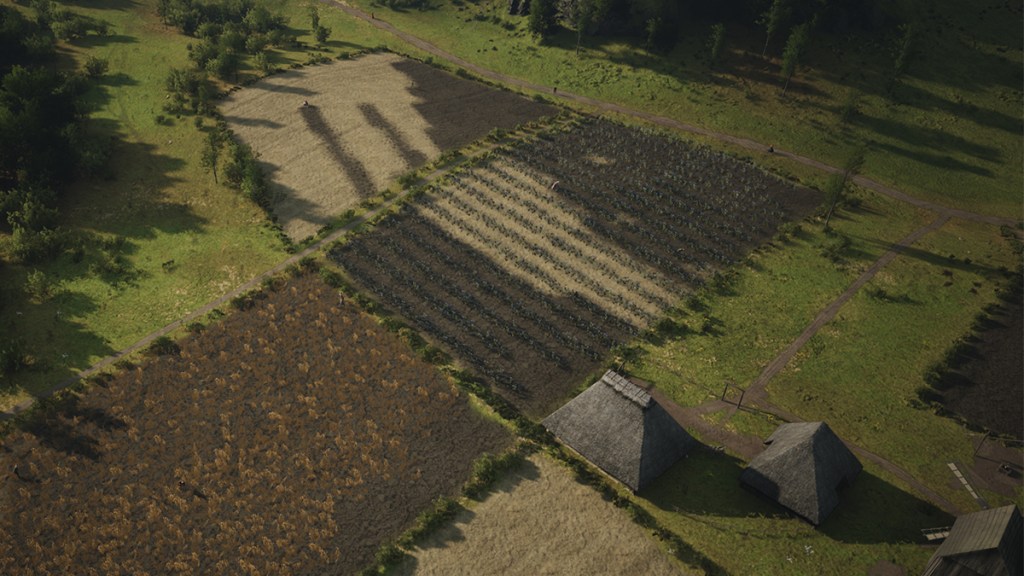
Effective farming extends beyond merely planting seeds; it requires a network of supporting structures to process, store, and distribute agricultural products.
- Farmhouse: This is the central hub of all farming operations. Assigning families to the Farmhouse enables them to plow fields, sow seeds, harvest crops, and manage livestock. Upgrading the Farmhouse can increase worker efficiency or allow for more families to be assigned, directly impacting agricultural output. Multiple farmhouses might be necessary for larger settlements managing numerous fields.
- Windmill: A crucial processing building, the Windmill converts raw grain (Wheat or Rye) into flour. Its location relative to fields and residential areas can impact efficiency. The speed of flour production directly bottlenecks bread output, making the Windmill a vital link in the food supply chain.
- Communal Oven/Bakery: After flour is produced, it must be baked into bread. The Communal Oven is an early-game structure where villagers can collectively bake bread. As settlements grow, upgrading to a dedicated Bakery (often a Burgage Plot extension) can streamline bread production, allowing assigned families to continuously bake and distribute bread more efficiently, moving away from manual villager input.
- Granary: While the general Storehouse can hold all types of goods, a dedicated Granary is specialized for storing food items, particularly raw grain and processed food like bread. Constructing Granaries near fields and processing facilities reduces transportation times and provides ample storage to prevent spoilage and ensure reserves for winter. Efficient storage is as critical as efficient production.
- Cattle Pasture: Though not directly a crop-producing structure, cattle pastures are intrinsically linked to sustainable farming. Livestock (cattle, sheep) can provide meat, hides, and wool, but crucially, their manure can be used to fertilize fields. Integrating animal husbandry with crop farming through a "mixed farming" approach can significantly enhance soil fertility and crop yields over time, closing the nutrient loop in a historically accurate manner.
Navigating Soil Fertility and Crop Rotation
One of the most realistic and challenging aspects of farming in Manor Lords is the dynamic nature of soil fertility. Unlike many city-builders where resources are static, agricultural land in Manor Lords degrades with continuous use. This mechanic necessitates strategic planning and a deep understanding of crop rotation.
To assess land suitability, players can access the "Farming" tab in the Construction menu. This overlay reveals a color-coded map indicating fertility levels for Emmer, Flax, Barley, and Rye. Bright green denotes highly fertile land, ideal for specific crops, while orange and red areas signify low fertility, best avoided for cultivation or reserved for resilient crops like Rye. This visual guide is indispensable for optimal field placement.
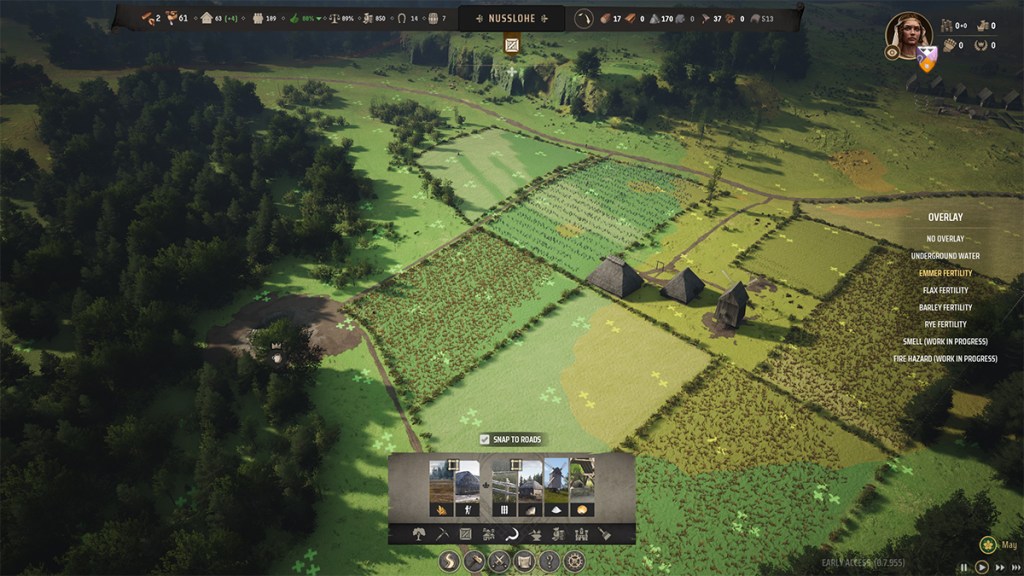
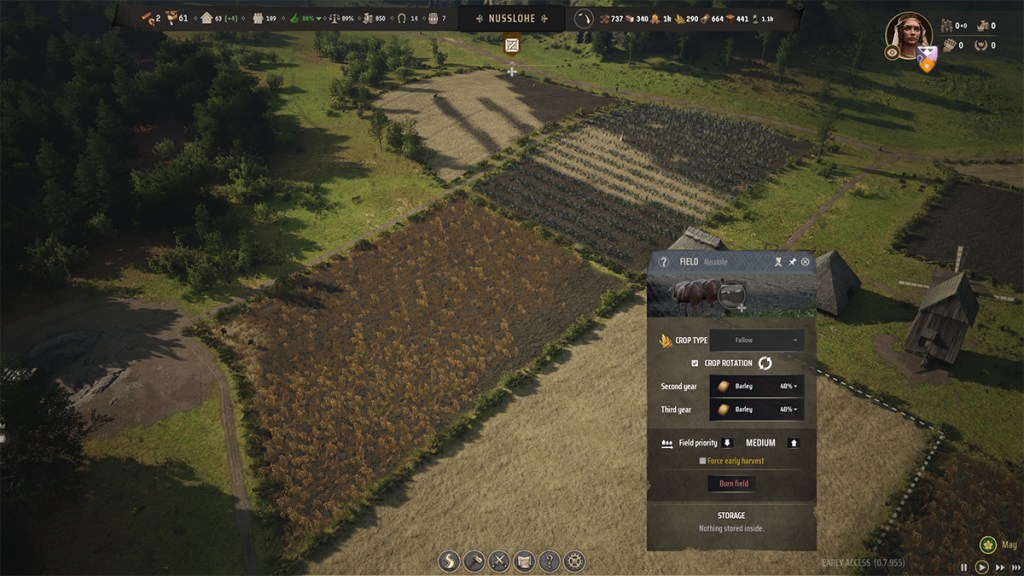
The game introduces a three-year crop rotation cycle to combat fertility depletion. This system allows players to schedule a field’s activity over three agricultural seasons. The most effective strategy involves letting a field lie "fallow" for at least one year within this cycle. A fallow field is left uncultivated, allowing the soil to naturally recover its nutrients and fertility. While this means sacrificing a year’s yield from that particular plot, the long-term benefits of sustained high yields from the remaining fields far outweigh the temporary reduction in output.
Fields in Manor Lords are measured in "morgen," an antiquated unit of land measurement historically equivalent to the amount of land a man could plow in a morning. A single family, when fully dedicated to farming, can manage approximately 2/3 of a morgen per year. The game provides guidance recommending fields of 1 morgen in size, suggesting that a single plot of this size, dedicated to wheat, can theoretically feed a small village. However, due to the critical mechanic of diminishing soil fertility and the necessity of crop rotation, maintaining only one field is unsustainable. A more robust and sustainable agricultural system typically requires at least three fields for each crop type: two fields actively growing crops in rotation, and one field lying fallow or being used as a temporary pasture for livestock to further enrich the soil with manure. This three-field system ensures continuous production while allowing for soil regeneration, a hallmark of medieval agrarian management.
Strategic Development Options for Agricultural Advancement
As a settlement grows and evolves, players gain "Development Points" by upgrading Burgage Plots. These points can be invested into various skill trees, one of which directly enhances agricultural capabilities. Strategic investment in these farming-focused development options can dramatically improve efficiency, yield, and sustainability. While the specific names may vary, common agricultural development options found in similar games, and logically inferred for Manor Lords, include:
- Heavy Plow: This crucial upgrade enhances the efficiency of plowing, allowing farmers to prepare fields faster or manage larger areas more effectively. This translates to quicker turnaround times between harvests and potentially larger active agricultural lands.
- Fertilization: This development point often unlocks the ability to use manure from livestock (e.g., cattle, sheep) to actively replenish soil fertility. This is a game-changer for sustainable farming, reducing the need for lengthy fallow periods and allowing for more intensive land use. It strongly encourages the integration of animal husbandry with crop farming.
- Advanced Husbandry/Sheepbreeding: While not strictly crop farming, these developments often improve the efficiency of livestock raising, leading to greater output of wool, hides, meat, and, importantly for farming, manure. Such developments underscore the interconnectedness of different aspects of a medieval economy.
- Improved Threshing/Milling Techniques: These developments might increase the output rate of grain processing facilities like the Windmill or Threshing Barns (if present), ensuring that raw harvests are quickly converted into usable flour or other products, preventing bottlenecks in the food supply chain.
- Specialized Storage (e.g., Large Granaries): Investing in storage advancements can increase the capacity of Granaries or reduce spoilage rates, crucial for managing large harvests and surviving extended periods without fresh produce.
Choosing which development points to unlock first requires careful consideration of the settlement’s immediate needs and long-term goals. An early investment in Heavy Plow can accelerate initial food production, while later investments in Fertilization can ensure sustained growth and prevent fertility crises as the settlement expands.
Implications and Broader Impact of Agricultural Strategy
The depth of Manor Lords‘ farming mechanics reflects a conscious design choice by the developers to emphasize historical realism and strategic challenge. Successful agrarian management is not merely a matter of placing fields; it underpins almost every other aspect of settlement growth and stability.
- Population Growth and Expansion: A consistent and abundant food supply is the primary driver for attracting new families and upgrading existing Burgage Plots. Without it, population growth stagnates, and the settlement cannot advance.
- Economic Stability and Trade: Surplus agricultural products, be it grain, ale, or linen, become valuable commodities for regional trade. This generates wealth, allowing the player to acquire resources not locally available or to fund further expansion and military endeavors.
- Regional Power and Influence: A self-sufficient and prosperous agricultural base reduces reliance on external trade for basic necessities, making the settlement more resilient to economic fluctuations or external threats. It forms the bedrock of a stable and influential regional power.
- Challenge and Realism: The inclusion of seasonal cycles, fertility depletion, and crop rotation forces players to think strategically, mirroring the challenges faced by medieval lords. This layer of realism enhances immersion and rewards thoughtful planning over simplistic expansion.
While it is tempting to blanket the landscape with vast farmlands for aesthetic appeal in Manor Lords, the underlying mechanics dictate that a balanced, efficient, and sustainable approach to farming is far more critical than sheer scale. Understanding the nuances of crop types, managing soil fertility through thoughtful rotation, and strategically investing in agricultural developments are the true keys to transforming a fledgling settlement into a prosperous and enduring medieval domain. The game’s intricate farming system ensures that agrarian success is not a haphazard outcome but the direct result of informed decisions and diligent management, a testament to the enduring importance of the land in medieval life.