


Electronic Arts (EA) Sports is set to launch NHL 27, the latest installment in its long-running professional hockey simulation series. With an early access release scheduled for September 4 and a general worldwide launch on September 11, the title arrives at a pivotal moment for the franchise. Historically, the NHL series has navigated a challenging development landscape, often operating with a significantly smaller budget and development team compared to EA’s flagship sports titles, EA Sports FC and Madden NFL. This financial reality has traditionally forced the development team to focus on iterative updates rather than sweeping overhauls. However, NHL 27 distinguishes itself by introducing two major pillars of development: the return of the Connected Franchise mode and a comprehensive overhaul of the game’s presentation suite.
The Evolution of the NHL Series and the Return of Legacy Features
To understand the significance of NHL 27, one must look at the historical trajectory of the series. For nearly three decades, the EA Sports NHL franchise has been the primary digital representation of the sport, beginning with its early successes on PC and 16-bit consoles. During the Xbox 360 and PlayStation 3 era, the series reached what many fans consider its zenith, offering deep customization and community-driven modes. One of the most fondly remembered features from that era was the ability for players to import custom music via ripped CDs, allowing for authentic, user-generated arena atmospheres, including team-specific goal songs and power-play themes.
As the series transitioned to the Xbox One and PlayStation 4, and subsequently the Xbox Series X|S and PlayStation 5, many of these "boutique" features were lost due to changes in console architecture and licensing complexities. The absence of these features created a gap in the immersion that veteran players had come to expect. NHL 27 attempts to bridge this decade-long gap by modernizing the presentation and reintroducing the "Connected Franchise" mode, a feature that has been absent from the series for over ten years.
Presentation Overhaul and Authentic Atmosphere
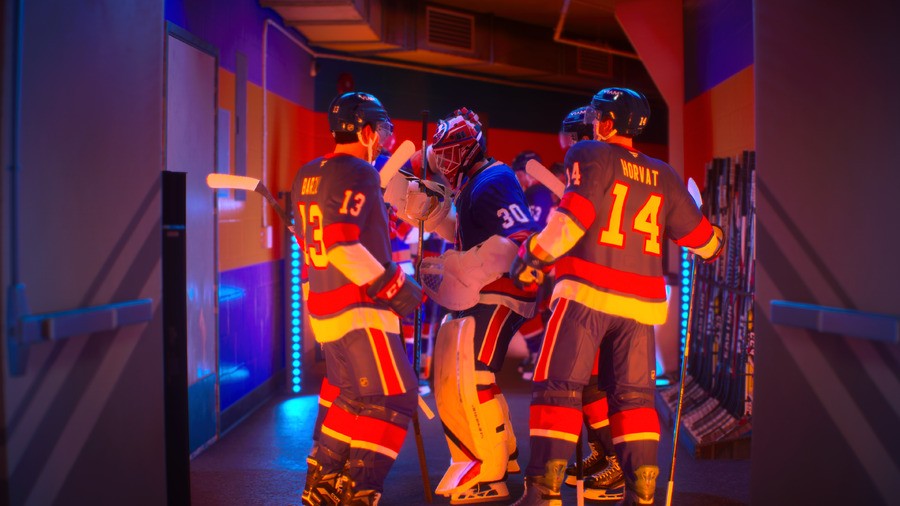
The most immediately noticeable improvements in NHL 27 are found within its presentation package. In an effort to mimic the high-definition broadcast standards of the National Hockey League, EA has introduced a suite of new visual and auditory elements. These include entirely new pre-game introductions, revamped replay packages, and high-fidelity close-up reactions from the virtual crowds.
A central component of this overhaul is the introduction of a new commentary team. After several years of utilizing the same broadcast duo, the refresh is designed to provide a more dynamic and less repetitive auditory experience. Furthermore, the development team has focused on arena-specific elements. In previous iterations, many arenas felt interchangeable; in NHL 27, specific architectural features and team-specific lighting effects have been implemented to ensure that playing in the Madison Square Garden feels distinctly different from playing in the Bell Centre.
Perhaps the most significant addition to the presentation is the licensing of official "hype" and goal songs. For years, the community has requested the return of authentic music to enhance the game’s atmosphere. The soundtrack for NHL 27 includes several iconic hockey anthems, such as:
- "Kernkraft 400" by Zombie Nation
- "Rock And Roll All Nite" by Kiss
- "Chelsea Dagger" by The Fratellis
- "Song 2" by Blur
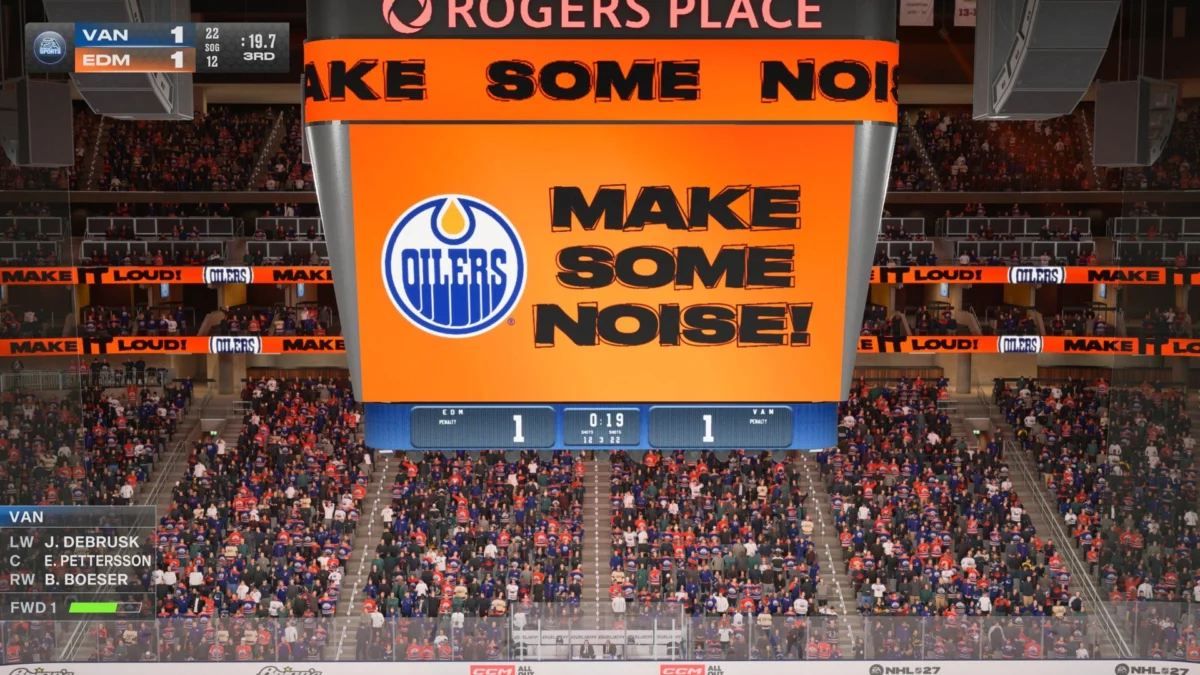
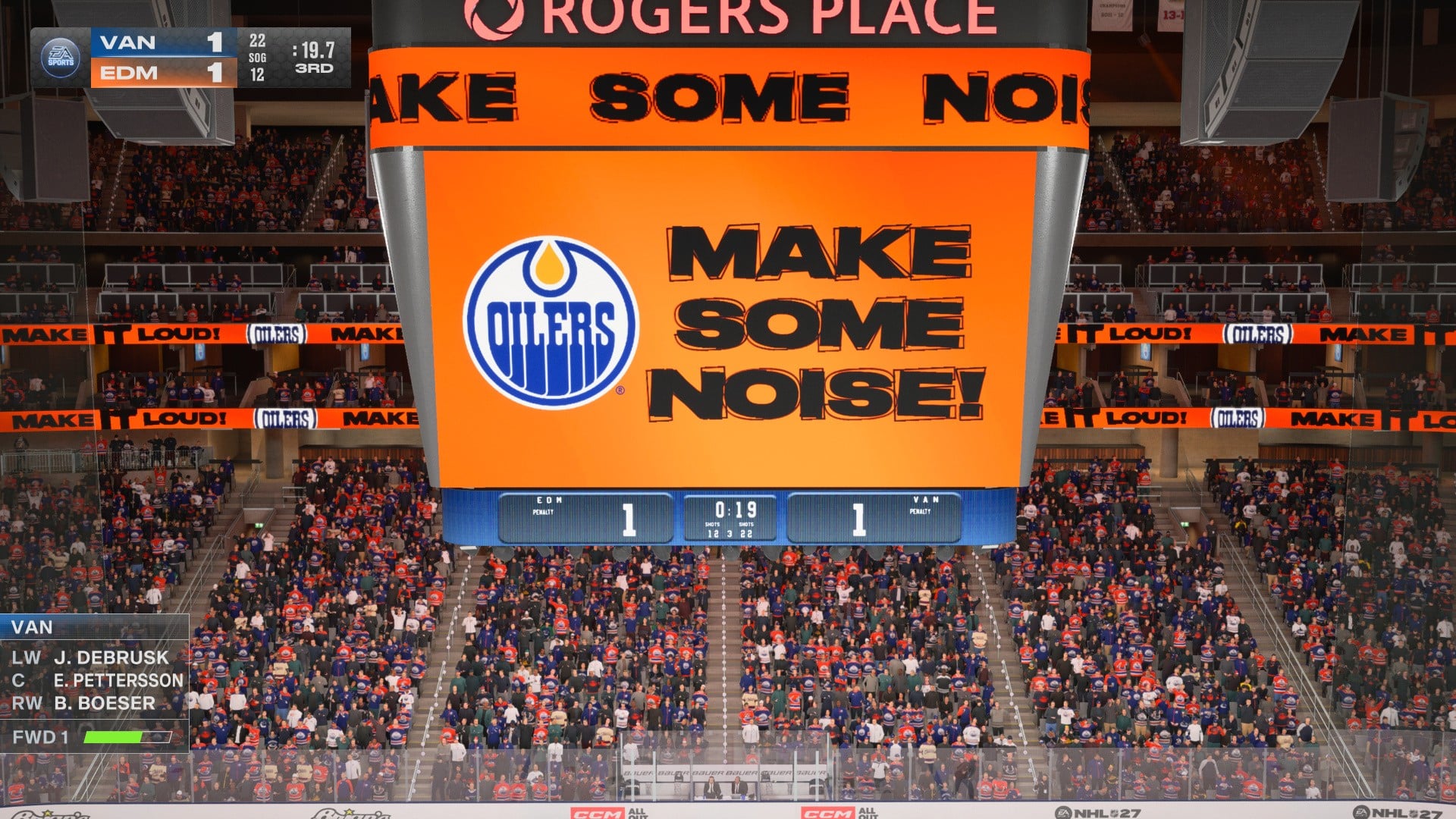
These tracks are utilized during menu navigation and, more importantly, during specific in-game events. When a home team scores, the corresponding licensed goal song triggers, accompanied by team-specific jumbotron graphics. EA has confirmed that they intend to continue adding official jumbotron assets for various NHL teams through post-launch updates, further deepening the authentic "game day" experience.
Gameplay Mechanics: Strategy and Artificial Intelligence
While the presentation provides the aesthetic framework, the core gameplay of NHL 27 builds upon the foundation established in NHL 26 with several targeted refinements. The game continues to utilize the Frostbite Engine, a choice that remains a point of discussion within the gaming community. While the engine allows for high-level lighting and player models, it has occasionally been criticized for producing "clunky" animations in high-speed sports contexts. In NHL 27, the focus has been on refining these animations to better represent the fluid nature of ice hockey.
A key gameplay innovation in this year’s entry is the "Contextual Strategy Shifts" system. This mechanic allows players to alter their team’s tactical approach with a single button press based on real-time suggestions from the virtual coach. For instance, if a team is trailing late in the third period, the system will prompt the player to adopt a more aggressive offensive stance and shorten the bench.
The AI has also been programmed to utilize these same strategies. When the computer-controlled opponent switches to a high-pressure forecheck, the shift in game tempo is palpable. This is supported by the introduction of new "Playbooks" for each NHL team. These playbooks are designed to reflect the real-world tactical identities of different coaches and rosters, ensuring that a game against a defensive-minded team like the New York Islanders feels fundamentally different from a matchup against a high-octane offensive unit like the Edmonton Oilers.
Connected Franchise: A Community-Centric Return
The reintroduction of Connected Franchise serves as the headline feature for the series’ dedicated online community. This mode allows groups of players to manage an entire league, handling trades, free agency, and scheduled games against one another.
At launch, the Connected Franchise mode in NHL 27 will support human players only, meaning that the league will not feature AI-controlled teams to fill empty slots. This decision highlights EA’s current focus on the social and competitive aspects of the mode, targeting organized leagues and groups of friends. While the lack of AI integration may limit the mode’s accessibility for smaller groups, it ensures a purely competitive environment for those able to fill a league roster.
Comparative Analysis of Game Modes
Beyond the new features, NHL 27 retains its staple modes:
- Franchise Mode: The traditional single-player experience remains largely consistent with the previous year, though it benefits significantly from the updated presentation and strategy shifts.
- Hockey Ultimate Team (HUT): The microtransaction-supported card-collecting mode returns with its usual seasonal content cycles.
- Be A Pro: This career mode allows players to take a single athlete from the draft to the Hall of Fame.
Data from previous years suggests that while HUT remains the primary revenue driver for the title, the "hardcore" player base heavily favors Franchise and online competitive modes. The decision to invest in Connected Franchise and presentation upgrades appears to be a strategic move to re-engage veteran players who may have felt the series had stagnated on current-gen hardware.
Industry Implications and Future Outlook
The development of NHL 27 reflects a broader trend in sports gaming where developers are increasingly prioritizing "immersion" and "authenticity" to differentiate their products. In an era where graphical fidelity has reached a point of diminishing returns, the auditory and emotional experience of the "broadcast" has become a primary field of competition.
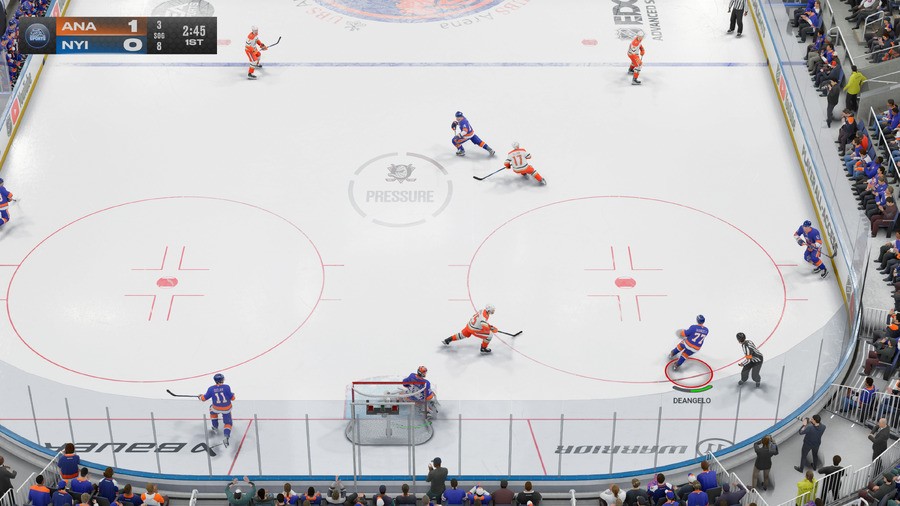
Analysts suggest that by securing high-profile music licenses and reviving fan-favorite modes, EA is attempting to stabilize the NHL player base ahead of future technological shifts. The move to include a 10-hour trial for Xbox Game Pass Ultimate subscribers starting the Friday before launch is a clear attempt to lower the barrier to entry and showcase the new presentation features to a wider audience.
While the Frostbite Engine still presents challenges in terms of animation fluidity, the consensus among early-access testers is that NHL 27 represents a more "complete" hockey package than its predecessors in the Xbox Series X|S era. The success of the title will likely depend on the stability of the Connected Franchise servers and the frequency of the promised post-launch content updates.
As the September 11 launch approaches, the hockey gaming community remains watchful. The focus on authenticity and the revival of legacy-style features suggests that EA Sports is listening to its niche but passionate audience. Whether these improvements are enough to propel the series back to its former critical heights remains to be seen, but for the first time in several years, the franchise appears to be moving toward a more immersive and community-focused future.