



The landscape of business simulation games, once a fertile ground for strategy and economic management, has seen a notable shift in recent years. While titles like Transport Tycoon, Rollercoaster Tycoon, and even the Sim series carved out significant niches and captivated players for hours on end, the genre has, for some, experienced a period of stagnation. However, a recent entrant, Big Ambitions, has unexpectedly reignited this passion for many, including those who, like this writer, had begun to drift away from the intricacies of virtual commerce. This comprehensive review delves into what makes Big Ambitions a standout title, its unexpected depth, and its potential impact on the future of business simulation games.
The Unlikely Allure of Mundane Management
At its core, Big Ambitions presents a premise that, on paper, sounds remarkably straightforward, perhaps even mundane: players are tasked with establishing and growing businesses within a virtual city. This involves a detailed management loop that includes setting product prices, meticulously scheduling employee shifts, sourcing inventory, and continuously refining operational strategies to maximize profitability. The initial impression is one of granular, almost spreadsheet-like complexity, a characteristic that might deter casual gamers.
However, the game transcends mere corporate management by integrating a surprisingly robust life simulation component. Players are not just abstract economic entities; they are embodied characters with tangible needs. This means that beyond the boardroom and the shop floor, players must also manage their avatar’s well-being. This extends to fundamental necessities such as ensuring their in-game vehicle is fueled and maintained, and that their character is adequately fed, rested, and entertained. Activities like visiting the gym, taking showers, watching television, and even engaging in video games become integral parts of the player’s daily routine, mirroring the real-world balance required in high-pressure professional lives.
The inclusion of these personal management elements, which could easily have felt like tedious distractions, instead serves to ground the player and add a layer of relatable challenge. The struggle to balance the demands of a burgeoning empire with the simple need to eat lunch or get enough sleep creates a unique tension that, paradoxically, enhances the overall engagement. It transforms the abstract pursuit of profit into a more personal, character-driven journey.
A Deep Dive into the Mechanics of Success
The business operations in Big Ambitions are designed with a significant degree of depth. To achieve true profitability and scalability, players must meticulously build and optimize their supply chains. This involves strategic decisions such as renting warehouse space to accommodate inventory, hiring specialized personnel like purchasing officers and logistics managers, and maintaining precise import and export levels to meet demand without incurring excessive carrying costs. The game rewards foresight and careful planning, allowing players to create interconnected networks of suppliers and distributors that form the backbone of their growing enterprises.
Initially, the game can present a steep learning curve, and players might find themselves engaged in what feels like a predictable grind. However, this initial phase is crucial for understanding the intricate systems at play. Anecdotal evidence from players, including the author’s own experience, suggests that what begins as a deliberate, sometimes slow, progression can rapidly accelerate. The feeling of accomplishment when a well-thought-out business model finally clicks, leading to a surge in profits and market dominance, is a powerful motivator.

The ability to replicate successful business models across different districts and to establish multiple successful franchises is a key aspect of the game’s addictive quality. While there is a potential for the game to eventually become less challenging once all systems are running smoothly, and the personal needs of the character become a routine rather than a priority, the journey to that point is exceptionally rewarding. The satisfaction derived from seeing a concept scale from a single shop to a ubiquitous brand is a testament to the game’s design.
The Elusive Formula for Engagement
Quantifying precisely why Big Ambitions resonates so strongly is a complex task, but several factors contribute to its success. The inherent appeal of incremental progress and the satisfaction of building something from the ground up are timeless elements of simulation games. Big Ambitions amplifies this by providing a degree of player agency that is both liberating and challenging. The game does not heavily dictate player actions, instead allowing for experimentation and self-discovery. This freedom fosters a sense of accomplishment when players independently devise effective strategies, making them feel like astute business strategists.
The game consistently provides players with new objectives and aspirations. Whether it’s expanding a retail chain, venturing into new industries, or simply acquiring luxury assets like high-end apartments and exotic vehicles, there is always a tangible goal to strive for. This continuous pursuit of improvement and acquisition keeps players invested, preventing stagnation and boredom.
A particularly engaging element is the in-game leaderboard, which tracks players’ financial success against their rivals. As income grows, players ascend the rankings, offering a competitive and rewarding experience. The presence of rivals, who engage in "normal business attacks" such as price wars and market manipulation, adds another layer of strategic depth. While these tactics can be disruptive, a well-established financial buffer allows players to weather these storms, further reinforcing the importance of sound financial management and strategic planning. The eventual immunity to these rival actions, achieved through consistent success, signifies a player’s mastery of the game’s mechanics.
While the current iteration does not appear to allow direct offensive actions against rivals, this is a feature many players have expressed a desire for. The potential for players to invest resources to actively disrupt competitor operations could add another dimension to the strategic gameplay. Given the game’s ongoing development and surprising depth, such features may be implemented in future updates.
Context and Chronology of Big Ambitions‘ Rise
Big Ambitions, developed by Hovgaard Games, emerged from early access on Steam in early 2023, gradually building a dedicated following. The game’s full release, or version 1.0, occurred recently, marking a significant milestone and attracting renewed attention from the gaming community. This transition from early access to a complete product signifies a period of iterative development, where player feedback has been crucial in shaping the game’s features and balance. The developers have consistently communicated with their player base, addressing bugs, introducing new content, and refining existing mechanics based on community input. This transparent and responsive development cycle has fostered a strong sense of trust and anticipation.
The initial premise of the game, as described by many early adopters and critics, was met with a degree of skepticism. The emphasis on granular business management and the inclusion of personal character needs seemed like a recipe for a niche, potentially slow-paced experience. However, the emergent gameplay, characterized by unexpected strategic depth and addictive progression loops, quickly began to defy these initial expectations. Player testimonials and online discussions frequently highlight the "50-hour rule" – the point at which players realize they have sunk a significant amount of time into the game without even noticing.
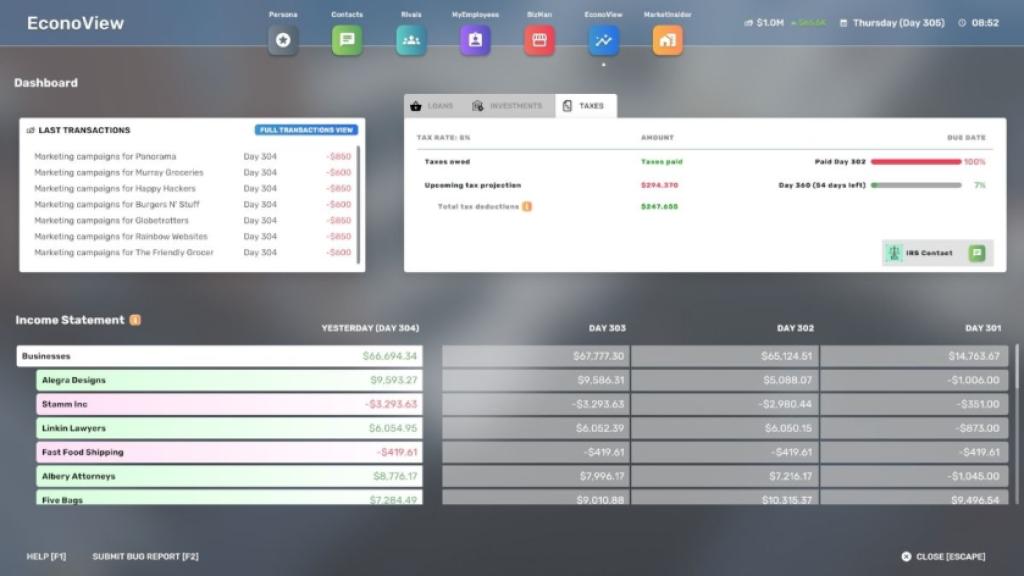
The game’s visual style, while not hyper-realistic, is functional and clear, allowing players to easily navigate the complex information presented. Screenshots often depict bustling cityscapes, well-organized store interiors, and detailed inventory management screens, all contributing to the immersive experience. The accompanying sound design, though not extensively detailed in initial reviews, typically complements the gameplay by providing ambient city sounds and subtle feedback cues for player actions.
Analysis of Implications and Future Potential
The success of Big Ambitions has several implications for the business simulation genre. Firstly, it demonstrates that there is a significant, perhaps underserved, market for deep and complex economic simulations that are not afraid to incorporate unconventional mechanics. The integration of personal life simulation, for instance, has proven to be a surprisingly effective way to enhance player immersion and engagement.
Secondly, the game’s trajectory from a niche early access title to a critically acclaimed full release highlights the value of developer-player collaboration. Hovgaard Games’ commitment to incorporating feedback has clearly paid dividends, creating a product that is both polished and highly attuned to player desires. This model of development can serve as a blueprint for other studios looking to foster long-term community engagement.
The broader impact of Big Ambitions may encourage other developers to explore similar themes and mechanics. The "boring premise, surprisingly fun execution" narrative is a powerful testament to smart design overcoming perceived limitations. It suggests that even seemingly mundane tasks, when presented with sufficient depth, challenge, and rewarding progression, can become incredibly compelling.
Looking ahead, the future of Big Ambitions appears promising. With its recent full launch, the game is well-positioned for continued growth. The developers have indicated plans for ongoing updates and content additions, which will likely further expand the game’s scope and longevity. Potential future developments could include:
- Expanded Rivalry Mechanics: As mentioned, the ability to actively engage in competitive business warfare could add a significant strategic layer.
- New Business Types and Industries: Introducing a wider variety of businesses, from high-tech manufacturing to specialized services, would offer even more diversification.
- Advanced City Simulation: Deeper integration with the city’s economy, including dynamic market fluctuations, urban development, and public services, could enhance realism.
- Multiplayer Features: While currently a single-player experience, a multiplayer mode allowing players to compete or collaborate in the same city could be a major draw.
- Modding Support: Robust modding tools could empower the community to create new content and extend the game’s lifespan indefinitely.
The game’s success underscores a vital point: the appeal of business simulation games lies not just in the complexity of the systems, but in the player’s ability to master them and witness the tangible results of their strategic acumen. Big Ambitions has, against initial expectations, managed to capture this essence exceptionally well, revitalizing a genre that many believed had lost its spark. For anyone seeking a deeply engaging and rewarding strategic experience, Big Ambitions is a venture well worth undertaking.