


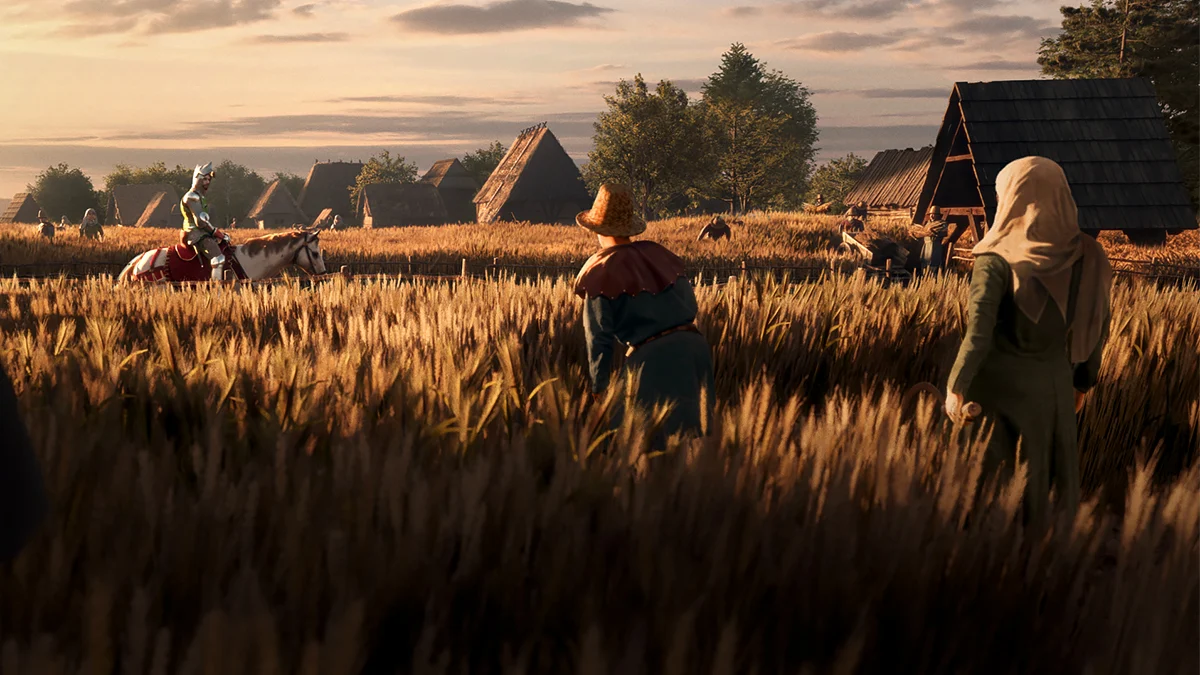
Farming stands as one of the most critical and foundational activities players will engage in from the outset in Manor Lords, a medieval city-builder strategy game renowned for its historical realism and intricate resource management. It serves as the primary engine for sustenance, directly feeding digital villagers, and indirectly fueling their morale and economic stability through the production of essential goods like ale. A robust agricultural system is not merely a convenience but the very bedrock upon which a thriving medieval settlement is built, determining whether your nascent community will flourish or succumb to the harsh realities of early medieval life.
The Foundational Imperative: Early Game Agricultural Strategy
Upon establishing a new settlement, the immediate priority for any aspiring lord is to secure a stable food supply. Among the available crops, Wheat emerges as the indisputable primary focus. Its direct conversion into bread provides the most efficient and substantial food source for the townsfolk, a factor that is often the sole determinant of their survival, particularly through the unforgiving initial winters. The game’s realistic seasonal cycle dictates that no crops can be harvested during winter months, necessitating a significant surplus of grain by the end of autumn. This strategic imperative is compounded by the need for essential infrastructure: a Windmill to process raw wheat into flour (referred to as "grain" in-game) and a Communal Oven or Bakery to transform flour into palatable bread. Without this crucial supply chain, winter can quickly become a period of widespread starvation and collapse.
Once the immediate threat of food insecurity from wheat shortages has been mitigated, and a healthy stock of grain and bread has been established, the agricultural focus can then broaden. The next logical step involves cultivating Barley, a crop vital for the production of ale. While not a direct food source in the same vein as wheat, ale plays a significant role in villager satisfaction and is often a prerequisite for upgrading burgage plots, which in turn unlocks further settlement development and population growth. This early game progression highlights the intertwined nature of survival and quality of life within Manor Lords’ intricate economic simulation.
The Agricultural Year: A Chronology of Survival and Planning
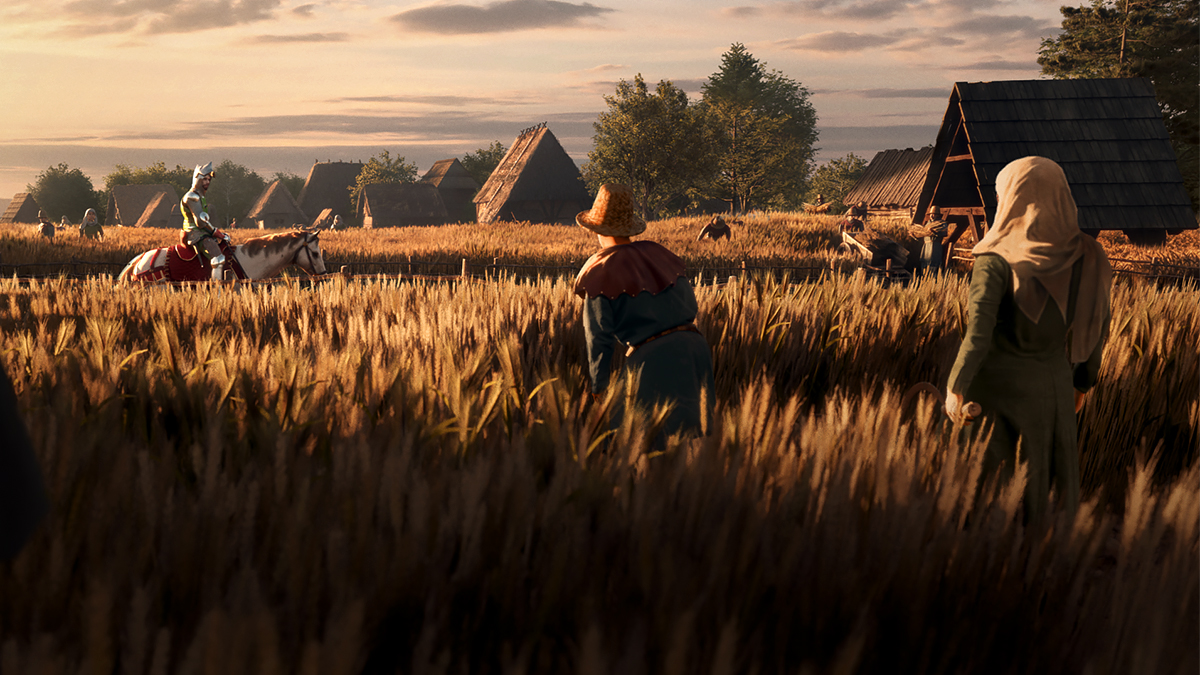
The farming mechanics in Manor Lords are deeply rooted in a cyclical, seasonal reality, demanding foresight and meticulous planning from players. Each season presents distinct challenges and opportunities, shaping the rhythm of village life:
- Spring: This is the season for preparation and planting. Fields are tilled, and seeds are sown. The success of the upcoming harvest hinges heavily on the efficiency of planting during this crucial window. Early investment in farmhouses and assigning sufficient families to agricultural labor is paramount to ensure all fields are sown before the season concludes.
- Summer: As crops grow, summer becomes a period of watchful waiting. While there’s no direct interaction with growing crops, families assigned to farms might be engaged in other tasks, such as clearing new land, constructing additional farm buildings, or transporting resources, provided they are available.
- Autumn: The most critical season for farmers, autumn is harvest time. Villagers must diligently gather the ripe crops from the fields. The speed and volume of the harvest directly dictate the winter’s reserves. Any delays due to insufficient labor, lack of tools, or inefficient storage can have dire consequences. Players must ensure adequate storage (Granaries for food crops) is available to house the bountiful yield.
- Winter: A period of agricultural dormancy. Fields lie fallow or covered in snow, and no new crops can be grown or harvested. Settlements rely entirely on the reserves accumulated during autumn. This season tests the player’s planning and resource management, as food consumption continues while production ceases. Long, harsh winters can quickly deplete inadequate stockpiles, leading to starvation, reduced morale, and potential population decline.
This annual cycle underscores the importance of not just producing enough food, but producing a surplus that can sustain the population through the lean winter months. Early game bottlenecks often involve a limited workforce, requiring careful allocation of families to ensure both farming and other essential tasks (like logging or construction) are adequately staffed.
Crop Varieties and Their Strategic Applications
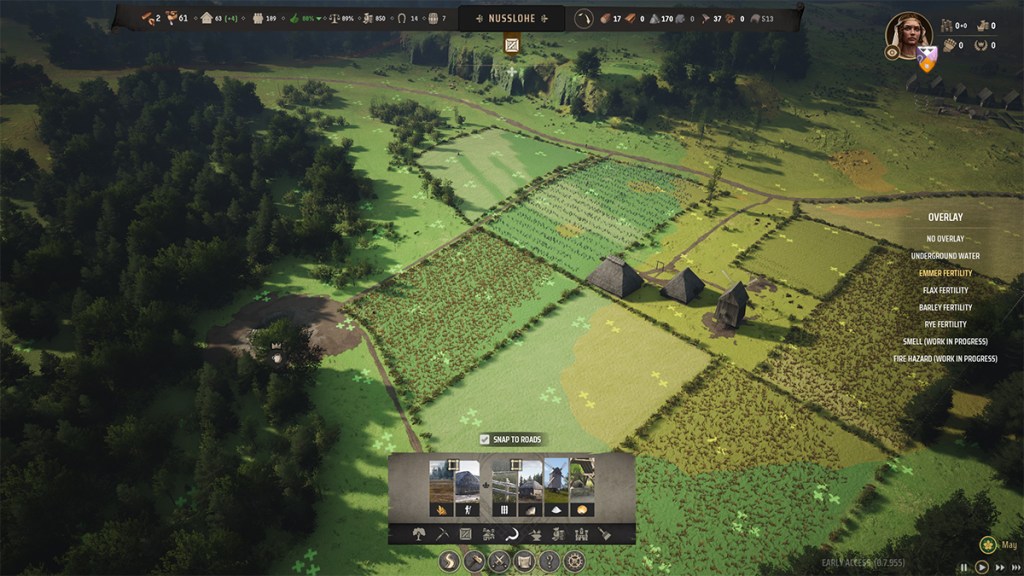
Manor Lords offers a selection of crops, each with specific fertility requirements and strategic uses, contributing to a diversified and resilient agricultural economy. Players can assess land suitability for each crop type via a dedicated "Farming" tab in the Construction menu, which overlays a color-coded fertility indicator onto the map. Bright green signifies highly fertile land, ideal for cultivation, while orange or red areas indicate poor soil quality, best avoided for specific crops.
The primary crop types include:
- Emmer (Wheat): As previously detailed, Emmer is the archaic term for Wheat and is the cornerstone of early-game survival. It boasts high caloric yield when processed into bread and is generally the most straightforward food source to establish. Its fertility requirements are moderate to high, making initial field placement critical. The game’s use of "Emmer" instead of "Wheat" in the fertility overlay serves as a subtle nod to historical accuracy, reflecting the types of wheat common in medieval Europe, although it can initially cause minor confusion for players expecting a direct "Wheat Fertility" option.
- Barley: This grain is primarily cultivated for its role in producing ale. While it can also be used for animal feed, its main economic value lies in providing a luxury good that significantly boosts villager satisfaction and enables burgage plot upgrades. Barley typically requires similar fertility to wheat.
- Flax: Unlike the grains, Flax is grown for its fibrous stalks, which are processed into linen. Linen is essential for crafting clothing, improving villager attire, and can be a valuable trade commodity. Establishing flax production diversifies the village economy beyond food, contributing to regional wealth and allowing for more advanced industrial chains. Flax generally prefers moderately fertile land.
- Rye: Rye is notable for its hardiness and ability to grow in less fertile soils compared to wheat or barley. This makes it an excellent choice for crop rotation, allowing players to utilize marginal lands or to give more fertile fields a break without completely sacrificing agricultural output. Rye can also be processed into flour for bread, providing a resilient alternative or supplement to wheat-based food supplies, particularly in regions with challenging soil conditions.
Understanding the specific fertility preferences of each crop and strategically placing fields accordingly is a fundamental aspect of efficient farming. The visual fertility overlay is an invaluable tool for making informed decisions about land allocation.
The Science of Soil and the Art of Crop Rotation
A core mechanic of Manor Lords’ agricultural simulation is the dynamic nature of soil fertility. Continuous cultivation of crops in a single field inevitably depletes the soil of its nutrients, leading to diminishing yields over time. To counteract this, players must implement a system of crop rotation, a practice vital to medieval agriculture and realistically represented in the game.
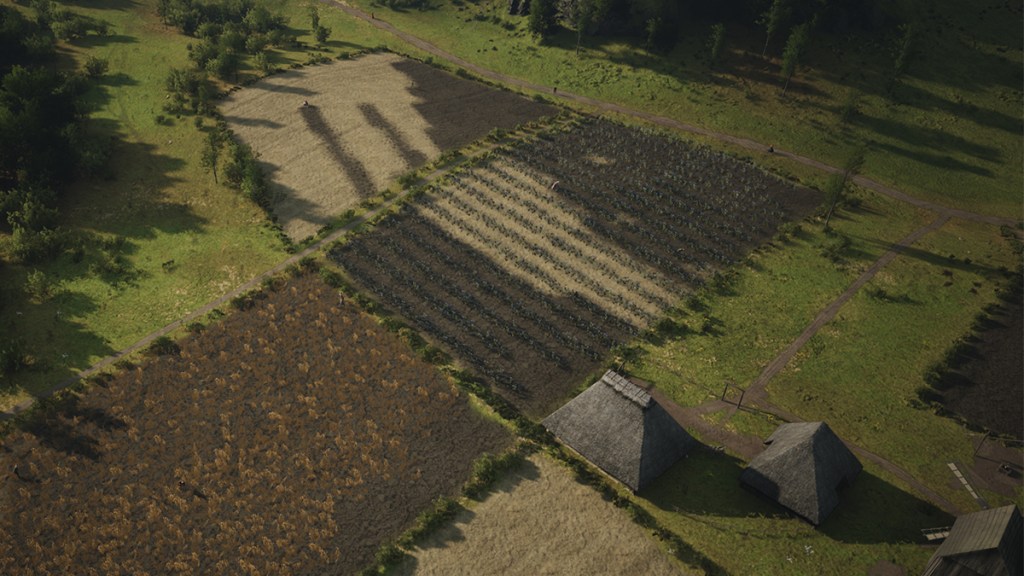
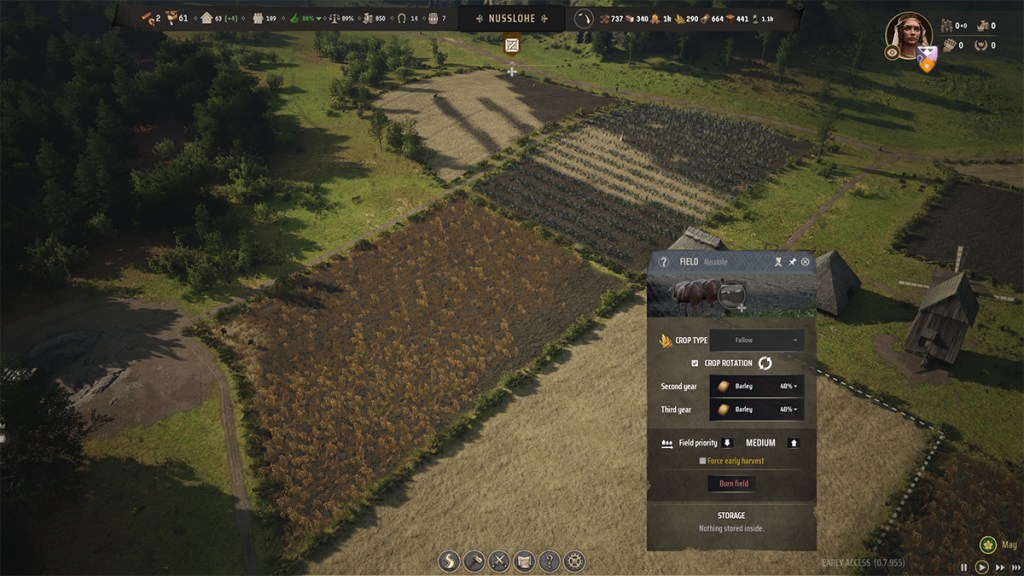
The game allows players to manage each plot’s growing cycle over a three-year period. The most effective strategy involves incorporating a "fallow" year, during which a field is left unplanted. This period allows the soil to naturally replenish its fertility, ensuring sustainable high yields in subsequent growing seasons. While a fallow year means a temporary loss of production from that specific field, the long-term benefits of restored fertility far outweigh the short-term cost.
An advanced strategy, and one that further enriches the game’s realism, is to use fallow fields for pasture. By integrating animal husbandry, particularly sheep or cattle, into the agricultural cycle, players can graze livestock on fallow fields. The animals’ manure acts as a natural fertilizer, accelerating the restoration of soil fertility and potentially increasing yields in future crop rotations. This symbiotic relationship between crops and livestock mirrors historical farming practices and adds another layer of strategic depth to resource management.
Fields in Manor Lords are measured in morgen, an old-school unit of land measurement. A single family, when assigned to farming, can efficiently manage approximately 2/3 of a morgen per year. While a tooltip often advises players to make initial fields 1 morgen in size, suggesting that a single 1-morgen wheat plot could feed a small town, the reality of diminishing fertility necessitates a more expansive approach. To maintain a consistent food supply and accommodate crop rotation, it is advisable to establish at least three fields for every single crop type, allowing two fields to be actively cultivated while one lies fallow or is used for pasture. This multi-field system ensures that agricultural production remains stable and sustainable over the long term, preventing localized soil exhaustion.
Essential Agricultural Infrastructure and Development
Beyond the fields themselves, a robust agricultural system relies on a network of supporting structures:
- Farmhouse: The central building for agricultural operations. A farmhouse houses the families assigned to farming and provides the base for managing all associated fields. Upgrading it or building additional farmhouses can increase the number of assigned families and thus the efficiency of farming operations.
- Windmill: Crucial for processing harvested wheat (Emmer) into grain (flour). Without a windmill, raw wheat cannot be converted into the usable form required for bread production.
- Communal Oven/Bakery: After the wheat is milled into grain, these structures are necessary to bake bread. The Communal Oven is typically an early-game, shared facility, while a dedicated Bakery (often a Burgage Plot extension) offers higher efficiency for larger settlements.
- Malt House & Brewery: Essential for the barley production chain. Barley is processed into malt at the Malt House, which is then used by the Brewery to produce ale. These structures become vital once the settlement moves beyond basic survival.
- Granary: An often-underestimated but critically important building. Granaries are specialized storage facilities for food resources. Building them near fields and production buildings (like windmills and bakeries) minimizes travel time for workers and ensures harvested crops are quickly stored, protecting them from spoilage and providing a buffer against unexpected shortages. Early investment in granaries is key to efficient food management.
- Storehouse: While granaries handle food, storehouses manage other raw materials and processed goods, including flax, which would be stored here before being moved to a weaver.
As settlements grow and thrive, players earn Development Points by upgrading Burgage Plots. These points can be invested into various skill trees, one of which directly enhances agricultural productivity and efficiency. Key developments often include:
- Heavy Plough: This development significantly improves the speed at which fields are tilled and planted. This is particularly beneficial for larger fields or for maintaining productivity with a smaller workforce, allowing more land to be managed effectively.
- Fertilization Techniques: Developments in this tree can enhance soil fertility recovery during fallow periods, or introduce methods to actively fertilize fields (e.g., using manure from livestock more effectively), thereby increasing yields and potentially reducing the frequency of fallow years.
- Advanced Crop Varieties/Resilience: While not explicitly detailed in the base game’s current iteration, similar titles often feature developments that unlock more resilient crop types (like Rye’s inherent hardiness) or improve resistance to adverse weather or pests, although Manor Lords focuses more on the physical labor and land management aspects.
These development choices allow players to tailor their agricultural strategy to their specific needs and regional advantages, further refining their medieval economy.
Broader Implications: Food Security, Economy, and Social Stability
The robust agricultural system in Manor Lords extends far beyond merely feeding the populace; it is intricately linked to the overall health and prosperity of the settlement.
- Population Growth and Stability: A consistent and abundant food supply is the fundamental prerequisite for attracting new families to the settlement and preventing existing ones from migrating due to hardship. Food security directly translates into population growth, which in turn provides the necessary labor for further expansion.
- Economic Diversification and Regional Wealth: While primary crops like wheat ensure survival, the cultivation of barley and flax opens avenues for economic diversification. Ale can be sold at trade posts, generating regional wealth, and linen from flax can be crafted into clothing for local consumption or export, further boosting the economy. This allows a settlement to become self-sufficient and eventually a trading hub.
- Villager Morale and Satisfaction: A well-fed populace with access to comforts like ale is a happy and productive populace. High morale prevents dissent, reduces crime, and encourages villagers to work more efficiently, contributing to the overall stability of the manor. Conversely, food shortages lead to widespread dissatisfaction, potentially triggering unrest and exodus.
- Strategic Resource Management: The farming system compels players to adopt long-term strategic thinking, planning not just for the current season but for multiple years ahead. Balancing immediate needs with future sustainability, making decisions about land use, and investing in appropriate infrastructure are constant challenges.
- Resilience Against Adversity: A diversified agricultural base, coupled with effective storage and contingency planning, makes a settlement more resilient against unforeseen events such as poor harvests due to adverse weather, bandit raids affecting supply lines, or sudden population spikes.
In Manor Lords, the romantic notion of vast farmlands stretching to the horizon is not merely an aesthetic choice, but a strategic imperative that reflects the realities of medieval life. Understanding and mastering the game’s farming mechanics—from initial crop selection and field placement to the intricacies of crop rotation, infrastructure development, and strategic upgrades—is paramount for building a prosperous and enduring medieval domain. It is through diligent cultivation and wise management that players can truly transform a humble beginning into a flourishing manor, ensuring their villagers not only survive but thrive amidst the challenges of the medieval world.