


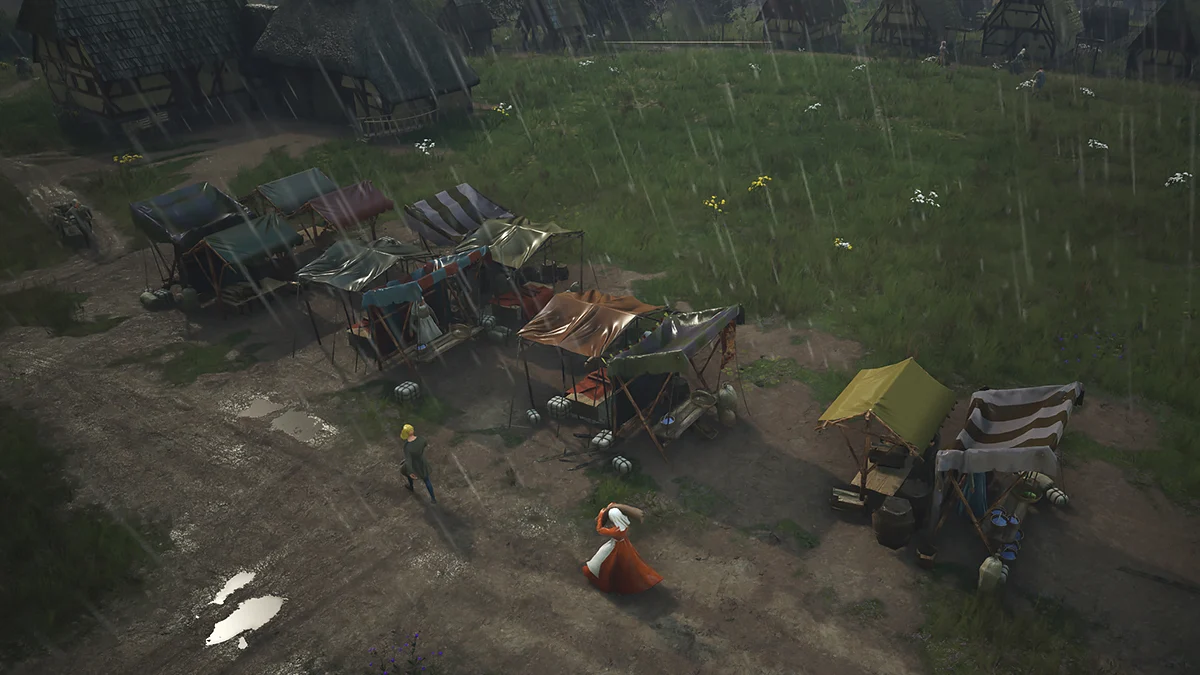
The intricate world of Manor Lords, a medieval city-building and real-time strategy game, has captivated a vast player base since its early access launch. Renowned for its historical accuracy, detailed economic simulation, and challenging resource management, the game tasks players with growing a humble settlement into a thriving regional power. However, amidst the satisfying progression of building and expanding, a recurring logistical conundrum often vexes even the most seasoned strategists: the puzzling persistence of abandoned supplies and raw materials, such as lumber and building components, that remain after a structure is demolished or resources are harvested. These seemingly innocuous piles of goods, left scattered across the landscape, are not merely aesthetic blemishes; they represent a critical bottleneck that can impede construction, lead to resource degradation, and ultimately stifle the organic growth of a player’s burgeoning medieval domain.
This phenomenon, characterized by logs, timber, stone, and other vital resources lingering on the ground, often occurs despite the ostensible presence of idle villagers and conveniently located storehouses or granaries. The game’s sophisticated simulation dictates that such exposed items are vulnerable to decay over time, diminishing their value or leading to outright loss, particularly in adverse weather conditions. More immediately, these misplaced materials can obstruct the very sites where new buildings are planned, forcing players into a frustrating waiting game or prompting a costly redesign of their settlement layouts. Understanding and mitigating this "logistics lag" is paramount for efficient town planning and resource utilization in Manor Lords.
The Genesis of Logistical Challenges in a Budding Feudal Economy
Manor Lords, developed by Slavic Magic and published by Hooded Horse, distinguishes itself with a grounded approach to medieval life. Resources are finite, labor is precious, and every decision carries weight. From the earliest stages of settlement, players are introduced to a delicate balance of production, storage, and consumption. The foundational elements of construction – timber, stone, planks, roof tiles – are acquired through dedicated facilities like Logging Camps, Stonecutter Camps, and Sawmills. Similarly, food resources are gathered, processed, and stored in Granaries, while other general goods find their home in Storehouses.
The logistical challenge typically intensifies as a settlement grows. In the nascent phases, resource management is relatively straightforward. A few villagers manually transport goods over short distances. However, as the player expands their territory, constructs more complex production chains, and begins to re-evaluate initial settlement choices, demolition becomes a necessary tool for optimization. Whether tearing down an old logging camp to build a farm, relocating a burgage plot, or clearing an area for a new district, demolition invariably leaves behind the raw materials that comprised the previous structure. Similarly, intensive logging operations can result in vast quantities of unprocessed timber lying in forests, awaiting collection.
The core of the problem lies in the game’s villager AI and its task prioritization system. While villagers are generally adept at performing their assigned roles – farming, crafting, trading – the task of simply "cleaning up" loose resources often appears to fall lower on their priority list, especially if they are already assigned to a specific production chain or if the logistics infrastructure isn’t perfectly optimized. This can lead to significant delays, turning what should be a simple clear-up operation into a prolonged bottleneck, directly impacting the player’s ability to maintain a fluid construction pipeline and protect their hard-earned resources from the elements.
A Chronology of Resource Management: From Scarcity to Surplus Challenges
The journey of resource management in Manor Lords can be viewed through a distinct chronology, each phase presenting unique logistical hurdles:
- Early Game (Settlement Founding to Initial Expansion): In the earliest days of a settlement, every log, every piece of stone, and every unit of food is critically important. Resources are scarce, and the focus is on establishing basic production and storage. During this phase, logistical issues are less pronounced due to smaller quantities of materials and shorter travel distances. However, even here, a single misplaced log can delay a crucial first building. Players learn the importance of placing storage close to production and construction sites.
- Mid Game (Expansion and Diversification): As the settlement grows, new industries are established, and the demand for raw materials escalates. Players begin to optimize their layouts, which often involves demolishing older, inefficient structures or clearing land. This is where the problem of abandoned supplies begins to manifest more frequently. Large-scale logging operations leave substantial timber piles, and the dismantling of multiple buildings can flood an area with materials that the existing logistics network struggles to process quickly. The "Exposed Goods" warning icon, a visual cue in the game’s interface, often makes its first appearance during this stage, signaling that valuable resources are vulnerable.
- Late Game (Regional Power and Optimization): In the late game, players manage multiple settlements, extensive trade routes, and a complex web of production chains. While raw material scarcity might be less of an issue, the sheer volume of resources and the scale of construction and demolition activities can exacerbate logistical problems. Efficient cleanup becomes vital not just for individual building sites but for maintaining overall economic efficiency and preventing resource waste across an entire region. Large-scale projects, such as building a formidable keep or expanding a sprawling marketplace, demand a pristine construction area, making timely removal of debris critical.
Throughout these phases, the player’s understanding and proactive management of resource movement evolve. What begins as a minor inconvenience in the early game can escalate into a significant impediment to progress if left unaddressed, highlighting the need for strategic interventions.
Strategic Interventions: Expediting Supply Movement and Optimizing Workflow
While Manor Lords eschews direct micro-management of individual villagers, it provides several indirect mechanisms for players to influence and accelerate the movement of stray supplies. These strategies hinge on understanding the game’s AI priorities and optimizing the logistics infrastructure.
-
Reinforcing Storage Facilities with Workers: The most straightforward approach is to ensure that relevant storage buildings—Storehouses for general goods (timber, planks, stone, tools, etc.) and Granaries for food items—are adequately staffed. Assigning more workers to these facilities directly increases the number of villagers whose primary task is to transport goods to and from storage. While this might seem intuitive, players often overlook that even if a villager is "idle," they might not automatically prioritize cleanup if their assigned building has other pressing tasks or if the overall logistics chain is inefficient. Increasing staff dedicated solely to warehousing can significantly boost throughput.
-
Optimizing Road Networks: The efficiency of resource transportation is heavily dependent on the quality and layout of the road network. Villagers and oxen move considerably faster on established roads than on undeveloped terrain. Ensuring a clear, direct, and well-maintained road connection between the site of the abandoned supplies and the nearest appropriate storage facility is crucial. A poorly connected site will dramatically slow down the cleanup process, as villagers will spend more time navigating difficult terrain. Strategic road placement is not just for market access; it’s a fundamental aspect of logistical efficiency.
-
The "Limit Work Area" Tactic for Focused Cleanup: This is perhaps the most powerful tool at a player’s disposal for targeted cleanup. By selecting a Storehouse, Granary, or Logging Camp, players can access an interface option to "Limit Work Area." This allows players to define a specific geographical zone where the workers of that building will focus their efforts.
- For General Supplies (Storehouse/Granary): If there are piles of timber, stone, or food left behind after a demolition, select the nearest Storehouse (or Granary for food). Click the "Limit Work Area" button and then carefully draw a polygon around the exact location of the unwanted supplies. This effectively tells the assigned workers, "Ignore all other tasks for now; your sole focus is to collect everything within this specific boundary and bring it back to this building." This forces immediate attention on the problematic area, overriding general AI priorities.
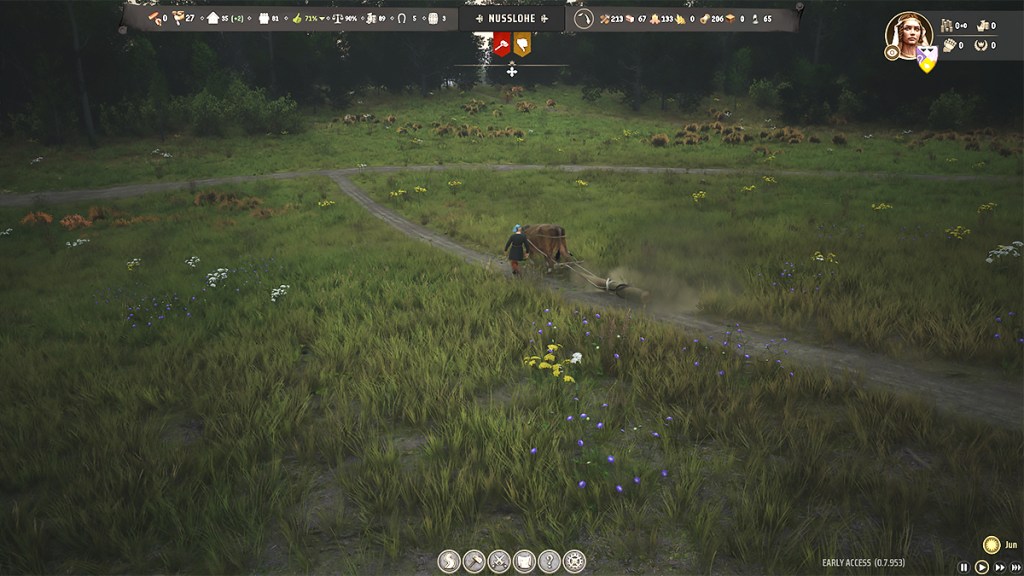
- For Logs (Logging Camp): Logs are a special case, typically handled by Logging Camps. If a large number of unprocessed logs are lying around after extensive tree felling or the demolition of a wooden structure, select a Logging Camp. Use the "Limit Work Area" function to encompass the area with the surplus logs. The loggers, often accompanied by oxen, will then prioritize collecting these logs and bringing them to the Logging Camp’s stockpile.
Once the area is cleared, it is critical to remember to deselect or "Clear Work Area" from the building’s interface. Failure to do so will keep the workers confined to that specific, now-empty zone, rendering them inefficient for broader resource collection.
-
Leveraging Oxen and Unassigned Villagers for Log Transport: Oxen are indispensable for efficient log transportation. Each Logging Camp typically has an associated ox, but if multiple camps are active, oxen might be tied up in other logging duties. If logs are accumulating, and the "Limit Work Area" tactic isn’t yielding rapid results, players can try a more indirect approach:
- Building a Closer Logging Camp: Sometimes, the issue is simply distance. If logs are far from existing Logging Camps, building a new, temporary camp closer to the log piles can dramatically reduce travel time for the oxen and loggers, expediting cleanup. Once the area is clear, the temporary camp can be demolished.
- Un-assigning Workers from Logging Camps: This counter-intuitive strategy can be highly effective. If workers are un-assigned from a Logging Camp, they become unassigned villagers. These unassigned villagers, along with any now-idle oxen, will then seek out available tasks, and clearing abandoned logs often becomes a high-priority unassigned task, particularly if the logs are impeding construction. This essentially "frees up" labor and animal power to focus on the cleanup.
By combining these strategies, players can gain a much greater degree of control over their logistics, transforming what might initially appear to be an AI oversight into a solvable strategic challenge.
Community Feedback and Developer Iterations: The Early Access Context
The logistical nuances of Manor Lords have been a frequent topic of discussion within its passionate player community. Forums on Steam, Reddit, and Discord are replete with players sharing their frustrations and innovative solutions for managing runaway resources. Many players appreciate the game’s commitment to realism, acknowledging that medieval logistics were inherently challenging and that immediate, magical cleanup would undermine the game’s core identity. However, there’s also a common desire for more intuitive or direct controls over villager priorities, particularly when specific areas need urgent clearing.
Developer Slavic Magic, primarily a single individual, has been highly responsive to community feedback throughout the Early Access period. While specific developer statements directly addressing this particular logistical challenge are not widely publicized in terms of dedicated patches, the game’s overall design philosophy, as communicated through developer blogs and community interactions, consistently emphasizes realism, strategic depth, and a commitment to refining AI behaviors. It is within this iterative development cycle that solutions like the "Limit Work Area" function likely emerged or were refined, offering players tools to manage these complex simulations. The very nature of Early Access means that gameplay mechanics are subject to continuous improvement, and it is plausible that future updates could further enhance villager AI for resource management, perhaps introducing more nuanced priority settings or automated cleanup options for specific zones.

Broader Implications: Balancing Realism, Challenge, and Player Agency
The challenge of managing stray supplies in Manor Lords serves as a microcosm of the game’s broader design philosophy: a delicate balance between historical realism, strategic depth, and player agency. The fact that resources don’t magically vanish or teleport to storage reinforces the game’s immersive simulation, forcing players to think like a medieval lord, considering every aspect of their logistical chain. This commitment to realism distinguishes Manor Lords from more arcade-style city-builders, offering a more deliberate and thoughtful gameplay experience.
However, this realism also introduces a significant learning curve. New players, accustomed to instantaneous actions in other games, might initially find the logistics lag frustrating. The need to actively intervene, to "micromanage" certain aspects of resource flow through tools like "Limit Work Area," means that efficient management isn’t just about building structures but about understanding and manipulating the underlying simulation.
Ultimately, mastering the movement of supplies and logs in Manor Lords is not merely about clearing a construction site; it’s about optimizing the entire economic engine of a settlement. Efficient logistics translate directly into faster construction, reduced resource waste, and a more robust economy. It allows players to maintain momentum, adapt to changing needs, and execute their grand visions without being hobbled by avoidable bottlenecks. By leveraging the available tools and understanding the intricacies of villager behavior, players can transform a potential source of frustration into another layer of strategic mastery, further solidifying their reign over their burgeoning medieval domain.