


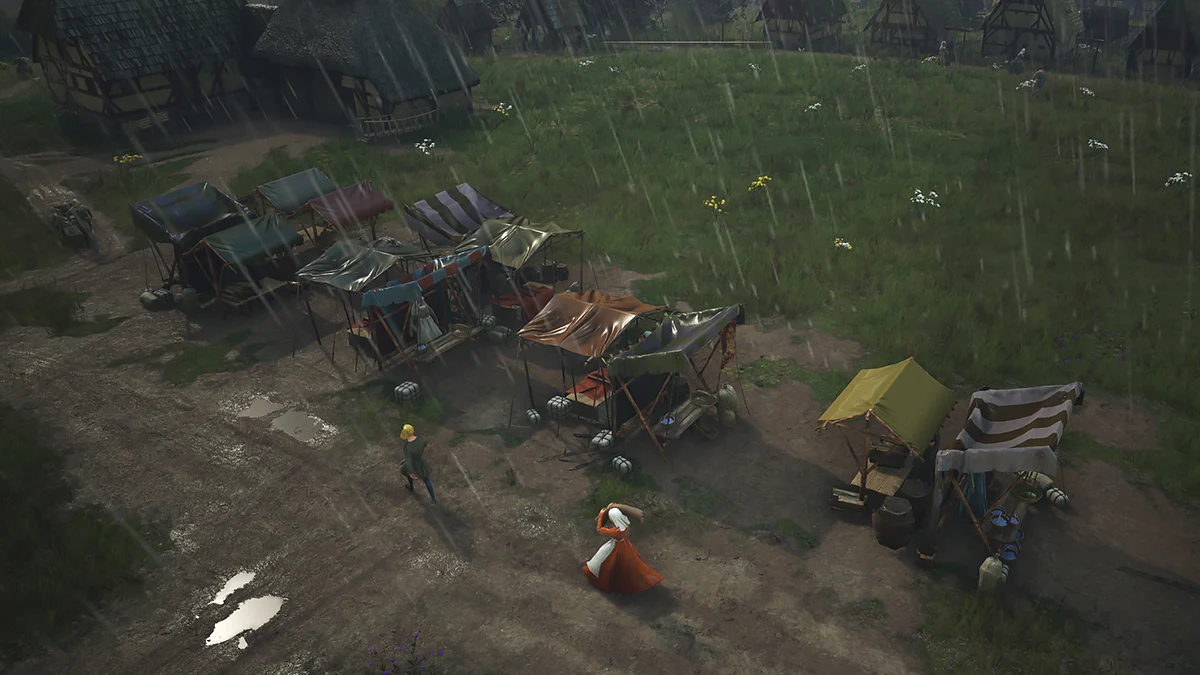
Since its highly anticipated early access launch on April 26, 2024, Manor Lords, the medieval city-builder and real-time strategy game developed by Slavic Magic and published by Hooded Horse, has captivated players with its intricate blend of historical realism, tactical depth, and stunning visual fidelity. However, amidst the satisfying progression of building a thriving settlement, a particular logistical challenge has consistently emerged as a source of both frustration and strategic puzzle-solving for players: the perplexing issue of abandoned supplies and logs. These orphaned resources, often left behind after demolishing structures or simply uncollected from production sites, not only degrade and are lost to the elements but also impede crucial construction projects, creating significant bottlenecks in a player’s meticulously planned medieval economy. Despite the presence of idle villagers and readily available storage facilities like storehouses and granaries, these stray items frequently remain stubbornly in place, highlighting a nuanced aspect of the game’s complex simulation engine that demands specific player intervention.
The Core Problem: Orphaned Resources and Their Impact
At the heart of Manor Lords‘ resource management system lies a commitment to realism, where every item, from a single log to a stack of hides, has physical presence and requires transport and storage. This design philosophy, while contributing to the game’s immersive qualities, also creates unique challenges. Players often encounter piles of timber, planks, stone, or various goods scattered across their settlement, particularly after the demolition of buildings or when production chains are interrupted. These abandoned resources, whether a lone log from a recently cleared forest patch or a heap of building materials from a relocated workshop, are not merely aesthetic blemishes. They carry significant gameplay ramifications.
Firstly, exposed goods are susceptible to weather degradation. Over time, resources left out in the open will diminish in quantity and eventually disappear entirely, representing a tangible economic loss for the player. In a game where every resource contributes to the growth and sustainability of the settlement, such losses can be detrimental, especially in the early game or during periods of rapid expansion. Losing valuable timber, for instance, can delay construction of new burgage plots, essential for attracting more families, or stall the production of tools, crucial for various industries.
Secondly, and perhaps more immediately impactful, these stray piles of resources can physically obstruct new construction. If a player attempts to lay down the blueprint for a new building on a site where abandoned supplies are present, the game will often register the area as occupied, preventing construction from commencing. This forces players into a frustrating waiting game, watching their construction queues stall while their villagers seemingly ignore the nearby clutter. This impedance directly affects the pace of settlement development, leading to inefficiencies and a sense of lost control over the meticulous planning that Manor Lords otherwise champions.
The paradox often observed by players is the sight of idle villagers wandering past these critical resource piles, even when a storehouse or granary is within close proximity and has available capacity. This seemingly illogical behavior from the game’s AI-driven populace has led to extensive community discussion and the development of specific strategies to circumvent these logistical logjams.
Background Context: Manor Lords’ Design Philosophy and AI Behavior
Manor Lords distinguishes itself from other city-builders through its deep simulation of medieval life, emphasizing granular control over supply chains, territorial expansion, and even battlefield tactics. Developed by a single individual, Grzegorz Styczeń (Slavic Magic), the game entered early access with a strong foundation but, like many complex simulations, presented emergent behaviors and challenges that players would need to master.
The game’s AI for villagers is designed to prioritize tasks based on a complex hierarchy that includes immediate needs (food, housing), assigned roles (farmer, blacksmith, logger), and general maintenance (transporting goods to storage). However, this prioritization isn’t always perfectly aligned with a player’s immediate strategic desires, especially when it comes to "clean-up" operations. Villagers assigned to a specific role will generally focus on that role’s primary function. For example, a logger’s main task is felling trees and transporting them to a logging camp, not necessarily clearing an old demolition site. Similarly, storehouse workers primarily move goods from active production sites or trade posts to the storehouse, rather than proactively seeking out every stray pile of resources across the entire map.
The game’s emphasis on realistic logistics means that villagers, and particularly oxen, are critical for heavy transport. Oxen are essential for moving logs and heavy construction materials, and their availability directly impacts the speed of resource relocation. If oxen are tied up in other logging or construction tasks, the movement of abandoned logs will inevitably slow down. This intricate interplay of worker assignments, vehicle availability, and AI prioritization forms the underlying mechanism behind the persistent issue of orphaned resources.
Chronology of Player Discovery and Community-Driven Solutions
Since the game’s early access launch in late April 2024, Manor Lords players quickly identified the orphaned resource problem. Initial discussions on platforms like the Steam forums, Reddit’s r/ManorLords community, and various Discord servers were characterized by a mix of frustration and collaborative problem-solving.
- Launch Week (April 26 – May 3, 2024): Early players, particularly those expanding rapidly or experimenting with settlement layouts, began reporting instances of construction sites being blocked by lingering resource piles. The "exposed goods" warning icon at the top of the screen became a familiar, if irritating, sight.
- First Few Weeks (May 2024): The community started hypothesizing about the underlying mechanics. Questions arose about villager AI pathfinding, the range of storage buildings, and the role of unassigned villagers. Players experimented with building temporary storage or logging camps closer to the problem areas.
- Emergence of Workarounds (Late May – June 2024): Through trial and error, several effective, albeit micro-management intensive, strategies began to solidify. The "limit work area" function, initially designed for controlling resource gathering zones, was discovered to be highly effective for forcing workers to focus on specific cleanup tasks. The trick of un-assigning loggers to free up oxen also gained traction.
- Documentation and Guides (Ongoing): As these solutions became widely accepted, community members started producing detailed guides and video tutorials, disseminating the knowledge to a broader player base. These community-driven efforts underscored the game’s engaging complexity, where mastering its nuances often requires shared experience and strategic thinking.
This chronological development highlights how players collectively tackled a complex emergent gameplay challenge, turning a potential source of frustration into an opportunity for deeper engagement with the game’s simulation mechanics.
Detailed Strategies for Expediting Resource Relocation
Addressing the issue of orphaned resources requires a proactive and sometimes micromanagement-heavy approach. The community has refined several key strategies:
1. General Goods (Supplies, Stone, Planks, Hides, etc.):
These items are typically stored in a Storehouse or, if food items, a Granary. When an "exposed goods" warning appears, or if a construction site is blocked by general supplies:
- Increase Storage Worker Assignments: The most straightforward approach is to ensure that your Storehouse or Granary has a sufficient number of assigned workers. While a single worker might suffice for routine operations, tackling a backlog of scattered resources often requires more hands. Assigning two to three families (typically 2-6 villagers) to these storage facilities will significantly increase the rate at which goods are identified, transported, and stored. This ensures a dedicated workforce for logistics.
- Optimize Road Infrastructure: Manor Lords heavily emphasizes the importance of roads for efficient transport. Ensuring a well-connected road network between the location of the exposed goods and the relevant storage building (Storehouse or Granary) is paramount. Villagers and their carts move significantly faster on roads, reducing travel time and increasing throughput. Conversely, goods located in off-road areas or difficult terrain will take much longer to clear, even with ample workers. Strategic road planning from the outset can mitigate future issues.
- Leverage the "Limit Work Area" Feature: This is arguably the most potent tool for focused cleanup operations.
- How to Apply: Click on the Storehouse or Granary. In its interface, locate the "Limit Work Area" button (often represented by a circular icon with a crosshair). Clicking this will allow you to define a specific area on the map using a drag-and-drop mechanism.
- Execution: Drag the work area precisely over the cluster of exposed goods that you wish to clear. This action effectively tells the assigned storage workers to prioritize collecting resources only within that defined zone, overriding their general AI priorities.
- Effectiveness: This forces workers to concentrate their efforts on the problem area, drastically expediting the collection process. It’s particularly useful for clearing demolition sites or areas slated for new construction.
- Crucial Follow-up: Once the area is cleared, it is critical to return to the Storehouse/Granary interface and click the "Clear Work Area" button. Failing to do so will keep your storage workers confined to that small area, preventing them from performing their regular duties across the wider settlement and potentially creating new logistical problems elsewhere.
2. Timber (Logs):
Logs are unique in that they are stored in a Logging Camp rather than a general Storehouse. Their bulk and the reliance on oxen for transport present slightly different challenges and solutions:
- Logging Camp "Limit Work Area": Similar to general storage, the Logging Camp also possesses a "Limit Work Area" function.
- Application: Select the Logging Camp, activate the "Limit Work Area" tool, and define a zone specifically around the abandoned logs.
- Mechanism: This will direct the assigned loggers (and their oxen) to prioritize collecting logs within that specified region. This is highly effective for clearing timber left after forest clear-cutting or old logging camps.
- Important Note: Remember to "Clear Work Area" once the logs are moved to allow loggers to resume their broader tasks of felling new trees.
- Strategic New Logging Camp Construction: For very large concentrations of abandoned logs, or logs located far from existing Logging Camps, building a new, temporary Logging Camp closer to the problem area can be an efficient solution.
- Process: Construct a new Logging Camp, assign a family to it, and potentially use the "Limit Work Area" feature on this new camp to focus its efforts.
- Benefit: This creates a dedicated collection point with minimal travel distance for the loggers and their oxen, ensuring a rapid clear-up. Once the area is clean, the temporary camp can be demolished, and its workers reassigned.
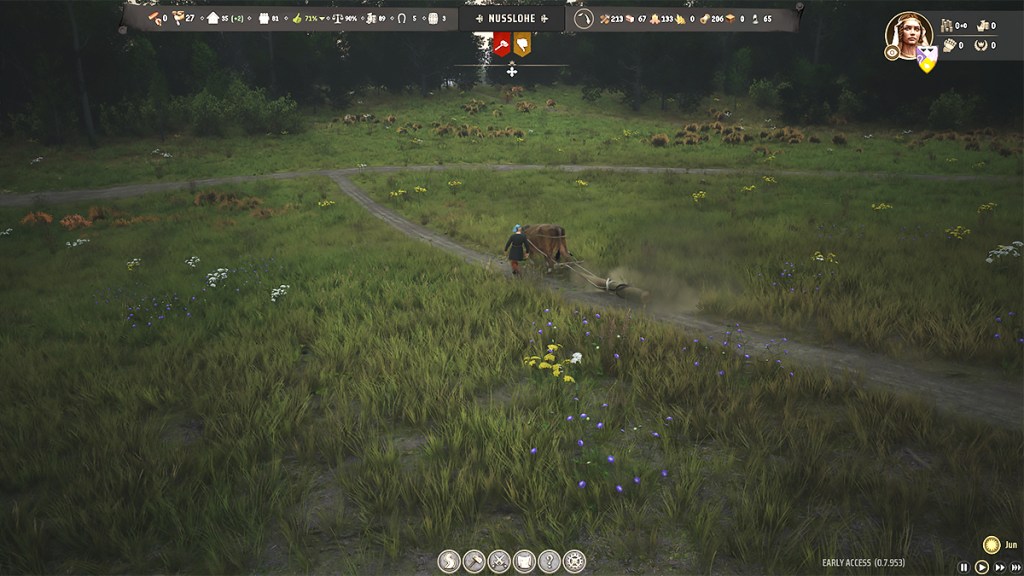
- Un-assigning Workers to Free Oxen: This is a particularly clever, community-discovered trick that leverages the game’s mechanics of oxen management.
- Principle: Oxen are tied to Logging Camps and are essential for transporting heavy logs. When loggers are actively working, their oxen are usually busy felling trees and transporting newly cut timber. However, unassigned villagers will often prioritize general tasks, including the collection of orphaned resources, if an ox is available.
- Execution: Temporarily un-assign some or all workers from an existing Logging Camp. This will free up the oxen associated with that camp. The now-idle villagers, along with any other unassigned villagers, will then be more likely to pick up abandoned logs across the settlement, using the newly available oxen for transport to the nearest Logging Camp.
- Caveat: This will temporarily halt regular logging operations, so it should be used strategically for targeted cleanup efforts rather than as a permanent solution. Once the logs are cleared, reassign the workers to resume normal logging.
Official Stance and Future Development

While developer Slavic Magic has not issued specific "statements" solely on the issue of orphaned resources, the mechanics themselves—the degradation of exposed goods, the blocking of construction, and the existence of the "exposed goods" warning—strongly suggest that this is an intentional design choice rather than a bug. It serves as a subtle, yet impactful, mechanic to simulate the logistical challenges of medieval settlement management, where efficient planning and careful resource flow are critical.
As Manor Lords is in early access, the game is subject to continuous development and refinement. It is plausible that future patches and updates could introduce quality-of-life improvements related to villager AI pathfinding, resource prioritization, or even new player commands for more direct control over site clearing. For instance, a "clear area" command that explicitly tasks unassigned villagers with removing all resources from a designated zone could be a welcome addition, offering players a less micro-intensive solution. The ongoing dialogue between the developer and the player community, facilitated by the early access model, will undoubtedly shape how these types of logistical puzzles evolve.
Broader Impact and Game Design Philosophy
The challenge of managing orphaned resources in Manor Lords is more than a minor annoyance; it’s an integral part of the game’s immersive design philosophy. It forces players to think critically about every aspect of their settlement, from initial layout to the consequences of demolition. This "puzzle" element encourages proactive planning:
- Spatial Planning: The need to clear sites emphasizes the importance of strategic placement for storage buildings and production facilities to minimize transport distances.
- Economic Awareness: The degradation of exposed goods reinforces the value of every resource, pushing players to optimize their supply chains and avoid unnecessary waste.
- Micro-management as a Feature: While some players might prefer a more automated system, the current state of affairs encourages players to engage directly with the simulation, making informed decisions about worker assignments and area management. This deep engagement is a hallmark of complex strategy games.
This aspect of Manor Lords contributes to its distinct identity within the city-builder genre, balancing aesthetic appeal with a demanding simulation. It ensures that players are not merely observers of their medieval towns but active participants in their logistical intricacies, where every decision, from felling a tree to demolishing a hut, has tangible and sometimes challenging consequences.
In conclusion, while the sight of abandoned supplies might initially confound players seeking order in their burgeoning medieval domains, Manor Lords provides the tools to address these logistical snags. By understanding the underlying mechanics of villager AI, optimizing road networks, strategically assigning workers, and effectively utilizing the "Limit Work Area" function, players can maintain a clean, efficient, and rapidly expanding settlement. These community-discovered strategies are not just workarounds; they are testament to the game’s depth and the engaging challenge it offers, reinforcing that mastering Manor Lords is as much about tactical cleanup as it is about grand strategic vision. As the game continues its early access journey, these insights will remain crucial for any aspiring lord looking to build a truly prosperous and well-ordered manor.