


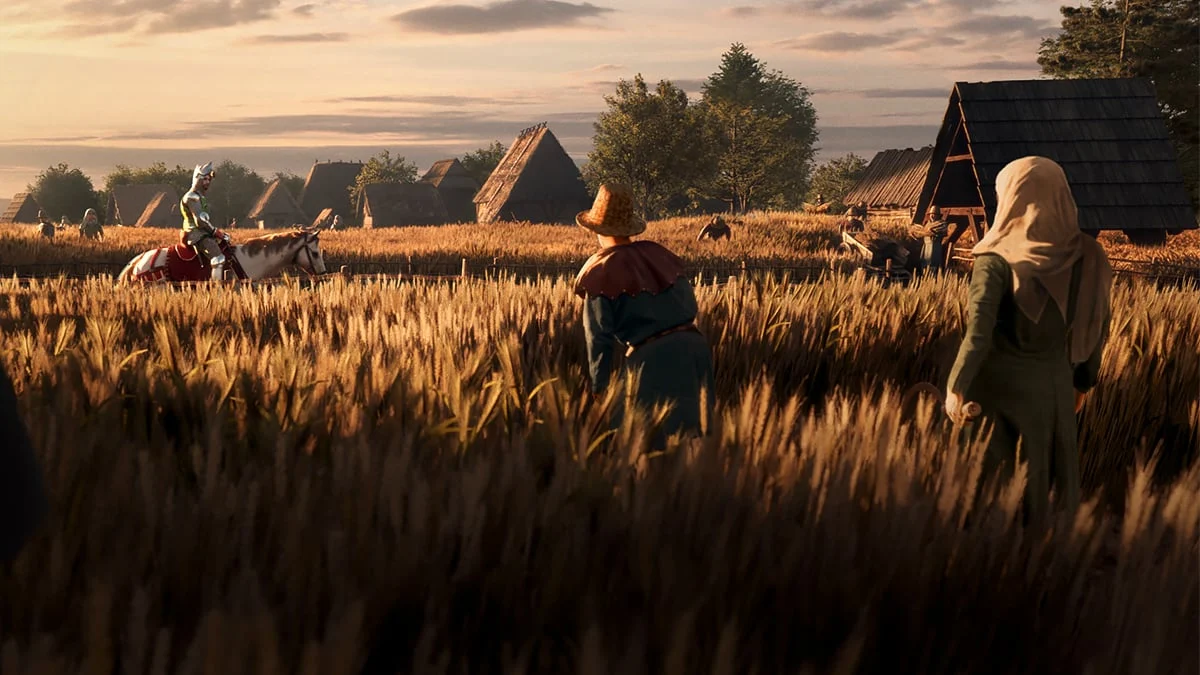
Farming stands as a foundational pillar in the medieval city-builder Manor Lords, an activity players are encouraged to prioritize from the earliest stages of settlement development. It is the bedrock upon which a thriving community is built, directly influencing both the survival and morale of a burgeoning population. Beyond merely preventing starvation, a robust agricultural system underpins the production of essential goods and contributes significantly to the economic stability and growth of a player’s domain. Understanding the nuances of crop selection, soil management, and production chains is paramount for any lord aiming to transform a humble encampment into a formidable regional power.
The Primacy of Sustenance: Early Game Agricultural Strategy
Upon establishing a new settlement, the immediate and most critical objective is to secure a reliable food supply. The initial focus must unequivocally be on Wheat, or "Emmer" as it is referred to in the game’s fertility indicators. This grain is the sole ingredient for bread, a staple food that will dictate the survival of villagers, especially through the harsh inaugural winters. Without a consistent and ample supply of bread, settlements face the grim prospect of widespread starvation, leading to population decline and ultimately, collapse.
The agricultural cycle in Manor Lords is deeply intertwined with the changing seasons. Crucially, there is no harvest during the winter months. This seasonal constraint necessitates strategic planning to cultivate a substantial surplus of grain during the autumn harvest. To process this raw grain into consumable bread, players must construct a Windmill to mill the wheat into flour and a Communal Oven for baking. Ensuring these structures are operational and staffed before winter sets in is a non-negotiable step in early game progression. A common early-game pitfall is underestimating the volume of grain required, often leading to a winter food crisis. Expert players often aim for at least a year’s worth of surplus in their granaries by late autumn, factoring in potential population growth.
Once the immediate threat of starvation is mitigated through a stable wheat supply, the agricultural focus can strategically shift towards diversification. Barley emerges as the next priority. While not a direct food source, Barley is essential for brewing ale, which serves as a vital morale booster for villagers. Regular access to ale significantly contributes to the approval rating of a settlement, influencing growth rates and productivity. The production chain for ale involves a Malt House (often an upgrade to a Burgage Plot) and a Brewery, highlighting the interconnectedness of farming with residential development.
Understanding Crop Types and Their Strategic Applications
Manor Lords features four primary crop types, each with distinct characteristics and uses:
- Emmer (Wheat): As discussed, this is the cornerstone of the food economy. Grown for its grain, which is then processed into flour and baked into bread. It is generally a robust crop but demands good soil fertility.
- Barley: Primarily cultivated for brewing ale. While not directly consumed, its role in maintaining villager morale makes it indispensable for a thriving settlement.
- Flax: This crop is unique in its application, yielding flax fiber. This fiber is then processed into linen at a Weaver Workshop, which is used to produce clothing. Clothing is another essential commodity for villager comfort and, in later stages, can become a valuable trade good.
- Rye: Similar to Wheat, Rye is another grain crop used for bread production. It is often noted for its resilience and ability to grow in less fertile soils compared to Wheat, making it a valuable alternative or supplementary crop, especially in regions with suboptimal Emmer fertility.
The game’s terminology for Wheat, "Emmer," can initially cause confusion, as there is no "Wheat Fertility" indicator. This historical term refers to an ancient species of hulled wheat, underscoring the game’s commitment to historical authenticity, even if it adds a slight learning curve for players. Recognizing Emmer as the game’s representation of Wheat is crucial for effective land planning.
The Imperative of Soil Fertility and Crop Rotation
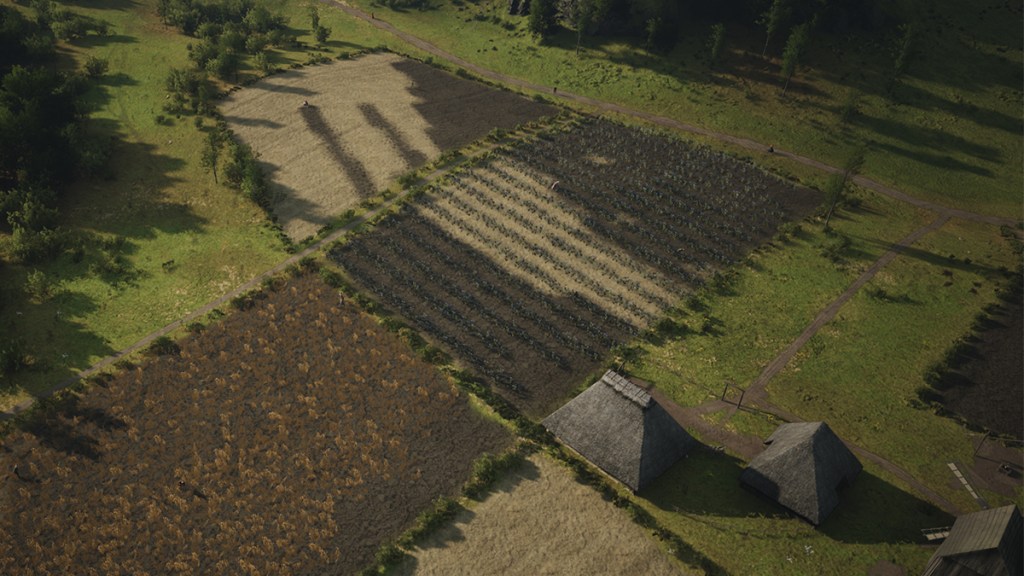
A fundamental mechanic in Manor Lords agriculture is the dynamic nature of soil fertility. Continuous cultivation of a single crop type in a field will inevitably deplete its nutrients, leading to diminished yields over time. To combat this degradation and ensure long-term productivity, the implementation of crop rotation is absolutely essential.
Players can access a dedicated "Farming" tab within the Construction menu. This tab provides a critical tool: a color-coded land fertility indicator for each crop type (Emmer, Flax, Barley, Rye). Bright green signifies highly fertile land, ideal for cultivation, while shades of orange and red indicate poor fertility, which should be avoided or carefully managed. When establishing new fields, players are advised to consult this overlay diligently to maximize initial yields.
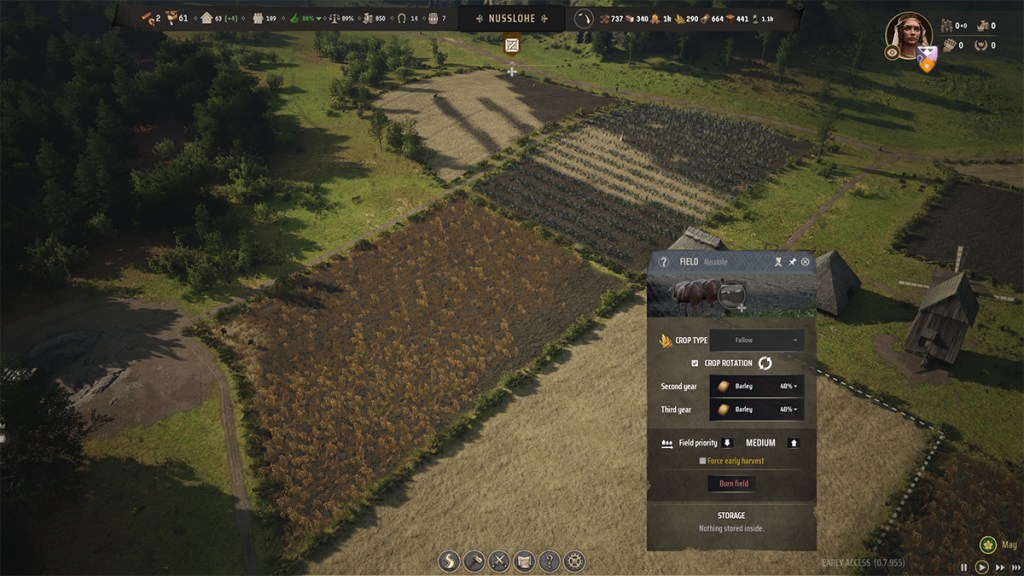
The game allows players to schedule a three-year growing cycle for each field. The most effective strategy involves letting a field lie fallow for at least one year within this cycle. A fallow field is left uncultivated, allowing the soil to naturally replenish its nutrients, thereby restoring fertility. An alternative to fallow is using the field for pasture, which, if sheep are present, can also contribute to fertility restoration through natural fertilization. A common and highly effective rotation is: Crop 1 -> Crop 2 -> Fallow/Pasture. For instance, Wheat -> Barley -> Fallow. This three-field system is the cornerstone of sustainable medieval agriculture simulation within Manor Lords.
Fields are measured in morgen, an archaic unit of land measurement. A tooltip often advises players to create fields of approximately 1 morgen in size. While a single 1-morgen wheat plot can theoretically feed a small town, this assumes optimal conditions and does not account for fertility depletion. Realistically, a single family can manage approximately 2/3 of a morgen per year. Therefore, to ensure continuous food supply while maintaining soil health, it is prudent to establish at least three fields for every crop type intended for sustained production: two fields actively growing crops and one lying fallow or being pastured. This allows for continuous production while ensuring fertility regeneration.
Key Structures and Workforce Management
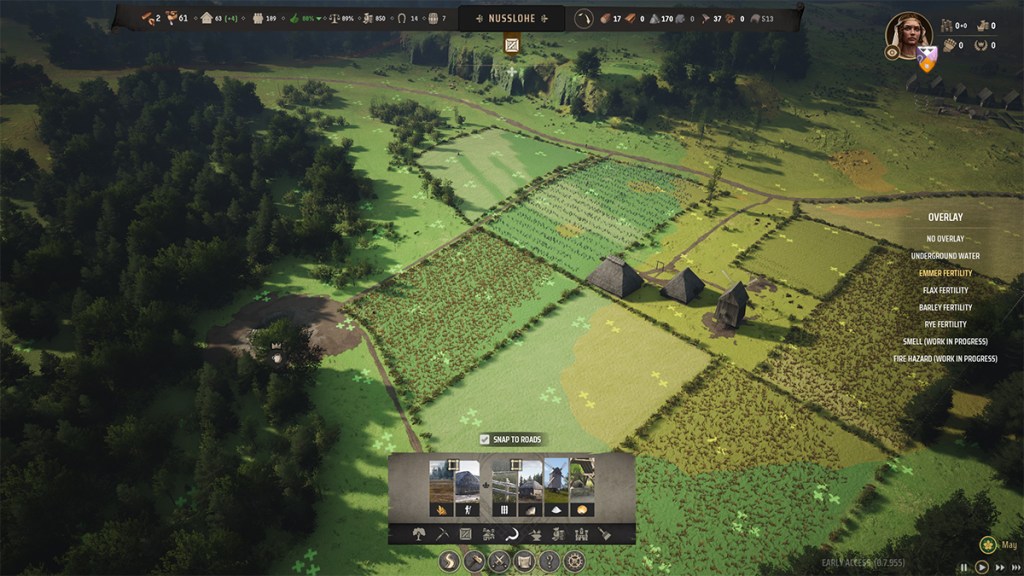
Efficient farming relies on a network of interdependent structures and a well-managed workforce:
- Farmhouse: The central hub of agricultural operations. Villagers assigned to a Farmhouse will plough fields, sow seeds, harvest crops, and transport goods to storage. Multiple Farmhouses may be required for larger agricultural operations spread across the map.
- Granary: Essential for storing harvested grain and other unprocessed food items. Proximity to Farmhouses and processing buildings (Windmill) is crucial for minimizing travel time and maximizing efficiency.
- Windmill: Converts harvested grain (Wheat, Rye, Barley) into flour. This is a critical step in the bread-making and ale-brewing chains.
- Communal Oven: Bakes flour into bread. This is often an upgrade to a Burgage Plot or a standalone structure.
- Malt House: Converts Barley into malt, a necessary ingredient for brewing ale.
- Brewery: Utilizes malt to brew ale, boosting villager morale.
- Weaver Workshop: Processes flax into linen and then into clothing.
The allocation of families to these structures is a delicate balancing act. While a single family can manage a significant portion of a field, the entire agricultural pipeline, from planting to processing and distribution, requires a coordinated effort. Over-assigning families to farming might leave other sectors understaffed, while too few farmers will result in spoilage or missed harvest windows. Players must constantly monitor their workforce and adjust assignments based on seasonal demands and production bottlenecks.
Strategic Enhancements: Development Points and Specializations
As a settlement grows and Burgage Plots are upgraded, players earn Development Points. These points can be invested in various skill trees, one of which directly enhances agricultural productivity and diversification. Thoughtful allocation of these points can significantly streamline farming operations and unlock advanced capabilities:
- Heavy Plough: This is arguably one of the most impactful early farming developments. It allows fields to be ploughed using oxen, dramatically increasing the speed and efficiency of fieldwork. This is crucial for managing larger fields and ensuring crops are sown and harvested within optimal seasonal windows.
- Fertilization: This development allows fields to recover fertility more rapidly while fallow, or introduces methods to actively improve soil quality. This reduces the reliance on extended fallow periods, potentially allowing for more frequent cropping cycles.
- Sheep Farming: While not directly a crop, sheep are a vital part of the agricultural ecosystem. This development improves sheep productivity, providing wool (for clothing) and meat, and their grazing can contribute to field fertility. Integrating sheep pasture into crop rotation offers a dual benefit.
- Orchard Cultivation: Unlocks the ability to plant orchards within Burgage Plots. Orchards provide fruit, another food source, contributing to dietary variety and overall food security. This is a passive food income stream that requires minimal direct management once established.
- Rye Cultivation: Though Rye can be grown without a specific development, this point might enhance its yield or resilience, making it a more viable alternative to Wheat, particularly in areas less suited for Emmer. (Note: Specific development names might vary in game, but these represent common agricultural upgrades).
Choosing which development points to invest in depends heavily on the player’s immediate needs, regional resources, and long-term strategy. For instance, a region with abundant sheep pastures might prioritize Sheep Farming, while a land-scarce region might benefit more from Fertilization or Orchard Cultivation to maximize yield per square morgen.
Broader Economic and Social Implications
Farming in Manor Lords extends far beyond mere sustenance. A well-managed agricultural sector fuels the entire economy:
- Trade: Surplus grain, flour, bread, linen, and even ale can be traded with neighboring regions, generating regional wealth and allowing players to import resources they lack. This is particularly crucial for acquiring raw materials for advanced industries or military expansion.
- Population Growth: A stable food supply and high morale (influenced by ale and clothing) directly contribute to villager approval, which in turn drives population growth. More villagers mean more available labor for other industries, accelerating the settlement’s development.
- Self-Sufficiency: A diverse agricultural base reduces reliance on external trade for basic necessities, making the settlement more resilient to economic fluctuations or trade route disruptions.
- Military Provisioning: In times of conflict, a strong agricultural backbone ensures that militia forces are well-fed, maintaining their effectiveness and morale during campaigns.
In essence, the agricultural system in Manor Lords is a complex interplay of environmental factors, historical practices, and strategic decision-making. It demands constant attention, adaptation, and foresight. While the visual aesthetic of vast, stretching farmlands might be appealing, the true art of farming in Manor Lords lies in efficient resource management, understanding the land’s capabilities, and implementing sustainable practices. A player who masters these aspects will not only ensure the survival of their villagers but will also lay the groundwork for a prosperous and enduring medieval empire, where every harvest is a testament to careful planning and strategic foresight.