



The world of UMIGARI, the latest offering from indie developer Chilla’s Art, challenges the conventional notion of fishing simulators by plunging players into a narrative steeped in cosmic horror, existential dread, and a profound, albeit disturbing, social commentary. Far from the tranquil waters of typical simulation games, UMIGARI presents a flooded landscape teeming with grotesque mutations and desperate human survivors, all caught in the throes of a mysterious curse. This title, which has garnered attention for its unsettling themes and unique blend of genres, prompts a critical examination of our relationship with the natural world and the darker aspects of human nature.
The Genesis of the Curse: A World Drowning in Suffering
UMIGARI‘s narrative unfolds in a world irrevocably altered by a cataclysmic event. The core premise revolves around a curse that has inverted the natural order: fish have been transformed into humans, and humans, into aquatic beings. This supernatural phenomenon is attributed to an omnipotent whale, an entity driven to enact vengeance upon humanity for its perceived exploitation and mistreatment of marine life. The game positions the player as an individual tasked with navigating this transformed world, seeking to unravel the mystery of the curse and, potentially, find a way to end it. The ultimate goal involves locating three ancient tablets, which are said to reveal the path to a distant island where the omnipotent whale resides, holding the key to restoring balance.

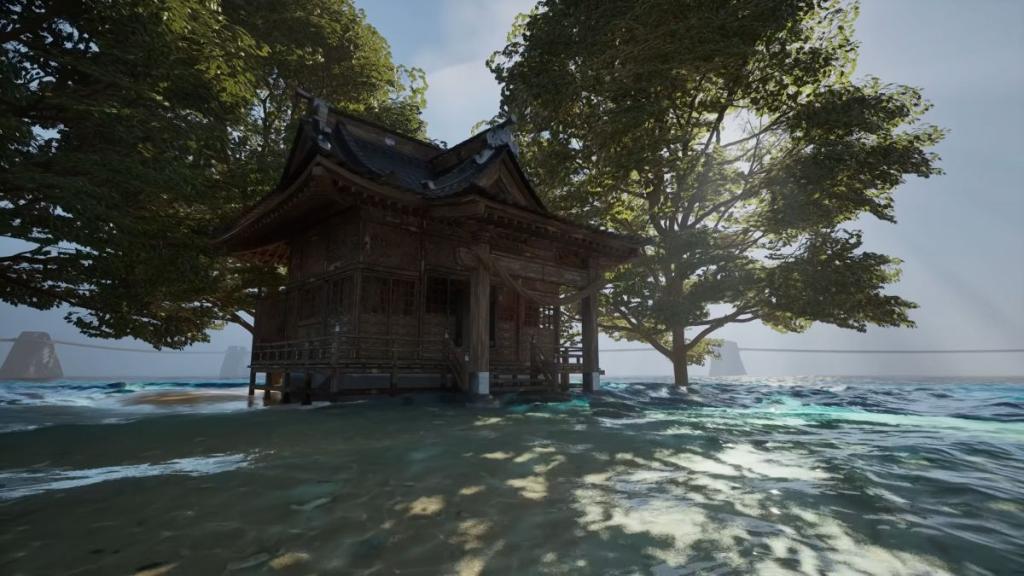
The environmental design of UMIGARI is central to its unsettling atmosphere. The flooded world is populated by a menagerie of bizarre and horrifying sea creatures. These are not merely mutated fish; they are disturbing amalgamations that blur the lines between the familiar and the grotesque. Descriptions from early players and promotional materials detail creatures with fins composed of human limbs, fish adorned in schoolgirl uniforms, hammerhead sharks bearing human-like lips and immense eyes, and stingrays with disturbingly plastered human faces. The very act of fishing, a traditionally passive and often relaxing activity, becomes fraught with peril and psychological distress as players reel in these nightmarish entities.
Navigating a Twisted Reality: Gameplay and Core Mechanics
At its heart, UMIGARI retains elements of a fishing simulator, but the experience is drastically recontextualized. The primary gameplay loop involves navigating the flooded expanse in a boat, fishing for sustenance and resources, and upgrading equipment. However, the "catch" takes on a profoundly disturbing dimension. As the game’s narrative progresses, it becomes apparent that many of the creatures caught are not simply fish but are, in fact, former humans transformed into aquatic beings. This realization forces players to confront the ethical implications of their actions, transforming the act of fishing into a grim hunt for sentient beings.
The game’s progression is tied to the acquisition of resources and upgrades for the player’s vessel. Crucially, the speed of the boat becomes paramount, primarily as a means to evade a relentless sea spirit that actively hunts the player between locations. This pursuit adds a constant layer of tension and danger, forcing strategic navigation and resource management. The economic system within the game, while seemingly straightforward—selling fish for currency—also contributes to the thematic exploration of greed and exploitation. As players venture further, the value of their catch increases, incentivizing a relentless cycle of hunting and resource depletion, ironically mirroring the very exploitation that the curse is meant to address. This creates a paradox: to survive and potentially end the curse, the player must engage in the same destructive behavior that the omnipotent whale sought to punish.
Thematic Underpinnings: A Mirror to Human Cruelty
UMIGARI‘s narrative and mechanics are deeply rooted in a critique of humanity’s impact on the natural world and the inherent complexities of morality. The curse, as explained within the game, is a direct response to the suffering inflicted upon fish by humans. The transformed fish, now inhabiting human forms, exhibit extreme hunger, resentment, and a propensity for violence, including cannibalism. This twisted reflection of human behavior suggests that the curse is not merely a supernatural event but a dark, allegorical examination of the worst aspects of human nature—greed, aggression, and a capacity for cruelty.
The game prompts players to question the very definition of evil. Are the fish-turned-humans inherently malevolent, or are their actions a direct consequence of the suffering they endured? Conversely, are the humans who continue to hunt and consume these transformed beings any less monstrous? UMIGARI deliberately blurs these lines, forcing players to confront the uncomfortable possibility that humanity, in its core, harbors a capacity for immense harm. The narrative can be interpreted as a commentary on environmentalism, animal rights, and the often-unacknowledged suffering of non-human species. The surreal and often grotesque imagery serves to amplify the emotional weight of these themes, making the player’s experience viscerally impactful.
Folklore and Fears: The Monsters of UMIGARI
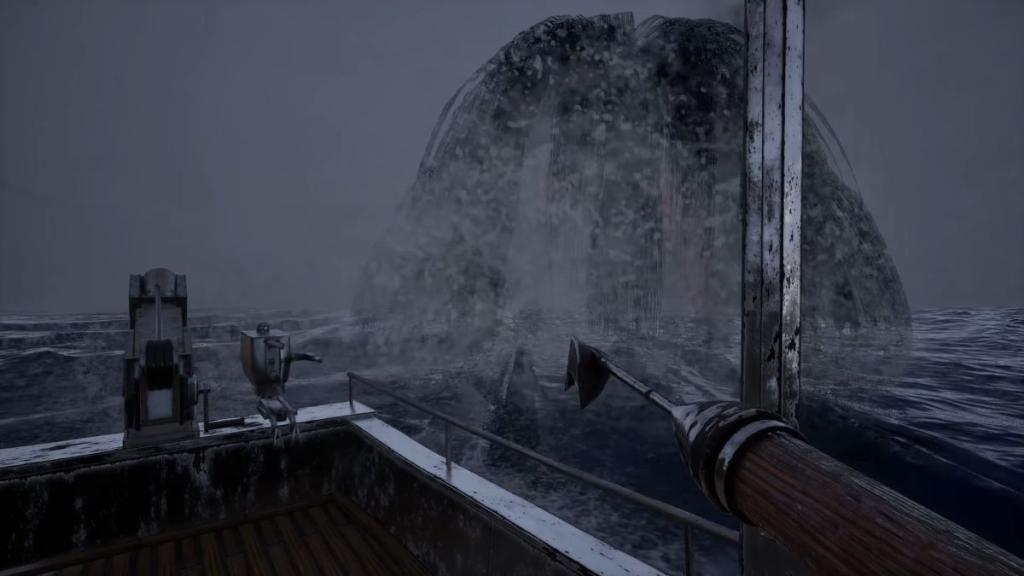
The creatures that populate UMIGARI‘s world draw heavily from Japanese folklore, adding another layer of depth and cultural resonance to the game’s horror. The most prominent antagonist is the Umiga, a colossal female ocean spirit. Her presence in the open waters serves as a constant threat, and players must strategically use bells on buoys to ward her off. The Umiga’s appearance is described as a monstrous female head that contorts into a gaping maw, from which arms emerge to drag boats to their watery graves. This entity may be a reference to the Umi-nyōbō, a yōkai known to lure sailors to their deaths, or a larger manifestation of the Nure-onna, a serpent-like creature with a woman’s head.

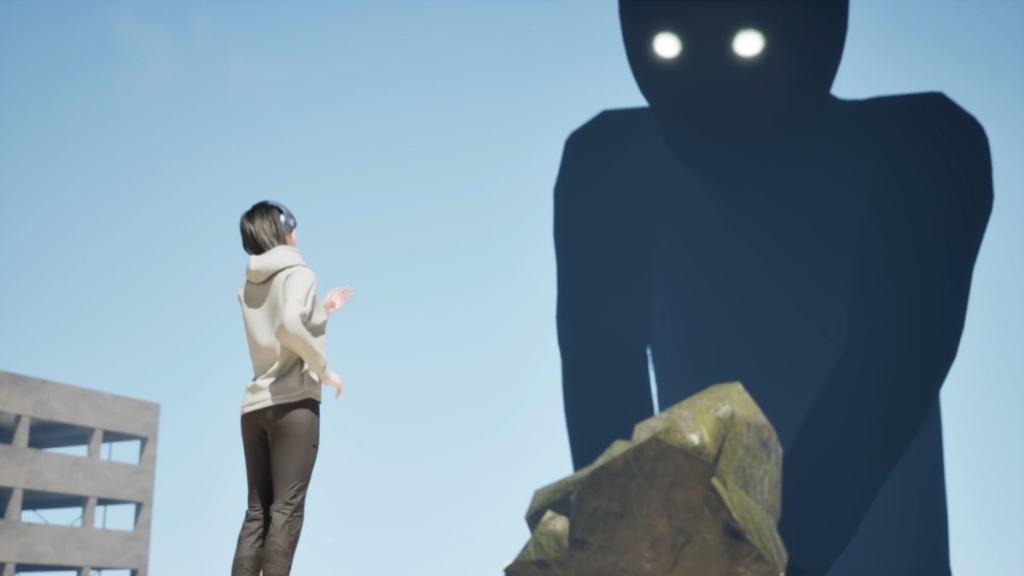
Another significant entity is the Umibōzu, a sea giant depicted as a gigantic, shadowy figure that capsizes boats. This yōkai is encountered later in the game, particularly within a surreal, Spirited Away-esque train sequence inside a "Suspicious Dome." The inclusion of these folkloric figures not only enhances the game’s terrifying atmosphere but also connects the modern-day narrative of environmental exploitation to ancient fears and cautionary tales.
Beyond these primary threats, the game features other creatures inspired by Japanese mythology. The Nure-onna, with its unsettling combination of a woman’s head and a serpent’s body, is presented as a creature that must be hunted for a quest. Similarly, the Ningyo, mermaid-like beings associated with bad omens yet rumored to grant immortality, are also targets for specific in-game objectives. These encounters highlight the game’s intricate weaving of its core themes with traditional mythologies, creating a world that feels both alien and strangely familiar.
Divergent Destinies: The Endings of UMIGARI
UMIGARI culminates in two distinct endings, both contingent on the player’s responses to the omnipotent whale’s interrogations. The whale, presented as a figure of immense power and cosmic awareness, questions the player’s role as a "human hunting fish" and seeks to understand the nature of the humans encountered. These interactions form the crux of the game’s philosophical inquiry, forcing players to reflect on their actions and their interpretation of the events.
Ending A: The Cynical Extinction
If the player answers affirmatively to the whale’s questions, acknowledging that humans, including themselves, were inherently evil, the curse is lifted. This leads to a chilling conclusion where the ocean is depicted as being flooded with drowned corpses, signifying the complete eradication of humanity. This ending presents a deeply cynical view, suggesting that humanity’s destructive nature is an immutable trait. It posits that if humans are fundamentally flawed, the only solution for preventing further suffering is their complete removal from existence. This bleak resolution serves as a stark warning, leaving players to ponder the futility of change and the potential for any species to fall prey to similar vices.
Ending B: A Glimmer of Coexistence
Conversely, if the player consistently answers negatively to the whale’s questions, suggesting that coexistence between humans and aquatic creatures is possible, a different future unfolds. The curse remains, with fish still inhabiting human forms and vice-versa. However, this transformed world is one of peace and harmony. The cutscene showcases a society where fish-humans have established communities, hold jobs, attend school, and engage in trade. Humanity, now living in the water, experiences a newfound sense of freedom and has the opportunity to "be good," finding a new meaning in existence. This wildly imaginative and optimistic conclusion, while still surreal, offers a hopeful perspective, suggesting that through empathy and a willingness to understand, a harmonious future is attainable, even in the face of profound change.
Broader Implications and Developer’s Intent
Chilla’s Art has consistently explored dark and unconventional themes in their games, often touching upon psychological horror and societal critiques. UMIGARI stands as perhaps their most ambitious exploration of these themes, utilizing the familiar framework of a fishing simulator to deliver a potent message about environmental responsibility and the complexities of interspecies relations. The game’s surrealism and disturbing imagery are not merely for shock value; they are integral tools for conveying the profound suffering that lies at the heart of its narrative.
The game’s success in provoking thought and discussion among players highlights the potential for interactive media to engage with complex ethical and philosophical questions. By forcing players to actively participate in a morally ambiguous scenario, UMIGARI encourages introspection and a reevaluation of their own perspectives on humanity’s role in the world and its relationship with other living beings. The title serves as a potent reminder that even seemingly simple activities, when viewed through a different lens, can reveal uncomfortable truths about our own nature and the consequences of our actions.