


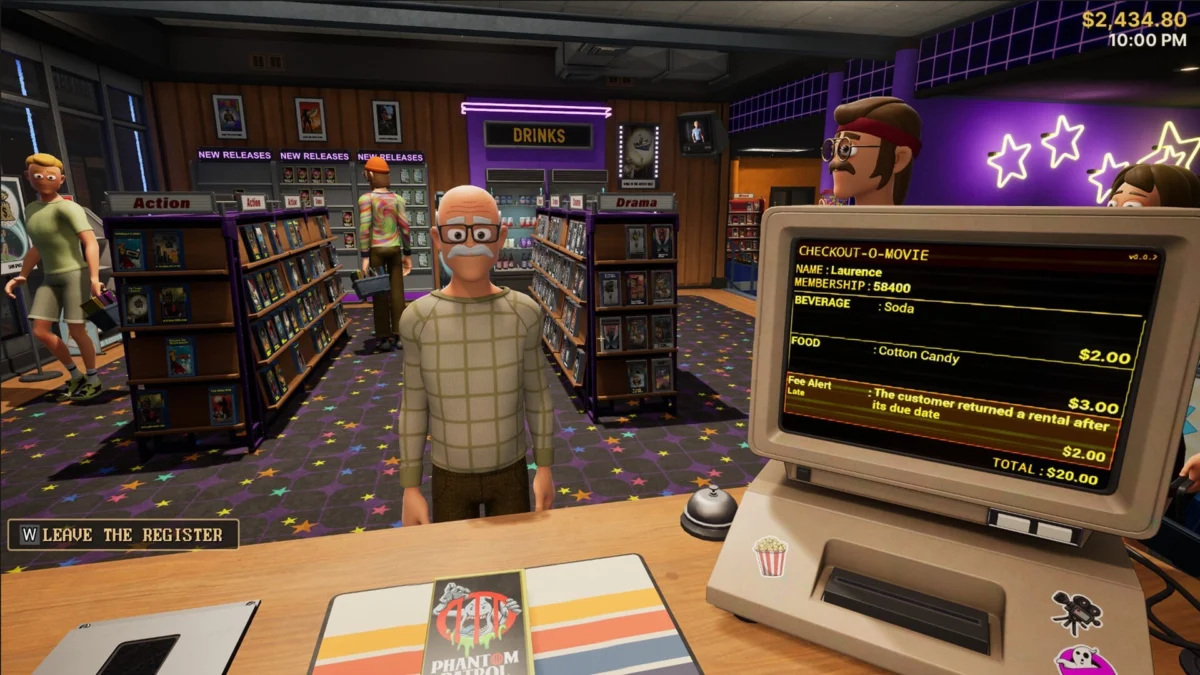
The digital storefront landscape has witnessed a significant shift following the March 17 release of Retro Rewind – Video Store Simulator, a management title that has rapidly ascended the sales rankings. Within its first week of availability on PC, the game has secured the eighth position on the Steam "Top Sellers" chart for the Great Britain region, outperforming several high-budget contemporary releases. This sudden surge in popularity has prompted a wave of inquiries from the console gaming community, specifically regarding potential releases for the Xbox Series X|S and PlayStation 5 platforms. However, current communications from the development team suggest that console enthusiasts may face a protracted wait, as the studio prioritizes the optimization and expansion of the existing PC version.
The Rapid Ascent of Retro Rewind
Retro Rewind – Video Store Simulator taps into a growing market trend centered on hyper-specific management simulations and 1980s-1990s nostalgia. The game tasks players with the comprehensive management of a period-accurate video rental establishment, requiring them to oversee inventory acquisition, staff management, customer service, and the physical organization of the storefront. Its rise to the eighth spot on the Steam GB Top Sellers list is a testament to the "simulator" genre’s enduring appeal, which has seen similar successes in titles like Supermarket Simulator and Gas Station Simulator.
The timing of the release on March 17 appears to have capitalized on a lull in major AAA releases, allowing the indie title to capture a significant share of the market’s attention. Industry analysts note that the game’s success is driven largely by its aesthetic commitment to the VHS era and a gameplay loop that balances mundane administrative tasks with strategic business growth. Despite this momentum, the lack of a multi-platform strategy at launch has left a significant portion of the gaming audience—specifically those on home consoles—searching for answers regarding a port.
Developer Stance and the Official FAQ
Addressing the growing demand for console versions, the development team has pointed toward an official FAQ originally published in November 2025. At that time, the developers were explicit about their technical and operational priorities. The statement released by the studio emphasized a "PC-first" philosophy, citing the need for stability and performance optimization across a diverse range of computer hardware before considering other platforms.
"We are currently focused on making the best PC game possible," the official FAQ states. "Please don’t expect console ports. We have optimized Retro Rewind for performance, so it should run well on a wide range of systems."
This conservative approach is common among smaller development teams. Porting a title to Xbox or PlayStation requires navigating rigorous certification processes, adjusting user interfaces for controller input, and optimizing hardware-specific APIs. By focusing exclusively on the PC architecture, the developers aim to ensure a polished core experience, avoiding the technical pitfalls that often plague simultaneous multi-platform indie launches.
Chronology of Development and Future Roadmap
The development of Retro Rewind – Video Store Simulator has followed a transparent, albeit focused, trajectory. Following the initial reveal and subsequent FAQ in late 2025, the studio moved toward its March release with a clear list of priorities. While the current version of the game is functional and commercially successful, the developers have outlined a comprehensive roadmap that details the next phase of the game’s evolution.
Significantly, the roadmap does not currently list "Console Development" as a milestone. Instead, the team is focusing on deepening the simulation mechanics. Key features slated for upcoming updates include:
- Controller Integration: While the game currently favors mouse and keyboard inputs for menu navigation and shelf organization, the addition of native controller support is a high-priority update. This is often viewed by industry observers as a necessary precursor to any eventual console port.
- Backstore Storage Management: Players will soon be able to manage overflow inventory, adding a layer of logistical complexity to the business simulation.
- VHS Repair Station: A new gameplay mechanic involving the physical restoration of damaged rental tapes, further leaning into the tactile nostalgia of the 1990s.
- Staff Management Overhaul: Expanded AI routines for employees to allow for more complex delegation of daily tasks.
Technical Implications and the Role of Project Helix
For Xbox users specifically, the absence of a native console port may eventually be mitigated by Microsoft’s internal technological shifts. Recent discussions within the industry have highlighted "Project Helix," a burgeoning initiative aimed at bridging the gap between the Xbox console ecosystem and the PC environment.
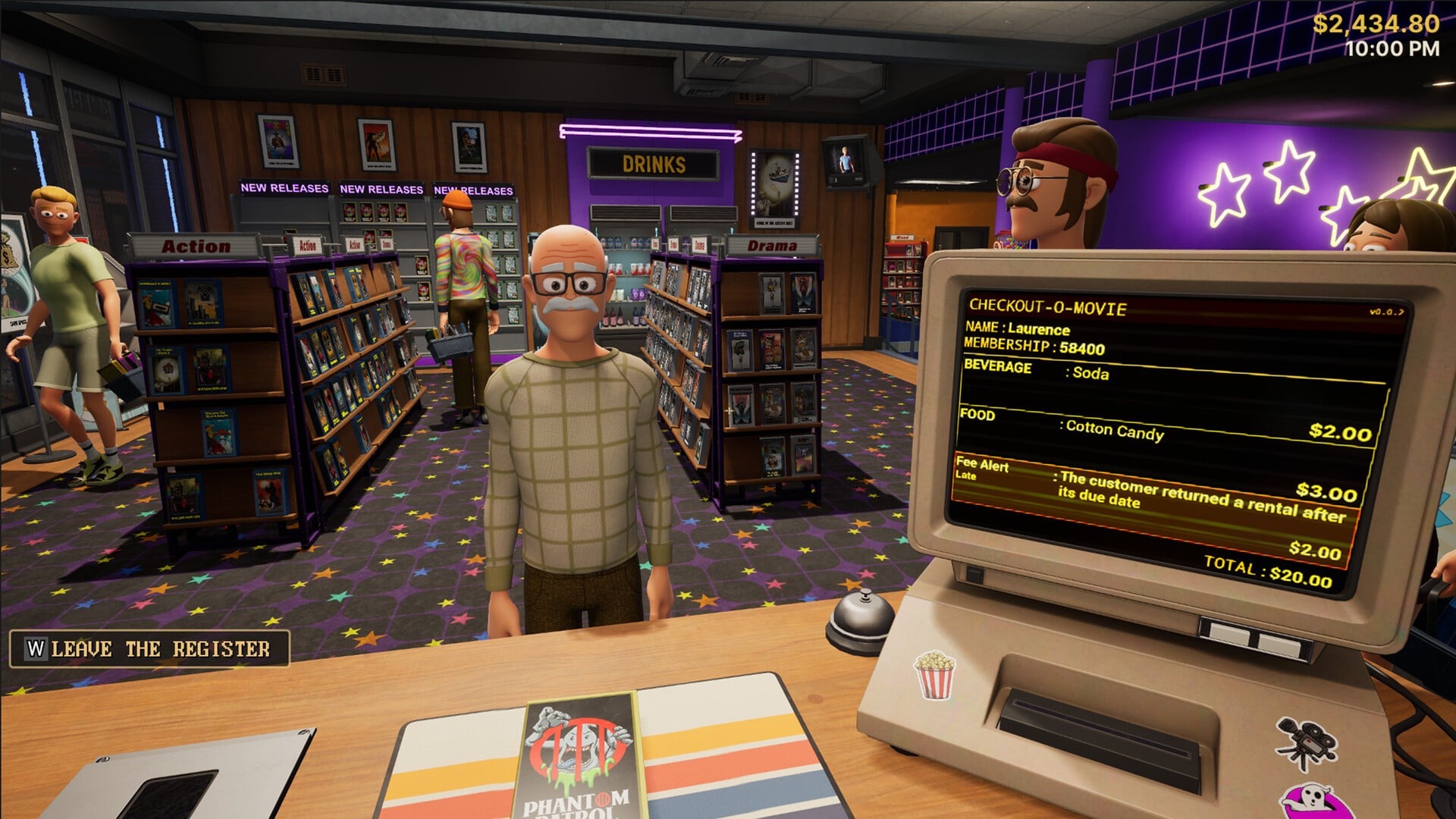
According to Xbox executive statements made earlier in March 2026, Project Helix is designed to create a unified environment where the hardware can natively execute both console-coded and PC-coded applications. If this technology reaches full implementation, Retro Rewind – Video Store Simulator could theoretically become playable on Xbox hardware without the developers needing to build a dedicated console port from scratch.
Analysts suggest that Project Helix represents Microsoft’s response to the increasing difficulty and cost of traditional console development. By allowing a system to run PC versions of games with minimal overhead, Microsoft could potentially grant its console users access to a massive library of indie titles that, like Retro Rewind, currently lack the resources for a dedicated port.
Market Context: The Simulator Genre Boom
The success of Retro Rewind – Video Store Simulator is not an isolated event but rather part of a broader market shift. Over the last three fiscal years, the "Job Simulator" sub-genre has evolved from a niche category into a pillar of the indie gaming economy. Data from SteamDB indicates that management simulators consistently maintain high player retention rates compared to narrative-driven indie games.
The appeal lies in the "gamification of the mundane." By taking a defunct business model—the video rental store—and turning it into a series of manageable tasks, the developers have tapped into a sense of digital craftsmanship. The British market, in particular, has shown a strong affinity for these titles, which explains the game’s high standing on the GB-specific charts.
The financial success of the PC version often serves as the "proof of concept" required for third-party porting houses to take interest. In many cases, an indie developer will partner with an external studio (such as BlitWorks or 4J Studios) to handle the transition to Xbox and PlayStation. If sales for Retro Rewind continue to climb, it is highly probable that such a partnership will be explored, regardless of the "no console ports" stance taken in the November 2025 FAQ.
Broader Implications for Indie Publishing
The current situation surrounding Retro Rewind highlights a recurring tension in the modern gaming industry: the disparity between viral success and development capacity. When a game becomes an overnight sensation on Steam, the developer is often inundated with demands for ports, localized versions, and mobile adaptations that were never part of the original business plan.
For the creators of Retro Rewind, the decision to remain on PC for the foreseeable future is a strategic move to maintain quality control. In an era where "Review Bombing" and social media backlash can derail a game’s momentum, releasing a sub-optimal console port can be more damaging than not releasing one at all.
Furthermore, the "Early Access" nature of many modern simulators means that the game’s code is constantly changing. Attempting to maintain parity between a PC build and a console build during a period of rapid feature expansion (like the addition of the VHS repair station) can lead to development bottlenecks.
Conclusion and Outlook
As it stands, Retro Rewind – Video Store Simulator remains a PC-exclusive success story. Its position as the eighth top-selling game in Great Britain underscores the high demand for nostalgic, detail-oriented simulation experiences. While the developers have officially discouraged expectations for an Xbox or PlayStation version in the near term, the inclusion of controller support in the upcoming roadmap suggests that the technical groundwork for a transition is being laid.
In the interim, the console community remains reliant on the potential of Project Helix or a future shift in the studio’s development priorities. As the game continues to evolve with new features and optimizations, its long-term viability will likely dictate whether the "video store" eventually opens its doors to the console market. For now, the "golden age of video rentals" remains a strictly PC-based revival.