


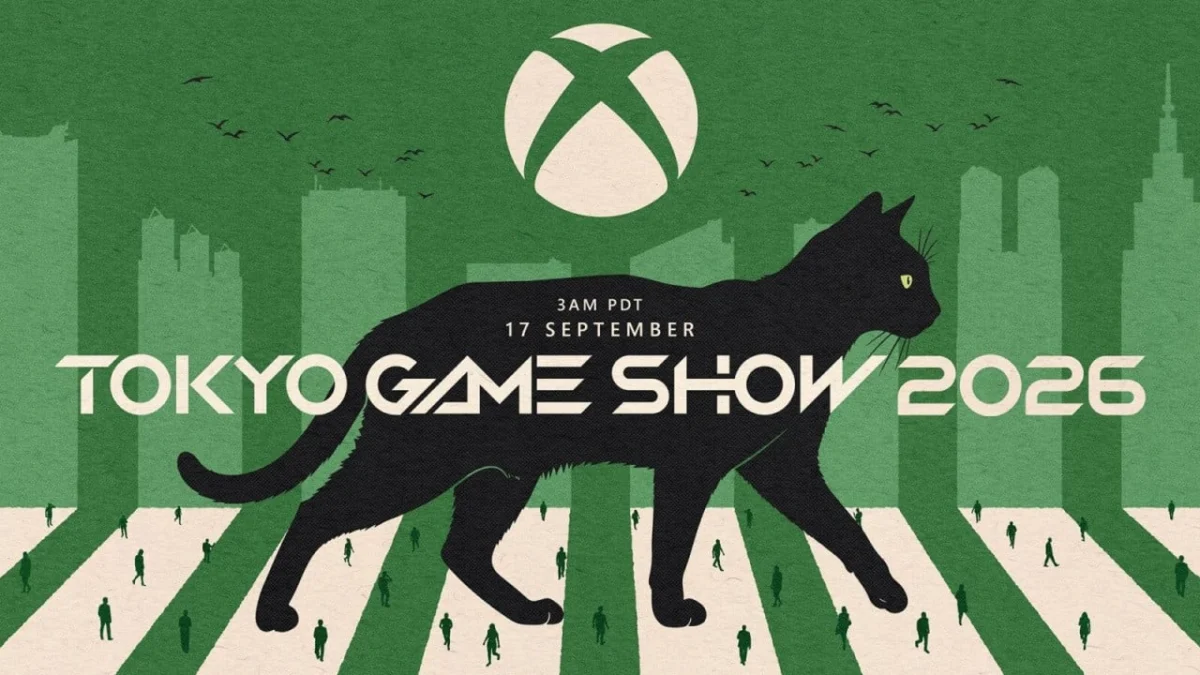
Microsoft’s gaming division has officially announced the scheduling and primary objectives for its upcoming Xbox Tokyo Game Show (TGS) 2026 digital broadcast, signaling a continued commitment to expanding its footprint within the Japanese and broader Asian gaming markets. Scheduled for Thursday, September 17, 2026, the presentation is positioned as a pivotal moment for the company’s 2026 publishing roadmap, featuring a blend of first-party updates and third-party reveals tailored specifically for the regional audience. The broadcast will commence at 7:00 PM JST, which translates to 3:00 AM Pacific Time, 6:00 AM Eastern Time, and 11:00 AM British Summer Time, ensuring a global reach despite its regional focus.
The event will be hosted by Misuzu Araki, a well-known figure in the Japanese gaming community, and is expected to showcase a diverse lineup of titles currently in development for Xbox Series X|S, Windows PC, and the Xbox Game Pass ecosystem. According to official statements from Microsoft, the 2026 showcase will prioritize "moments built specifically for this stage," suggesting that the content has been curated to resonate with the unique aesthetic and gameplay preferences of the Japanese market, while simultaneously maintaining relevance for international viewers.
Historical Context and the Strategic Importance of TGS
The Tokyo Game Show has historically served as a barometer for Xbox’s health in Japan, a market where the brand has faced significant uphill battles since the launch of the original Xbox in 2002. For decades, the Japanese market was dominated by domestic giants Sony and Nintendo, leaving Microsoft with a marginal market share. However, the narrative began to shift during the Xbox Series X|S generation. Through aggressive localization efforts, the expansion of the Xbox Game Pass service, and a concerted effort to court Japanese developers, Microsoft has seen a measurable uptick in regional engagement.
The 2026 broadcast follows a landmark performance at the 2025 event, which many analysts consider a turning point for the brand. Last year’s showcase was headlined by the surprise unveiling of Forza Horizon 6, a move that demonstrated Microsoft’s willingness to use TGS as a platform for major global franchise announcements, rather than just niche regional titles. While the company has cautioned fans not to necessarily expect a reveal of that specific magnitude this year, the precedent set in 2025 has heightened expectations for the 2026 presentation.
Microsoft’s strategy in Japan is currently built on three pillars: hardware accessibility via the Xbox Series S, the value proposition of Game Pass, and the "ID@Xbox" program which supports independent Japanese creators. By leveraging TGS, Microsoft aims to reinforce these pillars, showcasing how global infrastructure can empower local creativity.
Chronology of Xbox’s Recent Japanese Initiatives
To understand the weight of the upcoming 2026 broadcast, one must look at the timeline of Xbox’s regional maneuvers over the last three years. In 2024, Microsoft focused heavily on the integration of Activision Blizzard King titles into the Game Pass library, a move that significantly increased the platform’s appeal in Asian territories where mobile and PC gaming are dominant.
By early 2025, the company had solidified partnerships with major Japanese publishers including Sega, Square Enix, and Capcom. These partnerships resulted in high-profile "day-one" releases on Game Pass, such as entries in the Like a Dragon (formerly Yakuza) and Persona series. The momentum carried into the 2025 Tokyo Game Show, where the focus shifted toward technical prowess and the showcase of the "Velocity Architecture" in localized titles.
Heading into the September 17, 2026, broadcast, the chronology suggests a shift toward software delivery. With the hardware mid-cycle refresh now well-established, the 2026 event is expected to be a "software-first" showcase, focusing on the immediate 12-month release window. This timeline is critical as it aligns with the holiday shopping season, a period where Japanese consumers traditionally increase their spending on interactive entertainment.
Supporting Data: The Growth of the Xbox Ecosystem in Asia
Market data indicates that Microsoft’s investments in the region are yielding tangible results. According to industry reports from early 2026, Xbox Game Pass subscriptions in Japan have seen a year-over-year increase of approximately 18%, outpacing growth in several Western markets. This growth is largely attributed to the inclusion of "JRPG" (Japanese Role-Playing Game) titles and the increasing popularity of cloud gaming, which allows users to play high-end Xbox titles on mobile devices and tablets—a preferred medium for many Japanese gamers.
Furthermore, the Xbox Series S remains a top-selling console in urban Japanese centers due to its compact form factor, which fits more easily into smaller living spaces compared to the larger Xbox Series X or PlayStation 5. Internal Microsoft data suggests that nearly 40% of Xbox Series S owners in Japan are first-time Xbox console buyers, highlighting the success of the entry-level hardware in capturing a new demographic.
The 2026 TGS broadcast is designed to capitalize on this data. By showcasing "TGS-exclusive content," Microsoft is attempting to reward this growing loyalist base while providing a "hook" for the remaining unaligned consumers. The inclusion of new gameplay footage for titles coming later this year serves as a direct response to consumer demand for transparency regarding release schedules and performance benchmarks on current-gen hardware.
Official Statements and Host Dynamics
In the official announcement, Microsoft emphasized the collaborative nature of the event. "Our annual Tokyo Game Show broadcast is proof of what is possible when creativity from across the region meets a truly global platform," the company stated. This sentiment reflects the broader corporate philosophy of Phil Spencer, CEO of Microsoft Gaming, who has frequently traveled to Japan to meet with studio heads and independent developers.
The choice of Misuzu Araki as host is also a calculated move toward authenticity. Araki has been a recurring face for Xbox’s Japanese communications, providing a bridge between the American corporate entity and the Japanese gaming public. Her involvement ensures that the broadcast maintains a tone that is culturally resonant and professionally aligned with Japanese media standards, which often favor a more structured and respectful presentation style compared to the high-energy, "hype-driven" showcases typical of Western events like Summer Game Fest.

Broader Impact and Industry Implications
The implications of the Xbox TGS 2026 broadcast extend beyond mere product announcements. For the gaming industry at large, Microsoft’s continued presence at TGS serves as a vital check on the market monopoly traditionally held by domestic manufacturers. A healthy Xbox presence encourages competitive pricing, diverse content offerings, and better terms for developers who now have multiple viable platforms to launch their products.
For third-party developers, the TGS stage provides a unique opportunity to gain global visibility. Titles that might be considered "niche" in the West often receive a significant boost when featured in an Xbox showcase, as the platform’s global marketing machine can amplify a Japanese indie title to millions of subscribers worldwide. This "halo effect" has become a major selling point for Japanese studios considering exclusivity or Game Pass partnerships.
Furthermore, the focus on "moments built specifically for this stage" suggests that Microsoft may be leaning into cultural collaborations, perhaps involving Japanese music artists, illustrators, or popular culture icons to promote their gaming services. This holistic approach to marketing is essential in a region where gaming is deeply intertwined with broader media consumption habits, including anime and manga.
Anticipated Content and Final Preparations
While Microsoft has kept the specific game list under wraps to maintain the element of surprise, industry analysts expect a strong showing from the ID@Xbox stable, alongside updates on previously announced titles from Xbox Game Studios. There is also significant speculation regarding "stealth drops"—games that are announced and released on Game Pass simultaneously during the broadcast—a tactic that has become a hallmark of Xbox’s digital events.
The broadcast will be available with full Japanese audio and English subtitles, along with support for several other languages, ensuring that the "global platform" mentioned in the press release is accessible to all. As the countdown to September 17 begins, the gaming community remains focused on whether Microsoft can maintain the high bar set by previous years and continue its slow but steady ascent in one of the world’s most competitive gaming landscapes.
In conclusion, the Xbox Tokyo Game Show 2026 broadcast represents more than just a marketing event; it is a strategic maneuver designed to solidify Microsoft’s role as a permanent and influential fixture in the Japanese gaming industry. By blending regional exclusivity with global distribution power, Xbox aims to prove that its ecosystem is the premier destination for both creators and players, regardless of geographical boundaries.