


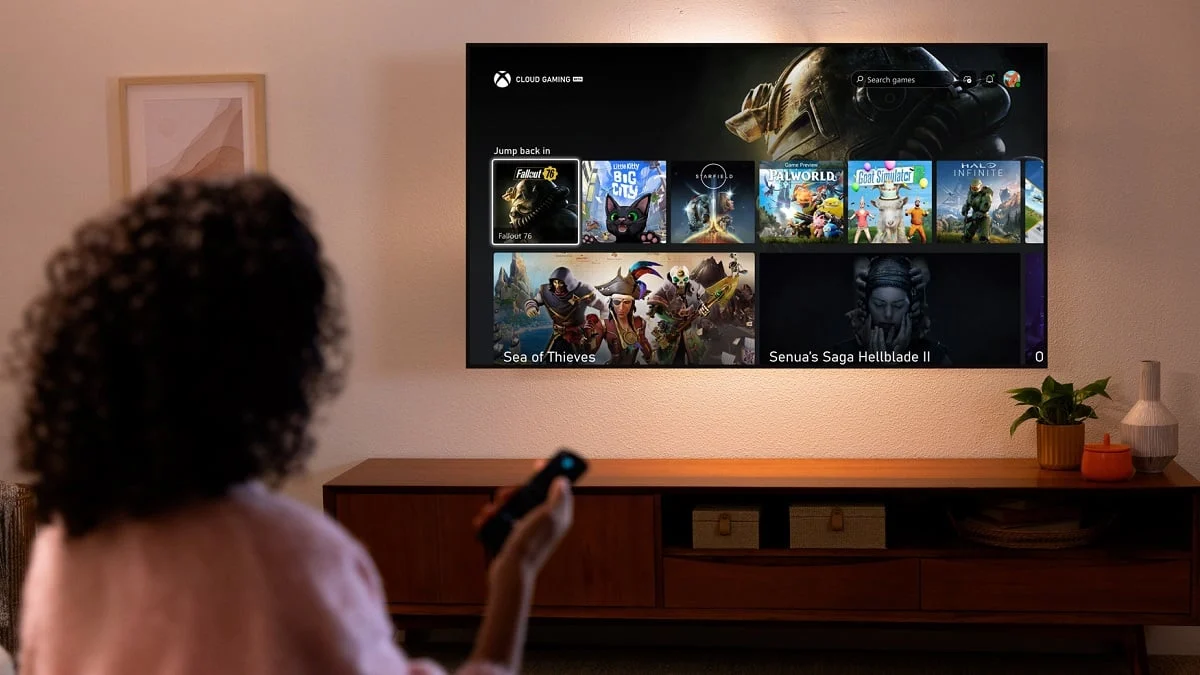
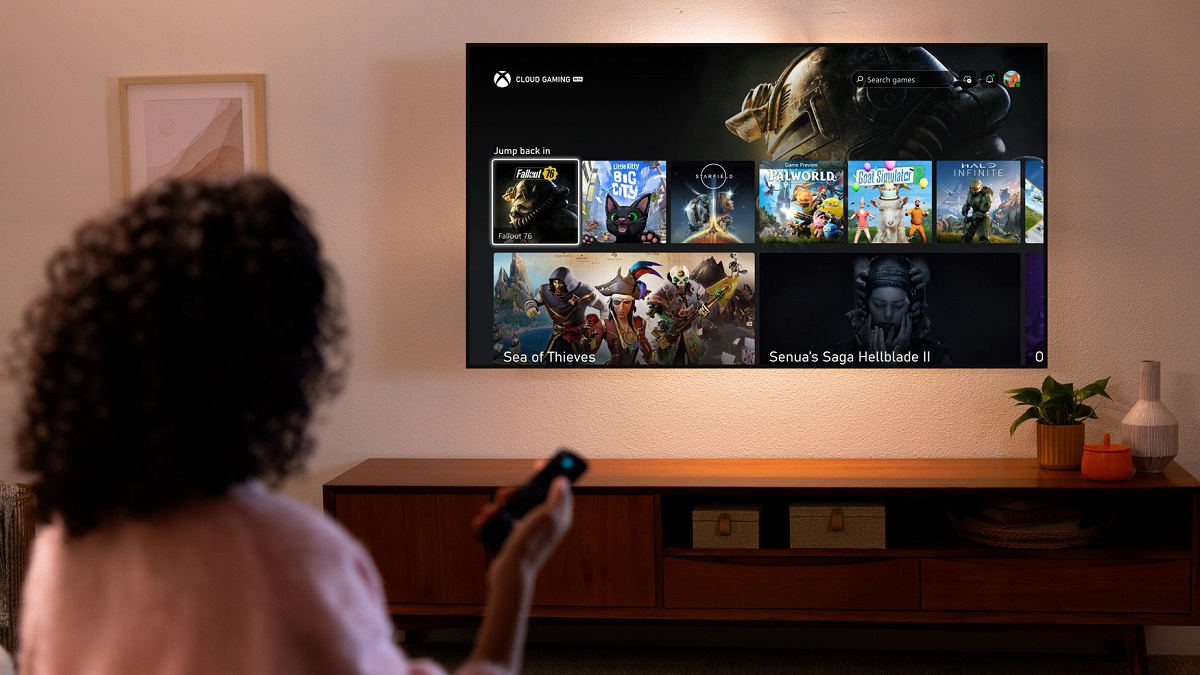
Microsoft has officially announced a significant expansion of its Xbox Game Pass ecosystem, making the extensive library of games accessible directly through select Amazon Fire TV devices. This strategic move allows subscribers to stream Xbox titles via cloud gaming without the need for a dedicated Xbox console, further solidifying the company’s commitment to its "Xbox Everywhere" vision and prioritizing subscription growth over traditional hardware sales. The upcoming integration, revealed in an Xbox Wire post on June 27, 2024, signifies a pivotal moment in the ongoing evolution of gaming accessibility and Microsoft’s platform-agnostic approach.
The new functionality will be available on Amazon Fire TV Stick 4K and Fire TV Stick 4K Max models, priced at $49.99 and $59.99 respectively. Users will simply need to download the Xbox app on their compatible Fire TV device, possess an Xbox Game Pass Ultimate subscription, and connect a Bluetooth wireless controller. Notably, the controller does not need to be an official Xbox peripheral; popular options like a PlayStation 5 DualSense controller will also be compatible, lowering the barrier to entry for existing gamers who might already own such accessories. While an exact launch date was not provided, Microsoft indicated that the feature would be "soon" available, signaling its imminent rollout.
Background: Microsoft’s Shifting Strategy Towards "Xbox Everywhere"
This latest development is not an isolated event but rather a continuation of Microsoft’s long-term strategic pivot in the gaming industry. For years, Xbox operated primarily as a console manufacturer, locked in direct competition with Sony’s PlayStation and Nintendo. However, under the leadership of Xbox head Phil Spencer, the brand has progressively transitioned into a services-first company, with Xbox Game Pass at the core of its strategy. Introduced in 2017, Game Pass was envisioned as a "Netflix for games," offering a rotating catalog of titles, including all first-party Xbox exclusives on day one, for a monthly subscription fee. This model aimed to de-emphasize the upfront cost of games and encourage consistent engagement with the Xbox ecosystem.
The "Xbox Everywhere" philosophy began to crystallize with the launch of Project xCloud, now known as Xbox Cloud Gaming, which was integrated into Game Pass Ultimate in September 2020. This move enabled subscribers to stream a subset of Game Pass titles to Android mobile devices, and later to iOS devices, PCs, and web browsers, fundamentally decoupling the gaming experience from the console. The vision was clear: to make Xbox content available on any screen a player might own, regardless of whether it was a dedicated gaming machine. Subsequent partnerships, such as the integration of the Xbox app onto Samsung Smart TVs in 2022, further underscored this ambition, allowing users to play Game Pass titles directly on their televisions without any additional hardware beyond a controller.
This strategic evolution is also reflected in Microsoft’s willingness to publish its first-party titles on rival platforms. In early 2024, the company announced that games like Sea of Thieves and Hi-Fi Rush, previously Xbox exclusives, would be released on PlayStation and Nintendo Switch. While this generated considerable discussion about the future of Xbox hardware, Spencer and other executives consistently reiterated that hardware remains a part of their strategy, even teasing the possibility of an Xbox handheld device. These moves collectively paint a picture of a company increasingly focused on maximizing the reach and profitability of its content and services, rather than solely on console sales figures.
The Mechanics of Cloud Gaming on Fire TV
The integration of Xbox Cloud Gaming onto Amazon Fire TV Sticks leverages the existing cloud infrastructure that Microsoft has meticulously built over the past few years. When a user launches an Xbox Game Pass title through the Fire TV app, the game is not processed locally by the Fire TV Stick. Instead, it runs on powerful Xbox Series X hardware located in Microsoft’s Azure data centers. The video and audio streams are then sent over the internet to the user’s Fire TV device, while the controller inputs are sent back to the data center. This real-time streaming allows for high-fidelity gaming experiences on relatively low-powered client devices.
For optimal performance, Microsoft typically recommends a stable internet connection with at least 20 Mbps download speed, though a 50 Mbps connection or higher is generally preferred for the best experience, especially for latency-sensitive games. The quality of the experience – including resolution, frame rate, and input lag – is directly dependent on the user’s internet connection stability and bandwidth. Unlike traditional console gaming, there is no offline play option for cloud-streamed titles. This reliance on a robust internet connection remains the primary caveat for cloud gaming, particularly in regions with inconsistent or slower broadband infrastructure.
The choice of Amazon Fire TV Stick 4K and 4K Max is strategic. These devices are widely popular, boasting significant market penetration globally due to their affordability and integration into Amazon’s expansive ecosystem. By targeting these specific models, Microsoft ensures a baseline performance capability, as the 4K and 4K Max variants offer more robust processing power and Wi-Fi capabilities than their standard counterparts, which are crucial for decoding high-quality video streams and maintaining a stable connection for cloud gaming.
Economic Implications and Enhanced Accessibility
One of the most compelling aspects of this announcement is its potential to drastically lower the entry barrier to the Xbox ecosystem. A detailed cost analysis reveals significant savings for consumers who opt for the Fire TV Stick route compared to purchasing a dedicated Xbox console.
Let’s consider the current pricing:
- Xbox Series S Console: $299.99
- Xbox Game Pass Ultimate Subscription: $16.99 per month, totaling $203.88 per year.
Scenario 1: Traditional Console Ownership
- Xbox Series S + 1 year of Game Pass Ultimate = $299.99 + $203.88 = $503.87
Scenario 2: Cloud Gaming via Fire TV Stick
- Amazon Fire TV Stick 4K: $49.99 (or Fire TV Stick 4K Max: $59.99)
- 1 year of Game Pass Ultimate = $203.88
- Total cost (with Fire TV Stick 4K) = $49.99 + $203.88 = $253.87
This comparison clearly demonstrates that accessing Xbox Game Pass through a Fire TV Stick is roughly half the cost of purchasing the entry-level Xbox Series S console along with a year’s subscription. Even factoring in the cost of a TV for users who might not already own one (as the original article alluded to, potentially an additional $240 for a basic compatible model), the combined cost remains highly competitive. For the vast number of households already equipped with a compatible television and a Fire TV Stick, this offering transforms their existing entertainment setup into a gaming platform with minimal additional investment.
This accessibility is critical for expanding Game Pass subscriber numbers. Microsoft has openly stated that growing subscriptions is a primary corporate objective, especially as console sales face increasing saturation. By removing the need for a costly dedicated console, Microsoft can tap into a much larger demographic, including casual gamers, budget-conscious consumers, and individuals in emerging markets where the upfront cost of a console might be prohibitive. It allows Xbox to compete not just within the traditional console space, but across the broader entertainment landscape, directly challenging other streaming services and casual gaming platforms.
Chronology of Xbox’s Accessibility and Cloud Gaming Journey
Microsoft’s journey to this point has been marked by a series of strategic decisions and technological advancements:
- June 2017: Xbox Game Pass officially launches, offering a curated library of games for a monthly fee.
- June 2018: Microsoft announces its intent to develop a cloud gaming service, Project xCloud.
- October 2019: Project xCloud begins public beta testing, initially on Android devices.
- September 2020: Project xCloud officially launches as Xbox Cloud Gaming, integrated into Xbox Game Pass Ultimate, expanding to mobile devices.
- June 2021: Xbox Cloud Gaming becomes available on Windows PCs and Apple devices via web browsers.
- June 2022: Microsoft partners with Samsung to integrate the Xbox app directly into Samsung Smart TVs, allowing console-free cloud gaming on select models.
- February 2024: Xbox announces its intention to bring four first-party titles (later confirmed as Sea of Thieves, Hi-Fi Rush, Grounded, and Pentiment) to rival platforms like PlayStation and Nintendo Switch. Phil Spencer discusses the strategic rationale behind this move, emphasizing broader reach.
- March 2024: Rumors intensify about an Xbox handheld device, with Phil Spencer himself teasing its existence.
- June 27, 2024: Microsoft officially announces Xbox Game Pass Cloud Gaming support for Amazon Fire TV Sticks.
This timeline illustrates a consistent and accelerating pattern of opening up the Xbox ecosystem, moving from console exclusivity to a multi-platform, multi-device strategy centered around its subscription service.
Industry Reactions and Broader Implications
The announcement has been met with significant interest from industry analysts and could elicit various reactions from related parties.
Microsoft’s Perspective (Inferred): Microsoft is likely to frame this as a victory for "player choice" and "gaming accessibility." Phil Spencer’s long-standing rhetoric about reaching "billions of players" aligns perfectly with this initiative. The company will emphasize that this move allows more people to experience the vast library of Game Pass titles, thereby increasing subscriber numbers, which are a key performance indicator for the company’s services division. It reinforces the message that Xbox is no longer solely defined by its hardware, but by its content and services.
Amazon’s Perspective (Inferred): For Amazon, integrating Xbox Game Pass adds significant value to its Fire TV ecosystem. It strengthens the appeal of Fire TV devices as comprehensive entertainment hubs, competing more effectively with other streaming sticks and smart TV platforms that might offer limited gaming options. This collaboration could also open doors for deeper integration between Amazon and Xbox services in the future, leveraging Amazon’s retail power and cloud infrastructure (AWS, though Xbox Cloud Gaming runs on Azure, the partnership demonstrates inter-company synergy).
Industry Analysts: Analysts are largely expected to view this as a shrewd strategic move for Microsoft. It addresses the challenge of console saturation and provides a clear pathway for Game Pass growth. However, it also sparks renewed debate about the long-term viability and role of dedicated Xbox hardware. While Microsoft maintains that hardware development will continue, the increasing ease of accessing Xbox content without a console may inevitably impact future console sales. This could also intensify competition in the cloud gaming space, putting pressure on Sony to expand its PlayStation Plus Premium cloud streaming beyond its current limitations and potentially prompting other tech giants to explore similar partnerships. The move reinforces the growing trend towards subscription-based, platform-agnostic gaming, signaling a potential "post-console era" where hardware becomes less of a gatekeeper and more of an optional premium experience.
Challenges and Future Outlook
Despite the significant advantages, challenges persist for Microsoft and the broader cloud gaming market. The primary hurdle remains the internet infrastructure. While broadband access is widespread in many developed nations, global disparities in speed, stability, and data caps can significantly hinder the cloud gaming experience. Latency, in particular, is a critical factor for competitive online games, and even minor delays can impact gameplay. Microsoft must continue to optimize its cloud infrastructure and streaming technology to mitigate these issues and ensure a consistently high-quality experience across diverse network conditions.
For Xbox itself, the long-term challenge lies in maintaining a distinct brand identity when its content becomes available everywhere. If the console becomes less essential, how does Xbox differentiate itself from a mere publisher or service provider? The answer likely lies in continued innovation in hardware (such as the rumored handheld or next-generation consoles that offer unique features), exclusive content, and fostering a strong community around its services. The strategic balance between growing Game Pass and preserving the appeal of its hardware will be crucial.
Looking ahead, this Fire TV partnership is likely just one more step in Microsoft’s expansive vision. We could see Xbox Cloud Gaming integrated into even more smart TV brands, potentially other streaming devices, or even in-car entertainment systems. The concept of an Xbox "stick" or micro-console, a dedicated, low-cost device solely for cloud gaming, also remains a possibility, offering a Microsoft-branded alternative to the Fire TV Stick while maintaining the console-free ethos. Ultimately, Microsoft’s strategy points towards a future where the "Xbox" brand represents a comprehensive ecosystem of games and services, accessible on virtually any screen, solidifying its position as a major player in the evolving landscape of interactive entertainment.