


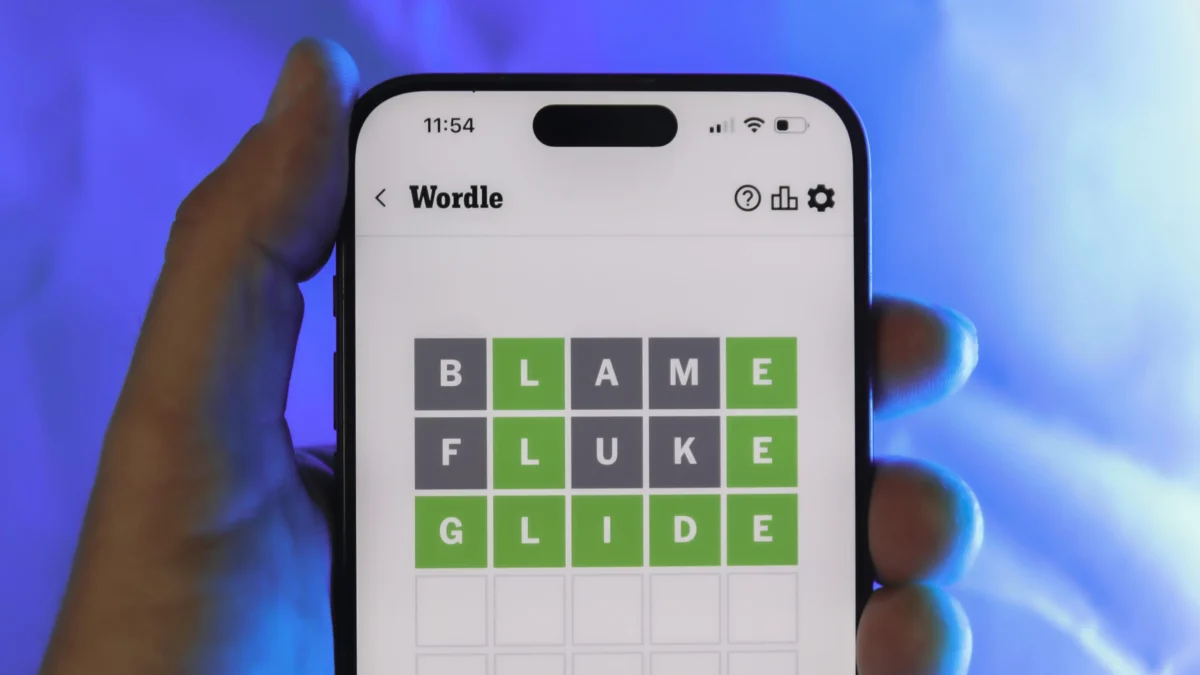
For players tackling Wordle puzzle No. 1859 on July 22, the answer, "LORRY," presented a distinct linguistic challenge, highlighting the subtle differences between American and British English that occasionally surface in the popular daily word game. This particular five-letter word, a common term for a truck in the United Kingdom, often proves tricky for the game’s predominantly American audience, serving as a reminder of Wordle’s global appeal and the diverse vocabulary it draws upon. The game, which has captivated millions worldwide with its simple yet addictive premise, continues to offer a daily dose of lexical intrigue, sometimes requiring players to stretch beyond their immediate linguistic comfort zones.
Today’s puzzle, number 1859, posed a notable hurdle. While the term "lorry" is deeply embedded in British lexicon, its usage is significantly less prevalent in American English, where "truck" is the standard equivalent. This disparity often generates discussion among players, as words rooted in specific regional dialects can elevate the puzzle’s difficulty. Despite the potential for unfamiliarity, the structured hints provided for Wordle No. 1859 aimed to guide players toward the solution through deductive reasoning. The word contains a repeated letter, features one traditional vowel and one ‘sometimes’ vowel (Y), starts with ‘L’, and ends with ‘Y’. These clues, when systematically applied, are designed to narrow down the possibilities, even for those unfamiliar with the specific term.
The Day’s Challenge: Wordle No. 1859 – ‘LORRY’
The revelation of "LORRY" as the answer for Wordle No. 1859, following yesterday’s solution "SHILL" (No. 1858, July 21), continued the game’s tradition of presenting words that range from common to culturally specific. For many players, the initial reaction to "LORRY" might have been one of surprise, particularly those in North America who primarily use "truck." However, this type of linguistic variation is not unprecedented in Wordle, occasionally sparking lively debates on social media platforms about the game’s dictionary choices and its global scope.
The hints provided for Wordle No. 1859 were critical in navigating this linguistic hurdle. The first hint, "Repeats," signaled the presence of at least one duplicated letter within the five-letter word. For "LORRY," the ‘R’ is repeated, a common but often overlooked feature that can significantly reduce the pool of possible answers. Players adept at Wordle strategy often consider words with double letters earlier in their attempts if initial guesses reveal relevant letter positions.
The second hint, "Vowels," indicated that the word contains one traditional vowel (A, E, I, O, U) and one ‘sometimes’ vowel (Y). In "LORRY," the ‘O’ is the traditional vowel, and the ‘Y’ functions as a vowel sound at the end of the word. This hint is particularly useful as it helps players pinpoint the sound structure and potential letter combinations, especially when considering the placement of ‘Y’.
Further narrowing the field, the third and fourth hints specified the word’s beginning and end. "First letter" revealed the word starts with ‘L’, and "Last letter" confirmed it ends with ‘Y’. Combining these, players could deduce the structure L _ Y. With the knowledge of a repeated letter and the vowel pattern, the possibilities rapidly diminish, steering players towards options like "LURRY" (a less common variant of ‘lorry’ or an archaic term for a heavy load) or, ultimately, "LORRY" itself, particularly if they considered British English vocabulary.
Finally, the meaning hint, "Today’s Wordle answer is a British term for a truck," explicitly clarified the word’s context, providing the definitive clue for those still struggling. This direct explanation served as the ultimate confirmation, bridging the gap for players unfamiliar with the British English term.
A Deeper Dive into Wordle Mechanics and Strategy
The appeal of Wordle lies not just in its daily challenge but also in the strategic depth it offers. Players often develop intricate methods to solve the puzzle, leveraging linguistic patterns and statistical probabilities. Understanding the mechanics of Wordle is key to consistent success, especially when encountering less common words like "LORRY."
Optimal Starting Words: The choice of an initial word is perhaps the most critical strategic decision in Wordle. Statistical analyses of the English language and the Wordle dictionary have shown that certain words are more effective at revealing key letters early on. Words like "CRANE," "ADIEU," "SLATE," and "TRAIN" are frequently cited as optimal starters. These words are chosen for their high frequency of common letters (E, A, R, I, O, T, N, S, L) and their balanced distribution of vowels and consonants. For instance, "CRANE" contains four distinct and common consonants and one common vowel, allowing players to quickly identify correct letters or eliminate incorrect ones, thereby narrowing the possibilities for subsequent guesses. The goal is to maximize information gain with the first guess, setting a strong foundation for the remaining attempts.

Letter Frequency: A fundamental principle guiding Wordle strategy is the understanding of letter frequency in the English language. Letters such as E, A, R, I, O, T, N, S, L, and C appear most often. Conversely, letters like Q, Z, J, X, and K are rare. Strategic players often prioritize guesses that include high-frequency letters in their initial attempts to maximize their chances of hitting correct letters or identifying their absence. This statistical approach helps in systematically eliminating large portions of the alphabet, making subsequent guesses more informed.
Common Pitfalls and Linguistic Nuances: Wordle’s design, while elegant, occasionally presents challenges beyond mere vocabulary. Words with double letters, as seen in "LORRY," can be tricky because players might initially assume all letters are unique. Similarly, less common letter combinations or words with unusual vowel structures can trip up even experienced players. The inclusion of regionalisms, as with "LORRY," adds another layer of complexity. While the New York Times, which acquired Wordle, largely standardizes its dictionary, a degree of linguistic diversity remains, reflecting the global nature of the English language. This requires players to sometimes think beyond their immediate dialect and consider broader English vocabulary.
The Phenomenon of Wordle: A Brief History and Cultural Impact
Wordle’s journey from a personal project to a global phenomenon is a remarkable story in digital gaming. Created by software engineer Josh Wardle for his partner during the COVID-19 pandemic, the game was initially a private endeavor. Its simplicity, elegance, and daily nature made it instantly appealing. Wardle publicly released Wordle in October 2021, and its popularity exploded through word-of-mouth, particularly on social media.
The game’s distinctive sharing feature—a grid of green, yellow, and grey squares representing correct, misplaced, and incorrect letters—was instrumental in its viral spread. This visual summary allowed players to share their results without revealing the answer, fostering a sense of communal challenge and friendly competition. It tapped into a universal desire for a quick, engaging mental exercise that could be shared and discussed.
By early 2022, Wordle had amassed millions of daily players, prompting The New York Times Company to acquire the game in January 2022 for an undisclosed seven-figure sum. This acquisition was a strategic move for the NYT, known for its venerable puzzles section, including the iconic Mini Crossword and Spelling Bee. Wordle’s integration into the NYT Games ecosystem significantly boosted the newspaper’s digital subscriptions and cemented its position as a major player in online casual gaming. The NYT’s commitment to keeping the game free-to-play, at least initially, further endeared it to its existing fanbase while attracting new users to the broader suite of NYT puzzles.
Wordle’s accessibility and low barrier to entry—no downloads, no ads, just a simple browser interface—contributed significantly to its widespread adoption. It offered a refreshing antidote to complex, time-consuming games, providing a satisfying cognitive workout that fit perfectly into daily routines. Its success also inspired a plethora of "Wordle-likes," variations, and clones, demonstrating its profound influence on the casual gaming landscape and the enduring appeal of word puzzles.
The Broader Landscape of Daily Puzzles
Wordle’s success did not occur in a vacuum; it resonated with a long-standing human fascination with puzzles and mental challenges. Its integration into The New York Times Games platform placed it alongside other highly popular daily diversions, creating a comprehensive ecosystem for cognitive engagement.
The New York Times Games Ecosystem: Beyond Wordle, the NYT offers a diverse array of puzzles. The Mini Crossword provides a quick, daily cross-section of traditional crossword challenges. Connections, a newer addition, tasks players with grouping seemingly disparate words into categories. Strands, another innovative game, challenges players to find words within a letter grid that relate to a hidden theme. And the Spelling Bee remains a favorite for its vocabulary and pattern recognition demands. This robust portfolio caters to different preferences and skill levels, transforming the act of puzzling into a daily ritual for millions.
Cognitive Benefits: Engaging with word puzzles like Wordle offers numerous cognitive benefits. They stimulate critical thinking, enhance vocabulary, improve pattern recognition skills, and can even boost memory and problem-solving abilities. The daily nature of Wordle encourages consistent mental exercise, which some studies suggest can contribute to maintaining cognitive function over time. For many, it’s not just a game but a form of daily mental hygiene, a brief escape that sharpens the mind.
Linguistic Nuances and Wordle’s Dictionary:

The choice of "LORRY" as a Wordle answer underscores the complexities inherent in standardizing a dictionary for a global game. The English language, while unified in many respects, is rich with regional variations, particularly between American English (AmE) and British English (BrE).
American vs. British English in Wordle: Words like "LORRY" are perfect examples of these transatlantic differences. While an American might say "truck," a Briton uses "lorry." Other notable examples that could appear in Wordle include "QUEUE" (AmE: line), "FLUME" (AmE: chute, though ‘flume’ is also used in AmE for water slides), "GAUGE" (AmE: gauge, but pronounced differently and often spelled ‘gage’ in some technical contexts), "CRANE" (AmE: crane, BrE: crane, but ‘juggernaut’ can also refer to a large truck/lorry in BrE in a more figurative sense, though it’s too long for Wordle). The NYT’s editorial team managing the Wordle dictionary must carefully balance accessibility for its broad audience with the richness of the English language. This sometimes means including words that might be unfamiliar to a segment of players, thus expanding their vocabulary.
The Wordle Dictionary Management: The New York Times inherited a curated list of five-letter words from Josh Wardle, and they continue to manage and update this dictionary. This process involves reviewing words for their commonality, potential for offense, and general suitability. Debates occasionally arise when a particularly obscure word appears, or when a word deemed common by some is excluded. However, the overall goal is to maintain a challenging yet fair game that encourages learning and broadens players’ lexical horizons. The deliberate inclusion of words like "LORRY" serves as an educational moment, exposing players to the wider tapestry of the English language.
Looking Ahead: The Future of Daily Word Puzzles
The enduring success of Wordle, alongside its companions in the NYT Games suite, points to a bright future for daily word puzzles. In an increasingly digital and fast-paced world, the appeal of a short, accessible, and mentally stimulating challenge remains strong.
Enduring Appeal: The simple elegance of Wordle’s design—one puzzle a day, shared easily, no pressure to perform—has carved out a unique niche. It’s a game that respects players’ time while offering a satisfying sense of accomplishment. This model is likely to inspire further innovation in casual gaming, focusing on quality over quantity, and engagement over endless play.
Role of Digital Platforms: Digital platforms have democratized access to puzzles, moving them from niche newspaper sections to mainstream digital entertainment. The ability to play on a smartphone or tablet, share results instantly, and engage with a global community has transformed the puzzle landscape. This trend is expected to continue, with new technologies potentially integrating puzzles into broader educational or entertainment ecosystems, perhaps even leveraging AI for personalized puzzle generation or adaptive difficulty.
Potential for New Variations and Integrations: The success of Wordle and its spin-offs indicates a fertile ground for new variations that build on its core mechanics. Developers might explore puzzles that incorporate more advanced linguistic concepts, multi-player cooperative modes, or even integrate augmented reality for interactive puzzle experiences. The intersection of language learning, cognitive science, and game design offers endless possibilities for future daily challenges.
In conclusion, Wordle No. 1859, with its British English answer "LORRY," perfectly encapsulates the game’s unique blend of linguistic challenge, strategic depth, and cultural resonance. It serves as a testament to the enduring power of simple yet engaging puzzles to connect people, broaden horizons, and provide a moment of enjoyable mental stimulation in the daily routine. The game, now firmly embedded in The New York Times’ digital offerings, continues to evolve, reflecting the dynamic nature of language itself and the ever-growing appetite for clever, accessible intellectual pursuits.
Recent Wordle Answers (for context):
- July 21, No. 1858: SHILL
- July 20, No. 1857: DIVER
- July 19, No. 1856: CHURN
- July 18, No. 1855: BOOTH
- July 17, No. 1854: LEGAL