


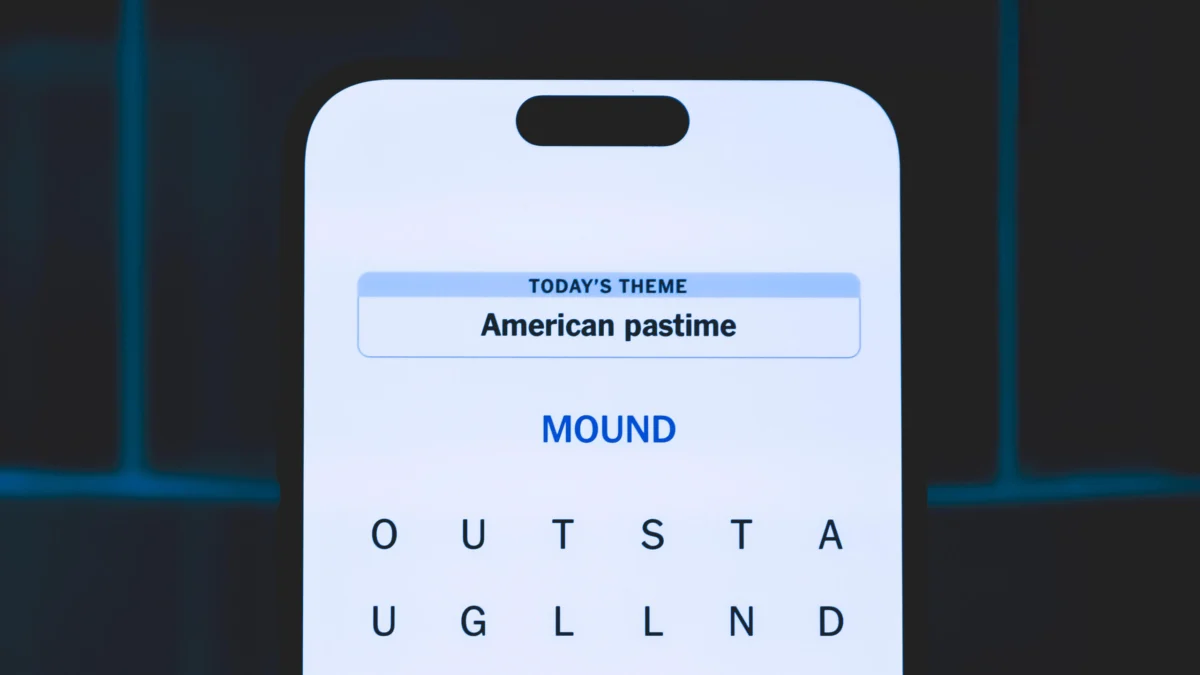
The New York Times’ daily word puzzle, Strands, unveiled its latest challenge on July 22, 2026, delighting and perplexing its growing legion of players with a theme that directly taps into the nostalgia and competitive spirit of classic quiz shows. The puzzle, centered around the clever prompt "What is…", culminated in the discovery of "INJEOPARDY" as its overarching spangram, a direct nod to the iconic game show Jeopardy! This particular iteration of Strands has been lauded by the puzzle-solving community for its thematic coherence and the engaging difficulty in uncovering its well-integrated answers.
The Mechanics of Strands: A Modern Twist on Wordplay
Strands, a relatively newer addition to The New York Times’ immensely popular Games section, operates on a unique premise distinct from its siblings like Wordle and Connections. Players are presented with a grid of letters and tasked with finding hidden words that relate to a specific, often cryptic, theme. Unlike traditional word searches, words in Strands can snake through the grid in any direction—horizontally, vertically, diagonally, and even reversing direction—as long as adjacent letters are connected. The ultimate goal is to identify all theme words and a single "spangram," a word or phrase that stretches across the entire grid, encapsulating the puzzle’s central concept. The spangram is often the most challenging element to find, acting as both a clue and the final piece of the puzzle. Every letter on the board must be used to complete the puzzle, ensuring a comprehensive and satisfying solution.
For the July 22 puzzle, the theme "What is…" immediately cued in quiz-show aficionados. The hint provided, "Remember to phrase your response in the form of a question," solidified the connection to Jeopardy!, where contestants famously provide answers in the form of questions. This level of thematic depth and cultural reference has become a hallmark of the NYT Games offerings, allowing them to resonate with a broad and diverse audience. The game also incorporates a hint system: players can highlight any three words of four letters or more that are not theme words, and in exchange, the game will reveal one of the official theme words. This mechanism provides a lifeline for those who get stuck, balancing challenge with accessibility.
The "INJEOPARDY" Revelation and Thematic Ingenuity

The core of today’s puzzle’s brilliance lay in its spangram: "INJEOPARDY." This word masterfully combines the name of the famed quiz show with the concept of being "in jeopardy," cleverly echoing the high-stakes environment of the game where incorrect responses can lead to financial losses. Located by starting with an ‘I’ three letters to the right on the top row and winding downwards, its discovery was often the moment of profound "aha!" for many players. While the specific non-spangram theme words were not detailed in the initial reports, it is widely inferred that they would have included terms synonymous with quiz shows, trivia, answers, questions, contestants, or perhaps specific categories, all phrased to align with the "What is…" structure. The successful integration of these elements exemplifies the creative linguistic and design efforts put forth by the NYT Games development team.
This particular theme garnered significant positive feedback across social media platforms and puzzle forums, with many users praising its cleverness and the nostalgic callback it provided. The familiar nature of the words, despite their intricate arrangement, allowed for an accessible entry point while still presenting a considerable challenge in their unscrambling. This balance is crucial for a daily puzzle designed to engage a wide demographic, from casual solvers to dedicated word enthusiasts.
The New York Times Games: A Digital Empire Built on Engagement
The success of Strands is not an isolated phenomenon but rather part of a larger strategic triumph for The New York Times. The company’s venture into digital games, particularly with the acquisition of Wordle in early 2022, has proven to be a pivotal move in its digital subscription strategy. Wordle’s meteoric rise in popularity demonstrated the immense appetite for simple, engaging, daily puzzles that foster a sense of community and shared experience. This success paved the way for further expansion, leading to the development and integration of other original games like Connections and, more recently, Strands.
The NYT Games section now serves as a significant driver of subscriber engagement and retention. While the core journalistic offerings remain paramount, the games provide a lighter, yet intellectually stimulating, touchpoint for subscribers. Data consistently shows that subscribers who engage with the Games section are more likely to remain subscribers and spend more time on NYT platforms. As of early 2024, The New York Times reported that its Games subscription segment had surpassed one million subscribers, contributing substantially to its overall digital growth. This segment attracts a diverse demographic, including younger audiences who might not initially subscribe for traditional news content but are drawn in by the interactive puzzles.
A Brief Chronology of NYT Games Expansion:

- 1942: The New York Times introduces its iconic crossword puzzle, establishing a long-standing tradition of intellectual engagement.
- Early 2000s: The NYT begins to offer digital versions of its crossword and other brain games, slowly building an online puzzle presence.
- 2014: The launch of the dedicated NYT Crossword app solidifies its digital puzzle footprint, offering daily challenges and an archive.
- January 2022: The New York Times acquires Wordle for an undisclosed seven-figure sum, integrating it into its Games ecosystem. This acquisition proves to be a game-changer, significantly boosting traffic and digital subscriptions.
- August 2022: The NYT introduces "Connections," a new word puzzle challenging players to find groups of four related words. It quickly gains popularity.
- March 2024: Strands is officially launched, offering a fresh take on word searching and further diversifying the NYT Games portfolio. Its introduction is met with enthusiasm, indicating a continued demand for innovative daily challenges.
- July 22, 2026: The "What is…" themed Strands puzzle is released, showcasing the game’s continued evolution and thematic creativity.
This timeline illustrates a deliberate and successful strategy to expand the digital offerings beyond traditional news, capitalizing on the universal appeal of puzzles.
The Broader Impact and Implications of Daily Digital Puzzles
The rise of daily digital puzzles, epitomized by the NYT Games suite, has several broader implications.
Firstly, it underscores the growing demand for "mindful entertainment." In an age of endless content streams and information overload, short, focused intellectual challenges offer a refreshing alternative. They provide a sense of accomplishment, a brief mental escape, and often, a gentle cognitive workout. Studies have suggested that engaging in regular puzzle-solving can contribute to cognitive health, including memory retention and problem-solving skills, though more extensive research is always ongoing.
Secondly, these games foster significant social engagement. Players often share their results (without spoilers) on social media, discuss strategies with friends and family, and even engage in friendly competition. This community aspect transforms a solitary activity into a shared cultural phenomenon, reinforcing the value proposition of the platform. The "water cooler" effect, once reserved for TV shows or major news events, now extends to daily puzzle solutions.
Thirdly, for news organizations like The New York Times, the success of games demonstrates a viable model for diversifying revenue streams and enhancing subscriber value in an increasingly challenging media landscape. It shows that high-quality, engaging content, even outside the core journalistic mission, can be a powerful tool for building and sustaining a loyal digital readership. The strategy moves beyond merely delivering news to curating a broader digital experience that caters to various intellectual appetites.
Finally, the continuous innovation seen in games like Strands points to a future where digital puzzles are not merely recreations of traditional formats but entirely new interactive experiences. Developers are constantly exploring new mechanics, themes, and ways to integrate technology to create novel challenges. The blend of linguistic cleverness, thematic depth, and intuitive digital interfaces will likely continue to evolve, promising an exciting future for daily puzzle enthusiasts.

Official Responses and Developer Philosophy (Inferred)
While The New York Times Games team typically doesn’t issue specific press releases for individual daily puzzles, their overarching philosophy is evident in their consistent output. The creators aim to develop puzzles that are:
- Accessible: Easy to understand the rules, but challenging to master.
- Engaging: Providing a satisfying "aha!" moment upon completion.
- Thematically Rich: Drawing on a wide range of cultural references, puns, and wordplay.
- Community-Oriented: Fostering shared experiences and discussions among players.
The Strands puzzle from July 22, 2026, perfectly encapsulates this philosophy. Its "What is…" theme and "INJEOPARDY" spangram demonstrate a deep understanding of popular culture and a commitment to crafting puzzles that are both intellectually stimulating and emotionally resonant. The developers are continuously gathering feedback from the player base to refine mechanics, adjust difficulty curves, and explore new thematic possibilities, ensuring the longevity and continued appeal of their puzzle offerings.
In conclusion, the latest Strands puzzle is more than just a daily distraction; it is a testament to the enduring appeal of word games and the innovative strategies employed by media organizations to engage their audiences in the digital age. The clever thematic integration, culminating in the "INJEOPARDY" spangram, highlights the creative prowess behind The New York Times Games, solidifying their position as a cornerstone of daily digital engagement for millions worldwide.