



The world of UMIGARI, a title developed by the notoriously unconventional Chilla’s Art, presents a fishing simulator experience that shatters all expectations of cozy gameplay. Instead, players are plunged into a vast, suffering-ridden landscape where a mysterious curse has warped reality, prompting a desperate search for meaning and radical change. The central question looms: is this transformation for the better, or does it usher in a new era of dread? This analysis delves into UMIGARI, offering an interpretation of its strangest, most unsettling offering to date.
UMIGARI Plotline: A Cursed Quest for Resolution
At its core, UMIGARI tasks players with a singular, monumental objective: to locate three ancient tablets. These artifacts are the key to unlocking a sacred shrine, which in turn will reveal a path across the horizon to a fabled island. It is there that an omnipotent whale supposedly resides, holding the power to finally bring an end to the pervasive curse that has gripped the world. The journey through this flooded realm is fraught with peril, populated by a menagerie of bizarre and increasingly disturbing sea creatures. The game’s visual narrative paints a nightmarish tableau: marine life exhibiting disturbing anthropomorphic features, such as fins replaced by human limbs, fish adorned in unsettling schoolgirl uniforms, and hammerhead sharks sporting human lips and colossal eyes. The horror escalates with each catch, as fish, once reeled in, begin to speak, their forms often grotesquely plastered with human faces, particularly noticeable on stingrays. This pervasive sense of dread is a hallmark of UMIGARI’s immersive, albeit terrifying, atmosphere.

The human element within UMIGARI is equally unsettling. The inhabitants of this cursed world exhibit profoundly erratic and often violent behavior. Instances of savage outbursts and, in some disturbing cases, cannibalism, are not uncommon. The game pushes the concept of NPC requests to a dark and twisted extreme, making titles like DREDGE and Subnautica, often considered unsettling, appear remarkably tranquil by comparison. There is no ambiguity: UMIGARI is undeniably a cursed fishing simulator, steeped in an atmosphere of profound unease.
Unraveling the Narrative: The Nature of the Curse
The central enigma of UMIGARI lies in the nature of the curse itself. It is revealed that fish have been transformed into humans, and conversely, humans have been transmuted into fish. The fish, now inhabiting human forms, struggle to comprehend their new existence. They awaken with an insatiable hunger and a deep-seated resentment towards humanity, a consequence of centuries of being hunted and consumed. This narrative twist can be interpreted as a potent social commentary, potentially reflecting on the historical fishing practices in Japan or, on a broader scale, the global suffering inflicted upon marine life. UMIGARI’s surreal gameplay mechanics and its disturbing narrative serve to highlight the continuous and, arguably, unnecessary abuse of aquatic creatures.
The primary motivation for engaging in fishing within the game is the acquisition of resources to upgrade the player’s boat. The most critical upgrade appears to be speed, a necessary enhancement for evading a relentless sea spirit that relentlessly pursues the player between locations. However, the addictive gameplay loop, coupled with the increasing value of fish the further one travels, subtly shifts the game’s focus towards avarice and a potentially destructive pattern of "farming to extinction." This creates a disquieting psychological effect, as the natural response to hunting and selling these transformed beings is one of profound sickness and moral revulsion.
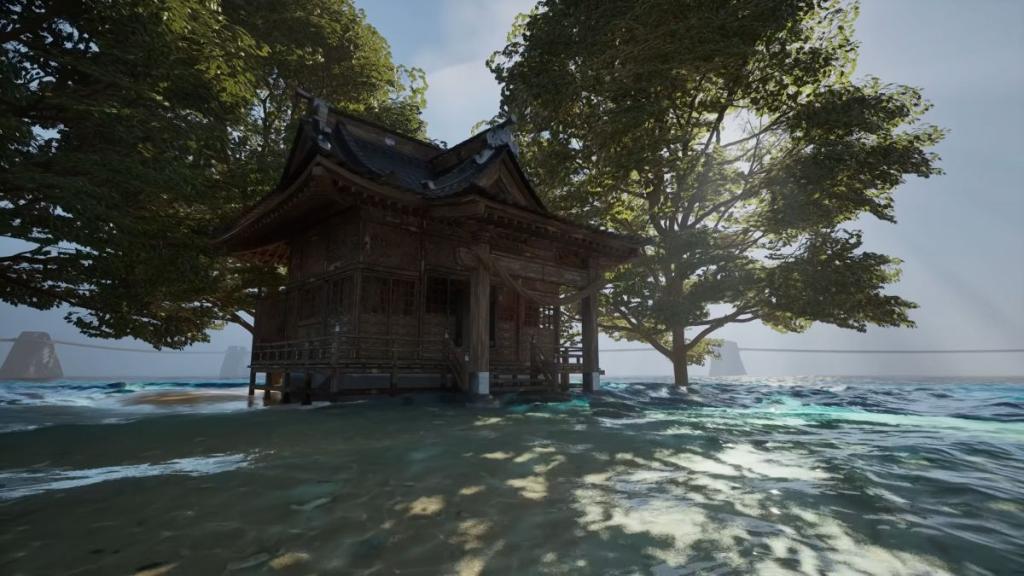
The curse, it is explained, was inflicted upon mankind by an omnipotent whale that grew weary of being hunted. In retaliation, fish developed an intense hatred and resentment towards sailors. When the roles were reversed, the fish, now in human guise, resorted to violence and cannibalism. UMIGARI’s underlying message appears to be a stark examination of the destruction and suffering caused by the pursuit of monetary gain, particularly at the expense of animal welfare. The game suggests that our perception of fishing would be drastically altered if we possessed the ability to communicate with, hear, or truly understand the suffering of the animals we exploit.
The fish-transformed humans, while appearing irrational, mad, and incoherent, exhibit behaviors that, disturbingly, mirror humanity’s own worst traits. This prompts a fundamental question: are humans inherently evil? UMIGARI poses this philosophical query directly to the player. The whale, upon hearing the cries of its kin, decided to enact a curse, swapping the places of fish and man. Yet, the fish-turned-humans have seemingly adopted the most negative aspects of human nature, leading to the game’s central thematic exploration of human morality.
The Enigmatic UMIGARI Monster
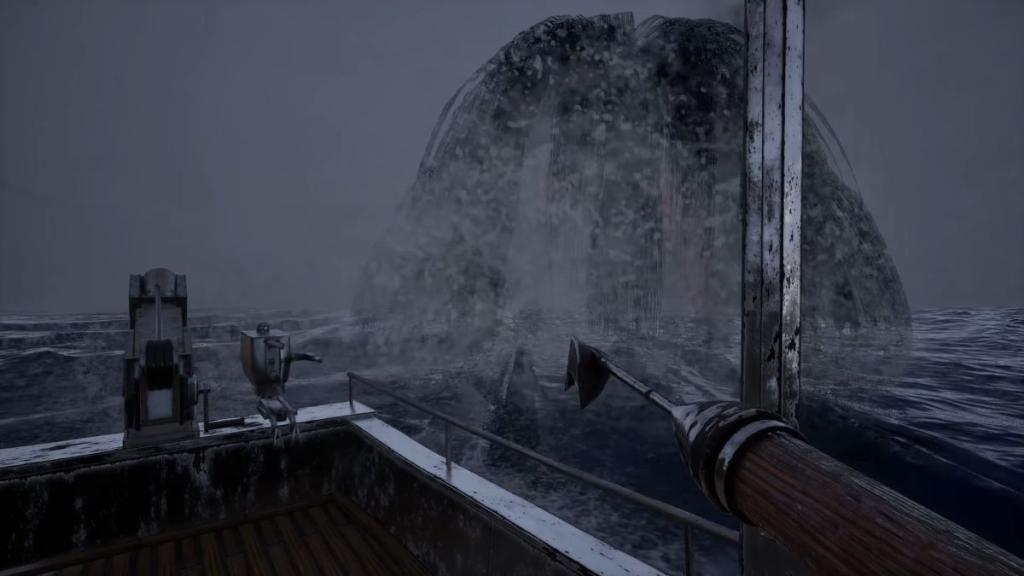
The primary antagonist and source of constant dread in UMIGARI is the Umiga, a colossal female ocean spirit that lurks in the open waters. This entity is repelled by the sound of bells, necessitating the player’s quest to find and strategically place these bells on buoys to create safe passages between locations. While the game does not explicitly detail the Umiga’s origins, its nature may draw parallels to the Umi-nyōbō, a yokai from Japanese folklore that preys on humans. Alternatively, the Umiga could represent a gargantuan manifestation of the Nure-onna, another mythical sea serpent with a woman’s head. Its terrifying appearance involves a massive female head that contorts into a gaping maw as it closes in on a boat, with skeletal arms reaching out to drag the vessel into the abyss.

Beyond the Umiga, the game features the Umibōzu, a colossal sea giant. This entity is a formidable yokai, depicted as a gigantic shadowy figure known for capsizing ships. The Umibōzu makes its appearance in the latter half of the game, specifically targeting the player within the "Suspicious Dome," a surreal location reminiscent of environments from Spirited Away, where it attempts to consume the player as they navigate a train.
UMIGARI also incorporates other monsters that draw heavily from Japanese folklore. The Nure-onna, a yokai with the head of a woman and the serpentine body of a snake, must be hunted for a character known as "Local Granny," located opposite the Umino Maternity Hospital. The Ningyo, mermaid-like creatures, are traditionally considered harbingers of ill fortune but are rumored to bestow immortality. Yuria, residing in Ominous City, tasks the player with hunting Ningyo in exchange for a cure for her failing eyesight, further weaving these mythical elements into the game’s fabric.
Navigating the Endings: Two Paths to Resolution
UMIGARI presents players with two distinct endings, each contingent on their responses to the omnipotent whale’s interrogations. The whale, which is revealed to be the father of the "Girl in School Uniform" – a pivotal character whose plight drives the player’s quest to reach the island – poses a critical question: "Were the humans you met evil itself?" The player’s answer directly influences the narrative’s conclusion, determining whether they perceive their actions as inherently evil or whether they acknowledge the parallels between the fish-turned-humans’ behavior and that of mankind.
The fish-turned-humans, much like humanity, have developed complex values and desires. The Merchant character, for instance, expresses a reluctance to return to their former existence, believing there is still more for him to accomplish in his current form. Conversely, the Girl yearns for a return to the status quo, recognizing that the protagonist’s actions, despite their intentions, have still caused suffering. The narrative suggests that the fish-turned-humans no longer harbor hatred for mankind, as it yielded no positive outcomes.
Ending A: The Cynical Eradication
Choosing to answer affirmatively to the omnipotent whale’s question, admitting that "humans," including oneself, were evil, triggers Ending A. The final cutscene depicts the ocean inundated with drowned corpses, symbolizing the swift and total eradication of humanity. This ending offers a bleak and cynical perspective, suggesting that even if humanity were replaced by another species, they too would inevitably succumb to greed, base desires, and violent tendencies. The implication is that if humanity is fundamentally evil, then genuine change is impossible, and the most logical course of action is to remove humanity from existence to prevent further suffering. This conclusion is profoundly unsettling, forcing players to question the ultimate purpose of their journey. However, this existential questioning is precisely the intended effect of this ending.
Ending B: A New Paradigm of Coexistence
The alternative ending is achieved by answering "no" to all of the omnipotent whale’s questions. This path leads to the suggestion that fish and humans can, in fact, coexist. The player advocates for granting all aquatic creatures the "power to think," thereby fundamentally altering the world’s dynamic. While the curse persists, with fish still existing as humans and humans still fishing, the world is transformed into a vastly different place. The concluding cutscene illustrates an end to suffering, depicting fish-humans integrated into society, holding jobs, forming communities, and raising families. They possess established bartering systems and children, while humans continue to inhabit the aquatic realm, experiencing a newfound sense of ultimate freedom. This ending posits that humanity has been granted an opportunity to "be good," finding a new meaning in existence. The result is a state of peace and harmony, a truly wild and outlandish conclusion that perfectly encapsulates Chilla’s Art’s most surreal and thought-provoking title to date.