


Narrative Premise and Structural Foundation
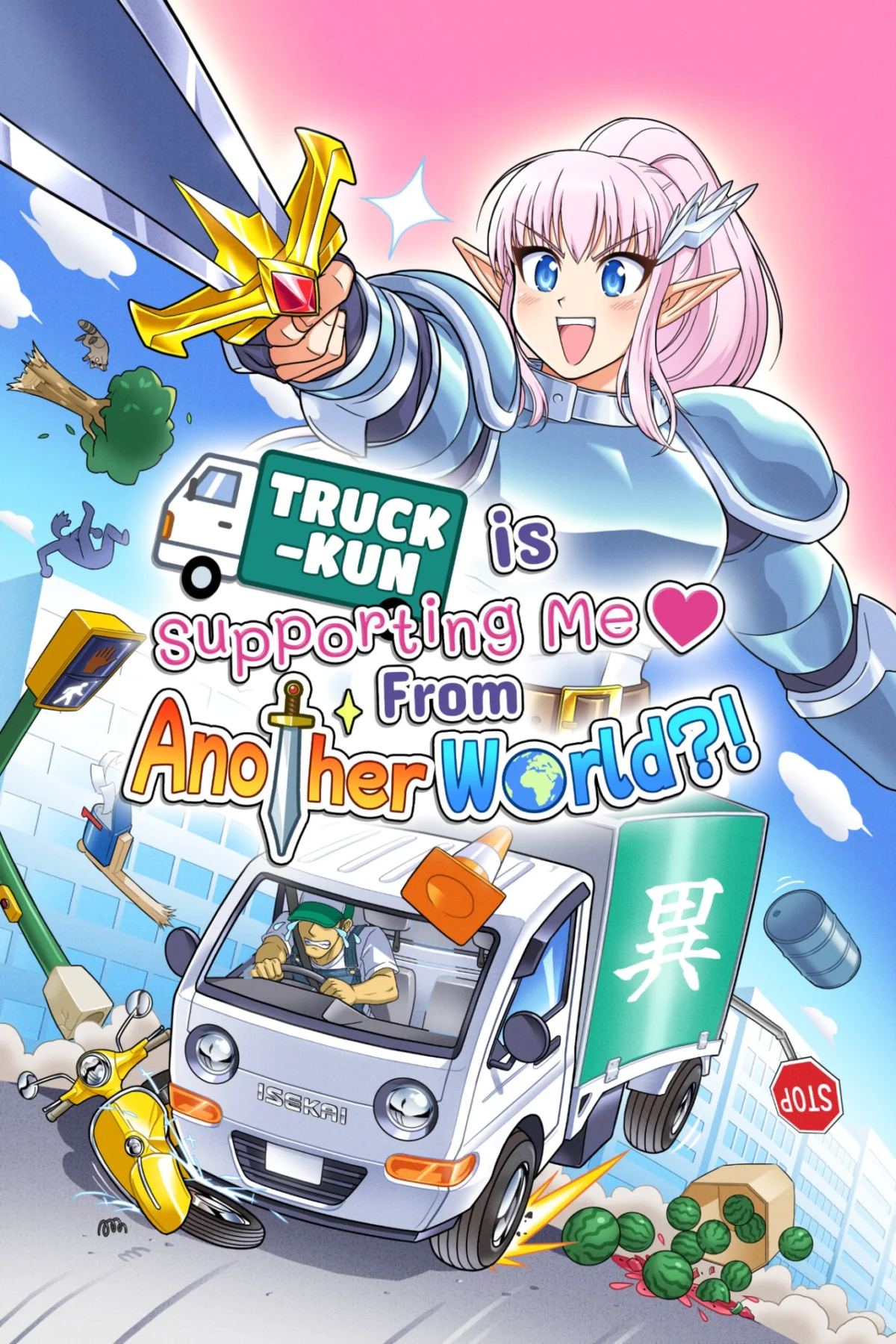
The narrative core of the title focuses on Carissa Ward, a high-achieving marketing professional whose career trajectory is abruptly terminated following a fatal encounter with a delivery vehicle on the eve of her promotion to Vice President. In a subversion of traditional afterlife narratives, the story follows two parallel tracks: Carissa is transported to a high-fantasy realm where she assumes the form of a formidable warrior, while the driver of the truck remains in the metropolitan "real world" to atone for the accident. This atonement is facilitated through a magical link where the driver’s actions—ranging from property destruction to high-speed stunts—directly empower Carissa’s combat capabilities in her new environment.
The game’s structure is built around high-intensity "runs," typically lasting between two and ten minutes. During these segments, players navigate a vibrant, open-ended city filled with destructible environments, ramps, and various obstacles. The primary objective is not merely to reach a finish line, but to generate "chaos energy" that translates into health, attack power, and special abilities for Carissa as she battles magical entities in a 2D interface positioned at the bottom of the screen.

Mechanical Analysis: The Dual-World System
The gameplay loop of Truck-kun is Supporting Me from Another World?! is defined by the constant management of two disparate but interconnected game states. The driving component utilizes a physics-heavy arcade model that draws heavy inspiration from Sega’s Crazy Taxi series. Players are tasked with navigating an urban landscape to complete a rotating set of objectives, such as drifting for specific distances, destroying a designated number of billboards, or performing aerial stunts through rings.
The RPG Synergy
The 2D RPG element, though non-interactive in the traditional sense, dictates the player’s priorities in the 3D world. When Carissa encounters a group of enemies, the player must shift their driving style to accommodate her needs. For instance, smashing environmental objects like beach chairs or hedges charges Carissa’s "Devastating Attack" meter. Conversely, striking pedestrians in the 3D world has the unique effect of "isekai-ing" them into Carissa’s world, where they appear as enemies for her to defeat, thereby providing her with experience points and loot. This creates a strategic tension where the player must decide whether to focus on empowering Carissa or increasing the density of enemies for faster leveling.
Objective and Time Management
Time management serves as the primary difficulty modifier. Each run begins with a strict time limit that can only be extended by completing specific objectives or collecting regenerating time power-ups scattered throughout the map. While delivery missions are available, they are often treated as secondary tasks unless specifically mandated by a milestone. The game encourages a deep familiarity with the map’s geography; efficient players learn the locations of high-density destruction zones, such as parking lots filled with cars or coastal areas with breakable furniture, to maximize their efficiency within the allotted time.

Technical Specifications and Performance on Xbox Series X
On the Xbox Series X hardware, the game emphasizes a high-contrast, "old school" aesthetic characterized by large polygons and a saturated color palette. This visual direction is intended to evoke the aesthetics of the Dreamcast and early PlayStation 2 era, prioritizing frame rate and visual clarity over photorealistic textures.
Despite the stylistic intent, the title exhibits certain technical inconsistencies. The physics engine, while capable of handling complex multi-car collisions, has been noted for its occasional "jank." Reversing maneuvers and drifts can feel unresponsive under certain conditions, and the interaction between the truck and the level geometry sometimes results in unpredictable bounces or the vehicle becoming wedged in narrow spaces. To mitigate these issues, the developers implemented a dedicated "Unstuck" function in the main menu, allowing players to reset their position without abandoning their current run.
Furthermore, the game’s launch version lacked certain features that are standard for the genre. A garage system for truck customization was notably absent at release, with developers promising a "Week 1" patch to integrate these cosmetic and functional upgrades. The lack of online leaderboards or competitive multiplayer modes limits the game’s longevity for players who prioritize social or competitive play, leaving the focus entirely on the single-player campaign and the pursuit of cumulative achievements.

Development Context and Industry Impact
The involvement of Strange Scaffold, led by Xalavier Nelson Jr., provides significant context for the game’s subversive nature. Strange Scaffold has established a reputation for developing "high-concept" indie titles that challenge traditional gameplay structures, such as El Paso, Elsewhere and Space Warlord Organ Trading Simulator. By taking the "Truck-kun" meme—which has become a ubiquitous and often criticized trope in the anime industry—and turning it into a functional game mechanic, the studio continues its trend of exploring the intersection of internet culture and interactive media.
Industry analysts have observed that the game’s $19.99 price point positions it in a competitive segment of the digital market. While the campaign is relatively brief—taking approximately three to four hours to reach the final encounter with the "Skeleton King"—the density of the experience is designed for high replayability in short bursts. This "bite-sized" approach aligns with current trends in indie development, where unique premises are favored over long-form, repetitive content.
Timeline of Progression and Milestones
The progression within the game is tracked through global milestones that trigger narrative developments. The following chronology outlines the typical player experience:

- Phase One: Introduction and Basic Mechanics: Players familiarize themselves with the truck’s handling and the basic objective system. The early game focuses on low-stakes destruction and learning the city layout.
- Phase Two: Synchronization: As milestones are met, unvoiced dialogue boxes provide insights into the relationship between Carissa and the driver. Players begin to consciously coordinate their driving actions with the status of the 2D RPG screen.
- Phase Three: Escalation: Law enforcement intervention increases. Cops act as mobile hazards that must be avoided or neutralized using "side-swipe" maneuvers. Objectives become more complex, requiring specific stunt sequences.
- Phase Four: The Grind for the King: To summon the Skeleton King, the game’s final boss, players must complete a series of cumulative tasks, including hitting a specific threshold of pedestrians and environmental objects.
- Final Phase: The Skeleton King Confrontation: The culmination of the campaign, where the chaos generated in the 3D world is used to fuel a protracted battle in the RPG world, leading to the game’s conclusion and credits.
Market Reception and Broader Implications
The release of Truck-kun is Supporting Me from Another World?! comes at a time when "absurdist" simulators and arcade revivals are seeing a resurgence in popularity. By eschewing the realism of modern racing simulators like Forza Motorsport or Gran Turismo, the title carves out a niche for players seeking a more kinetic, less structured experience.
While critics have pointed out that the game lacks the "deliberateness and precision" found in the titles that inspired it, its infectious humor and commitment to its bizarre premise have earned it a following within the indie community. The game serves as a case study in how niche cultural tropes can be leveraged to create distinctive gameplay loops that stand out in a saturated digital marketplace.
In conclusion, while the title may be perceived as a "short burst" experience with some technical rough edges, it successfully delivers a unique synthesis of two very different media formats. Its reliance on the "isekai" narrative framework provides a cohesive justification for its chaotic gameplay, ensuring that every smashed car and performed stunt serves a greater purpose within its fictional universe. As the "Week 1" patch rolls out to address customization and physics issues, the game is poised to remain a notable, albeit eccentric, entry in the 2026 gaming calendar.