


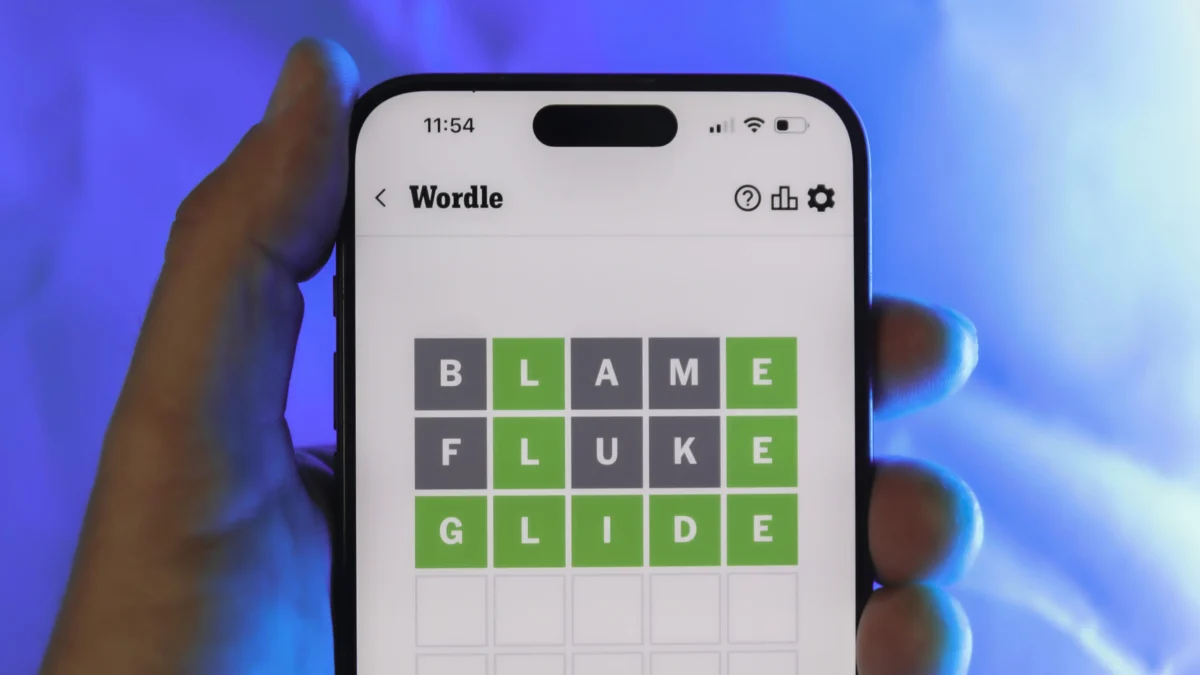
The latest daily challenge in the globally popular Wordle puzzle series, identified as Wordle #1909 for September 10, presented a significant hurdle for many players, particularly due to its unusual vowel structure. The five-letter word, ultimately revealed to be DRYLY, tested participants’ linguistic intuition and strategic guessing, highlighting the game’s capacity to surprise even seasoned enthusiasts. The inherent difficulty stemmed from the word’s repeated use of the letter ‘Y’ functioning as a vowel, a common source of complexity in English phonetics and, consequently, in Wordle gameplay.
The specific nuances of Wordle #1909, along with a consistent stream of daily challenges, underscore the game’s continued cultural relevance since its meteoric rise. Players are routinely presented with a mix of common and obscure words, demanding a blend of vocabulary knowledge, logical deduction, and strategic letter placement. The daily unveiling of the solution, accompanied by a set of carefully crafted hints, has become a morning ritual for millions worldwide, fostering a unique blend of personal challenge and collective experience.
Navigating Wordle #1909: A Closer Look at ‘DRYLY’
Wordle #1909, solved as DRYLY, proved to be particularly challenging for several reasons, as indicated by the game’s internal hints and player feedback. The difficulty was primarily centered on its vowel composition and the less common nature of the word itself.
The Specific Challenge: Vowels and Repetition
The primary source of consternation for players tackling DRYLY was its peculiar vowel arrangement. The word contains only one traditional vowel, ‘Y’, which appears twice. In English, ‘Y’ is often referred to as a "sometimes vowel" because it can function as both a consonant (as in "yellow") and a vowel (as in "sky" or "rhythm"). In DRYLY, both instances of ‘Y’ operate as vowels, producing the /aɪ/ sound in the first syllable and the /ɪ/ sound in the second. This dual-vowel ‘Y’ scenario, especially with a repetition, is statistically less common than words containing ‘A’, ‘E’, ‘I’, ‘O’, or ‘U’, immediately narrowing the pool of potential guesses and increasing the difficulty.
Furthermore, the word "dryly" itself, while a legitimate English adverb, might not be as frequently encountered in daily conversation or writing as many other five-letter words. It describes an action or manner that is subtle, quiet, and often humorous in a understated way, such as "He delivered the punchline dryly." Its adverbial form, ending in ‘-LY’, also adds a layer of complexity as players often prioritize nouns or verbs in their initial guesses.
Decoding the Hints for #1909
The provided hints for Wordle #1909 were strategically designed to guide players without immediately revealing the solution, slowly peeling back layers of complexity:
-
Wordle Hint No. 1: Repeats
This hint immediately informed players that one letter would appear more than once in the five-letter sequence. This is a crucial piece of information, as many starting word strategies focus on unique letters to maximize information gain. Knowing a repeat exists encourages players to consider words with double letters earlier in their attempts. For DRYLY, the repeated letter is ‘Y’. -
Wordle Hint No. 2: Vowels
This hint further refined the challenge, stating that the word contained "one sometimes vowel, and it’s the repeated letter, so you’ll see it twice." This was the most direct clue regarding the ‘Y’s role. It confirmed that ‘Y’ was the repeated character and that it functioned as a vowel in both instances. This hint directed players away from traditional vowel-rich words and towards those incorporating ‘Y’ in a vocalic capacity. -
Wordle Hint No. 3: First Letter
The third hint revealed that "Today’s Wordle answer begins with D." This significantly narrowed the possibilities, as players could then focus on five-letter words starting with ‘D’ that also fit the previous criteria of having a repeated ‘Y’ as a vowel. -
Wordle Hint No. 4: Last Letter
Further refining the structure, this hint specified that "Today’s Wordle answer ends with Y." Combined with the previous hint, players now knew the word started with ‘D’ and ended with ‘Y’, and contained another ‘Y’ somewhere in between, functioning as a vowel. This structure (D_ _Y Y) made the word "DRYLY" almost inevitable once the ‘R’ and ‘L’ were discovered, or if players correctly deduced the ‘Y’ was both the repeated vowel and the final letter.
-
Wordle Hint No. 5: Meaning
The final hint provided semantic context: "Today’s Wordle answer can refer to speaking or acting in a subtle, quiet, and humorous way." This meaning clue is often the last piece of the puzzle for players who have narrowed down the letter combinations but need to confirm the exact word from a few plausible options. For "DRYLY," this description perfectly encapsulates its usage as an adverb.
The Daily Ritual: A Glimpse at Recent Wordle Solutions
The daily cadence of Wordle puzzles ensures a fresh challenge every 24 hours. Wordle #1909 (DRYLY) on September 10 followed a series of other diverse words, each with its own set of characteristics that contributed to varying levels of difficulty. The consistent format, where players have six attempts to guess a five-letter word, has remained a cornerstone of its appeal.
Recent Wordle answers leading up to #1909 include:
- Sept. 5, No. 1904: SOUPY (Highlighting ‘Y’ as a vowel at the end, similar to DRYLY, but with more traditional vowels.)
- Sept. 6, No. 1905: BEIGE (A word with a less common ‘G’ and silent ‘E’, often challenging.)
- Sept. 7, No. 1906: BLIND (A straightforward word with common letters.)
- Sept. 8, No. 1907: LIVEN (Another common verb, relatively easy.)
- Sept. 9, No. 1908: BURST (A word with a ‘U’ and ‘R’ often used in good starting words.)
This sequence demonstrates the variety in Wordle’s word list, ranging from common adjectives and verbs to adverbs like DRYLY, ensuring that players never quite know what to expect.
The Genesis of a Global Phenomenon: Wordle’s Meteoric Rise
The story of Wordle’s creation and subsequent explosion into popular culture is a testament to the power of simplicity and thoughtful design in the digital age. What began as a personal project evolved into a global sensation, capturing the imagination of millions.
From Private Project to Public Sensation
Wordle was initially developed by Josh Wardle, a software engineer based in Brooklyn, New York, as a word-guessing game for his partner, Palak Shah, who enjoyed word puzzles. The game was first released to the public in October 2021 on a simple website. Its mechanics were straightforward: guess a five-letter word in six tries, with feedback provided in the form of colored tiles (green for correct letter in the correct spot, yellow for correct letter in the wrong spot, and gray for a letter not in the word).
The game’s virality was largely fueled by its ingenious "share" feature, which allowed players to post their results on social media using a grid of green, yellow, and gray squares, without revealing the word itself. This visually distinct and spoiler-free sharing method quickly caught on, turning daily Wordle results into a ubiquitous sight on Twitter, Facebook, and other platforms. The game’s appeal was amplified by its daily refresh cycle, limiting play to one puzzle per day, which created a sense of anticipation and prevented burnout, distinguishing it from endlessly playable mobile games.
Acquisition by The New York Times
By January 2022, Wordle had amassed millions of daily players. Its immense popularity attracted the attention of The New York Times, which acquired the game from Wardle for an undisclosed seven-figure sum. The acquisition was announced in late January 2022 and completed shortly thereafter. The New York Times, a long-standing publisher of acclaimed crossword puzzles and other games, saw Wordle as a strategic addition to its digital offerings, aiming to expand its audience and engage new subscribers.
Following the acquisition, The New York Times largely preserved Wordle’s original design and free-to-play model, a decision that was widely praised by the game’s community. While some minor changes to the word list were implemented (reportedly to remove obscure or potentially offensive words), the core experience remained intact. The acquisition cemented Wordle’s status as a legitimate and enduring puzzle, integrating it into a prestigious portfolio of intellectual games.
The Art and Science of Wordle Strategy
Success in Wordle is not solely dependent on luck or an expansive vocabulary; it involves a strategic approach, particularly concerning the choice of starting words and subsequent deductions. Insights from linguistic analysis and computational studies have helped define optimal strategies.
Optimizing Your Opening Move
The first guess in Wordle is arguably the most critical, as it sets the foundation for all subsequent attempts by providing the initial letter feedback. Expert players and statistical analyses suggest that the best starting words are those that maximize the probability of revealing common letters and vowels. English letter frequency analysis consistently shows ‘E’, ‘A’, ‘R’, ‘I’, ‘O’, ‘T’, ‘N’, ‘S’, ‘L’, and ‘C’ as the most common letters.
Therefore, effective starting words typically:
- Contain 2-3 common vowels (A, E, I, O, U, and sometimes Y).
- Include 2-3 common consonants (R, S, T, L, N).
- Avoid less common letters like Z, J, Q, X, K, V, B, W, which are unlikely to appear in the target word and thus offer less information.
Some widely recommended starting words, often cited by analysts including CNET editor Gael Fashingbauer Cooper, who frequently comments on pop culture trends and digital phenomena, include:
- ADIEU: Excellent for its four vowels (A, I, E, U), maximizing vowel discovery early.
- TRAIN: Balances vowels (A, I) with common consonants (T, R, N).
- CRANE: Another strong contender, using common letters (C, R, A, N, E).
- CLOSE: Features common vowels (O, E) and consonants (C, L, S).
- STARE: Incorporates three very common letters (S, T, A, R, E).
- NOISE: Uses common vowels (O, I, E) and consonants (N, S).
The aim is to use a word that, regardless of whether it’s the correct answer, provides the most comprehensive feedback on letter presence and position. For a puzzle like DRYLY, a vowel-heavy word like ADIEU might initially seem less effective if it doesn’t contain ‘Y’, but it still provides critical information by eliminating common vowels.
Beyond the First Word: Advanced Strategies
After the initial guess, players move into a phase of logical deduction and elimination. Key strategies include:
- Positional Analysis: If a letter is yellow, it exists in the word but is in the wrong place. If green, it’s correct. Players should mentally (or physically) track letter positions.
- Elimination: Any gray letters are out. Subsequent guesses should meticulously avoid these letters.
- Second Guess Optimization: The second guess should ideally use entirely different, high-frequency letters than the first, particularly if the first guess yielded little green/yellow feedback. For instance, if ADIEU was the first guess and yielded no green/yellow, a second guess like CRONY would introduce different common consonants and the ‘Y’ vowel.
- Consonant Clustering: Many English words feature common consonant clusters (e.g., ST, TH, CH, SH, BL, DR). Recognizing these patterns can aid in narrowing down options.
- Vowel Placement: English words typically have at least one vowel. Understanding common vowel placements (e.g., usually not at the very beginning of a word, often in the middle) can help.
- The "Sometimes Vowel" Conundrum: The letter ‘Y’, as seen in DRYLY, presents a unique challenge. When ‘Y’ appears in a Wordle puzzle, especially when it functions as a vowel, it can be tricky. Players often prioritize A, E, I, O, U, and might overlook ‘Y’ in their early guesses if they’re not specifically looking for it. Its dual nature means that strategic players might incorporate words with ‘Y’ into their repertoire of starting words or second guesses to test for its presence.
Wordle’s Enduring Cultural Impact and Cognitive Benefits
Wordle’s appeal extends beyond its simple gameplay, contributing to a daily global community and offering tangible cognitive benefits. Its rapid adoption and sustained popularity underscore its unique position in the pantheon of digital puzzles.
A Daily Global Community
The game’s one-puzzle-per-day model, coupled with its shareable results, has fostered a sense of collective participation. Millions log on daily, often at similar times, creating a shared experience that transcends geographical boundaries. Social media platforms become vibrant hubs for discussing the day’s challenge, celebrating successes, and commiserating over failures. This communal aspect, a lighthearted form of competition and shared intellectual pursuit, is a significant driver of Wordle’s enduring engagement. It taps into a fundamental human desire for connection and shared ritual, offering a low-stakes, high-satisfaction daily interaction point.
Enhancing Vocabulary and Logic
Beyond entertainment, Wordle offers genuine cognitive benefits. Regular play encourages:
- Vocabulary Expansion: Players are exposed to a wide array of words, some familiar, others less so, subtly enhancing their lexical knowledge.
- Logical Deduction: The core mechanic of the game is a process of elimination and deduction. Players must analyze feedback, formulate hypotheses, and test them systematically, sharpening their logical reasoning skills.
- Pattern Recognition: Identifying common letter patterns, vowel/consonant distributions, and word structures becomes an unconscious skill developed through consistent play.
- Problem-Solving: Each Wordle puzzle is a miniature problem to solve, requiring players to think critically under constraints (limited guesses, fixed word length).
For many, Wordle serves as a gentle mental workout, a brief moment of focused concentration that can be both stimulating and relaxing, making it a perfect start or break in a busy day.
The Simplicity of Success
In an era saturated with complex, graphically intensive video games and endless content streams, Wordle’s minimalist design and straightforward premise stand out. Its success reaffirms the timeless appeal of simple, well-executed puzzles. There are no ads, no in-app purchases, no complicated tutorials – just a clean interface and a clear objective. This simplicity contributes to its accessibility across all age groups and technological proficiencies, allowing the focus to remain purely on the linguistic challenge.
The Future of Wordle Under The New York Times
Under the stewardship of The New York Times, Wordle’s future appears stable and well-managed. The Times has a vested interest in maintaining the game’s integrity and appeal, as it serves as a gateway to its broader digital ecosystem, including its subscription-based crosswords and other popular games.
The Times has been careful to preserve the essence of Wordle, resisting the temptation to over-monetize or complicate it. This approach suggests a long-term vision focused on user experience and brand loyalty. As the game continues, players can expect the consistent daily challenge that has become a staple of their routines. The Times’ commitment to maintaining the game’s free access, while subtly integrating it into their larger digital strategy, positions Wordle to remain a beloved and accessible puzzle for years to come. It serves as a prime example of how digital properties can foster community and provide enriching experiences through thoughtful design and careful management.