


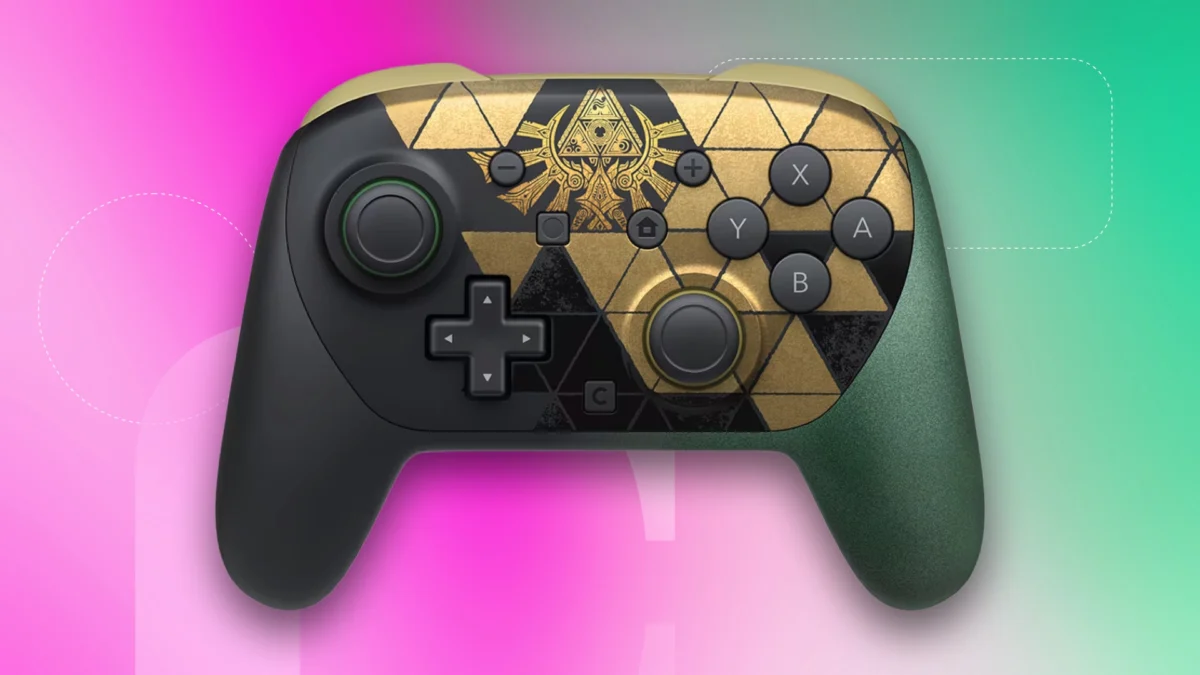
The highly anticipated limited-edition Nintendo Switch 2 Pro Controller, commemorating the 40th anniversary of The Legend of Zelda franchise, has experienced an immediate sell-out across major online retailers following its preorder launch. Priced at $100, this exquisitely designed peripheral, a centerpiece of Nintendo’s extensive anniversary celebrations, is now sporadically available, prompting keen enthusiasts and collectors to vigilantly monitor stock updates from outlets such as Best Buy, Walmart, and GameStop. The rapid depletion of initial stock underscores the enduring appeal and significant market demand for The Legend of Zelda brand and Nintendo’s specialized hardware offerings.
The Unveiling and Immediate Market Reaction
Nintendo officially announced the 40th-anniversary edition of the Nintendo Switch 2 Pro Controller as part of its broader campaign to celebrate four decades of the iconic Legend of Zelda series. The announcement, made in conjunction with details regarding the upcoming The Legend of Zelda: Ocarina of Time remake for the Nintendo Switch 2, generated immediate excitement within the global gaming community. Preorders for the controller went live on September 9, 2026, quickly leading to "sold out" statuses across all primary retail channels within hours. Despite the swift sell-out, retailers like Best Buy and GameStop have indicated potential for future availability, advising customers to check back regularly. The controller is slated for official release on October 29, 2026, offering a tangible collector’s item ahead of the Ocarina of Time remake’s launch on November 5, 2026.

A Deep Dive into the Anniversary Controller’s Design and Features
Functionally, the 40th-anniversary edition Pro Controller is engineered to be identical to the standard Nintendo Switch 2 Pro Controller, ensuring a consistent and premium gaming experience. Its distinction lies primarily in its striking aesthetic, a homage to the rich lore and visual identity of The Legend of Zelda. The controller boasts a sophisticated color palette of black, emerald green, and gold, intricately adorned with decorative patterns directly inspired by iconic elements from the Zelda universe. These designs typically include motifs such as the Triforce, Hylian crests, and symbols reminiscent of ancient Hyrulean artistry, meticulously etched or printed onto the controller’s surface. This attention to detail transforms a utilitarian device into a collectible art piece, resonating deeply with fans of the franchise.
Beyond its visual appeal, the controller incorporates the advanced technological features expected from Nintendo’s flagship peripheral. This includes enhanced HD Rumble 2, an evolution of the haptic feedback system designed to deliver more nuanced and immersive sensory experiences, translating in-game actions into lifelike vibrations. Motion controls, a staple of Nintendo’s console design since the Wii, are also fully integrated, offering intuitive control options for a variety of game genres. The built-in Amiibo functionality allows players to tap compatible Amiibo figures to the controller, unlocking in-game bonuses, characters, or content. Furthermore, the controller promises a long-lasting battery life, essential for extended gaming sessions, and features convenient back buttons for customizable inputs, alongside a standard 3.5mm audio jack for direct headphone connectivity. These features collectively aim to provide a superior and immersive gameplay experience on the Nintendo Switch 2.

The Enduring Legacy: 40 Years of The Legend of Zelda
The release of this anniversary hardware marks a significant milestone: 40 years since the debut of The Legend of Zelda. The franchise, which first launched in Japan on February 21, 1986, with The Legend of Zelda for the Famicom Disk System, quickly captivated audiences with its innovative open-world design, challenging puzzles, and compelling narrative of heroism, exploration, and destiny. Over four decades, the series has evolved dramatically, introducing groundbreaking gameplay mechanics and setting industry benchmarks for adventure games. Titles like Ocarina of Time, Majora’s Mask, The Wind Waker, Twilight Princess, and more recently, Breath of the Wild and Tears of the Kingdom, have consistently garnered critical acclaim and commercial success, selling over 140 million units worldwide as of 2024.
The 40th anniversary in 2026 represents not just a celebration of past achievements but also a reaffirmation of the series’ ongoing cultural impact. The Legend of Zelda has transcended its video game origins to become a global phenomenon, influencing countless other games, media, and pop culture. Its themes of courage, wisdom, and power, embodied by Link, Zelda, and Ganon, remain timeless. Nintendo’s decision to launch special hardware and a highly anticipated remake like Ocarina of Time underscores the importance of this anniversary to both the company and its dedicated fanbase.

The Nintendo Switch 2: A New Generation’s Horizon
The mention of a "Nintendo Switch 2 Pro Controller" and a "Zelda version of the Switch 2" in the article, dated September 10, 2026, firmly places this news within the context of Nintendo’s latest console generation. While Nintendo traditionally remains tight-lipped about future hardware, the article implicitly confirms the existence and, likely, the recent or imminent launch of the "Nintendo Switch 2." This new console is expected to build upon the unprecedented success of its predecessor, the original Nintendo Switch, which sold over 140 million units since its 2017 launch.
Industry analysts had long speculated about a successor, often referring to it as the "Switch Pro" or "Switch 2," anticipating significant upgrades in processing power, graphical capabilities, and potentially new form factor innovations while retaining the hybrid console concept. The introduction of a "Switch 2 Pro Controller" suggests a continued commitment to ergonomic, high-performance peripherals designed for extended and competitive play. The launch of a new console generation, especially one with a dedicated Zelda-themed edition, is a strategic move by Nintendo to drive early adoption and reinforce its position in the competitive gaming market, leveraging one of its most powerful intellectual properties. The synergy between a new console and a beloved anniversary celebration is likely to create substantial market momentum.

Retailer Strategies and Consumer Challenges in a High-Demand Market
The rapid sell-out of the anniversary controller highlights a common challenge in the market for limited-edition collectibles: managing overwhelming consumer demand against finite supply. Retailers such as Nintendo’s official store, Best Buy, GameStop, Walmart, and Target have adopted various strategies to manage preorders and subsequent stock replenishment.
- Nintendo: The official Nintendo store often serves as the primary hub for special editions. Their "check back soon" message indicates a potential for staggered releases or restocks, a tactic used to manage server load and give more consumers a chance.
- Best Buy: With a "coming soon" status for availability, Best Buy positions itself as a strong contender for future preorders. Their unique offer of savings through old controller trade-ins adds an incentive, potentially attracting customers looking to upgrade or acquire the special edition at a slightly reduced cost.
- GameStop: Historically a key retailer for gaming hardware, GameStop’s "not available" status with a note about fluctuating availability suggests a dynamic stock situation. Their advice to "keep an eye on this page" is a common industry practice to engage customers actively in the hunt for limited items.
- Walmart: Walmart’s option for email alerts for future availability is a practical approach, allowing interested buyers to be notified directly when stock is replenished, without the need for constant manual checking.
- Target: Target’s more definitive "preorders have sold out" message, combined with a suggestion to check on release day, implies that their initial allocation was entirely exhausted, with less certainty about immediate restocks before the official launch.
For consumers, securing such an item often involves a combination of vigilance, quick action, and sometimes, a degree of luck. The phenomenon of "scalpers" leveraging bots to buy up stock for resale at inflated prices is a persistent issue in these scenarios, further complicating genuine consumer access. Retailers are continually refining their anti-bot measures, but the speed at which these items sell out remains a testament to both their desirability and the competitive nature of the collector’s market.

The Broader Implications: Collector’s Market and Nintendo’s Business Strategy
The immediate sell-out of the Zelda 40th Anniversary Pro Controller is not merely a transient retail event; it carries significant implications for the collector’s market and Nintendo’s overarching business strategy. Limited-edition hardware, especially for beloved franchises, consistently commands a premium in both primary and secondary markets. The initial $100 asking price, $11 more than the standard Switch 2 Pro Controller’s $89 price, reflects the added value of its unique design and collectible status. On the secondary market, prices for such items can often soar, driven by scarcity and demand from collectors who missed the initial window or investors seeking future returns. This dynamic reinforces the perception of these items as valuable assets, akin to art or other collectibles.
For Nintendo, these anniversary celebrations and special hardware releases are a multi-faceted strategic play. Firstly, they serve to honor the legacy of their iconic franchises, fostering goodwill and loyalty among long-time fans. Secondly, they act as powerful marketing tools, generating significant buzz and media attention around both the classic IP and new hardware, such as the Nintendo Switch 2. The concurrent announcement of a Zelda-themed Switch 2 console and the Ocarina of Time remake further amplifies this effect, creating a cohesive and compelling narrative for the anniversary. This strategy not only drives direct sales of the limited editions but also encourages wider adoption of the new console and its associated software.

Moreover, the high demand for such items provides valuable market intelligence, demonstrating the fervent attachment of consumers to Nintendo’s brands and their willingness to invest in premium, aesthetically distinctive products. This data can inform future product development, marketing campaigns, and pricing strategies for both hardware and software. By blending nostalgia with cutting-edge technology (implied by the "Switch 2"), Nintendo adeptly maintains relevance while celebrating its rich history, ensuring that The Legend of Zelda continues to resonate with both veteran players and a new generation of enthusiasts.