


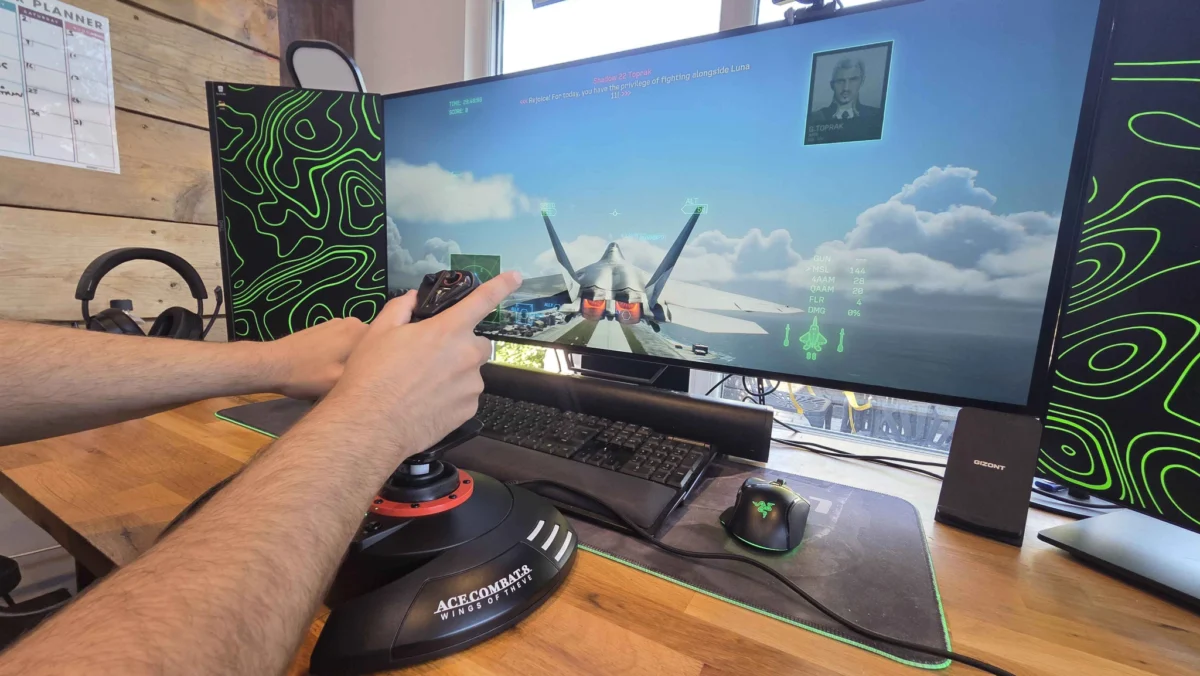
The release of Ace Combat 8: Wings of Theve marks a significant milestone for Bandai Namco’s long-running aerial combat franchise, and to coincide with this launch, Thrustmaster has introduced the T.Flight Neo. This entry-level Hands-On Throttle and Stick (HOTAS) system is specifically designed to provide an immersive experience for pilots navigating the skies of the fictional "Strangereal" universe. As the latest iteration in Thrustmaster’s accessible flight peripheral line, the T.Flight Neo aims to bridge the gap between standard gamepad play and high-end enthusiast flight simulation. Positioned as a direct successor to the widely utilized T.Flight One and T.Flight 4 models, the Neo variant introduces updated aesthetics, refined ergonomics, and a streamlined connection interface tailored for the current generation of gaming hardware.
Technical Specifications and Hardware Architecture
The T.Flight Neo is engineered as a modular yet cohesive unit, consisting of a dedicated flight stick and a separate throttle quadrant. While the two components are physically distinct to allow for ergonomic placement, they remain permanently tethered via a secure connecting cable. This design choice ensures a unified signal path to the host console or PC while providing users the flexibility to adjust the width of their setup. For those who prefer a more traditional, single-piece configuration, the underside of the units features a specialized routing system for the cable and a locking mechanism. By utilizing the included hex key—which is conveniently stored in a dedicated slot on the base of the device—users can bolt the throttle and stick together into a single, rigid frame.

Connectivity is handled through a modern USB-C to USB-A interface, with a 2-meter cable included in the retail packaging. This represents a significant update over previous generations that relied on older USB standards, ensuring better power delivery and lower latency. The device is sold in two distinct versions to accommodate the fragmented console market: one specifically licensed for the PlayStation 5 and PlayStation 4, and another for the Xbox Series X|S and Xbox One. Both versions maintain native compatibility with Windows PC environments. Switching between console and PC modes is accomplished through a firmware-level toggle; by holding the "View" button for five seconds and using the joystick’s directional input, users can cycle between modes. An LED indicator provides visual confirmation, though interestingly, the Xbox/PC version utilizes a green light for PC mode and a white light for Xbox mode, a choice that deviates from traditional branding colors but serves as a clear functional indicator.
The Evolution of the T.Flight Series
To understand the placement of the T.Flight Neo, it is necessary to examine the chronology of Thrustmaster’s entry-level flight hardware. For over a decade, the T.Flight Hotas X and its successors (the One and 4) have served as the primary gateway for console players into the world of flight simulation. These devices were instrumental during the resurgence of the genre, driven by titles such as Microsoft Flight Simulator (2020), Star Wars: Squadrons, and Ace Combat 7: Skies Unknown.
The T.Flight Neo represents a "refreshed take" on this legacy. While higher-end models like the Thrustmaster Warthog or the TCA Airbus Edition target specific niches of hardcore simulation, the T.Flight series focuses on durability and ease of use. The Neo version arrives at a critical juncture where Ace Combat 8: Wings of Theve lacks day-one support for older or third-party HOTAS setups. This exclusivity, whether intentional or a byproduct of launch-window technical constraints, positions the T.Flight Neo as an essential purchase for players seeking a flight-stick experience in the new title.

Ergonomics and Control Mapping
The joystick component of the T.Flight Neo features a contoured grip designed to minimize hand fatigue during extended dogfights. A critical feature for combat flight is the inclusion of a twist-rudder function, allowing for 3D axis control (pitch, roll, and yaw) directly through the stick. For pilots who demand a specific tactile response, the underside of the base includes a tension adjustment dial. This allows users to increase or decrease the physical resistance of the stick, catering to those who prefer a "stiffer" feel for precise maneuvers or a looser response for rapid, twitch-based combat.
The button layout on the joystick is optimized for the fast-paced nature of Ace Combat. The primary trigger manages machine gun fire, while the special weapon toggle is positioned immediately above it for quick access. The face of the stick houses the target selection button and the primary missile release. Furthermore, the stick incorporates two mini-joysticks: a central analog stick for cockpit "look" functions and a multi-directional hat switch that mirrors the functionality of a standard D-pad.
The throttle quadrant provides the "Hands-On" half of the HOTAS acronym. It features a large, comfortable handle with integrated buttons for the X, A, B, and Y (on the Xbox version) or Shape buttons (on the PlayStation version). On the rear of the throttle, a rudder paddle offers an alternative method for yaw control for players who prefer not to use the stick-twist method. Additional toggles for radar range and landing gear deployment are located on the base and handle. While the throttle includes a physical detent at the 50% mark to help pilots find a neutral thrust position, some early testing indicates a lower level of mechanical resistance compared to the joystick, leading to a "looser" feel during rapid acceleration and deceleration.

Integration with Ace Combat 8: Wings of Theve
The partnership between Thrustmaster and Bandai Namco ensures that the T.Flight Neo is recognized as a native peripheral by Ace Combat 8: Wings of Theve immediately upon connection. This "plug-and-play" functionality is vital for the console market, where users typically avoid complex driver installations. However, the launch state of the game presents certain limitations; currently, the software does not support custom button remapping for flight sticks. This means players must adapt to the preset control scheme defined by the developers, making the ergonomic placement of the T.Flight Neo’s buttons even more critical.
During gameplay, the transition from a standard controller to a HOTAS setup significantly alters the difficulty curve. While a gamepad allows for instantaneous, binary inputs, a flight stick requires a more nuanced understanding of momentum and aerodynamic drag. In the high-speed interceptions characteristic of Ace Combat 8, the T.Flight Neo provides a level of immersion that a standard controller cannot replicate, though it demands a higher degree of physical coordination from the pilot.
Market Analysis and Industry Implications
The release of the T.Flight Neo at a competitive price point reflects a broader strategy within the gaming peripheral industry. As flight simulation becomes more mainstream, manufacturers are prioritizing accessibility. Data from market research indicates that entry-level HOTAS units often serve as "gateway products," leading consumers to eventually invest in mid-range and high-end flight ecosystems.

Industry analysts suggest that the launch of Ace Combat 8 could drive a 15-20% uptick in flight peripheral sales during its first quarter. Thrustmaster’s decision to brand the T.Flight Neo specifically with Ace Combat 8 livery is a calculated move to capture this surge. By providing a reliable, licensed product, Thrustmaster mitigates the risk for consumers who might be wary of compatibility issues with non-licensed hardware.
Technical Challenges and User Feedback
Despite the streamlined design, some early users have reported intermittent connectivity issues on PC platforms, where the device may not be immediately recognized by the Windows Game Controllers utility. While these "PC gremlins" often resolve after a system restart or a manual driver refresh, they highlight the complexities of modern USB-C peripheral integration. Thrustmaster is expected to address these minor software hurdles through firmware updates shortly after the public release.
The physical construction of the T.Flight Neo has also drawn observation. To maintain its entry-level price point, the device utilizes high-grade plastics rather than the metal alloys found in premium units. While this results in a lighter weight—which may require the use of the mounting holes on the base for those with aggressive flying styles—the internal sensors remain highly accurate, providing the necessary fidelity for the demanding missions of Ace Combat 8.

Conclusion and Broader Impact
The Thrustmaster T.Flight Neo | Ace Combat 8 Edition stands as a robust solution for gamers entering the world of flight simulation. By combining the stick and throttle into a single, affordable package, Thrustmaster has addressed the needs of a growing audience that seeks more than what a standard gamepad can offer. While the lack of in-game remapping in Ace Combat 8 and the loose resistance in the throttle quadrant are notable points of contention, the overall package delivers on its promise of immersion.
As the flight simulation genre continues to evolve with more sophisticated physics engines and VR support, the demand for tactile, responsive hardware will only increase. The T.Flight Neo is well-positioned to remain a staple of the entry-level market, serving as a reliable tool for aspiring aces looking to claim air superiority in the skies of Wings of Theve. For players on PC, Xbox, and PlayStation, it represents a functional and stylish upgrade that enhances the core gameplay loop of one of the most anticipated flight games of the decade.