


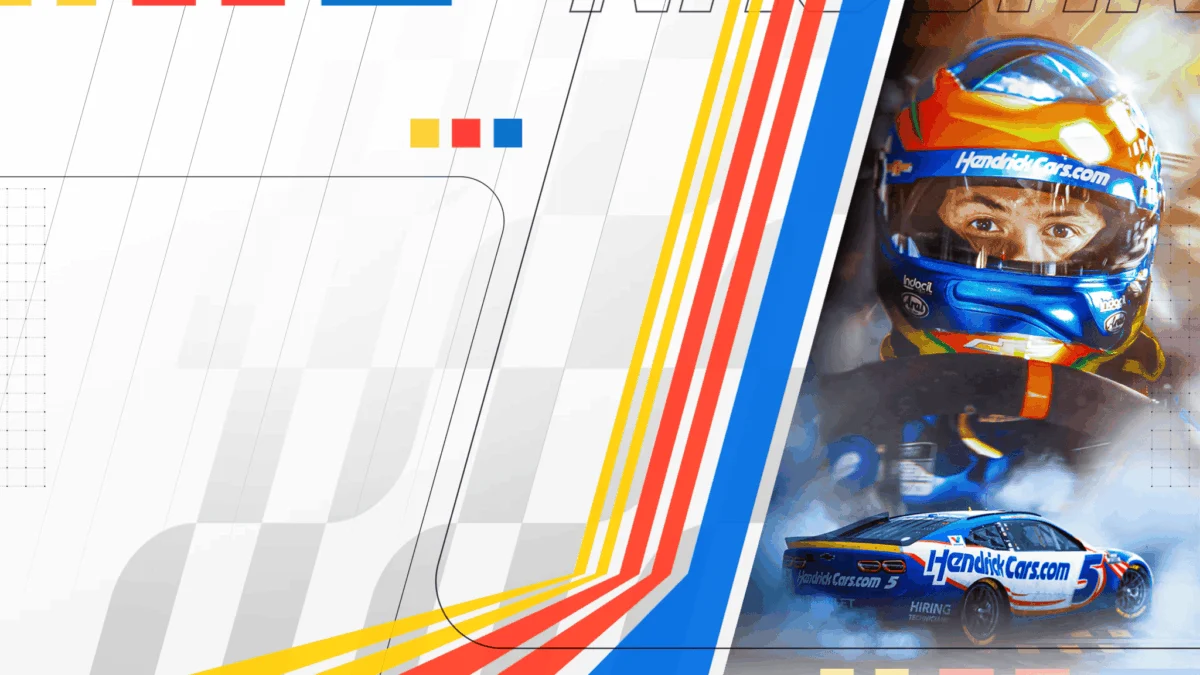
The annual cycle of licensed motorsports titles has seen a significant shift in recent years, with the NASCAR franchise undergoing a major transition in development leadership. Following the acquisition of the license by iRacing.com Motorsport Simulations, the series has moved toward a more robust simulation-focused foundation. The latest entry, NASCAR 26, represents the second full iteration under this new stewardship, aiming to build upon the groundwork laid by its predecessor. Tested on Xbox Series X and Xbox Series S, the title introduces several technical advancements, including long-awaited cross-platform play and an evolved dynamic track system, while maintaining an accessible entry point for console-based racing enthusiasts.
The Evolution of the NASCAR Gaming License
To understand the current state of NASCAR 26, it is necessary to examine the chronology of the franchise’s development. For much of the early 2020s, the NASCAR license was held by Motorsport Games, a period marked by technical instability and critical disappointment, most notably with the release of NASCAR 21: Ignition. In late 2023, iRacing—a company renowned for its industry-standard PC flight and racing simulations—officially acquired the simulation racing license from Motorsport Games.

This transition was viewed by the industry as a pivotal moment for the sport’s digital presence. iRacing’s first effort, NASCAR 25, was praised for stabilizing the franchise and introducing a more realistic physics model. NASCAR 26 continues this trajectory, utilizing iRacing’s proprietary physics data to simulate the complexities of high-speed oval racing. The development focus for this year’s installment has shifted from foundational stability to feature parity and environmental realism, addressing specific community feedback regarding multiplayer connectivity and career depth.
Technical Infrastructure and Multiplayer Enhancements
One of the most significant additions in NASCAR 26 is the implementation of full cross-play support. In previous iterations, the player base was fragmented by platform, which often led to diminished lobby sizes on specific consoles. The inclusion of cross-platform functionality allows users on Xbox Series X|S, PlayStation 5, and PC to compete within the same ecosystem, a move that is expected to increase the longevity of the game’s online community.
The multiplayer suite utilizes an "old-school" server browser approach rather than a modern skill-based matchmaking system. While this provides players with more agency in selecting specific race types and track conditions, it lacks the sophisticated ranking and licensing systems found in iRacing’s dedicated PC simulation. However, the game does support lobbies of up to 40 players, mirroring the real-world starting grid of the NASCAR Cup Series.

Technical testing reveals that the online experience is underpinned by a refined physics engine. Key variables such as fuel consumption, tire degradation, and aerodynamic drafting are simulated with high fidelity. A standout feature in NASCAR 26 is the "Dynamic Track" evolution. As a race progresses, the asphalt surface accumulates rubber in the "racing line," which alters grip levels in real-time. This forces players to adapt their driving lines as the stint continues, a mechanic that adds a layer of strategic depth often missing from arcade-leaning titles.
Gameplay Mechanics and Simulation Fidelity
NASCAR 26 strikes a balance between "sim-cade" accessibility and hardcore simulation. While the game is designed to be playable on a standard gamepad, it offers extensive support for force-feedback steering wheels. The sensation of "tight" (understeer) and "loose" (oversteer) handling characteristics is communicated effectively through haptic feedback, allowing drivers to feel the weight transfer of the 3,400-pound stock cars.
The artificial intelligence (AI) in NASCAR 26 has seen a notable overhaul. Unlike static AI in many racing games, the computer-controlled opponents in this title react to the evolving track conditions. AI drivers will experience performance fluctuations based on their tire wear and fuel loads, leading to organic racing scenarios where some cars may be faster at the beginning of a run while others excel toward the end.

Furthermore, the game introduces a more nuanced "Drafting" mechanic. In NASCAR, the aerodynamic "hole" punched in the air by the lead car is essential for overtaking. NASCAR 26 accurately simulates the "side-drafting" technique, where a driver pulls alongside an opponent to dump air onto their spoiler, slowing them down. These high-speed interactions are the core of the NASCAR experience, particularly on superspeedways like Daytona and Talladega.
Career Mode and Single-Player Content
The career mode serves as the primary single-player component, offering a structured progression through the ranks of American stock car racing. The journey begins in the ARCA Menards Series, a developmental tier, before moving through the NASCAR Craftsman Truck Series, the NASCAR Xfinity Series, and finally the premier NASCAR Cup Series.
Key features of the career mode include:

- Authentic Schedules: Players compete on digital recreations of the 2026 season tracks, including ovals, road courses, and street circuits.
- Legend Integration: The game features digital likenesses of iconic figures, such as Dale Earnhardt Jr., who provide mentorship and context to the player’s career.
- Team Management: Drivers have the option to sign with existing powerhouse teams like Hendrick Motorsports or Joe Gibbs Racing, or attempt to build their own organization.
- Driver Rating Customization: A new feature for the 2026 edition allows players to manually adjust the ratings of AI drivers. This provides the ability to create custom rivalries or simulate historical eras by boosting or nerfing specific competitors.
Despite these additions, the career mode remains a traditional "rags-to-riches" narrative. While it lacks the cinematic storytelling found in titles like F1 24’s "Braking Point," it focuses heavily on the technical aspects of a race weekend, including practice sessions and qualifying trim adjustments.
Technical Performance and Platform Disparity
The performance of NASCAR 26 varies significantly across hardware. On the Xbox Series X, the title maintains a consistent 60 frames per second (FPS) at a high resolution, providing the visual clarity necessary for high-speed pack racing. The lighting engine effectively captures the transition from afternoon sun to stadium floodlights during night races, reflecting off the cars’ metallic wraps and the track surface.
However, the Xbox Series S version exhibits technical limitations. Reports from testing indicate inconsistent frame rates on more demanding tracks and occasional software crashes during long-distance endurance events. These performance hurdles suggest that while the game is optimized for high-end hardware, the "entry-level" next-gen console requires further post-launch patching to achieve the same level of stability.

Community Integrity and Penalty Systems
A recurring challenge for licensed racing titles is the management of player behavior in public lobbies. NASCAR 26 utilizes a safety rating system similar to its predecessor, which tracks "incidents" such as collisions and off-track excursions. Players are allowed a maximum of 20 incident points per race before being disqualified.
While the system aims to discourage "griefing" and "T-bone" maneuvers, it has faced criticism for its lack of nuance. The automated system often struggles to differentiate between the aggressor and the victim in a multi-car "big one" (a common large-scale wreck in NASCAR). Consequently, players may receive penalty points for accidents they could not avoid. The ranking system currently prioritizes speed and draft efficiency over pure safety, which can occasionally lead to high-intensity but chaotic online environments.
Market Impact and Future Outlook
The release of NASCAR 26 solidifies iRacing’s position as the definitive developer for the sport. By focusing on physics and platform connectivity, the developers have addressed the primary concerns of the core fanbase. The game occupies a unique niche in the market; while Forza Motorsport and Gran Turismo 7 offer stock cars as part of a larger roster, neither provides the specific rulesets (such as "Stage Racing" and "Green-White-Checkered" finishes) that define NASCAR.

Industry analysts suggest that the success of this title will likely pave the way for a more integrated esports ecosystem. Given iRacing’s history with professional sim-racing, there is an expectation that future updates may introduce "Pro" lobbies or qualifiers for sanctioned NASCAR esports events directly within the console interface.
In summary, NASCAR 26 is a refined, technical achievement that prioritizes the "feel" of the car and the strategy of the race. While it lacks the social complexity of more established "sim-cade" franchises, its focus on ever-evolving race conditions and authentic physics makes it a standout title for fans of oval racing. As iRacing continues to iterate on this engine, the gap between console accessibility and professional-grade simulation continues to narrow, offering a compelling vision for the future of the franchise.