


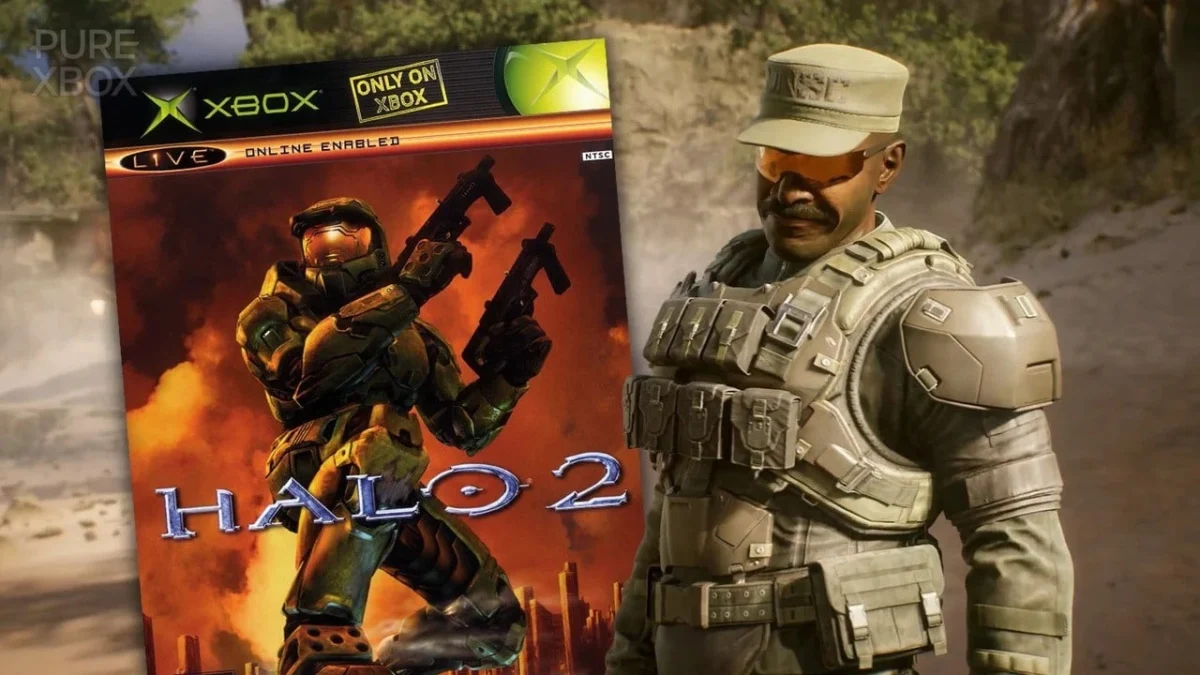
Microsoft and its Xbox gaming division have officially confirmed a significant restructuring of the Halo franchise’s development pipeline, marking one of the most substantial shifts in the series’ 25-year history. Under the new arrangement, Activision—the massive publisher acquired by Microsoft in a landmark $68.7 billion deal—will take the lead on the development of the next mainline Halo title. This transition coincides with a major downsizing at Halo Studios, the entity formerly known as 343 Industries, which will now transition into a secondary support role. While a small team at Halo Studios will remain dedicated to maintaining and updating current titles on the market, the broader workforce has faced significant layoffs, leaving the future of several rumored projects, including high-definition remakes of Halo 2 and Halo 3, in a state of precarious uncertainty.
The decision follows the recent release of Halo: Campaign Evolved, a comprehensive remake of the original 2001 classic. While the title received critical acclaim for its modernized visuals and faithful recreation of the series’ roots, internal data suggests that commercial performance did not meet Microsoft’s aggressive sales targets. This financial underperformance, combined with the strategic integration of Activision’s massive development resources, has prompted a pivot in how the Halo intellectual property (IP) is managed. The move signals an end to the era of Halo Studios as the sole custodian of the franchise, a role it held since Bungie’s departure in 2010.
A Chronology of the Halo Franchise Transition
To understand the gravity of this shift, it is necessary to examine the timeline of the Halo franchise and its management under Microsoft. The series was originally developed by Bungie, which produced the original trilogy and the prequel, Halo: Reach. In 2011, 343 Industries took over full control, overseeing the release of Halo 4, Halo 5: Guardians, and Halo Infinite.
In early 2024, 343 Industries underwent a rebranding to Halo Studios, a move intended to signify a "new dawn" for the franchise, including a shift from the proprietary Slipspace Engine to Epic Games’ Unreal Engine 5. This rebranding was accompanied by the announcement of Halo: Campaign Evolved, which was positioned as the first in a new trilogy of remakes intended to bridge the gap between mainline entries.
However, by late 2025, reports began to surface regarding internal friction and shifting priorities within Xbox Game Studios. The acquisition of Activision Blizzard provided Microsoft with a suite of experienced first-person shooter (FPS) developers, including those behind the Call of Duty franchise. In 2026, the announcement was made that Activision would assume the mantle for the next major chapter in the Master Chief’s journey, effectively sidelining the internal team at Halo Studios.
The Financial and Critical Context of Halo: Campaign Evolved
The catalyst for this structural change appears to be the commercial reception of Halo: Campaign Evolved. From a critical perspective, the remake was a triumph, with many outlets praising its technical fidelity and its ability to capture the "feel" of the original Xbox era. Reviewers noted that the game served as a perfect entry point for new fans while providing a nostalgic trip for veterans.
However, market analysis indicates that the appetite for a full-priced remake of a 25-year-old game may have been overestimated. Industry analysts point to several factors for the "under par" sales:
- Market Saturation: The original Halo: Combat Evolved had already seen a remaster in 2011 (Halo: Combat Evolved Anniversary) and was readily available via the Halo: The Master Chief Collection.
- Subscription Model Impact: With the game launching day-and-date on Xbox Game Pass, traditional retail and digital sales were cannibalized, making it difficult for the project to demonstrate "blockbuster" revenue in a traditional sense.
- Competitive Landscape: The FPS market in 2025 and 2026 has become increasingly crowded with live-service titles and new IP, making it difficult for a single-player-focused remake to dominate the conversation.
The lower-than-expected revenue from Campaign Evolved reportedly led Microsoft executives to reconsider the viability of the subsequent remakes. A Halo 2 remake had been heavily teased within the secret "Legendary" ending of Campaign Evolved, where the character Sergeant Johnson explicitly stated, "I’ll see you in the sequel." For the fanbase, this was a clear indication that a ground-up recreation of the 2004 classic was in development. With Activision now leading the franchise, the status of this sequel—and a subsequent Halo 3 remake—remains unconfirmed and, according to internal sources, likely cancelled or indefinitely postponed.
The Activision Integration and Strategic Implications
The decision to hand the "keys to the kingdom" to Activision represents a pragmatic, if controversial, use of Microsoft’s newly acquired assets. Activision possesses a robust infrastructure for developing high-fidelity FPS titles on a global scale. By leveraging studios like Infinity Ward, Treyarch, or Sledgehammer Games, Microsoft aims to bring a new level of "triple-A" polish and perhaps a more consistent release cadence to the Halo brand.
Industry observers suggest that Activision’s involvement may lead to a fundamental shift in the series’ direction. While Halo Studios focused heavily on the lore and the specific "sandbox" mechanics of the series, Activision’s history with Call of Duty suggests a potential pivot toward a more robust live-service model, integrated social features, and a revitalized competitive multiplayer scene.
One of the primary criticisms of Halo: Campaign Evolved was its lack of a dedicated, modernized multiplayer suite, as it relied on the existing Master Chief Collection infrastructure. Analysts believe that if Activision had been at the helm of a Halo 2 remake, the inclusion of a fully realized, modern multiplayer component would have been a central pillar, potentially solving the sales issues faced by the Campaign Evolved release.
Impact on Personnel and the Halo Studios Legacy
The human cost of this restructuring cannot be ignored. The transition of Halo Studios to a support role has resulted in significant layoffs, affecting developers, artists, and narrative designers who had spent years shaping the Halo universe. For many, this marks the end of an era for a studio that, despite its ups and downs, remained deeply committed to the legacy of the Master Chief.
The remaining "small team" at Halo Studios is tasked with a difficult mission: maintaining the current ecosystem of Halo Infinite and the Master Chief Collection while providing "institutional knowledge" to the Activision teams. This ensures that the technical nuances of Halo—such as its unique physics, vehicle handling, and AI behavior—are not lost in the transition to a new lead developer.
Broader Industry Reactions and Fan Sentiment
The reaction from the gaming community has been a mix of skepticism and cautious optimism. On one hand, long-time fans expressed disappointment over the potential loss of the Halo 2 and Halo 3 remakes, which are widely considered the peak of the franchise’s narrative and multiplayer design. The "Sgt. Johnson" teaser had generated significant hype, and the perceived cancellation of that project is seen by some as a broken promise.
On the other hand, a segment of the audience views Activision’s takeover as a necessary "shot in the arm" for a franchise that has struggled to maintain its cultural dominance over the last decade. The hope is that Activision’s resources can deliver a Halo experience that matches the scale and polish of modern industry leaders.
Microsoft has not yet released an official statement regarding the specific fate of the Halo 2 remake, nor have they identified which specific Activision sub-studio will lead the next project. However, the company’s recent filings and public comments emphasize a "multi-platform and multi-studio" approach to its major IPs, suggesting that the next Halo game may be more ambitious in scope than anything seen previously.
Conclusion: A New Chapter for the Master Chief
As the dust settles on this major announcement, the Halo franchise stands at a crossroads. The transition from Halo Studios to Activision represents a bold gamble by Microsoft to revitalize its most iconic brand. While the loss of the planned remake trilogy is a blow to nostalgia-driven fans, the shift toward a new mainline title developed by the world’s most successful FPS powerhouse could provide the evolution the series needs to survive in an increasingly competitive market.
For now, the legacy of Halo: Campaign Evolved serves as a bittersweet reminder of what Halo Studios was capable of achieving in its final days as a lead developer. Whether Activision can capture the "magic" of the Halo universe while delivering the commercial success Microsoft demands remains the most significant question in the gaming industry today. The timeline for the next Activision-led Halo project remains undisclosed, but the eyes of the gaming world will undoubtedly be fixed on the first glimpses of this new era.