


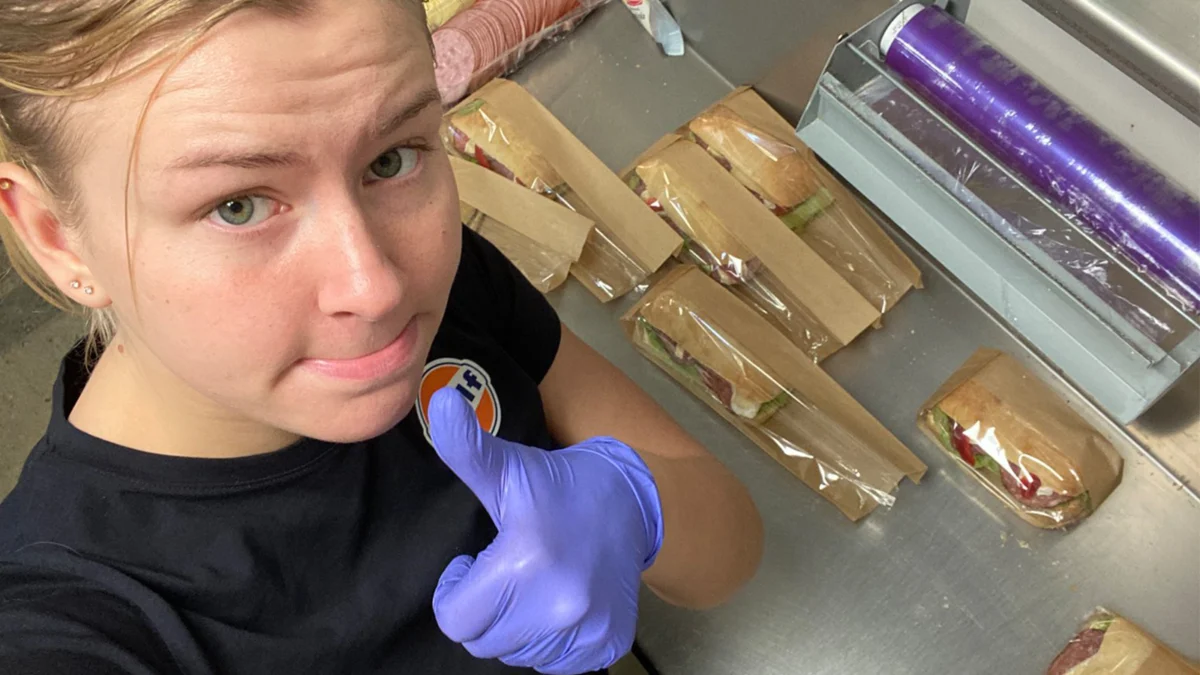
Tilde "7liciousCSGO" Byström, a prominent figure in the Swedish Counter-Strike 2 (CS2) scene as both a player and commentator, has unexpectedly captured global attention after posting a photograph of herself at her day job assembling sandwiches. The image, shared on November 19, quickly became a viral sensation, sparking conversations about the financial precariousness faced by many in the professional esports landscape, particularly within the women’s circuit. The post, captioned "After 10 years in esports, I’m officially a sandwich maker," depicted Byström with a cheerful demeanor, giving a thumbs-up beside a neatly arranged collection of bagged sandwiches, a testament to her current employment.
This seemingly simple act resonated deeply within the gaming community and beyond, serving as a poignant, albeit humorous, commentary on the challenges of sustaining a career in esports. Despite her decade-long immersion in the competitive CS2 world, including stints with notable organizations and her role as a respected commentator, Byström’s photograph underscored the reality that many professional gamers, even experienced ones, must maintain conventional employment to ensure financial stability. The image was a direct, self-aware response to the common, often dismissive, trope leveled at female gamers: "Go back to the kitchen and make me a sandwich."
The post’s virality was almost instantaneous. Within 24 hours, Byström’s tweet had amassed over 300,000 likes and garnered more than 18 million views across the platform X. The widespread engagement even caught the eye of major food corporations, including the American fast-food chain Pizza Hut, which humorously commented, "Pizza maker is also fire." Byström responded with equal enthusiasm, indicating her culinary versatility by stating, "YO! I know how to make a pizza." This playful exchange further amplified the reach of her initial post, transforming a personal observation into a widely discussed cultural moment.
The Underlying Message: A Commentary on Women’s Esports and Financial Sustainability
In an exclusive interview conducted on November 20, Byström elaborated on the multifaceted meaning behind her viral photograph. She revealed that the post was intentionally crafted as a dual-purpose statement. Primarily, it was a lighthearted retort to the persistent sexist remarks she and other female gamers have encountered throughout their careers. The "sandwich-making" trope, often used to belittle women in gaming, was being reclaimed and subverted.
More significantly, however, the photograph served as a stark, yet candid, illustration of the current economic climate within professional women’s CS2. Byström explained that the post was a "combination of a joke, but at the same time, to be able to survive and pay rent and still play CS2, especially in the current state of the scene for women’s CS, I have to also work a normal job, and pretty much always had to have side jobs while pursuing my dream!" This statement directly addresses the systemic issues plaguing the women’s esports sector, where opportunities for full-time, sustainable careers remain limited.
A Difficult Landscape for Women in Esports
Byström’s experience is not an isolated incident. The professional women’s CS2 circuit has faced significant headwinds in recent years, leading to the dissolution of several key initiatives and team rosters. A prominent example is the ESL Impact circuit, a significant platform for women’s Counter-Strike, which announced the cessation of its operations after Season 8 in October. ESL cited the "current economic model is simply not sustainable" as the primary reason for discontinuing the circuit, a statement that echoed concerns voiced by numerous other organizations.
This economic challenge has also prompted several major Counter-Strike teams to disband their women’s rosters. Natus Vincere (NAVI), a globally recognized esports organization, publicly stated that the business model for their women’s CS2 team "seems unsustainable and does not allow for long-term planning." This trend indicates a broader industry-wide issue where investment in women’s esports, while growing, has not yet reached a level that guarantees consistent financial support or long-term viability for players and teams.
A Decade in the Grind: From Player to Commentator to Sandwich Maker
Byström’s journey in esports spans a decade, beginning her engagement with the scene in 2015 with streaming and progressively focusing on the professional competitive aspect from 2019. During this period, she has represented several high-profile esports organizations, including Evil Geniuses Gold and Ghost Gaming. While these affiliations provided invaluable experience and exposure, they did not translate into full-time salaries that could adequately support a professional gaming career. She noted that while she has received salaries from organizations, they have not been sufficient for full-time living expenses.
Her career path highlights the often-unseen dedication and sacrifice required by aspiring esports professionals. The need to supplement income through side jobs or conventional employment is a common narrative, particularly for those in disciplines or regions where esports infrastructure and investment are still developing. Byström’s situation underscores that even for players with a significant track record and established presence, the path to a fully sustainable career in esports is fraught with financial uncertainty.
The Dream of Mixed Leagues: A Vision for the Future
Despite the current challenges, Tilde Byström remains optimistic about the future of women’s Counter-Strike. Her ultimate aspiration is to witness the evolution of the esport to a point where mixed leagues, featuring both male and female players, become a reality. This vision represents a progressive step towards greater inclusivity and competitive parity within the esports ecosystem.
"The dream for me is that women’s CS can evolve so much that we can, in the future, have mixed teams!" she stated passionately. This forward-looking perspective suggests a desire for a more integrated and equitable competitive environment, where talent and skill, rather than gender, are the primary determinants of success and opportunity. The current fragmented nature of men’s and women’s leagues, while often necessary for fostering growth in the initial stages, can inadvertently create disparities in resources, recognition, and career progression.
Broader Implications for the Esports Industry
The viral moment created by Tilde Byström’s sandwich-making photo serves as a critical inflection point for discussions surrounding the financial sustainability and inclusivity of esports. Her candid approach has shed light on the economic realities faced by countless individuals in the industry, particularly women, who often contend with underfunding, limited opportunities, and persistent gender-based biases.
The widespread reaction indicates a growing awareness and demand for more robust support systems and equitable career pathways within esports. As the industry continues to mature, the challenges highlighted by Byström’s post necessitate a deeper examination of investment strategies, organizational support, and community engagement to ensure a more stable and promising future for all aspiring professionals. The conversation ignited by her simple photograph has the potential to drive meaningful change, encouraging stakeholders to address the underlying issues and work towards a more sustainable and inclusive esports landscape. The incident underscores that while the dream of professional gaming may be alluring, the path to achieving it often requires a resilience that extends far beyond the virtual battlefield, demanding practical considerations for financial survival in a rapidly evolving industry.