


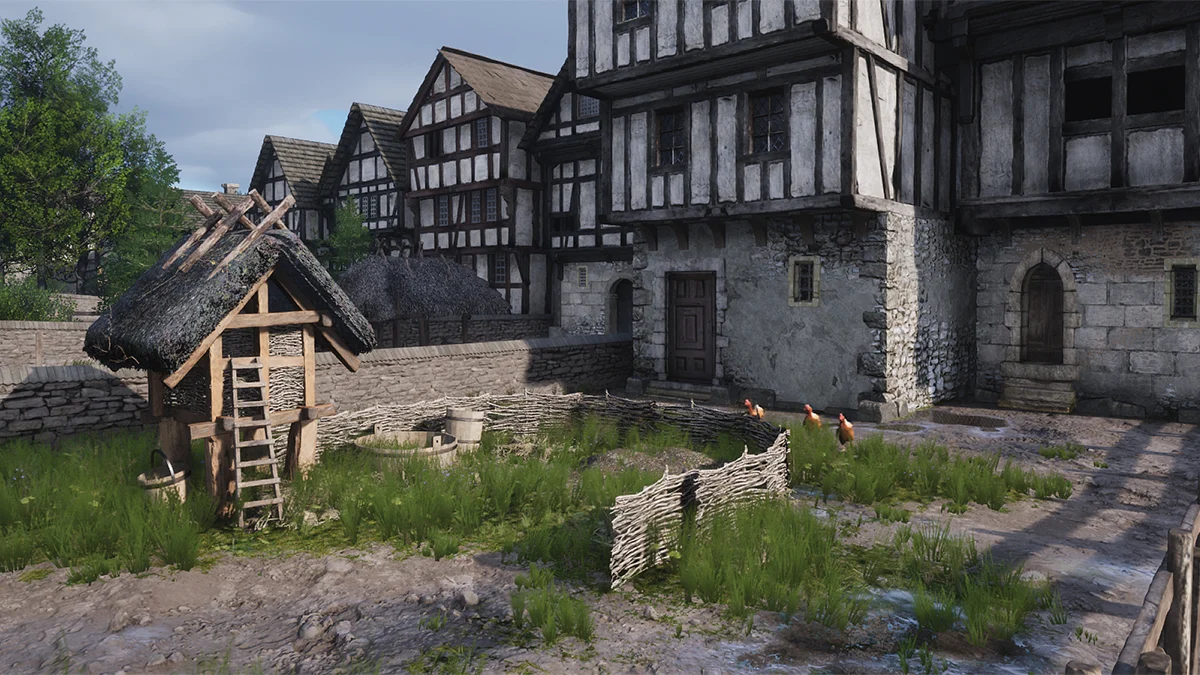
Upon commencing a new campaign in the critically acclaimed medieval city-builder, Manor Lords, players are initially granted control over a modest settlement comprising just five families. This limited starting population quickly underscores the fundamental challenge and primary objective: expanding the populace to foster a thriving village. Attracting new families, however, is not an immediately intuitive process and requires a nuanced understanding of the game’s core mechanics, primarily revolving around villager satisfaction and available infrastructure.
The Foundational Challenge: Initial Settlement and Early Growth
The initial allocation of five families in Manor Lords serves as a deliberate game design choice, immediately impressing upon the player the scarcity of labor. In a game deeply rooted in historical realism and economic simulation, a larger population directly translates to increased workforce capacity, enabling the construction of essential buildings, the establishment of diverse resource production chains, and the eventual development of a robust economy and formidable militia. Without a growing population, progress stagnates, and the aspirations of transforming a humble encampment into a bustling medieval manor remain unfulfilled. The early game, therefore, becomes a critical period focused on establishing the prerequisites for sustainable demographic expansion.
The Dual Pillars of Prosperity: Approval and Living Space
Two paramount elements dictate the influx of new families into a player’s settlement: Approval and Living Space. These interconnected metrics are central to the population growth mechanic, functioning as both indicators of a village’s desirability and prerequisites for immigration.
Approval Mechanics: The Barometer of Villager Satisfaction
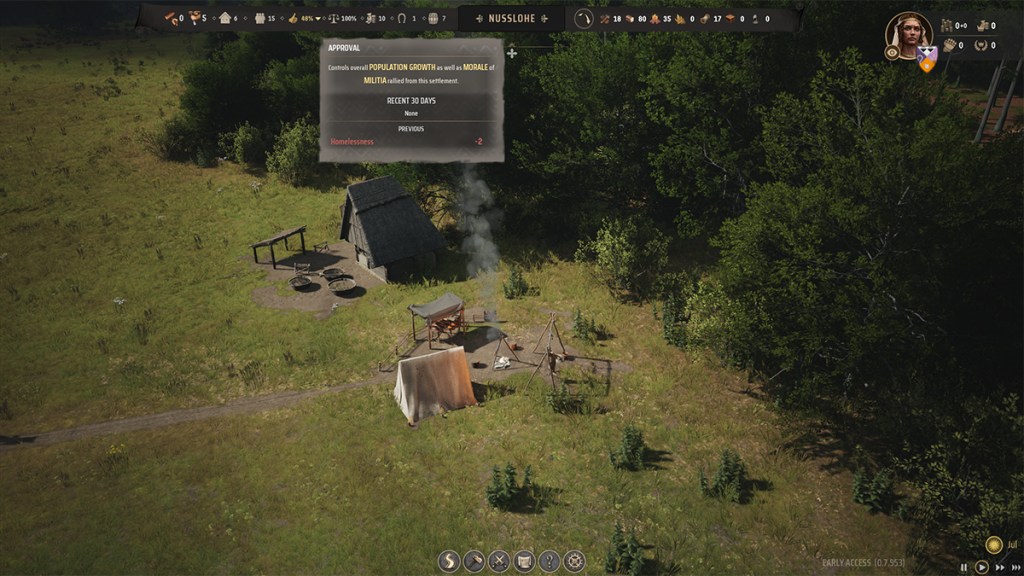
Approval, visibly tracked by a dedicated bar at the top-left of the user interface, acts as the primary sentiment indicator for the current populace. It reflects the overall satisfaction and morale of the villagers. This metric is not merely cosmetic; it directly translates into tangible impacts on population dynamics:
- 50% Approval Threshold: Achieving and maintaining at least 50% Approval is the minimum requirement for new families to consider relocating to the village. At this level, new families will arrive at a steady rate of approximately one family per month, provided there is adequate housing. This represents the critical turning point from stagnation to incremental growth.
- 75% Approval Threshold: Surpassing 75% Approval signifies a highly desirable and well-managed settlement. Villages reaching this benchmark will experience an accelerated immigration rate, attracting up to two families per month. This surge in population can significantly boost early-to-mid-game development, allowing for faster expansion of industries and services.
- Below 25% Approval: The Exodus Risk: Conversely, allowing Approval to plummet below 25% signals severe dissatisfaction among the existing villagers. In such dire circumstances, families will begin to abandon the village in search of "greener pastures," leading to a detrimental population decline. This mechanic serves as a harsh but effective reminder of the importance of continuous villager welfare.
The Approval system encourages players to adopt a holistic approach to village management, prioritizing the well-being of their inhabitants alongside economic and infrastructural development. It prevents purely exploitative or neglectful playstyles, reinforcing the game’s emphasis on organic, sustainable growth.
Living Space: The Foundation of a New Life
Beyond villager satisfaction, the physical capacity to house new arrivals is equally critical. The game explicitly requires available housing for new families to settle. This is primarily facilitated through the construction of Burgage Plots, which serve as the foundational residential units in Manor Lords. A surplus of Burgage Plots ensures that as Approval levels attract new families, there is an immediate and suitable place for them to reside, preventing a potential bottleneck in population growth even with high Approval.
Cultivating Contentment: Strategies for Boosting Approval
Achieving and maintaining high Approval levels is a multifaceted endeavor that evolves with the village’s development. In the early stages of the game, the most straightforward and impactful strategies focus on fulfilling basic needs and establishing essential services.
1. Ensuring Food Variety and Abundance:
One of the most immediate and significant contributors to early Approval is the availability of a diverse food supply. Villagers are not content with a monoculture diet; they crave variety.
- Early Game Solutions:
- Hunting Camp: Constructing a Hunting Camp allows for the acquisition of meat, a crucial protein source.
- Forager Hut: A Forager Hut facilitates the collection of berries and mushrooms, adding essential dietary diversity.
- Mid-to-Late Game Expansion: As the village grows, players must diversify further. This includes establishing Farms for grain production (leading to bread via bakeries), Vegetable Gardens attached to Burgage Plots, and potentially Goat Sheds for dairy products. The presence of at least two distinct food types significantly boosts Approval, with further variety providing diminishing but still positive returns. Adequate storage facilities, such as the Storehouse, are vital to prevent spoilage and ensure consistent availability.
2. Providing Sufficient and Quality Housing (Burgage Plots):
Burgage Plots are more than just houses; they are dynamic residential units that can be upgraded and improved, directly impacting Approval.
- Initial Construction: Simply building enough Burgage Plots to house the existing and anticipated population is a primary step. The game penalizes "Homelessness" with a significant negative impact on Approval, making proactive housing construction a priority.
- Burgage Plot Levels and Amenities: Burgage Plots progress through three levels, each requiring increasingly sophisticated amenities and market access to upgrade and, in turn, provide higher Approval bonuses.
- Level 1 Requirements: To upgrade to Level 1, a Burgage Plot typically requires access to a Well (for water) and proximity to a Church (for spiritual needs). The strategic placement of these communal buildings is crucial. Wells should be distributed to cover multiple plots, and a Church, being a larger structure, often becomes a central point of the early settlement.
- Level 2 Requirements: Further upgrades to Level 2 demand additional amenities, such as access to a Tavern with a supply of Ale, and potentially a wider variety of Market Stalls providing non-food goods like clothing or tools.
- Level 3 Requirements: Level 3 Burgage Plots are the pinnacle of residential development, requiring advanced amenities like a Manor House or a Stone Church, and a broad range of luxury goods from the marketplace.
3. Establishing a Robust Market Economy:
A thriving Marketplace is indispensable for maintaining high Approval. Villagers need access to a variety of goods to meet their daily needs and improve their quality of life.
- Market Stalls: Designating an area for a marketplace allows villagers to set up stalls. These stalls should be stocked with diverse products:
- Food: Multiple food types (meat, berries, bread, vegetables) from various production buildings.
- Fuel: Firewood or charcoal from woodcutter’s lodges or charcoal kilns.
- Clothing: Linen, leather, or yarn from associated production chains.
- Tools: Basic tools from a blacksmith.
- Supply Chains: The effectiveness of the marketplace hinges on efficient supply chains. Raw materials must be processed into finished goods and transported to the market by dedicated workers. This necessitates a well-planned layout of production buildings, warehouses, and markets, minimizing travel times and maximizing efficiency.
The Chronology of Expansion: From Hamlet to Town
The process of attracting villagers and expanding a settlement in Manor Lords follows a discernible chronology, guided by the player’s strategic decisions and the evolving needs of the populace.
Phase 1: Initial Survival and Basic Needs (0-50 Approval)
The very first objective is to establish a stable foundation. This involves:
- Building the initial Burgage Plots.
- Constructing a Hunting Camp and Forager Hut to secure a basic food supply and variety.
- Setting up a Woodcutter’s Lodge for fuel.
- Placing a Well for water access.
- This phase is about reaching the 50% Approval threshold to initiate any population growth.
Phase 2: Steady Growth and Core Infrastructure (50-75 Approval)
Once new families begin to arrive, the focus shifts to accommodating them and improving their quality of life to accelerate growth:
- Continuously building more Burgage Plots to stay ahead of the curve.
- Upgrading existing Burgage Plots to Level 1 by adding a Church and ensuring well access.
- Diversifying food production further (e.g., beginning farming operations, establishing a bakery).
- Setting up basic production chains for non-food items like hides for leather, or flax for linen, to provide goods for the marketplace.
- This phase aims to push Approval towards the 75% mark for accelerated immigration.
Phase 3: Accelerated Prosperity and Specialized Industries (75+ Approval)
With a robust and growing population, the village can evolve into a more complex economic entity:
- Establishing advanced industries such as mining (for iron ore and eventually tools), tanning, weaving, and brewing.
- Building a Tavern and ensuring a consistent supply of Ale, which significantly boosts Approval.
- Upgrading Burgage Plots to Level 2 and eventually Level 3, requiring more sophisticated amenities and luxury goods.
- Developing trade routes to import or export goods, further enriching the market and treasury.
- A large population also enables the training of a militia, crucial for defense and regional control.
Developer Philosophy and Game Design Implications
The population mechanics in Manor Lords reflect a deliberate design philosophy emphasizing organic, grounded growth rather than rapid, unrealistic expansion. The solo developer, Slavic Magic, has consistently articulated a vision for a game that prioritizes player agency within a historically plausible framework. The intricate relationship between Approval, amenities, and population growth encourages players to:
- Plan Ahead: Forethought in resource management, infrastructure placement, and housing construction is rewarded. Reactive management often leads to crises.
- Balance Growth with Sustainability: Rapid population growth without corresponding increases in food, fuel, and amenity provision quickly leads to dissatisfaction and decline. The system forces players to build a sustainable ecosystem.
- Understand Interdependencies: Every building and resource in Manor Lords is part of a larger web. Understanding how a Hunting Camp connects to a Marketplace, or how a Farm contributes to Ale production, is key to success.
- Embrace the "Slow Burn": Unlike some real-time strategy games that prioritize speed, Manor Lords encourages a slower, more methodical pace of development, where each decision has a tangible impact on the lives of the simulated villagers.
This approach has resonated strongly with the gaming community, contributing to the game’s significant early access success. Player feedback frequently highlights the satisfaction derived from seeing a meticulously planned village flourish, directly attributable to the transparent and logical population mechanics.
Beyond the Basics: Advanced Population Management
As a settlement matures, population management extends beyond basic needs to encompass more complex aspects of medieval life.
Ale and Taverns: A Spirit of Community
The Tavern becomes a vital amenity, particularly for Level 2 Burgage Plots and above. Supplying the Tavern with Ale is a significant boost to villager morale and Approval. The production of Ale involves its own complex chain:
- Farming: Growing barley on Farms.
- Malting: Processing barley into malt at a Malt House.
- Brewing: Crafting malt into ale at a Brewery.
This chain not only provides a valuable commodity but also creates new job opportunities, further solidifying the economic base.
Taxes and Governance: Fueling Expansion
A larger, more prosperous population directly translates into increased tax revenue. As Burgage Plots upgrade, they contribute more taxes to the player’s treasury. This capital is essential for funding larger infrastructure projects, recruiting mercenaries, or supporting military campaigns. The ability to levy taxes without severely impacting Approval requires a delicate balance of providing excellent living conditions and managing expectations.
Specialized Labor and Economic Efficiency:
With a growing population, players can allocate families to specialized roles. This move from general laborers to specialized workers (e.g., farmers, miners, foresters, craftsmen, traders, militia) dramatically increases the efficiency of resource extraction and production.
- Farms: More families mean more fields can be cultivated, increasing food output.
- Mines: Mines require a dedicated workforce to extract valuable resources like iron and stone.
- Workshops: Crafting industries (e.g., blacksmiths, tailors, tanners) depend on skilled labor to produce higher-value goods.
The ability to specialize labor is a direct consequence of a successful population growth strategy and is crucial for transitioning from subsistence to a robust economy.
Military Implications: Defense and Expansion
Finally, a sufficient population is the bedrock of military strength. Every family contributes potential able-bodied individuals to the Militia. A larger population allows for the recruitment of more militia units, essential for defending the settlement from bandit raids, rival lords, or engaging in territorial expansion. This links the peaceful, economic growth aspects of the game directly to its strategic, conflict-oriented elements.
Community Insights and Strategic Best Practices
Experienced players of Manor Lords often share several key strategic best practices for effective population management:
- Prioritize Food Variety Early: This provides the quickest and most significant early Approval boost.
- Overbuild Housing: Always aim to have 1-2 empty Burgage Plots available to immediately house new arrivals without incurring homelessness penalties.
- Centralize Basic Amenities: Place Wells and Churches strategically to maximize coverage for Burgage Plots, especially for Level 1 upgrades.
- Plan Market Placement: Ensure the Marketplace is easily accessible to all residential areas and is regularly supplied with diverse goods.
- Monitor Approval Constantly: Treat the Approval bar as a vital sign of the village’s health, reacting swiftly to any drops.
- Balance Production: Don’t just produce; ensure you have the storage and transport infrastructure to deliver goods where they are needed.
The Broader Economic and Societal Impact within Manor Lords
The sophisticated population mechanics in Manor Lords elevate the game beyond a simple city-builder. They create a living, breathing medieval society where the well-being of the individual family directly impacts the prosperity and stability of the entire region. The challenges of attracting and retaining villagers force players to consider:
- Resource Scarcity and Logistics: How to acquire, process, and distribute resources efficiently across a growing settlement.
- Economic Cycles: The interplay between production, consumption, and trade.
- Social Cohesion: How to maintain morale and prevent dissent in a growing community.
- Strategic Expansion: When and where to expand, considering the impact on existing infrastructure and resource availability.
In conclusion, attracting villagers in Manor Lords is far from a passive process. It is a dynamic and interactive core mechanic that underpins virtually every other aspect of the game. By meticulously managing Approval through diverse food, ample housing, essential amenities, and a vibrant market, players can foster a burgeoning population that will, in turn, enable the transformation of a small settlement into a formidable and prosperous medieval manor. This intricate system rewards thoughtful planning, balanced development, and a genuine commitment to the welfare of one’s digital populace, making population growth a continuously engaging and rewarding strategic endeavor.