


Star Wars: Galactic Racer represents a significant shift in the interactive landscape of the Star Wars franchise, moving away from the lightsaber-focused combat of recent years to revisit the high-velocity adrenaline of the racing circuit. Developed by Fuse Games and tested on the Xbox Series X, the title serves as a spiritual and narrative successor to the podracing legacy established in the early 2000s. While the prequel trilogy remains a subject of historical debate among fans, its contribution to the aesthetic of the "Galaxy Far, Far Away" is undeniable. The cinematic intensity of the Boonta Eve Classic has been reimagined for a new era, blending the physics-defying speed of F-Zero with the aggressive vehicular combat characteristics of the Burnout series. Set within the New Republic Era, Star Wars: Galactic Racer introduces the Galactic League—a high-stakes, multi-planetary competition that expands the scope of racing beyond the scrap-metal pods of Tatooine to include a diverse array of advanced aerodynamic craft.

Narrative Framework and the New Republic Setting
The chronological placement of Star Wars: Galactic Racer is pivotal to its world-building. Set following the collapse of the Galactic Empire in Return of the Jedi, the game explores a galaxy in transition. The Galactic League is presented not merely as a sport, but as a cultural phenomenon organized by Darius Pax, a veteran racer seeking to legitimize high-speed competition across the Mid-Rim and Outer Rim territories. Players assume the role of Shade, a delivery pilot whose aptitude for navigation catches the attention of the League’s scouts.

The narrative arc centers on Shade’s ascent through the ranks to challenge the reigning champion, Kestar Bool. Unlike previous Star Wars racing protagonists who were often motivated by survival or freedom, the conflict here is professional and political. Bool is depicted as a corporate-backed antagonist attempting to monopolize the League’s influence, providing a grounded motivation for the player’s progression. This story is delivered through a series of voiced dialogues and third-person exploration sequences within planetary hubs, adding a layer of immersion rarely seen in the arcade racing genre.

Core Mechanics and Technical Innovation
At its technical core, Star Wars: Galactic Racer utilizes a complex physics engine designed to simulate high-speed hovering vehicles. The gameplay is defined by two primary propulsion systems: the Afterburner and the Ramjet. The Afterburner functions as a standard, rechargeable speed boost, essential for maintaining position within the pack. However, the Ramjet represents the game’s primary risk-reward mechanic. Based on experimental New Republic technology, the Ramjet allows for speeds that push the hull integrity of the craft to its absolute limit.

Overuse of the Ramjet causes the engine to overheat, leading to catastrophic failure and vehicle destruction. This "edging" mechanic requires players to monitor heat gauges with precision, especially on planets with extreme environmental variables. For instance, the volcanic tracks of Sullust accelerate engine overheating, while the frigid environments of Hoth-like moons offer a natural cooling effect but risk freezing the intake valves.

The influence of the Burnout franchise is most evident in the "Takedown" system. Players are encouraged to use their vehicles as weapons, slamming opponents into track hazards or cliff faces. The Xbox Series X hardware facilitates this with high-fidelity destruction modeling and cinematic slow-motion cameras that highlight the impact of successful maneuvers.

The Rogue-lite Progression System
Departing from the traditional linear campaign structure, Star Wars: Galactic Racer adopts a rogue-lite framework. This structure is integrated into the lore via "League Tokens." To participate in the prestigious Galactic League, racers must maintain their standing and their equipment. A "run" consists of a series of events across different planets. If a player exhausts their tokens—either through repeated vehicle destruction or failing to meet specific objectives—the run ends, and they must begin the season anew, albeit with permanent upgrades unlocked through spent credits.

The variety of event types contributes to the game’s longevity:

- Standard Circuit Races: Twelve-player competitions across three laps.
- Elimination Rounds: A survival mode where the last-placed driver is removed every 30 seconds.
- Road Rage: A combat-focused mode tasking players with achieving a specific number of takedowns within a time limit.
- Time Trials: Precision-based challenges often utilizing specialized, high-performance prototype vehicles.
This structure mimics the volatility of professional racing, where a single mechanical failure or pilot error can invalidate months of preparation.

Planetary Hubs and Customization
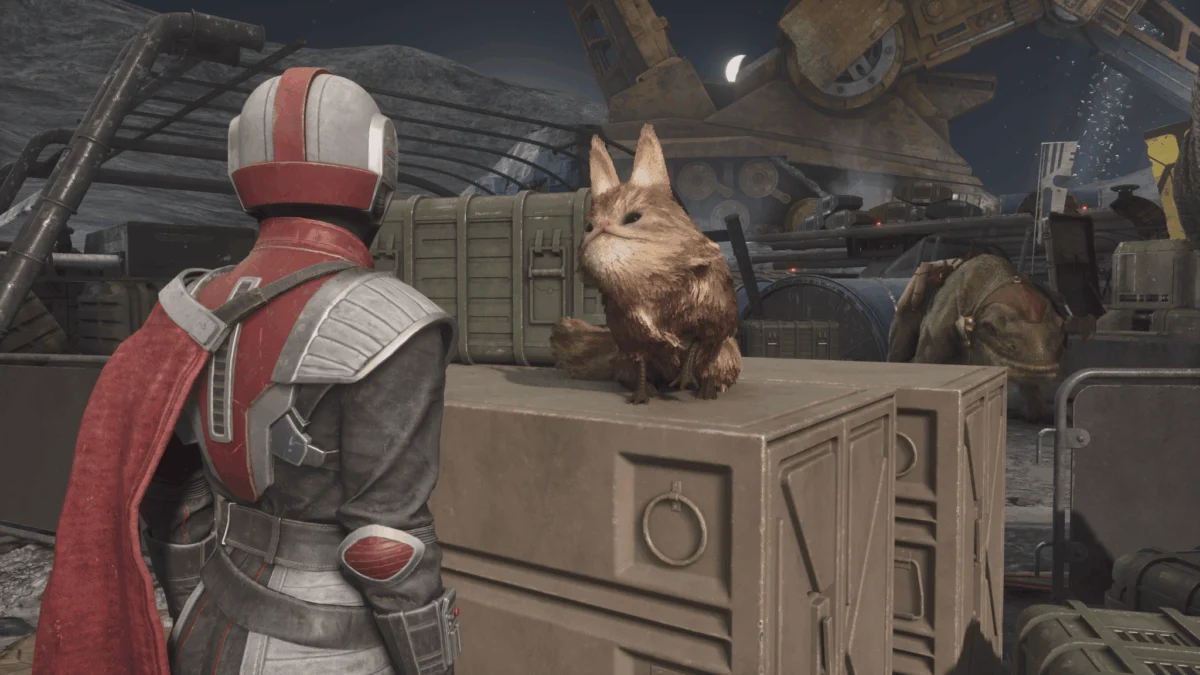
Between racing events, players explore planetary hubs in a third-person perspective. These areas serve as the strategic backbone of the experience. Here, players can interact with NPCs, including legacy characters like Sebulba. Now a retired legend, Sebulba provides "Heritage Missions"—playable flashbacks to the classic podracing era. These missions serve as a bridge between the old technology of The Phantom Menace and the sleek, shielded craft of the New Republic.

Customization is handled through a "Build" system. Credits earned from sponsors and race winnings can be invested in:

- Hull Integrity: Increasing the amount of damage a vehicle can sustain before a terminal explosion.
- Cooling Systems: Allowing for longer Ramjet bursts.
- Handling and Aerodynamics: Improving the "drift" capability, which allows craft to tilt 90 degrees to navigate narrow apertures.
- Special Abilities: Including automated repair droids, temporary energy shields, and a controversial "Auto-Drive" module that can navigate complex sections of track for a limited duration.
Technical Performance on Xbox Series X
On the Xbox Series X, Star Wars: Galactic Racer targets a native 4K resolution at a stable 60 frames per second. The technical demands of the game are significant, given the velocity of the vehicles and the complexity of the environments. Fuse Games has utilized the console’s Velocity Architecture to ensure near-instantaneous loading between the hub worlds and the racing tracks.

The visual presentation is characterized by advanced lighting effects. The glow of engine thrusters, the shimmer of energy binders between pods, and the particle effects of kicked-up dust or snow create a visceral sense of speed. The sound design follows the Star Wars tradition of excellence, featuring a symphonic score that dynamically adjusts its intensity based on the player’s position in the race and the heat level of their engine.

Market Context and Genre Implications
The release of Star Wars: Galactic Racer comes at a time when the arcade racing genre has seen a decline in high-budget, track-based entries. The current market is largely divided between open-world titles like Forza Horizon and realistic simulators like F1 or Assetto Corsa. By focusing on a stylized, combat-heavy, track-based experience, Fuse Games is addressing a vacuum left by the absence of franchises like F-Zero and Wipeout.

Industry analysts suggest that the success of Galactic Racer could signal a resurgence in "combat racers." The integration of a popular IP like Star Wars provides the necessary commercial leverage to reintroduce these mechanics to a mainstream audience. Furthermore, the inclusion of a robust online multiplayer mode, featuring global leaderboards and seasonal rewards, aligns the title with modern "live service" expectations without compromising the core single-player narrative.

Conclusion and Broader Impact
Star Wars: Galactic Racer is a sophisticated evolution of the sci-fi racing sub-genre. It successfully balances nostalgia for the podracing era with modern gameplay innovations and a challenging progression system. While the difficulty curve is notably steep—potentially alienating casual players—the depth of the customization and the precision of the driving mechanics reward dedicated players.

By placing the player in the cockpit during one of the most interesting eras of the Star Wars timeline, Fuse Games has created more than a simple spin-off; they have delivered a high-octane expansion of the lore that emphasizes the "war" in Star Wars through the lens of interstellar sport. The title stands as a testament to the versatility of the franchise and the technical capabilities of the current console generation. The Force, it seems, is indeed strong with the Galactic League.