


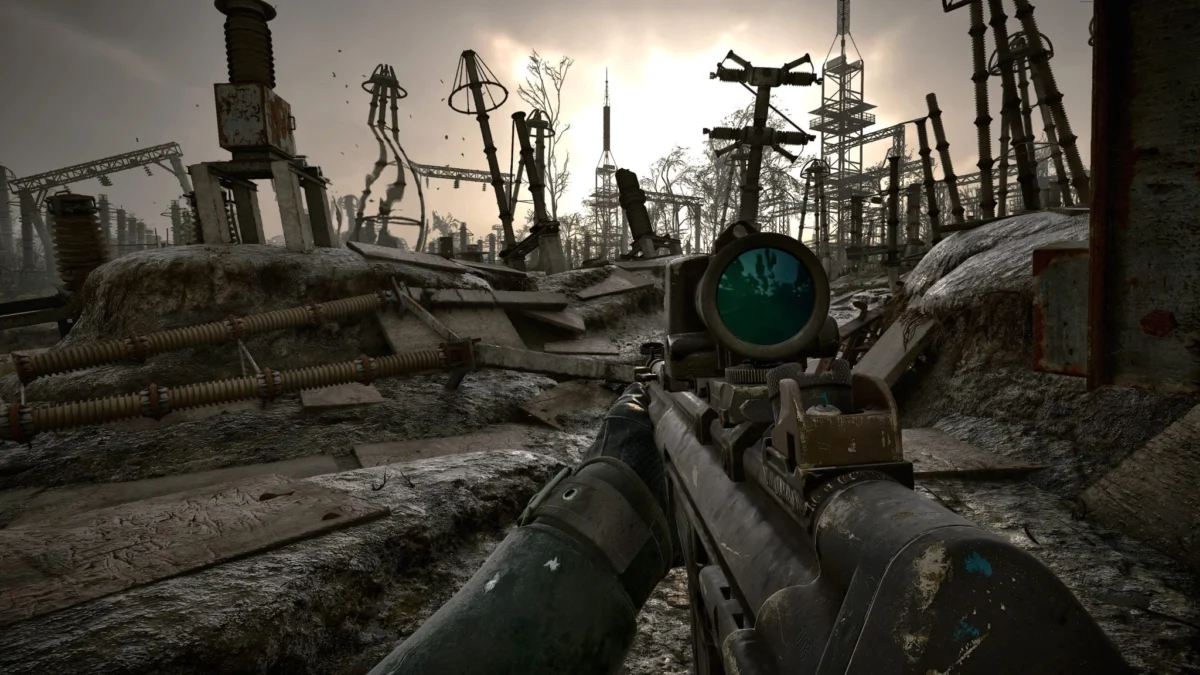
The release of the 2.0 update alongside the "Cost of Hope" expansion marks a definitive turning point for S.T.A.L.K.E.R. 2: Heart of Chornobyl, transitioning the title from a troubled launch to a polished, comprehensive survival experience. Developed by GSC Game World, this major content milestone serves as both a technical overhaul and a narrative enrichment, drawing industry parallels to the transformative "Phantom Liberty" expansion for Cyberpunk 2077. By migrating the project to a more advanced iteration of Unreal Engine 5 and addressing fundamental mechanical shortcomings, the developers have effectively re-launched the title for a global audience that had previously grappled with the game’s initial instability.

Technical Evolution and Unreal Engine 5 Migration
The centerpiece of the 2.0 update is a significant migration to an updated version of the Unreal Engine 5 framework. This technical shift has facilitated substantial improvements in performance and visual fidelity. In high-end benchmarking environments—specifically utilizing an NVIDIA GeForce RTX 5080 paired with an AMD Ryzen 7 5800X—the game now maintains a consistent 80 to 100 frames per second at 4K resolution with DLSS set to "Quality." This represents a marked improvement over the 1.0 launch version, which was characterized by volatile frame rates and significant optimization bottlenecks.
Beyond raw performance, the visual landscape of the Chornobyl Exclusion Zone has undergone a meticulous refinement. The 2.0 update introduces a revamped lighting system and enhanced foliage density, resulting in a world that appears more cohesive and naturalistic. The implementation of a new fog system serves a dual purpose: it enhances the atmospheric dread synonymous with the franchise while providing tactical depth by offering visual cover during stealth encounters or retreats from superior forces.

One of the most critical technical resolutions involves the "A-Life" system, the proprietary artificial intelligence architecture designed to simulate a living ecosystem within the Zone. In earlier versions, players reported immersion-breaking issues such as enemies spawning within the player’s line of sight or incessant, nonsensical firefights between factions that drained the world of its tension. The 2.0 iteration has stabilized these interactions, creating a more deliberate and organic flow of life and death across the map. Faction skirmishes now feel like rare, consequential events rather than constant background noise, heightening the sense of isolation that is core to the Stalker experience.
The Cost of Hope: Narrative and Structural Integration
The "Cost of Hope" expansion is not a post-game add-on but is instead seamlessly integrated into the existing campaign structure. The narrative arc of the DLC begins approximately one-quarter of the way through the main story and concludes around the three-quarter mark. This integration allows the new content to feel like an essential chapter of the protagonist’s journey rather than a tangential distraction. For returning players who wish to bypass the early hours of the base game, GSC Game World has included an "Advance Start" option, which places the player directly into the expansion-ready world state, though this requires making a pivotal campaign decision immediately upon starting.

The expansion’s plot centers on the long-standing ideological conflict between two of the Zone’s most prominent factions: Duty and Freedom. While the base game explored these groups extensively, "Cost of Hope" delves into the logistical and moral costs of their perpetual stalemate. Players are granted access to previously restricted sectors of the Zone, most notably the Iron Forest and the interior perimeters of the Chornobyl Nuclear Power Plant (CNPP). These locations are rendered with haunting detail, leaning heavily into the "eco-horror" aesthetic that has defined the series since 2007.
The narrative concludes with a major branching point, leading to two distinct endings for the DLC. This design choice encourages replayability and reinforces the theme of player agency in a world that is otherwise indifferent to human life.

Mechanical Enhancements and Quality of Life
The 2.0 update addresses several long-standing requests from the player community, most notably the reintroduction of binoculars as a standard piece of equipment. This addition fundamentally alters the gameplay loop, allowing for long-range reconnaissance before entering high-risk areas. In a game where resource management is vital, the ability to scout an anomaly field or a mutant pack from a distance can be the difference between a successful haul and a wasted journey.
New weaponry has also been introduced to fill specific niches in the player’s arsenal, though the game remains grounded in its survival-horror roots. The combat remains lethal; even on the standard "S.T.A.L.K.E.R." difficulty setting, tactical errors are punished severely. Testing indicates that the platforming elements—often a point of contention in first-person survival games—remain challenging, contributing to a significant portion of player fatalities during the exploration of vertical environments like the Iron Forest.

Localization and Immersion Challenges
A persistent point of critique remains the English voice acting (VO). While the actors deliver their lines with professional competence, the consensus among long-term fans and technical reviewers is that the English script often lacks the natural cadence required for deep immersion. The Zone’s atmosphere is most effectively captured through the native Ukrainian voice track.
However, choosing the native VO presents a tactical challenge. Because the game requires constant environmental awareness, diverting one’s gaze to read subtitles during high-intensity combat can lead to rapid player death. This creates a unique tension for international players: choosing between the superior atmosphere of the native language and the survival advantage of the English audio.

Historical Context: The Road to 2.0
To understand the significance of the 2.0 update and the "Cost of Hope" DLC, one must consider the unprecedented development history of S.T.A.L.K.E.R. 2. The project faced numerous delays, including those caused by the relocation of GSC Game World from Kyiv to Prague following the 2022 invasion of Ukraine. The development team worked under conditions of extreme duress, which was reflected in the "beautiful, buggy mess" of the 1.0 release.
The launch version was criticized for its technical instability, yet it was praised for its ambition and the raw beauty of its world-building. The 2.0 update is the fulfillment of the promises made during that turbulent development cycle. It represents a stabilization of the studio’s vision, proving that the foundation laid in the initial release was sound, even if the execution required further refinement.

Broader Industry Implications and Analysis
The release of "Cost of Hope" signifies a broader trend in the AAA gaming industry where the "launch" of a game is merely the beginning of its public development. Much like No Man’s Sky or Cyberpunk 2077, S.T.A.L.K.E.R. 2 has utilized post-launch support to redeem its reputation and deliver the "complete" experience that was hampered by external circumstances at launch.
From a technical standpoint, the game’s mastery of Unreal Engine 5 sets a benchmark for future open-world survival titles. The use of Lumen for dynamic lighting and Nanite for high-detail geometry, combined with the refined A-Life 2.0, creates a level of environmental simulation that few other titles can match. The "Cost of Hope" expansion successfully leans into the horror elements of the franchise, utilizing OLED technology’s perfect blacks to create sequences of near-total darkness. In these moments, the reliance on high-quality in-game tools, such as Night Vision Goggles (NVGs), becomes a core pillar of the gameplay rather than an optional gimmick.

Conclusion and Future Outlook
S.T.A.L.K.E.R. 2: Heart of Chornobyl, in its 2.0 and "Cost of Hope" iteration, is a testament to the resilience of GSC Game World. The expansion provides a substantial amount of content—roughly 15 to 20 hours of additional gameplay depending on the player’s approach—and integrates it into a world that is now technically stable and visually peerless.
For players who were deterred by the initial reports of bugs and performance issues, this update marks the ideal entry point. The Zone remains as hostile and unforgiving as ever, but the tools provided to the player are now more reliable, and the world they inhabit is more reactive. As the first major story expansion, "Cost of Hope" sets a high bar for future DLC, suggesting that the life cycle of S.T.A.L.K.E.R. 2 will be long and characterized by a commitment to atmosphere, horror, and complex factional storytelling. The Zone has finally reached its potential, offering a haunting, immersive experience that justifies its long and difficult journey to completion.