


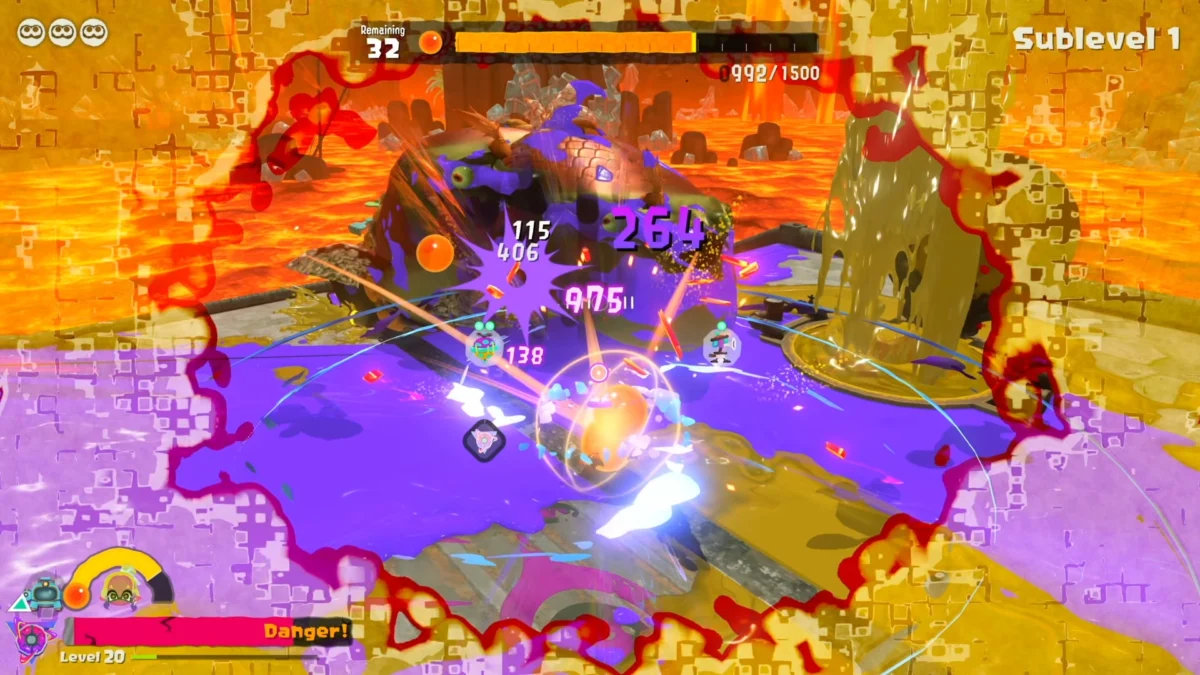
Nintendo has officially diversified its flagship shooter franchise with the release of Splatoon Raiders, a title that pivots from the series’ traditional turf-war focus toward a dedicated "Player vs. Environment" (PvE) looter shooter experience. Developed for the Nintendo Switch 2, the game represents a significant mechanical evolution, utilizing the franchise’s established movement systems to anchor a progression-heavy, cooperative survival loop. By expanding the "Salmon Run" concept introduced in previous entries, Splatoon Raiders attempts to capture the growing market for live-service cooperative shooters while maintaining the unique aesthetic and kinetic identity that has defined the Splatoon brand since its 2015 debut.

Evolution of the Splatoon Ecosystem
The Splatoon series has long been recognized for its high-skill ceiling and technically involved movement mechanics. Historically, the franchise centered on "Turf War" and various ranked modes, where players utilized ink-based weaponry to claim territory. However, the introduction of the Salmon Run mode in Splatoon 2—a cooperative wave-based survival game—revealed a substantial player appetite for non-competitive content.
Splatoon Raiders acts as the logical culmination of this trend. Set against the backdrop of the Splatoon 3 narrative timeline, the game places players in the role of "The Mechanic." Working alongside the popular idol trio "Deep Cut"—comprising members Shiver, Frye, and Big Man—players are tasked with investigating a mysterious storm and salvaging treasure in uncharted territories. This narrative framework serves to justify a loop focused on resource extraction, gear customization, and escalating difficulty tiers.

Core Gameplay Mechanics and Movement Systems
At its foundation, Splatoon Raiders retains the "Kid-to-Squid" transformation system that distinguishes the franchise from conventional third-person shooters. Players operate in two primary stances: a humanoid "Kid Mode" for combat and a "Squid Mode" for traversal and resource replenishment.
- Ink Management: Success in Splatoon Raiders is predicated on efficient ink usage. Players must coat surfaces with their team’s color to enable Squid Mode, which facilitates high-speed movement and recharges the ink meter.
- Combat Dynamics: Unlike the PvP entries, where the goal is to ink territory to win, Raiders focuses on tactical ink placement to create escape routes and defensive perimeters against swarms of Salmonids.
- The Looter Shooter Loop: The game introduces a tiered loot system. Defeated enemies and end-of-stage treasure chests drop weapons of varying rarities and specialized components. Players can equip up to three different ink tanks, each offering unique gadgets designed to manage enemy crowds.
Mission Structure and Objective Variety
Splatoon Raiders utilizes a mission-based architecture, with raids typically lasting between five and ten minutes. This condensed format is designed for both quick sessions and extended "grinding" for rare materials. The game categorizes its objectives into three primary types:

- Extraction Raids: Players must navigate to the end of a complex level while fending off "zerg-rush" style attacks from Salmonids.
- Egg Farming: A timed mode where the primary goal is to collect a specific quota of Power Eggs, the series’ long-standing energy resource.
- Boss Raids: High-intensity encounters requiring players to defeat a mini-boss or a major "tank" enemy at the conclusion of a level.
In addition to these standard missions, Nintendo has implemented "Sampler Dungeons." These are specialized challenge rooms unlocked via compasses found in the main levels. These dungeons serve as technical benchmarks, testing the player’s mastery of the game’s physics and movement mechanics through platforming and environmental puzzles.
The Raft: Hub Progression and Customization
A central feature of the Splatoon Raiders experience is the "Raft," an upgradable island base shared by the player and the Deep Cut squad. This hub serves as the primary site for character and gear progression. Over the course of the campaign, players invest currency and salvaged parts to expand the Raft’s facilities.

Key functions of the hub include:
- Weapon Modification: Scrapping unwanted gear for currency or parts to enhance primary weapons.
- Gadget Crafting: Creating modifiers that can be applied to ink tanks to change their utility.
- Stat Upgrades: A permanent progression system that allows players to upgrade their character’s base stats independently of their gear level.
This expansion of the hub provides a visual representation of player progress, as the small raft eventually grows into a sprawling floating base. It also functions as a testing ground where players can refine their builds before deploying into more difficult raids.

Analysis of Enemy Variety and AI Behavior
One of the most significant technical achievements in Splatoon Raiders is the scale of its horde encounters. The game utilizes the enhanced processing power of the Switch 2 to render massive numbers of Salmonids simultaneously. The enemy roster ranges from small, fast-moving "Smallfry" to massive, armored tank-class entities that require coordinated team fire to neutralize.
To balance the overwhelming numbers, the game provides players with "Showstoppers"—massive area-of-effect abilities deployed by the Deep Cut idols. Additionally, players can utilize a "jump boost" mechanic to maintain verticality, a crucial tactic when the ground level becomes saturated with hostile ink.

However, industry analysts have noted that the game’s reliance on horde density can lead to repetitive gameplay loops. The "Crystal Mining" missions, in particular, have been identified as a point of potential fatigue, as they often involve sweeping small maps repeatedly to clear objectives. Despite this, the tight combat mechanics and the variety of weapon classes—which significantly alter playstyles based on range and fire rate—provide enough depth to sustain the endgame experience.
Narrative Atmosphere and World-Building
Splatoon has historically balanced a colorful, "street-wear" aesthetic with dark, post-apocalyptic lore. Splatoon Raiders leans further into these "creepy" undertones. The game’s environments often consist of desolate, life-devoid islands, and the central plot involves the morally ambiguous harvesting of Salmonid Power Eggs (literal unhatched offspring) to fuel technological advancement.

This atmosphere is bolstered by a soundtrack that departs from the series’ usual "Ink-Pop" genre. The Raiders score incorporates distorted samples, broadcast interference, and processed vocalizations to create a sense of isolation and tension. This tonal shift has been praised for adding weight to the PvE experience, making the world feel more consequential and dangerous than in the standard multiplayer entries.
Technical Performance and Future Outlook
While Splatoon Raiders has been lauded for its fluid movement and robust loot system, early user feedback has highlighted a need for specific "quality of life" improvements. A primary concern is the absence of a dedicated "restart" function within missions. Currently, failing a specific challenge requires players to return to the base and re-initiate the deployment sequence, a process that can be cumbersome during difficult endgame content.

Nintendo has not yet released a formal patch schedule, but the company’s history of supporting the Splatoon franchise suggests a long-term commitment to seasonal updates. Expected post-launch content likely includes:
- Additional weapon classes and ink tank gadgets.
- New raid locations within the storm-ravaged archipelago.
- Collaborative "Big Run" events that integrate the Raiders mechanics with the broader Splatoon 3 community.
Broader Implications for the Nintendo Switch 2
Splatoon Raiders serves as a key software showcase for the Nintendo Switch 2. By successfully managing high-density AI hordes and maintaining a stable frame rate during chaotic combat, the title demonstrates the hardware’s increased capabilities compared to its predecessor. Furthermore, the game’s focus on cooperative play and long-term progression aligns with current industry trends toward "live" games that retain player engagement over several years.

For Nintendo, Raiders represents a strategic expansion of an established IP. By providing a high-quality alternative to traditional competitive shooters like Warframe or Destiny, Nintendo is positioning the Splatoon brand as a versatile ecosystem capable of housing multiple genres.
In conclusion, Splatoon Raiders is a technically proficient and mechanically deep addition to the Nintendo library. While it faces the inherent challenges of the looter shooter genre—specifically regarding mission repetition and UI friction—its unique movement systems and intense horde combat offer a distinct experience that leverages the strengths of the Splatoon universe. As the first major PvE spin-off for the series, it sets a strong precedent for the future of the franchise on Nintendo’s next-generation hardware.