


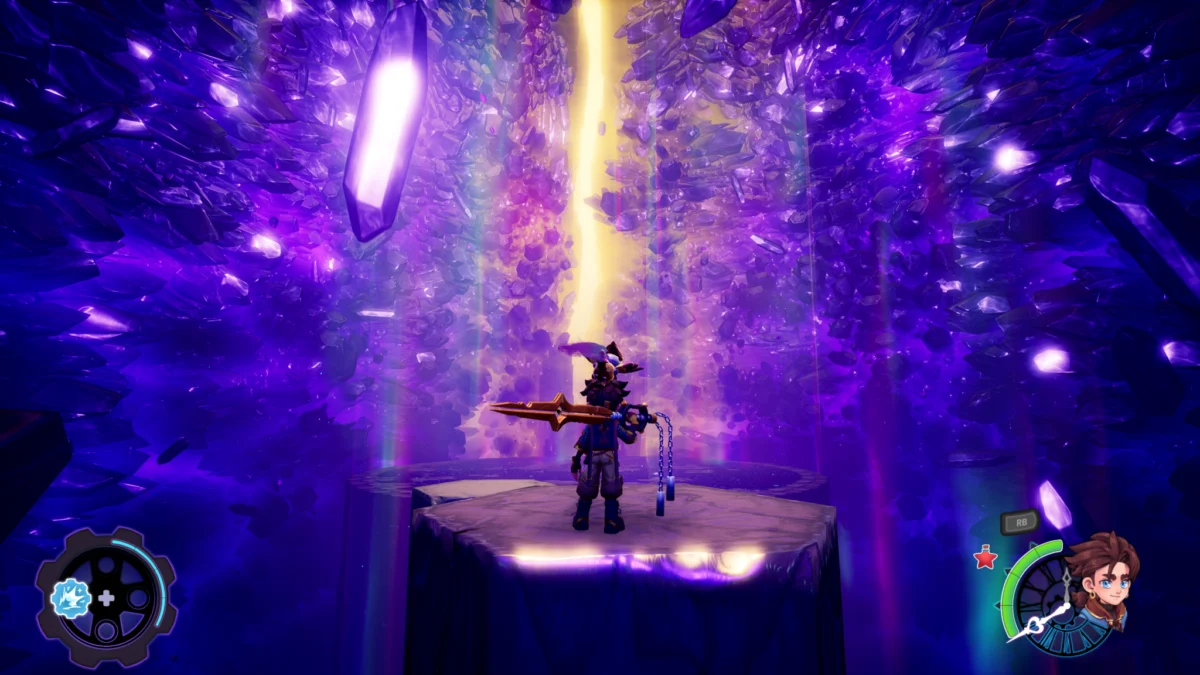
Duskfade, the latest release from developer Weird Beluga, represents a calculated attempt to bridge the gap between sixth-generation console nostalgia and modern technical capabilities. Utilizing Unreal Engine 5, the title explores the philosophical and practical implications of time through the journey of Zirian, a clockmaker tasked with navigating a world that mirrors the structural design of the early 2000s. While the game succeeds in capturing the aesthetic and kinetic spirit of the PlayStation 2 era, it simultaneously inherits the technical and mechanical frustrations that characterized that period of game development. This analysis explores the various facets of Duskfade, from its visual artistry to its polarizing combat systems and technical performance on modern hardware.

Narrative Premise and Thematic Framework
The story of Duskfade centers on Zirian, a young clockmaker whose life is upended when a massive, supernatural clocktower emerges in his hometown. Armed with a clockwork blade—a weapon bearing a striking resemblance to the iconic Keyblades of the Kingdom Hearts franchise—Zirian is joined by a quasi-robotic companion named Cuckoo. Their primary objective is the rescue of Zirian’s sister, Allira, who has been taken by a mysterious masked adversary.
The narrative structure relies heavily on the concept of time, not just as a plot device but as a thematic lens. The script attempts to tackle mature themes regarding the necessity of moving forward versus the comfort of looking back. However, the execution of this narrative is hampered by a heavy reliance on flashbacks in the early stages, which some analysts suggest delays the establishment of a compelling emotional hook. Despite these pacing issues, the game maintains a commendable balance between exposition and gameplay. Much of the world-building is relegated to optional NPC interactions, allowing players to digest the lore of "TickTown" and its surrounding regions at their own pace. This approach respects player agency, even if the central plot follows a relatively predictable trajectory.

Visual Artistry and World Design in Unreal Engine 5
One of the most significant achievements of Duskfade is its visual presentation. By leveraging the power of Unreal Engine 5, Weird Beluga has crafted a world that transcends traditional "painterly" aesthetics, moving instead toward a style reminiscent of animated stained glass. The lighting engine creates a soft, dreamlike glow that elevates simple, cartoony textures into grand vistas.
The game is divided into four primary geographic sections, each offering a distinct thematic experience:

- TickTown: The central hub, clearly inspired by the "Traverse Town" archetype, serving as the player’s base of operations.
- The Underwater Academy: A section focusing on verticality and fluid environmental design.
- The Clockwork Temples: A steampunk-infused region that integrates mechanical obstacles like laser beams shaped like clock hands.
- The Sky World and Beach: Traditional platforming environments updated with modern fidelity and Greek-style architecture.
While the environmental design has received high praise for its cohesiveness and beauty, the character models have been noted for a "mobile game" aesthetic that occasionally clashes with the high-fidelity backgrounds. Nevertheless, the orchestrated soundtrack complements the visuals effectively, providing a premium auditory experience that echoes the whimsical yet epic tones of the Epic Mickey series.
Mechanics of Movement and Platforming
At its core, Duskfade is a 3D platformer that draws heavily from the "Big Three" of the PS2 era: Jak and Daxter, Ratchet & Clank, and Sly Cooper. The movement system is the game’s most polished element, offering a suite of abilities including wall jumps, glides, grapples, and long jumps.

Technical analysis of the platforming indicates that while it lacks the "surgical tightness" associated with first-party Nintendo titles, it provides a satisfying level of responsiveness. The depth perception in a 3D space—a common pitfall for the genre—is handled with competence, allowing for confident navigation of complex obstacles. The progression of movement abilities is paced to ensure a steady drip-feed of new mechanics, maintaining player engagement throughout the linear level structures. Ironically, despite the central theme of time, the platforming puzzles rarely utilize time-manipulation mechanics, representing a missed opportunity for further innovation in the genre.
Combat Systems and the Progression Dilemma
The most significant point of contention in Duskfade is its combat system, which stands in stark contrast to the fluidity of its platforming. Critics and players alike have noted that the feedback on attacking enemies feels "light," lacking the visceral impact required for an action-platformer. The game struggles with "knockback" mechanics, where environmental hazards and enemy attacks can lead to frustrating loops of damage, exacerbated by inconsistent invincibility frames.

The defensive options are equally problematic. The lack of a dedicated block button and an unreliable dodge mechanic make large-scale encounters feel disorganized. Furthermore, the game employs a controversial progression model:
- Skill Tree Limitations: Basic combat maneuvers, such as a dodge counter and essential combo strings, are locked behind a skill tree. This results in the first half of the game feeling mechanically stunted.
- Currency Scarcity: Upgrades require "cogs" found throughout the world. Data suggests that even thorough exploration may not provide enough currency to fully develop Zirian’s capabilities until the very late stages of the campaign.
- Gadget Utility: The unlockable gadgets—including proximity mines and area-of-effect attacks—suffer from long cooldowns and poor collision detection, rendering them less effective than the primary clockwork blade.
Technical Performance on Xbox Series X and ROG Ally X
In terms of technical stability, Duskfade exhibits several inconsistencies on current-generation hardware. On the Xbox Series X, the game targets 60 frames per second (fps), but frequently fails to maintain this target in the hub world of TickTown and during large-scale combat encounters. These frame rate drops can interfere with the timing required for precise platforming and combat dodges.

For the growing market of handheld PC players, testing on the ROG Ally X reveals similar performance hurdles. The absence of comprehensive internal graphics settings limits the ability of users to optimize performance for portable play. While these issues are not categorized as "game-breaking," they represent a lack of polish that may deter players who prioritize technical fluidity.
Industry Context and Developer Background
Weird Beluga previously gained attention for Clid the Snail, a top-down shooter that showcased the studio’s ability to create unique, atmospheric worlds. With Duskfade, the studio has shifted focus toward the "B-tier platformer" revival. This sub-genre focuses on titles that may not have had the massive marketing budgets of AAA franchises but provided essential variety to the gaming landscape of the early 2000s.

Industry analysts suggest that Duskfade is part of a broader trend of "New-Retro" 3D platformers, joining titles like A Hat in Time and Yooka-Laylee. However, where those titles focused on the Nintendo 64 "collectathon" style, Duskfade specifically targets the cinematic action-platformer style prevalent on the PlayStation 2.
Official Responses and Future Implications
While Weird Beluga has not yet released a formal roadmap for post-launch patches, the community response has highlighted the need for combat rebalancing and technical optimization. Inferred statements from the developer’s design choices suggest a commitment to "authentic nostalgia," which includes the preservation of certain era-specific flaws.

The inclusion of extensive difficulty options and accessibility settings serves as a modern concession, allowing players to bypass the more frustrating combat segments to experience the platforming and story. Furthermore, the inclusion of collectible costumes and "sound test" items provides a degree of replayability, though the lack of an in-game map makes 100% completion a daunting task for many.
Final Assessment of Broader Impact
Duskfade serves as a potent reminder of the strengths and weaknesses of a bygone era of game design. Its stunning Unreal Engine 5 visuals and refined platforming mechanics demonstrate the potential of modern technology to revitalize classic genres. Conversely, its dated combat and restrictive progression systems highlight why certain design philosophies were eventually phased out by the industry.

For players with a deep-seated affinity for the PlayStation 2 library—those who fondly remember the works of Insomniac, Naughty Dog, and Sucker Punch—Duskfade offers a beautifully crafted, if flawed, tribute. It is a game that successfully bottles the essence of 2003, complete with the "warts and all" approach to game design. As the indie market continues to explore nostalgic revivals, Duskfade stands as a significant case study in the balance between honoring the past and embracing the future of interactive entertainment.