


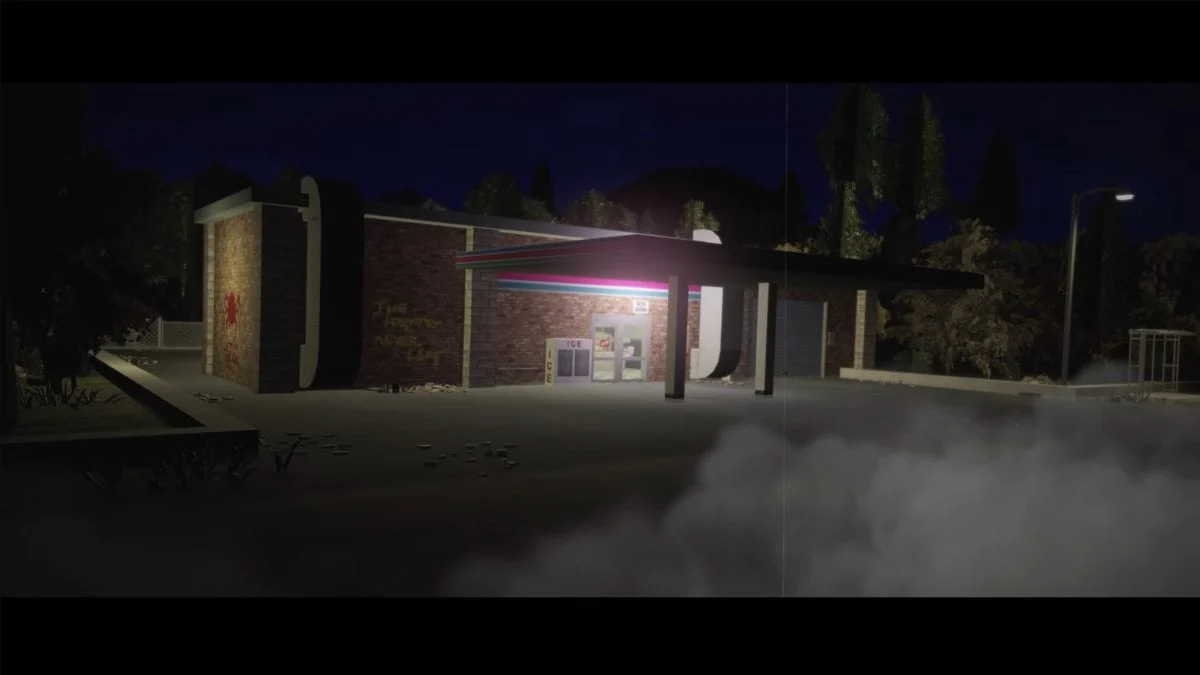
The unsettling atmosphere of Shift at Midnight intensifies beyond the immediate financial anxieties of veterinary bills and surgical costs, as a new mystery emerges: the disappearance of Guillermo. This development, presented through a seemingly ordinary missing dog poster, introduces a layer of intrigue that has captivated and puzzled players navigating the game’s increasingly perilous night shifts. The poster, a visual element that appears during the tenth night, serves as a crucial focal point for understanding the game’s narrative design and the subtle ways it weaves in lore and player engagement.
The Appearance of the Missing Dog Poster: Night 10 and the Notice Board
Guillermo, described as a brown Labrador sporting a distinctive yellow collar, vanishes during the tenth night of gameplay. It is at this juncture that a "Missing Dog" poster, detailing Guillermo’s appearance and disappearance, becomes visible on the in-game notice board. This notice board functions as a pivotal hub for disseminating new information within Shift at Midnight, complementing the Store Manager’s direct communications via phone calls or written notes. In a game where every detail can be a clue or a misdirection, the sudden appearance of such a personal plea suggests a deeper narrative thread than initially apparent.
The game’s developers have established the notice board as a consistent source of updates, often signaling impending challenges or providing contextual background. However, the treatment of Guillermo’s missing poster deviates from the typical urgency associated with other in-game quests. While side quests in the game’s Story Mode demand immediate action upon their introduction, the missing dog scenario is handled with a deliberate ambiguity. A $50 reward is mentioned on the poster, ostensibly linking it to the game’s bonus system and the completion of the Store Manager’s requests. Yet, despite this incentive, players find no apparent in-game mechanism to actively search for or locate Guillermo. This absence of a tangible objective has led to widespread speculation that the poster may serve a purpose beyond a direct gameplay challenge, potentially acting as a narrative red herring or a piece of environmental storytelling.
Distinguishing Guillermo from Tofu: A Crucial Narrative Distinction
It is imperative to differentiate Guillermo from Tofu, the service dog who appears as a customer within the game. Shift at Midnight is known for its ability to manipulate player perception, and the encounter with Tofu presents a prime example. Players are deliberately misled into believing they must harm this seemingly innocent canine, a scenario that highlights the game’s dark humor and psychological manipulation. Guillermo, however, is presented as a distinct entity, a pet who has genuinely gone missing. His disappearance could be intrinsically linked to the overarching narrative concerning The Dentist or other customer doppelgangers, suggesting that Guillermo’s owner might have been replaced or incapacitated, leaving the beloved pet without a familiar caretaker.
The Lore Purpose: Environmental Storytelling and Player Empathy
The immediate, intuitive player response to such a poster would likely involve venturing into the surrounding environment, perhaps the nearby forest, in search of a lost animal. However, Shift at Midnight does not facilitate this direct interaction. Viewing the missing poster does not unlock any new dialogue options with customers or prompt specific investigative actions. This lack of direct gameplay integration strongly suggests that the poster’s inclusion is primarily for lore development and to evoke a specific emotional response from the player.
The narrative designers may have strategically placed Guillermo’s poster to amplify the player’s existing anxieties and their drive to protect their own in-game pet. The constant threat of danger and the high stakes of working a midnight shift are the very reasons players are risking their lives. By introducing the vulnerability of another pet, the developers might be aiming to deepen the player’s emotional investment in the game’s world and its inhabitants, reinforcing the importance of care and protection in a chaotic environment. This subtle psychological maneuver can enhance the overall player experience, even if it doesn’t translate into an explicit quest.
Community Efforts and the Absence of Evidence
The player community, particularly on platforms like the Shift at Midnight Discord server, has dedicated considerable effort to locating Guillermo. Extensive searches and discussions among players have yielded no concrete evidence of his in-game presence. This collective experience among seasoned players reinforces the notion that Guillermo is not a findable entity within the game’s mechanics. Newcomers are often informed by the community that there is no actual missing dog to discover, further solidifying the theory of the poster’s narrative function.
The most compelling evidence supporting the absence of a findable Guillermo lies within the poster itself. Crucially, there is no in-game option to contact the owner via the displayed phone number. This deliberate omission serves as a clear indicator that the game has not implemented a system for locating the missing dog. The functionality required to initiate such a search—whether through dialogue prompts, map markers, or interaction with specific NPCs—is conspicuously absent. Therefore, the poster functions less as a call to action and more as a piece of world-building, contributing to the overarching atmosphere of unease and the narrative’s exploration of loss and vulnerability.
Thematic Resonance: Loss, Vulnerability, and the Human-Animal Bond
The inclusion of Guillermo’s missing poster, even without a direct gameplay objective, resonates deeply with the game’s core themes. Shift at Midnight consistently explores the fragility of life, the psychological toll of high-pressure jobs, and the unexpected sources of comfort and connection in a bleak world. The human-animal bond is a powerful element, often serving as a grounding force amidst the chaos. By presenting a lost pet, the developers tap into universal experiences of worry, longing, and the pain of separation.
This narrative device can be seen as a sophisticated form of environmental storytelling, enriching the player’s understanding of the game’s world without resorting to explicit exposition. It implies a life outside the confines of the immediate gameplay loop, hinting at the personal lives and emotional landscapes of the characters who inhabit the game’s universe. The poster suggests that even in a reality fraught with supernatural or existential threats, the mundane tragedies of pet loss still occur, adding a layer of poignant realism to the fantastical elements.
Broader Implications for Narrative Design in Shift at Midnight
The handling of Guillermo’s disappearance offers a valuable case study in contemporary game design, particularly in how developers engage players through indirect means. The absence of a direct quest for Guillermo demonstrates a deliberate choice to prioritize narrative immersion and thematic depth over straightforward gameplay mechanics. This approach can foster a more nuanced and thought-provoking player experience, encouraging deeper engagement with the game’s lore and world.
Furthermore, the community’s collaborative efforts to "solve" the mystery of Guillermo, even if that solution is the realization that he is not meant to be found, highlights the power of shared player experiences and online communities. These platforms become extensions of the game itself, where players collectively deconstruct narratives, share theories, and build a deeper understanding of the game’s intricacies. The developers, by fostering such an environment, can cultivate a dedicated and engaged player base that actively participates in the ongoing evolution of the game’s narrative.
In conclusion, the missing dog poster for Guillermo in Shift at Midnight serves a sophisticated narrative purpose. While initially appearing as a potential quest, its lack of direct gameplay integration points towards a deliberate design choice. It functions as a powerful tool for environmental storytelling, enhancing the game’s thematic exploration of loss, vulnerability, and the enduring significance of the human-animal bond. The mystery of Guillermo, though ultimately unsolvable within the game’s mechanics, contributes significantly to the rich and unsettling tapestry of Shift at Midnight, leaving players to ponder the unspoken narratives and emotional undercurrents that permeate its dark, mysterious world.