


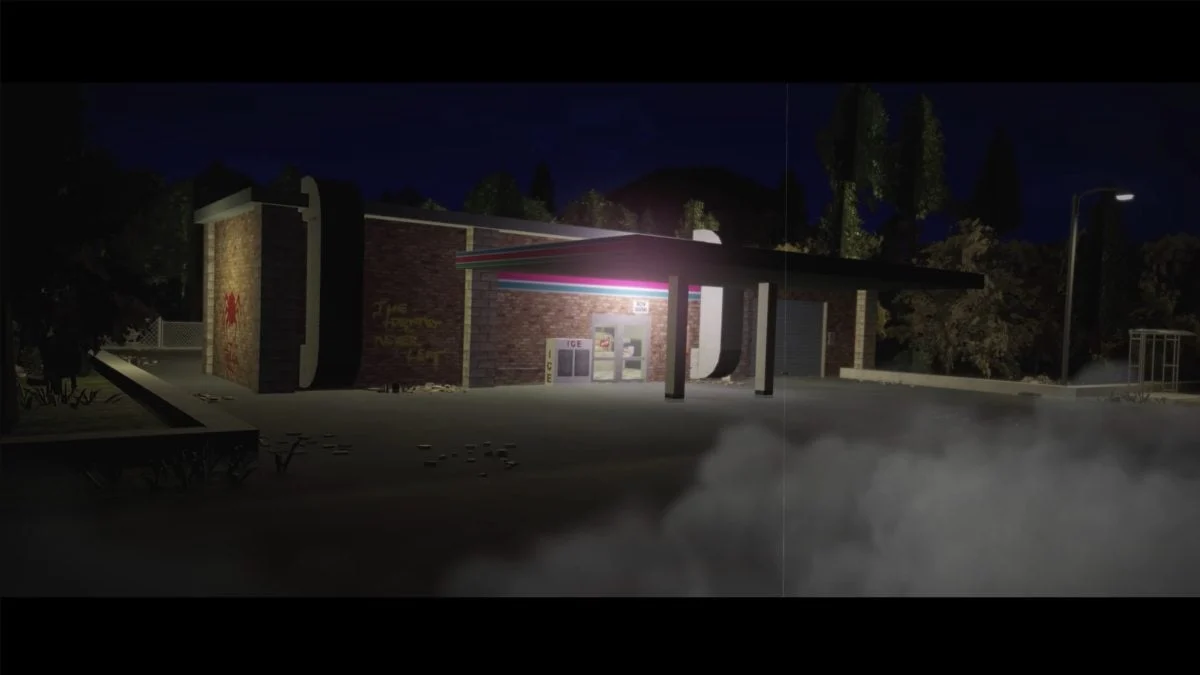
The harrowing reality of managing a late-night convenience store in Shift at Midnight extends far beyond the immediate concerns of paying for veterinary care for a beloved pet. The recent introduction of a missing dog poster, featuring a brown Labrador named Guillermo, has ignited a flurry of speculation and investigation within the game’s community. While the poster presents a seemingly urgent plea for information, a deeper examination suggests its purpose may lie more in narrative enhancement and atmospheric building than in offering a tangible in-game objective. This article delves into the circumstances surrounding Guillermo’s disappearance, the community’s efforts to locate him, and the potential implications of this enigmatic detail within the overarching lore of Shift at Midnight.
The Appearance of Guillermo’s Poster: A New Mystery Unfolds
The critical moment in question occurs during the tenth night shift within Shift at Midnight. It is at this juncture that a notice board, a recurring in-game element serving as a primary conduit for new information and directives, displays a prominent missing dog poster. This poster details the appearance of Guillermo: a brown Labrador distinguished by a yellow collar. The immediate juxtaposition of this poster with the existing financial pressures of pet care—a relatable concern for many players—creates an emotional hook. However, unlike the typical side quests or urgent instructions players receive from the Store Manager, Guillermo’s plight appears to operate under a different set of rules.
The poster offers a tangible reward of $50, a sum that, in the context of the game’s mechanics for accumulating bonuses through completing the Store Manager’s requests, initially suggests a potential in-game activity. This reward structure, coupled with the visual prominence of the poster, leads players to believe that locating Guillermo is a solvable puzzle, a new objective to pursue. Yet, despite this apparent incentive and the clear visual cues provided, the game seemingly offers no direct mechanism for players to actively search for or interact with Guillermo. This absence of a clear pathway to resolution has led to widespread conjecture about the poster’s true function.
Distinguishing Guillermo from Other Canine Encounters
It is crucial to differentiate Guillermo from another significant canine presence in Shift at Midnight: Tofu, the service dog. The game deliberately introduces a scenario where players might mistakenly perceive Tofu as the missing pet, creating a moment of tension and potential moral dilemma as players are tasked with serving him. This deliberate misdirection highlights the game’s penchant for psychological manipulation and narrative twists. Guillermo, however, is presented as a distinct entity—a "random dog" who has gone missing. This distinction is vital, as it steers the player away from any confusion with the Tofu encounter and reinforces the idea that Guillermo’s situation is a separate narrative thread.
The speculation surrounding Guillermo’s ownership further complicates the narrative. Given the game’s established themes of doppelgangers and replaced individuals, a prevailing theory suggests that Guillermo’s owner may have been among those replaced. This would leave Guillermo ownerless, a stray in a world increasingly populated by unsettling imitations. The potential connection to "The Dentist," a character often associated with unsettling transformations or hidden agendas, is another avenue of inquiry that the community has explored. If The Dentist or a similar figure is involved, Guillermo’s disappearance could be a consequence of their machinations, further embedding him within the game’s darker lore.
Community Efforts and the Absence of In-Game Proof
The urgency conveyed by the poster naturally prompts players to investigate the immediate surroundings, specifically the surrounding forest, a common area where stray animals might be found. However, upon viewing the missing poster, no new dialogue options become available that would allow players to query customers or investigate specific leads related to Guillermo’s whereabouts. This lack of interactive feedback is a significant indicator that the poster may not be a traditional quest trigger.
The Shift at Midnight community, particularly on its official Discord server, has become a hub for player-driven investigation. Members have dedicated considerable effort to scouring the game world for any sign of Guillermo, engaging in extensive discussions and sharing their findings. These collective efforts have, thus far, yielded no concrete evidence of Guillermo’s in-game presence. Newcomers to the game are often informed by seasoned players that there is, in fact, no discoverable missing dog to be found.
The most compelling evidence supporting this conclusion lies within the poster itself. Upon closer inspection, players will note that there is no in-game phone number to call or any contact information that would facilitate a direct interaction with Guillermo’s owner. This absence of a functional contact mechanism, a standard feature in any genuine lost pet advertisement, strongly suggests that the poster is not designed to initiate a solvable in-game event. Instead, its inclusion appears to serve a more thematic purpose.
Lore Enhancement and Player Motivation
The presence of Guillermo’s missing poster, despite its lack of direct gameplay utility, serves as a potent narrative device. It functions as a piece of environmental storytelling, enriching the game’s atmosphere and deepening its thematic exploration of vulnerability and loss. In a game where players are constantly under duress, facing existential threats and making life-or-death decisions, the poster of a lost pet serves as a poignant reminder of the ordinary lives and emotional attachments that exist outside the immediate chaos of the convenience store.
Furthermore, the poster subtly reinforces the player’s own motivations for enduring the perilous night shifts. The overarching reason players are risking their lives is to protect their own pets, a commitment that is intrinsically linked to their personal well-being and emotional stability. Guillermo’s predicament, though unsolvable within the game’s current mechanics, amplifies this sense of responsibility and underscores the stakes involved. It reminds players what they are fighting for—the safety and well-being of their beloved companions. The poster, therefore, acts as a powerful psychological anchor, solidifying the player’s emotional investment in the game’s premise.
Potential Implications and Future Developments
The inclusion of Guillermo’s poster, even as a non-interactive element, raises questions about the developers’ intentions and the potential for future content. Is this a standalone piece of lore, intended solely to add depth and emotional resonance? Or could it be a foreshadowing of future gameplay mechanics or narrative arcs?
One possibility is that the poster serves as a foundational element for future updates or expansions. Developers often introduce seemingly minor details that later become integral to new storylines or quests. If Shift at Midnight were to introduce mechanics for searching for lost pets, or if Guillermo’s story were to become more directly involved in the overarching narrative, the poster would then gain a functional significance.
Another implication relates to the game’s design philosophy. Shift at Midnight appears to be a game that thrives on ambiguity and psychological tension. The developers may be intentionally introducing elements that are not immediately solvable to foster a sense of unease and encourage player discussion and theorizing. This approach can be highly effective in building a dedicated and engaged community.
The timeline of Guillermo’s disappearance, occurring on Night 10, places it relatively late in the game’s progression. This timing suggests that the developers may be introducing new narrative threads as players become more deeply immersed in the game’s world and its established dangers. The shift from immediate survival concerns to the broader emotional landscape, as represented by the missing pet poster, could indicate a gradual expansion of the game’s thematic scope.
Broader Impact on Player Experience
The existence of Guillermo’s poster, and the subsequent community investigation, highlights the dynamic and collaborative nature of modern gaming. Players are no longer passive recipients of content; they are active participants in unraveling mysteries and constructing narratives. The extensive efforts to locate Guillermo, even in the face of repeated failure, demonstrate the community’s dedication to the game and its lore.
The experience of encountering the poster and realizing its non-interactive nature can be a unique aspect of the Shift at Midnight player journey. It challenges expectations and prompts players to think critically about the information presented to them. This can lead to a more nuanced understanding of the game’s design and its underlying messages. While the $50 reward may be a deliberate misdirection, the emotional investment players develop in the idea of finding Guillermo is a testament to the game’s ability to evoke empathy and engagement.
In conclusion, Guillermo’s missing dog poster in Shift at Midnight is more than just a decorative element or a misleading clue. It is a carefully crafted piece of narrative design that enhances the game’s atmosphere, deepens its thematic resonance, and fuels community engagement. While players may not be able to physically locate Guillermo within the game’s current mechanics, his presence on the notice board serves as a powerful reminder of the stakes involved in their perilous shifts and the emotional core that drives their fight for survival. The mystery of Guillermo, though unresolved, contributes significantly to the rich and unsettling tapestry of Shift at Midnight.