


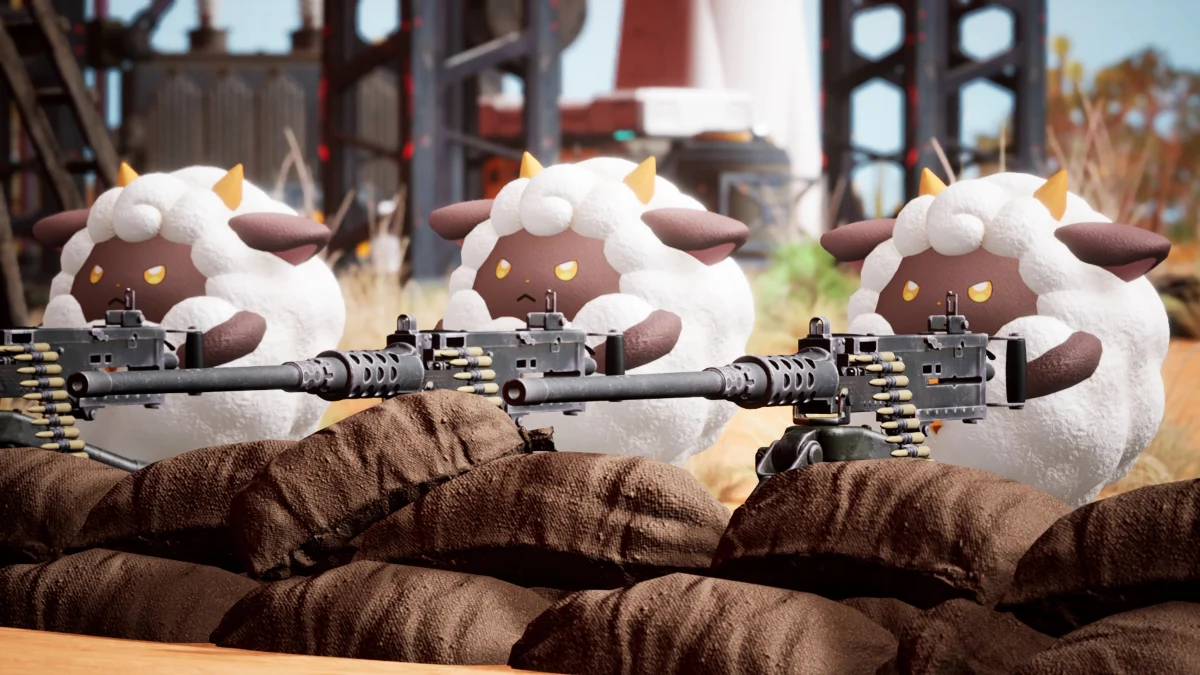
The unexpected and unprecedented success of Pocket Pair’s Palworld, a title colloquially described as "Pokémon with guns," has sent shockwaves through the video game industry, demonstrating a potent blend of familiar mechanics and novel concepts. Within a mere eight hours of its global launch, the game surpassed the remarkable milestone of one million copies sold, a feat that underscores intense market interest and positions it as one of the fastest-selling new intellectual properties in recent memory. This rapid commercial triumph, achieved almost immediately upon its debut in Steam Early Access and Xbox Game Preview, has ignited widespread discussion regarding player preferences, the viability of genre hybridization, and the evolving landscape of game development and distribution.
Unprecedented Commercial Velocity: A Deep Dive into Palworld’s Launch Performance
The announcement by developer Pocket Pair that Palworld had sold over one million units in just eight hours is a staggering achievement, placing the title in an elite category of games that have experienced immediate, explosive commercial success. To put this into perspective, many highly anticipated AAA titles from established franchises often take days, if not weeks, to reach the one-million-unit mark, even with massive marketing budgets and pre-existing fanbases. For a relatively unknown studio with a new IP, this sales velocity is virtually unheard of.
This rapid adoption signifies more than just initial curiosity; it suggests a deep resonance with a broad segment of the gaming audience. The game’s availability on Xbox Game Pass further amplified its reach, allowing subscribers to access the title without an additional purchase, though these activations are typically not factored into direct sales figures. This dual-pronged release strategy, encompassing both direct sales and subscription service inclusion, maximized accessibility and contributed to its immediate, widespread player engagement. The swift accumulation of sales data points to efficient market penetration, driven by strong pre-release buzz and effective word-of-mouth promotion that translated directly into purchases.
The Genesis of a Phenomenon: Concept and Development Background
Pocket Pair, a Japanese independent game developer, has carved a niche for itself by creating games that often blend unexpected elements. Prior to Palworld, the studio was known for titles such as Craftopia, another open-world survival crafting game, and Overdungeon, a roguelike deck-building game. This history demonstrates a willingness to experiment with genre conventions and a commitment to iterative development, often leveraging early access models to engage with player feedback.
The core concept of Palworld — described by its creators as a "monster-catching, survival and crafting game" — is undeniably its most captivating and controversial aspect. The moniker "Pokémon with guns" quickly became a viral descriptor, immediately capturing attention by juxtaposing the whimsical, family-friendly aesthetic of monster collection with the gritty, often violent mechanics of survival and combat. This seemingly incongruous blend, however, appears to be precisely what has propelled Palworld into the spotlight. It taps into a latent desire among players for a more mature, consequence-laden experience within the monster-collecting genre, which has largely remained rooted in its established, often child-friendly, conventions.
The development journey for Palworld has been characterized by an open approach to design, drawing inspiration from a multitude of successful titles. This "hodgepodge" methodology, as noted by critics, is a deliberate strategy rather than an accidental outcome. By integrating elements from diverse genres, Pocket Pair aimed to create a game that offered a wide array of engaging activities, appealing to different player motivations.
A Confluence of Genres: The "Hodgepodge" Design Philosophy
The design philosophy behind Palworld is a fascinating study in genre synthesis. Critics and players alike have quickly identified striking similarities to several landmark titles across the gaming spectrum. Destructoid’s Eric Van Allen, in his early access impressions, highlighted not only the obvious parallels to the Pokémon series in terms of monster collection and interaction but also significant influences from open-world exploration games like Nintendo’s The Legend of Zelda: Breath of the Wild, the harsh survival and base-building mechanics of Rust and Valheim, and the large-scale creature combat reminiscent of Monster Hunter.
This intentional blending of mechanics from disparate genres creates a rich, multifaceted gameplay experience. From Breath of the Wild, Palworld inherits an expansive, visually appealing open world ripe for exploration, complete with climbing mechanics and glider usage. The influence of Rust and Valheim is evident in its robust crafting system, resource gathering, base construction, and the constant threat of environmental hazards and hostile creatures, pushing players towards survival-oriented decision-making. The Monster Hunter series’ impact can be seen in the design of various large Pals (creatures) and the emphasis on strategic combat encounters, often requiring players to utilize their Pals’ unique abilities and their own crafted weaponry effectively.
The most prominent influence, Pokémon, forms the foundation of the Pal-catching and training system. However, Palworld distinguishes itself by allowing players to equip their Pals with firearms, engage them in direct combat alongside the player, and even utilize them for labor in their bases, automating resource collection and production. This darker, more utilitarian approach to creature companionship challenges the traditional narrative of friendly coexistence often found in other monster-collecting games, presenting a world where Pals are both companions and tools for survival. This innovative combination has arguably contributed significantly to its broad appeal, offering a fresh take on established concepts.
Pre-Launch Momentum and Social Media Virality
The explosive launch of Palworld was not entirely unforeseen; rather, it was the culmination of significant pre-release momentum. Leading up to its debut, the game garnered substantial attention on digital storefronts, particularly on Steam. The night before its official launch, Palworld held the coveted third position on Steam’s global Wishlist page, a strong indicator of player anticipation. Being ranked among the most wishlisted games on Steam, a platform with hundreds of millions of users, signals immense latent demand and effectively serves as free, highly targeted marketing. This metric is closely watched by industry analysts as a predictor of launch-day success.
Beyond storefront metrics, Palworld also achieved significant virality on social media platforms. Prior to and during its launch, the game was a dominant trending topic on X (formerly Twitter). Discussions ranged from excitement over its unique premise to humorous observations about its gameplay mechanics and debates over its aesthetic similarities to other popular franchises. This organic social media buzz played a critical role in expanding its visibility far beyond typical gaming circles, drawing in a broader audience intrigued by the "Pokémon with guns" concept. The visual distinctiveness and the inherent meme-worthiness of its premise made it highly shareable, converting casual observers into potential purchasers. This grassroots marketing, fueled by community engagement and influencer interest, proved incredibly effective in building a critical mass of awareness before the game even became widely available.
Early Access Strategy and Future Development Roadmap
Palworld has launched under the Early Access and Game Preview programs on Steam and Xbox, respectively. This strategic decision by Pocket Pair indicates a commitment to community-driven development and an iterative approach to game refinement. According to its Steam page, the game is expected to remain in an Early Access state for at least a year, signaling a long-term vision for its evolution.
The development roadmap outlined by Pocket Pair is ambitious and responsive to the potential for extensive player feedback. The studio has committed to a continuous stream of new content and features, including the introduction of new Pals to catch, expanding the roster of unique creatures available to players. Furthermore, plans include the addition of new areas and dungeons to explore, ensuring that the expansive world of Palworld remains fresh and engaging for long-term players. New buildings and items for the survival and crafting systems are also slated for implementation, deepening the strategic elements of base management and resource utilization.
Crucially, Pocket Pair has emphasized its intention to be highly receptive to player input. The development team has explicitly stated that they "are also considering incorporating entirely new game systems based on player feedback and ideas." This open-ended approach, characteristic of successful Early Access titles, empowers the community to shape the game’s future direction, fostering a sense of ownership and sustained engagement. Such a strategy allows the developers to prioritize features that resonate most with their player base, ensuring that future updates align with community expectations and desires. This collaborative development model has proven highly effective in building passionate communities around games that evolve over time.
Industry Implications and Broader Analysis
The meteoric rise of Palworld carries significant implications for the broader video game industry, challenging several prevailing assumptions about game development, marketing, and market saturation.
Firstly, its success provides a powerful validation for the genre-blending approach. In an increasingly crowded market, simply replicating existing formulas often leads to diminishing returns. Palworld‘s ability to fuse elements from monster-catching, survival, crafting, and open-world exploration into a cohesive, albeit unconventional, experience demonstrates that innovation can arise from creative synthesis rather than solely from entirely novel mechanics. This could inspire other developers to experiment more boldly with cross-genre concepts.
Secondly, the speed of its sales underscores the power of a compelling, easily digestible, and viral concept. "Pokémon with guns" is a pithy, memorable hook that immediately communicates the game’s unique selling proposition. This highlights the importance of strong conceptualization and effective communication in attracting initial player interest, especially for new IPs competing against established franchises.
Thirdly, Palworld‘s performance provides a strong case study for the efficacy of the Early Access model when executed correctly. By launching a stable, albeit incomplete, version of the game, Pocket Pair was able to capitalize on pre-release hype, generate immediate revenue, and establish a feedback loop with its player base. This model allows for organic growth and refinement, contrasting with the traditional, often high-stakes, big-budget launch cycles of AAA titles.
Moreover, the success of Palworld could be seen as a market signal to long-standing franchises, particularly those in the monster-collecting genre. While the Pokémon series remains immensely popular, some segments of its fanbase have expressed desires for more mature themes, deeper gameplay mechanics, or greater innovation. Palworld demonstrates that there is a significant appetite for a more complex, adult-oriented monster-collecting experience, potentially prompting established players to consider evolving their own offerings to meet these emergent demands.
From an economic perspective, the rapid sales surge provides Pocket Pair with substantial financial resources, enabling them to invest further in development, expand their team, and potentially explore new projects. However, it also brings immense pressure to deliver on the promises of Early Access, manage community expectations, and sustain momentum in the face of inevitable scrutiny and competition. The challenge for Pocket Pair now shifts from achieving initial success to ensuring long-term player satisfaction and the consistent delivery of high-quality content.
Finally, the discussion around Palworld‘s aesthetic and mechanical similarities to other games, particularly Pokémon, raises broader questions about intellectual property, homage, and originality in game design. While the game clearly draws heavy inspiration, it also introduces distinct elements that differentiate it. This ongoing discourse will likely shape future conversations about creative borrowing and the boundaries of design influence within the industry.
Community Reception and Ongoing Discourse
The community reaction to Palworld‘s launch has been a vibrant tapestry of enthusiasm, surprise, and critical analysis. Players have largely praised the game’s engaging loop of exploration, crafting, and monster collection, finding satisfaction in its blend of familiar mechanics presented with a distinct twist. The ability to arm Pals with an array of weaponry, from assault rifles to rocket launchers, has been a particular point of amusement and enjoyment for many, fulfilling a niche fantasy previously unexplored in mainstream gaming. Streamers and content creators have flocked to the game, further amplifying its reach and contributing to its viral nature through engaging gameplay videos and live broadcasts.
However, the rapid success has also invited scrutiny. Debates surrounding the game’s originality, particularly its perceived visual and conceptual similarities to Pokémon, have been prominent. While many see it as a clever homage or a distinct evolution of the genre, others have questioned the extent of its derivative elements. These discussions highlight the ongoing tension between innovation and inspiration in creative works.
Despite these critical observations, the overwhelming sentiment from the player base has been positive, reflected in the game’s strong sales and concurrent player counts on Steam, which quickly soared into the hundreds of thousands. This robust engagement signals a healthy and active community forming around the game, eager to participate in its ongoing development through the Early Access program.
Conclusion: A New Horizon for Game Development
Palworld‘s sensational launch marks a significant moment in the gaming industry. Its ability to sell over a million copies in just eight hours is not merely a commercial success story; it is a testament to the power of a bold concept, effective genre hybridization, and a responsive development model. Pocket Pair has tapped into a unique market demand, demonstrating that even in a saturated industry, there remains ample room for innovation and disruption.
As Palworld embarks on its journey through Early Access, the industry will be closely watching its evolution. Its continued success will depend on Pocket Pair’s ability to maintain player engagement, deliver consistent updates, and navigate the complex discourse surrounding its design. Regardless of its long-term trajectory, Palworld has already etched its name in gaming history as a formidable and unexpected challenger, proving that sometimes, the most outlandish ideas can yield the most extraordinary results. The "Pokémon with guns" phenomenon has arrived, and its impact is likely to resonate for years to come, influencing future game design and market strategies.