



The emergent complexities within Manor Lords, the highly anticipated medieval city-builder and real-time tactics game, present players with a myriad of strategic challenges, not least among them the seemingly mundane but surprisingly impactful issue of managing discarded supplies. From the remnants of demolished structures to errant logs left uncollected in the wilderness, these seemingly innocuous piles of resources can significantly impede progress, disrupt urban planning, and ultimately undermine the meticulously crafted aesthetic of a burgeoning medieval settlement. Players frequently encounter scenarios where vital building sites remain blocked by abandoned materials, or valuable resources slowly decay under the elements, despite the apparent availability of idle villagers and nearby storage facilities. This persistent logistical puzzle highlights a core aspect of Manor Lords‘ design philosophy: every element, no matter how small, contributes to the overall management simulation, demanding keen attention from aspiring lords.
The problem manifests in several critical ways within the game environment. Uncollected materials, whether timber, stone, or general goods, do not merely represent an aesthetic blight; they carry tangible negative consequences. Firstly, prolonged exposure to the elements causes these resources to degrade and eventually disappear, representing a direct loss of valuable assets that could have been used for construction, trade, or further processing. This decay mechanism underscores the urgency of efficient collection and storage. Secondly, and often more immediately frustrating for players, these abandoned piles frequently occupy prime building plots. The game’s construction mechanics dictate that new structures cannot be placed on occupied land, meaning a single misplaced log can indefinitely halt the expansion of a residential zone, the construction of a crucial production building, or the establishment of a vital agricultural plot. This blockage can cascade into significant developmental delays, forcing players to re-evaluate their town layouts or, more critically, to find effective methods for clearing these obstructions.
The player experience is often characterized by a dichotomy: the satisfying flow of a well-oiled medieval economy contrasted with the sudden halt caused by unmanaged clutter. The game’s interface occasionally provides a helpful "exposed goods" notification, signaling that resources are vulnerable to decay, yet the resolution of this alert can often feel sluggish. Even with ample storage capacity in Storehouses and Granaries, and a visible cohort of unassigned villagers, the movement of these exposed goods to their proper repositories can inexplicably lag. This friction point has become a notable topic of discussion within the Manor Lords community since its highly successful Early Access launch on April 26, 2024, where it quickly topped Steam charts and garnered widespread critical acclaim for its blend of historical realism and engaging gameplay. The community’s collective pursuit of optimal strategies reflects the game’s depth and the player base’s dedication to mastering its intricate systems.
Strategic Approaches to Expedite Supply Removal
Addressing the issue of lingering supplies requires a combination of patience and targeted micromanagement. While the game’s AI is designed to handle resource logistics, players can significantly influence its efficiency through specific interventions. These strategies vary depending on the type of material and the designated storage facility.
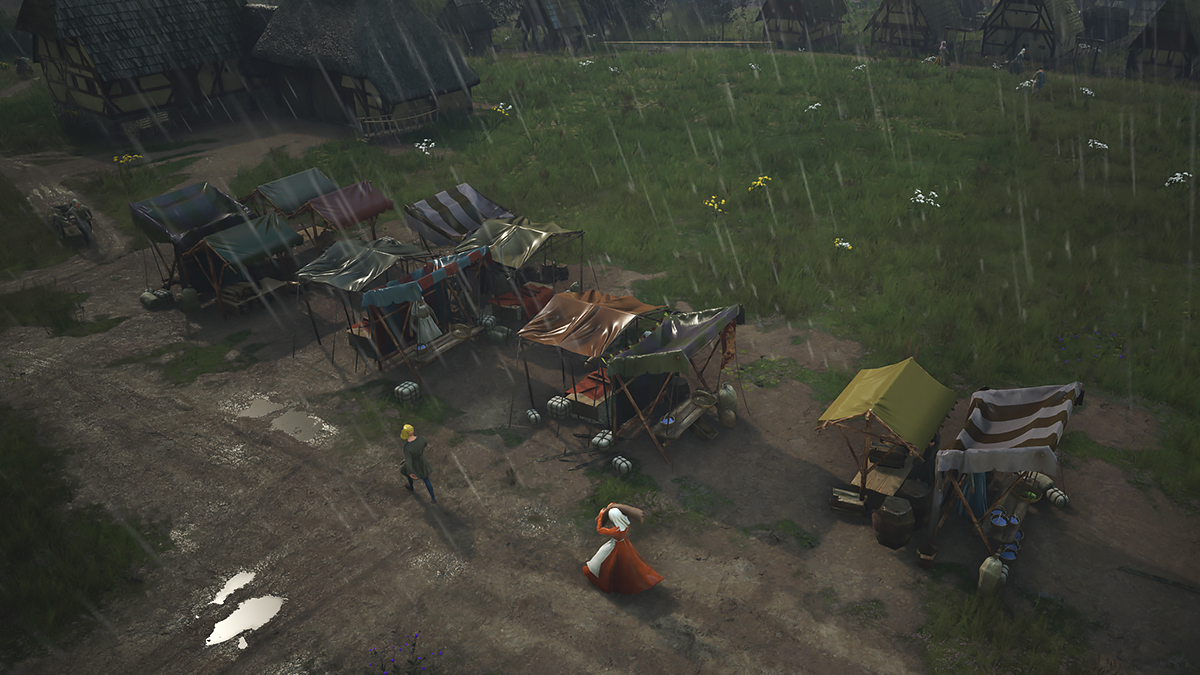
Managing General Goods (Storehouses and Granaries)
General goods, encompassing a wide array of items like planks, leather, food, and various manufactured products, are typically stored in Storehouses or Granaries. When these items are left exposed, either from a demolished building or as overflow from a production facility, their timely collection is paramount.
-
Optimizing Worker Allocation: The most straightforward, albeit sometimes insufficient, approach is to ensure adequate staffing at your Storehouses and Granaries. Assigning more workers to these facilities theoretically increases the number of villagers dedicated to transporting goods. However, the game’s internal prioritization system means these workers might be engaged in other tasks or might not prioritize exposed goods over incoming resources from production. A balanced workforce across all essential services is key, but a temporary increase in storage workers can sometimes provide the necessary impetus.
-
Enhancing Infrastructure: The Critical Role of Roads: A frequently underestimated factor in resource transportation efficiency is the road network. Manor Lords simulates logistical pathways, and a well-planned road system significantly reduces travel times for villagers and their oxen. When exposed goods are located far from a storage facility, or if the path is indirect and unpaved, transportation becomes inherently slow. Constructing a direct, paved road connecting the area of abandoned supplies to the nearest Storehouse or Granary can drastically cut down the time required for collection. This foundational infrastructure improvement is vital for overall town efficiency, not just for clearing clutter.
-
Targeted Collection with "Limit Work Area": This powerful feature, often overlooked by new players, allows for precise control over where certain buildings’ workers operate. For Storehouses and Granaries, accessing the building’s interface and selecting the "Limit Work Area" option enables players to define a specific zone on the map. By drawing this zone exclusively around the area containing the exposed goods, players can effectively force the assigned workers to prioritize collecting resources within that confined space. This micromanagement technique is particularly effective for clearing persistent piles that seem to be ignored by general logistics. Once the area is cleared, it is crucial to remember to deselect "Clear Work Area" to allow workers to resume their broader duties.
Handling Logs (Logging Camps)
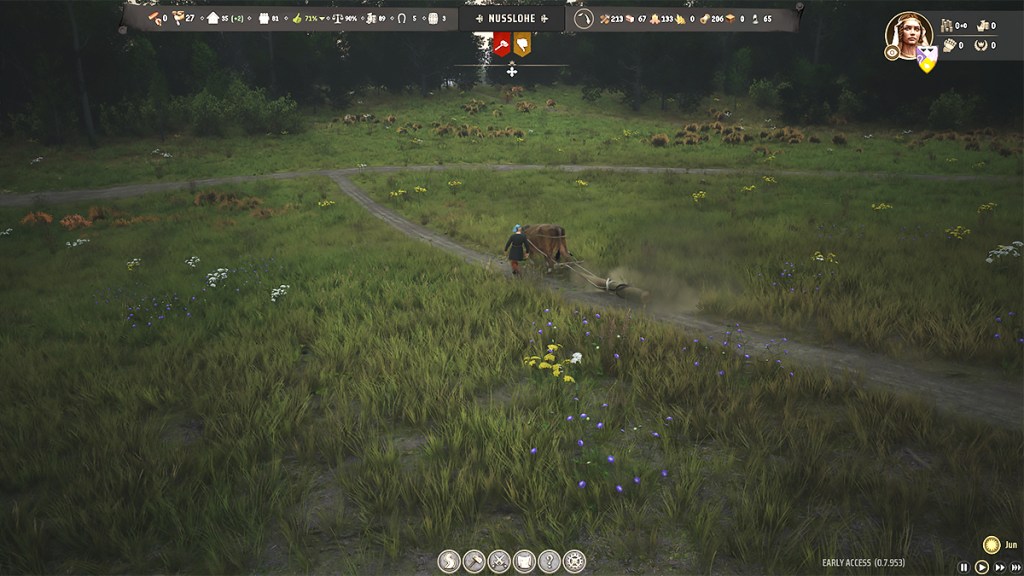
Logs are a unique resource in Manor Lords, as they are not stored in general Storehouses but specifically managed by Logging Camps and then processed into planks at Sawpits. Abandoned logs, often found after clearing forests or demolishing wooden structures, present a similar challenge to general goods, particularly due to their size and the need for oxen in their transportation.
-
Leveraging Logging Camp "Limit Work Area": Similar to Storehouses and Granaries, Logging Camps also feature the "Limit Work Area" option. If a cluster of logs is impeding construction or simply cluttering a vital area, players can direct the logging camp’s workers to focus solely on that specific location. This ensures that the loggers, and crucially their associated oxen, prioritize the removal of these particular logs.
-
Strategic Deployment of Logging Camps: In situations where the abandoned logs are far from existing Logging Camps, or if the current camps are overwhelmed with regular timber production, constructing a new, temporary Logging Camp closer to the problem area can be an efficient solution. Even a single worker assigned to this temporary camp, especially if equipped with an ox, can quickly clear the localized log piles. Once the area is clean, the temporary camp can be easily dismantled, and its workers reallocated.
-
Un-assigning Workers to Mobilize Oxen: Perhaps one of the most effective, albeit less intuitive, tricks for clearing stubborn log piles involves manipulating worker assignments. Oxen are indispensable for transporting heavy resources like logs. Each Logging Camp typically has an ox assigned to it for timber hauling. If players un-assign workers from an existing Logging Camp, those villagers become idle. More importantly, their associated oxen also become available for general transport tasks. These now "free" oxen, often paired with an idle villager, will then prioritize picking up any abandoned logs in the vicinity and moving them to the nearest available storage (typically the Logging Camp’s own small storage or a timber yard if available, before eventually being moved to a Sawpit). This method effectively re-prioritizes the game’s internal logistics to address specific log piles. After the logs are cleared, workers can be re-assigned to their original posts.
Broader Implications and Game Design Philosophy
These logistical challenges, while sometimes a source of frustration, are integral to the Manor Lords experience. The game, developed by Slavic Magic, aims for a high degree of historical authenticity and realism in its economic and societal simulations. The necessity of managing supply chains, resource decay, and transportation efficiency reflects the genuine difficulties faced by medieval settlements. This meticulous attention to detail is part of what has resonated so strongly with players, contributing to its status as one of the most successful indie launches of recent years.

The impact of unmanaged supplies extends beyond mere inconvenience:
- Economic Strain: Lost resources due to decay represent direct economic losses, forcing players to expend more time and labor to replace them. In the early game, where resources are scarce, this can be particularly detrimental.
- Developmental Bottlenecks: As mentioned, blocked building sites directly hinder town expansion. This can prevent the establishment of crucial production chains, housing for a growing population, or defensive structures, thereby stalling overall progress.
- Aesthetic Disruption: For players who take pride in their organized and visually appealing settlements, piles of discarded materials can be a significant immersion breaker. The ability to quickly clear these areas allows for the maintenance of a pristine and orderly medieval town.
- Resource Prioritization Learning Curve: The mechanics surrounding supply management force players to understand the game’s internal logic for resource allocation and transportation. Mastering these elements is a key part of becoming an effective lord in Manor Lords.
The developers are actively engaged with the player community, collecting feedback and continuously refining game mechanics through patches and updates. While the current solutions often involve player micromanagement, it is plausible that future updates might introduce more streamlined or automated options for clearing persistent clutter, or perhaps clearer visual cues for logistical bottlenecks. For instance, enhanced pathfinding AI or dedicated "cleanup" assignments for idle villagers could reduce the need for such intensive manual intervention.
In conclusion, the seemingly minor issue of abandoned supplies in Manor Lords serves as a microcosm of the game’s deeper strategic layers. It challenges players to not only plan their towns effectively but also to actively manage the flow of resources, adapting to logistical hurdles as they arise. By judiciously applying techniques such as optimizing road networks, strategically allocating workers, and utilizing the "Limit Work Area" feature, players can efficiently clear their settlements of clutter, prevent resource decay, and ensure that their medieval domains can expand and prosper without unnecessary impediments. Mastering these seemingly small details is essential for any lord aiming to build a truly thriving and orderly manor.