


The sterile, white confines of the "OBEY THE VOICE" environment present a chilling tableau, where survival hinges on adherence to a quartet of starkly displayed rules. Yet, within this ostensibly controlled space, players are confronted by an unsettling cacophony of internal and external voices, and the terrifying realization that monstrous entities lurk just beyond perception. This psychological thriller, developed by the studio behind the equally disorienting "IN THE FACADE WE TRUST," plunges players into a narrative that systematically erodes the boundaries of reality, forcing a constant reevaluation of trust and perception.
Unraveling the Psychological Labyrinth of OBEY THE VOICE
"OBEY THE VOICE" immerses players in an experience that masterfully blends familiar domesticity with an unnerving, clinical aesthetic. The game’s environments, characterized by a stark, pearly white that attempts to mimic reality, evoke the sensation of a meticulously crafted dream or an experimental procedure. This surreal juxtaposition of the mundane and the clinical creates an atmosphere of routine and control, directly contrasting with the unpredictable emergence of monstrous entities and conflicting inner voices. This constant tension between the presented reality and the encroaching psychological disturbances suggests an internal landscape rather than a tangible physical location.
The game’s design and environmental progression bear a striking resemblance to the cult classic "P.T." (Silent Hills Playable Teaser), particularly in its claustrophobic and looping house layout. This deliberate echo immediately signals the game’s commitment to psychological horror. Beyond its structural similarities, "OBEY THE VOICE" delves deeply into psychological themes, employing elements such as fragmented radio broadcasts that hint at the protagonist’s fractured past and the introduction of monsters that appear to be physical manifestations of the protagonist’s psyche, drawing parallels to the deeply personal horrors depicted in "Silent Hill 2."
Deconstructing the Monstrous Manifestations
The game’s core antagonists, the "monsters," are not merely arbitrary threats but intricate symbols of the protagonist’s inner turmoil and distorted perception of reality. Each entity is intrinsically linked to a specific challenge or rule within the game, and understanding their symbolic representation is crucial to navigating the narrative.
The "Hot and Cold" Entity: A Divided Self
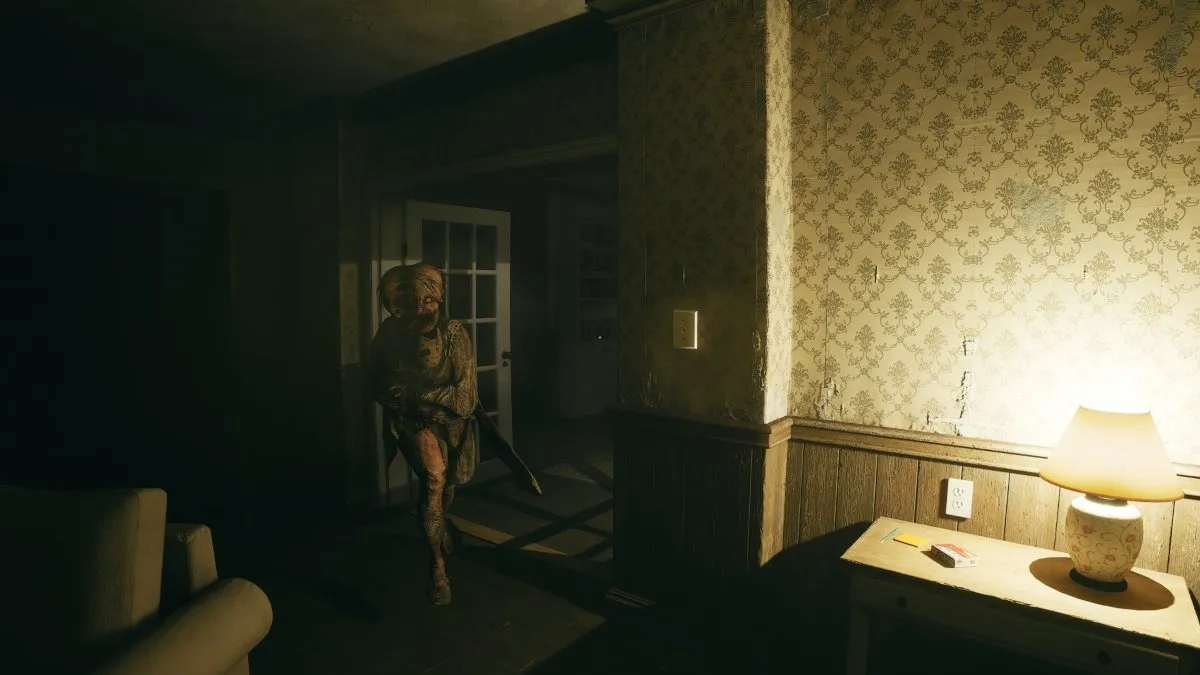
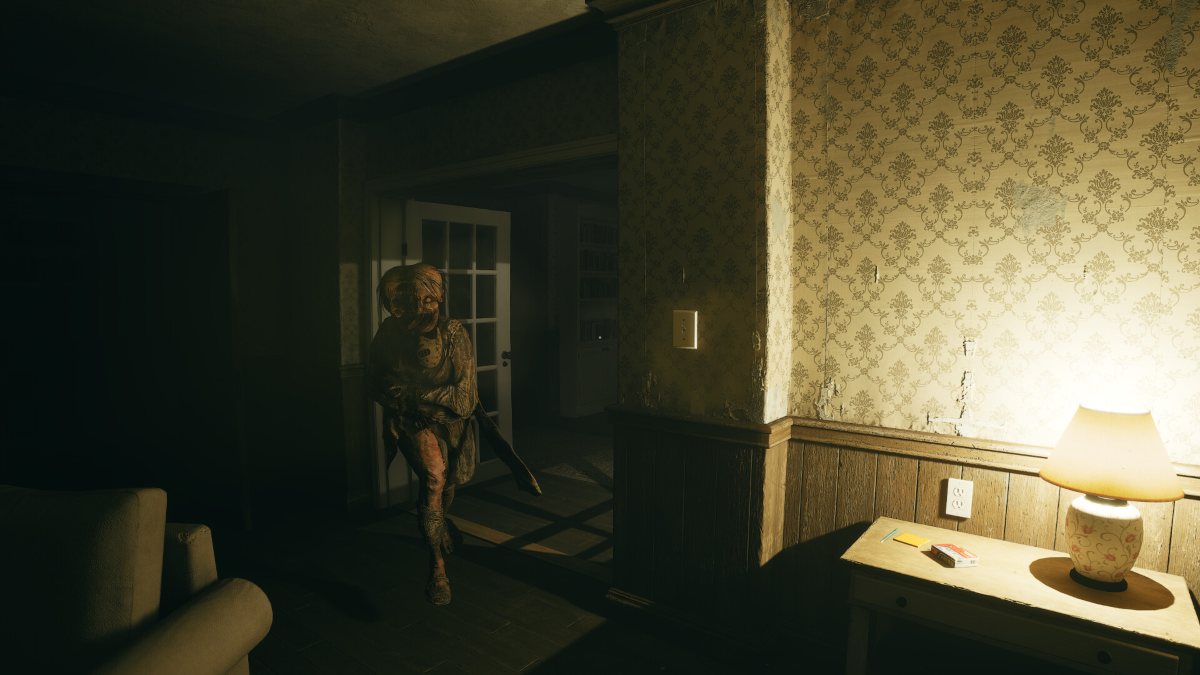
The "Hot and Cold" entity is a particularly disturbing figure, visually characterized by a straitjacket, a restraint mask, and a head split down the middle. This grotesque imagery is widely interpreted as a representation of the protagonist’s internal conflict – a psyche torn between warring, contradictory impulses. The straitjacket and mask symbolize a perceived need for external control, suggesting that in the "real world," the protagonist is viewed as dangerously volatile and unpredictable, necessitating such restrictive measures. This entity embodies the protagonist’s struggle with his own duality and the external forces that seek to contain him.

"Spot the Difference": The Erosion of Identity
The introduction of mannequins and a shadowy figure in the "Spot the Difference" segment points towards themes of identity loss and fragmented memory. The mannequins can be seen as representing the protagonist’s struggle to maintain a sense of self amidst overwhelming psychological distress. The shadowy figure, conversely, likely embodies the protagonist’s fractured and unreliable recollections of the traumatic incident that forms the narrative’s core. This segment highlights the disintegration of the protagonist’s identity and the difficulty in piecing together a coherent personal history.
"The Voice Says": Maternal Trauma and Guilt
The "Mother Entity," a towering female figure bearing a fetus within her abdomen, is a pivotal and tragic manifestation. This entity directly references the protagonist’s violent act: the murder of his mother, whom he stabbed in the stomach with a kitchen knife. The entity’s limping gait and increasing speed when the player errs underscore the persistent weight of guilt and the inescapable nature of this memory. This encounter serves as a visceral, nightmarish reenactment of the pivotal moment of violence, forcing the protagonist (and the player) to confront the source of his torment. The recurring motif of the fetus within the mother further amplifies the sense of violation and the tragic loss of potential life.
"Red Light Green Light": A Perverted Embrace
In the "Red Light Green Light" sequence, the Mother Entity reappears, but with a significant alteration: her hands are fused to her abdomen, forming a gesture that resembles an embrace. This subtle yet profound change offers a chilling insight into the mother’s final moments. It suggests that in her dying act, she attempted to comfort her son, a poignant and tragic detail that underscores the complex emotional landscape of the incident. This twisted depiction of maternal protection highlights the protagonist’s deep-seated psychological damage and his inability to process even acts of love in a healthy manner.
"Find the Melody": The Birth of a New Self
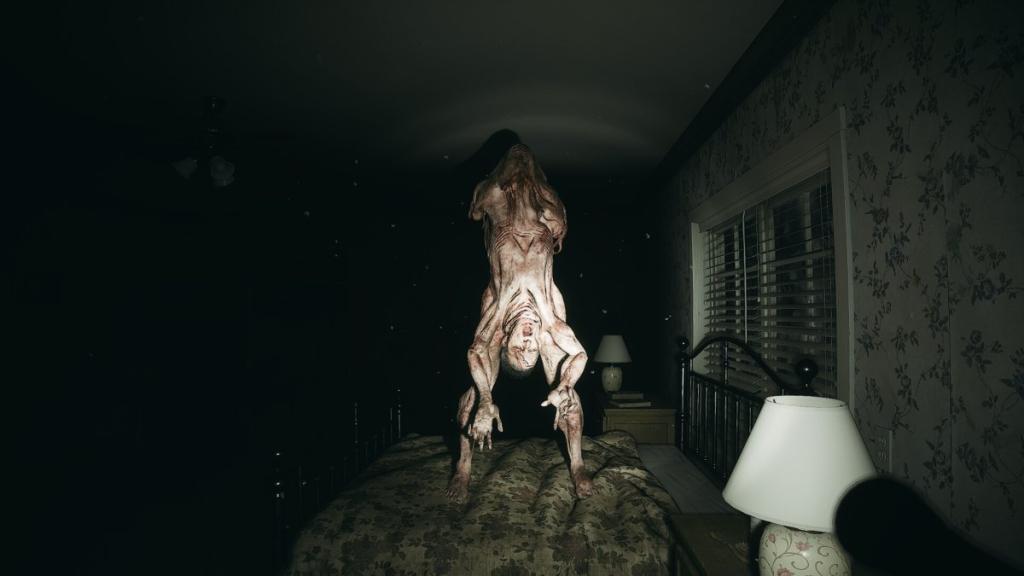
The "Camera Entity," visible only through the flash of a camera, is a nightmarish fusion of two human forms. Its body appears to be in the process of birthing a new head and limbs, with remnants of the original form dangling unnaturally. This entity is interpreted as a manifestation of the malevolent force that has begun to exert control over the protagonist. It represents a fragmented, conflicted sense of self, a nascent identity struggling to emerge from the protagonist’s subconscious. The entity’s exposure and distorted form symbolize a loss of authentic self and the unsettling birth of something alien and potentially dangerous. This segment delves into the protagonist’s struggle for self-preservation and the terrifying prospect of his original identity being overwritten.
"Morse Code": Confronting Unspeakable Trauma
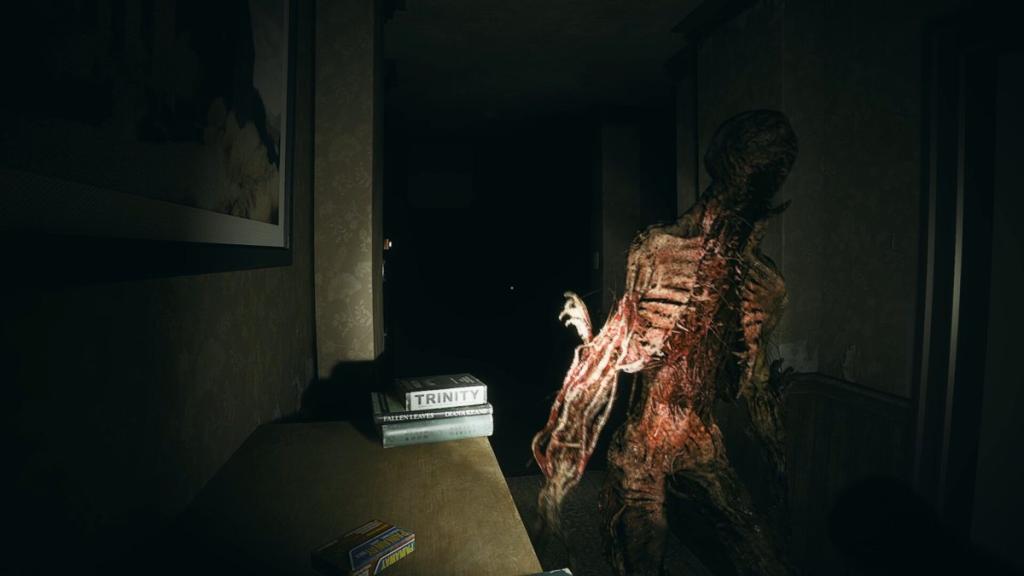
The "Don’t Look Entity," characterized by its multiple arms and a gaping mouth that contorts with its ribcage, represents the protagonist’s profound inability to confront his trauma directly. The lack of discernible facial features, save for the horrific mouth, signifies a complete disassociation from the emotional impact of his actions. This entity embodies the psychological defense mechanisms that prevent the protagonist from acknowledging or processing the full horror of his past. The act of not looking becomes a metaphor for his avoidance of the truth, a constant struggle against facing the unbearable.
The Chorus of Inner Voices: Patient 10’s Fractured Mind
Within the psychological landscape of "OBEY THE VOICE," three distinct vocal presences shape the player’s experience and narrative progression.

The Overseer: "The Voice"
The primary authoritative presence is "The Voice," who acts as the game’s overseer. This entity provides guidance, dictates objectives, and monitors the protagonist’s progress through the trials. While presented as a real person overseeing an experimental procedure, the intrusion of other voices casts doubt on the perceived reality of this authority figure. The Voice’s pronouncements are designed to guide the protagonist towards a specific outcome, but the conflicting narratives introduced by other internal voices create a constant state of uncertainty.
The Rescuer: The Female Voice
In stark contrast to the controlling nature of The Voice, a female voice emerges with the intent to aid the protagonist. This voice actively challenges and questions every directive, offering an alternative perspective and encouraging defiance. It represents a part of the protagonist that yearns for freedom from the imposed narrative and seeks to expose the truth behind the procedure. This voice embodies a nascent will to resist and a desire for autonomy.
The Usurper: The Male Voice
The third voice is a male entity that aggressively seeks control, aiming to dominate the protagonist’s consciousness. This voice represents the darker impulses and the aggressive persona that has taken root within the protagonist’s mind. Its primary motivation appears to be self-preservation and the complete subjugation of other identities. This entity is a direct manifestation of the external force that began influencing the protagonist prior to the traumatic incident.
The Tragic Genesis: A Timeline of Trauma
The narrative of "OBEY THE VOICE" unfolds against a backdrop of profound tragedy. The incident that forms the core of the protagonist’s psychological distress involved the stabbing of his mother. Crucially, the game reveals that a teenage girl and her older brother, the protagonist, were the sole survivors of this violent event. It is implied that approximately a week before this horrific act, an external influence began to take hold of the older brother, gradually supplanting his original personality.
This external force, seemingly malevolent and manipulative, appears to have orchestrated or at least exacerbated the violent outbreak. The fragmented memories and distorted reality experienced by the protagonist are a direct consequence of this possession and the subsequent trauma. The game’s progression can be viewed as a chronological unraveling of these events, from the immediate aftermath of the incident to the deeper psychological layers of guilt, fragmented identity, and the lingering influence of the possessing entity.
The Deeper Implications: Dissociative Identity Disorder and Consciousness Transfer
The conflicting internal voices are not merely plot devices; they are carefully crafted representations of Dissociative Identity Disorder (DID), a complex psychological condition. The female and male voices, along with the protagonist’s primary persona, are revealed to be separate identities co-existing within the protagonist’s mind, referred to as "Patient 10." The increasing activity of these voices as the "consciousness transfer procedure" nears completion suggests a deliberate attempt to analyze and potentially resolve Patient 10’s fractured mental state.
The trials within "OBEY THE VOICE" are designed to assess cognitive functions such as memory, attention, problem-solving, and decision-making. The ultimate goal of this procedure appears to be the stabilization of Patient 10 into a primary, coherent identity. However, the ethical implications of such a procedure, particularly when dealing with the aftermath of extreme trauma and potential external influence, are significant and raise questions about patient autonomy and the very definition of self.
The Chilling Revelation: The "OBEY THE VOICE" Ending Explained
The game’s conclusion delivers a profound and unsettling revelation regarding the nature of the consciousness transfer procedure and its outcome. The critical observation is that the dissociated identities, while in conflict with each other and with The Voice, were not in direct communication amongst themselves. This lack of inter-identity dialogue is interpreted by The Voice as evidence that Patient 10 is under the control of the "aggressive persona"—the perpetrator of the crime.
This interpretation leads to a devastating conclusion: the procedure’s purpose may have been to isolate and eliminate the identities that were not in control during the incident. While the innocent identities were not culpable for the murder, they are systematically "deleted" from the protagonist’s consciousness. This process leaves only the guilty persona, the aggressor, as the sole remaining identity. The consequence is a seemingly singular, culpable entity, making the task of assigning blame for the mother’s murder straightforward, albeit through a process of profound psychological erasure. The ending raises critical questions about justice, identity, and the morality of manipulating a fractured psyche, even in the pursuit of accountability. The game leaves players to ponder whether this synthesized "justice" is truly just, or a brutal simplification of a deeply complex psychological tragedy.