


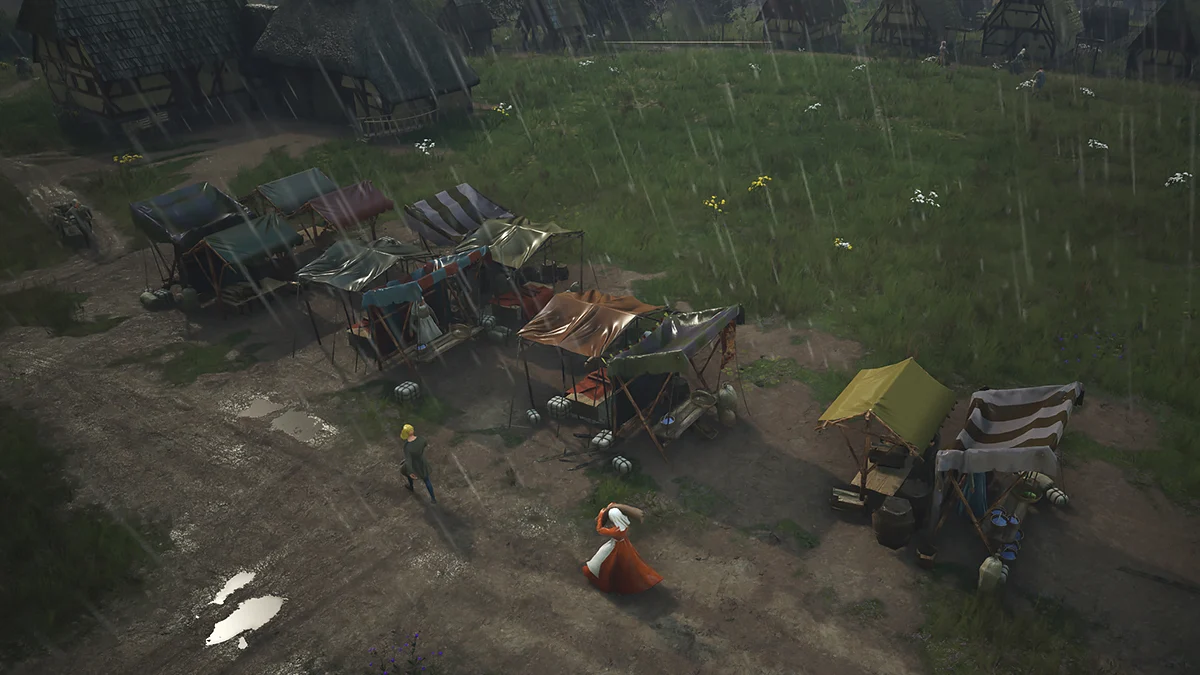
The persistent issue of uncollected supplies in Manor Lords stands as one of the more perplexing yet common challenges for players meticulously crafting their medieval settlements. From the seemingly innocuous solitary log abandoned in a field to substantial piles of materials left behind after the demolition of a structure, these unmanaged resources present a dual problem: they are susceptible to decay from exposure to the elements, representing a tangible economic loss, and they physically obstruct the development of new infrastructure, impeding the strategic expansion of a player’s domain. This often occurs even when numerous idle villagers are present and storage facilities like storehouses are conveniently located, leading to a palpable sense of frustration among players striving for order and efficiency in their burgeoning towns.
The Economic and Developmental Impact of Stagnant Supplies
In the immersive world of Manor Lords, a game celebrated for its historical realism and intricate city-building mechanics, the efficient flow of goods and materials is paramount to survival and prosperity. Unlike many titles where resources instantly vanish or are automatically transferred, Manor Lords introduces a layer of logistical complexity that demands player attention. When goods, particularly raw materials like timber, stone, or even processed items, are left exposed, they are vulnerable to the harsh realities of the medieval environment. Rain, snow, and the passage of time can degrade these resources, reducing their quantity or rendering them unusable, directly impacting the settlement’s economic output and its capacity for growth. For instance, a stack of timber left out too long might see a significant portion lost, forcing players to commit more villagers and oxen to logging operations, diverting precious labor from other critical tasks.
Beyond the direct economic cost, abandoned supplies pose a significant barrier to development. A player might plan a vital new farm, a strategic military encampment, or a bustling marketplace, only to find the construction halted because a few forgotten logs or stone piles occupy the designated building site. This can lead to frustrating delays, forcing players to re-evaluate their carefully laid plans or endure a period of stagnation until the area is cleared. The game’s design emphasizes a tactile, ground-up approach to building, where physical presence of resources matters, underscoring the importance of meticulous logistical oversight.
Understanding Villager AI and Resource Prioritization
The root of the problem often lies in the game’s sophisticated yet sometimes opaque villager AI. While players might observe idle villagers near a pile of uncollected goods, these villagers are not always immediately tasked with cleanup. Their priorities are typically dictated by their assigned roles and the overarching needs of the settlement. A villager assigned to a farm will prioritize farming tasks, even if there are uncollected goods nearby. Similarly, a builder might be waiting for materials to be delivered to a construction site rather than clearing an obstruction.
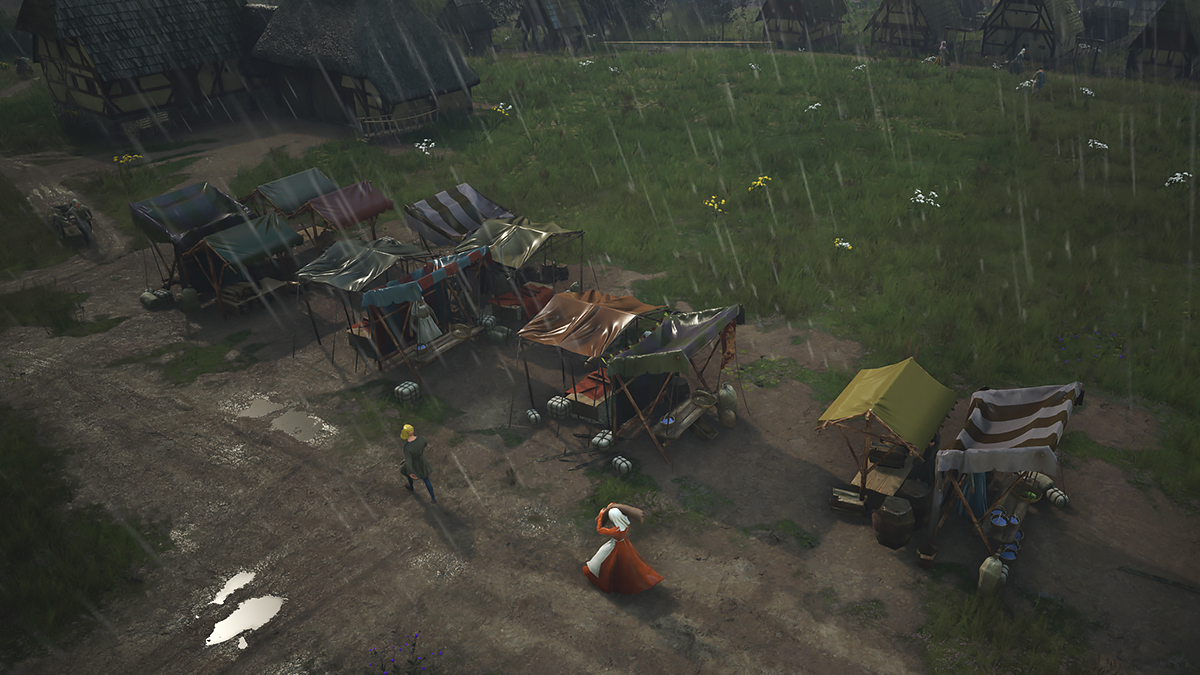
The game assigns specific roles for resource transportation:
- Storehouse Workers: Primarily responsible for moving general goods (planks, stone, iron, leather, etc.) to and from the Storehouse.
- Granary Workers: Handle food items (berries, meat, grain, bread, etc.) for the Granary.
- Logging Camp Workers: Focus on timber, both felling trees and transporting logs to the Logging Camp or construction sites.
- Marketplace Vendors: Manage goods for sale.
- Unassigned Villagers (Laborers): These are the most flexible, theoretically available for various tasks including construction and resource transport. However, their prioritization can feel inconsistent.
The system is designed to simulate a realistic medieval economy, where specialized labor is key, and unassigned labor fills in gaps. The challenge arises when the game’s prioritization algorithms do not align with the player’s immediate need for site clearance, leading to the observed delays.
Strategies for Expedited Resource Management: From Passive Waiting to Active Micro-management
While the default advice for uncollected goods often boils down to "just wait," experienced Manor Lords players have developed a suite of proactive strategies to significantly expedite the cleanup process. These methods involve a blend of infrastructural planning, worker allocation, and tactical use of in-game mechanics.
1. Optimizing Worker Assignments and Infrastructure:
The most fundamental approach is to ensure an adequate workforce is dedicated to logistical operations.
- Increase Storage Workers: Assigning more families to your Storehouse and Granary directly increases the number of villagers available to transport general goods and food items, respectively. Each family assigned adds transport capacity. This is particularly effective after a large-scale demolition or when production facilities are moved, generating a sudden surplus of materials.
- Strategic Road Networks: The importance of a well-developed road network cannot be overstated. Villagers and oxen move significantly faster on roads. Connecting areas prone to resource accumulation (like logging zones, mining sites, or demolition areas) directly to your storage facilities with well-maintained roads drastically reduces travel time and improves overall logistical efficiency. A long, winding path over rough terrain will always be slower than a direct, paved route.
2. The Power of "Limit Work Area": Precision Logistics
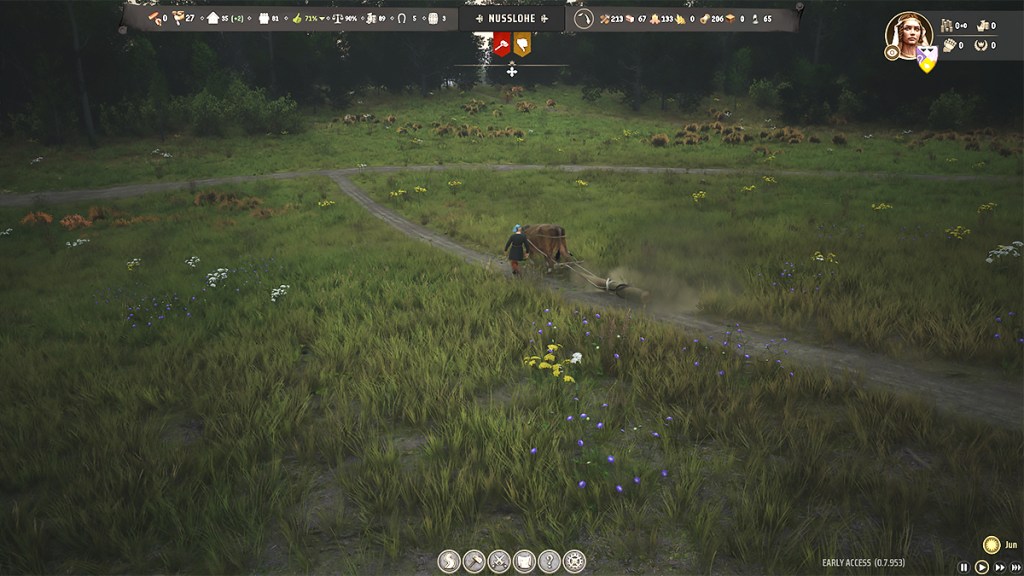
One of the most potent tools at a player’s disposal for targeted cleanup is the "Limit Work Area" function. This feature, available for various buildings, allows players to define a specific geographical zone where workers assigned to that building will focus their efforts.
- For Storehouses and Granaries: If you have general goods or food items lying exposed in a particular spot (e.g., after demolishing a market stall or a farm), you can select your Storehouse or Granary, click on its interface, and choose "Limit Work Area." Then, draw a small circle or square around the exact location of the unwanted supplies. This will force the assigned workers to prioritize collecting and moving only those items within the defined zone to their respective storage buildings. This bypasses the general prioritization algorithm and ensures immediate attention to the specific problem area.
- Tactical Application: This is invaluable when clearing space for a critical new building or when preventing valuable goods from spoiling.
- For Logging Camps: Logs, distinct from other goods, are managed by Logging Camps. If you have abandoned logs (e.g., from an uncompleted logging task or a demolished wooden structure), you can similarly select a Logging Camp, activate "Limit Work Area," and define a zone around the surplus timber. Loggers will then focus on collecting these logs and transporting them to their camp or directly to construction sites that require timber.
- Specialized Log Management: Sometimes, logs are left far from an existing Logging Camp. In such scenarios, a creative solution involves building a temporary Logging Camp closer to the abandoned logs. Assign a family to it, use the "Limit Work Area" function, and once the logs are cleared, you can dismantle the temporary camp, reclaiming the resources.
Crucial Follow-up: After the exposed items have been successfully hauled away, it is imperative to remember to "Clear Work Area" in the respective building’s interface. Failing to do so will keep the workers constrained to that limited zone, potentially hindering their ability to perform their broader duties and collect resources from other parts of your settlement.
3. Micro-managing Oxen and Unassigned Villagers:
Oxen are the workhorses of Manor Lords logistics, essential for transporting heavy loads like logs and large quantities of goods. Their availability directly impacts transport speed.
- Freeing Up Oxen: If your Logging Camps are particularly busy felling trees, their oxen might be constantly occupied. Temporarily un-assigning workers from a Logging Camp can free up its oxen, making them available for general transport duties, including moving abandoned logs. These now-idle villagers might also be re-tasked by the game’s AI to general labor, including cleanup.
- Unassigned Laborers: While less predictable, maintaining a small pool of unassigned villagers (laborers) can sometimes provide the flexibility needed for spontaneous cleanup tasks. These villagers will often pick up tasks that are not explicitly assigned to a specific building, including moving exposed goods if no other higher-priority jobs are available.
Developer Intent and the Design Philosophy of Manor Lords
The logistical challenges presented by Manor Lords, including the management of exposed goods, are not accidental oversights but rather appear to be deliberate design choices by developer Slavic Magic. The game aims for a higher degree of realism and strategic depth than many of its contemporaries in the city-builder genre. This realism extends to simulating the cumbersome nature of medieval logistics, where resource movement was a significant undertaking requiring careful planning and substantial labor.
Instead of an abstract resource counter, Manor Lords makes resources tangible entities on the map. This design philosophy encourages players to think critically about settlement layout, infrastructure placement, and worker allocation. The "frustration" many players experience with uncollected goods can be reinterpreted as a learning opportunity, pushing them to master the game’s intricate systems rather than relying on automatic solutions. As an Early Access title, the game is continuously evolving, and player feedback on these mechanics is undoubtedly being monitored, potentially leading to refinements in future updates without compromising the core design vision.

Community Engagement and the Collective Learning Curve
The discussion around efficient resource management is a cornerstone of the Manor Lords player community. Forums, social media, and wikis are rife with players sharing their experiences, frustrations, and ingenious solutions to logistical bottlenecks. This collective problem-solving underscores the game’s depth and the engaging nature of its challenges. The satisfaction derived from successfully streamlining a complex supply chain, transforming a chaotic pile of goods into an organized flow of resources, is a significant part of the game’s appeal. Mastering these seemingly minor details contributes significantly to the overall sense of accomplishment in building a thriving medieval dominion.
Broader Implications for Strategic City Planning
The ability to efficiently manage and clear exposed goods is not merely about maintaining a tidy village; it is a critical component of a successful overarching strategy in Manor Lords.
- Economic Stability: Preventing resource spoilage directly contributes to a stable economy, ensuring that invested labor and time are not wasted.
- Accelerated Development: Promptly clearing construction sites means new buildings, vital for population growth, specialized production, or defense, can be erected without unnecessary delays. This allows for faster technological progression and expansion.
- Resource Allocation: Efficient logistics free up villagers and oxen for other crucial tasks, such as farming, crafting, or military training, directly impacting the settlement’s overall productivity and resilience.
- Spatial Planning: The need to manage exposed goods forces players to think carefully about the spatial relationship between production, storage, and consumption, encouraging the development of optimized settlement layouts.
In conclusion, while the sight of abandoned supplies might initially provoke exasperation, it serves as a subtle yet profound challenge within Manor Lords. It compels players to engage deeply with the game’s logistical mechanics, transforming a potential source of frustration into an opportunity for strategic mastery. By diligently assigning workers, constructing efficient road networks, and leveraging the tactical "Limit Work Area" function, players can ensure that every resource is accounted for, every building site is clear, and their medieval domain flourishes with unparalleled efficiency. Mastering these seemingly small details is, in fact, crucial for building a formidable and prosperous realm that can withstand the tests of time and the elements.