


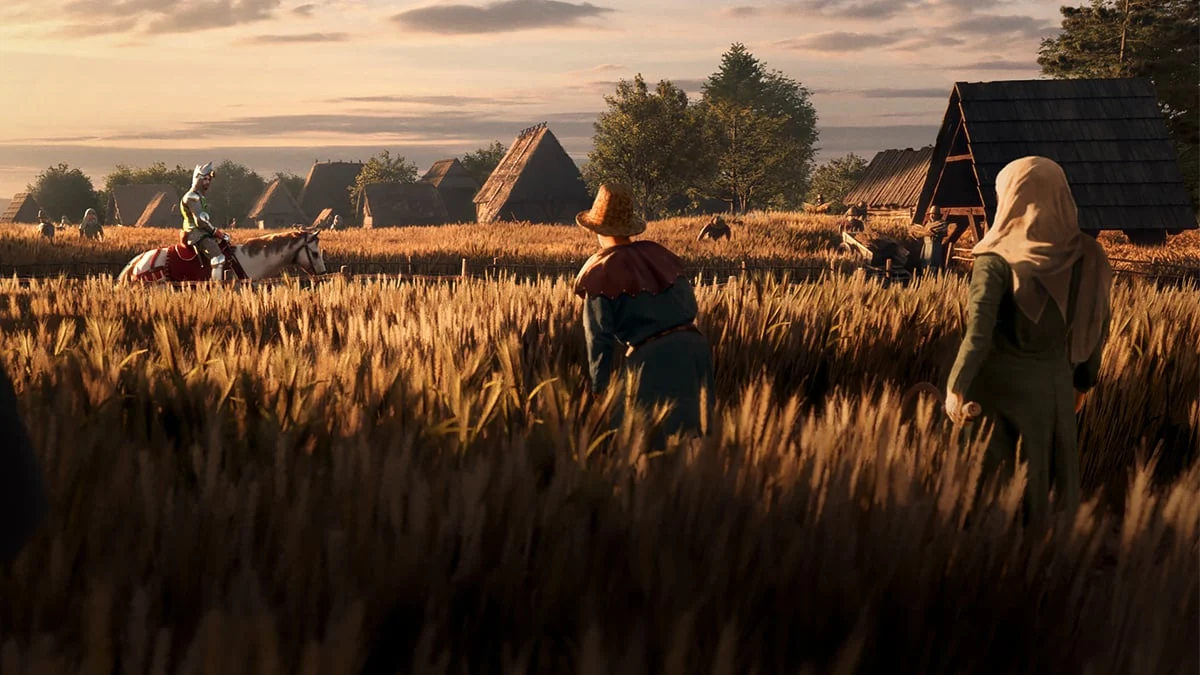
Farming stands as a cornerstone activity in Manor Lords, an imperative endeavor for any burgeoning medieval settlement aiming for prosperity and longevity. It serves as the primary engine for food production, directly impacting the survival and satisfaction of your digital villagers, and indirectly fueling their recreational pursuits through the generation of essential commodities like ale. Understanding the intricate mechanics of agricultural production, from initial crop selection to advanced soil management, is paramount for a successful reign.
The Foundational Importance of Early Farming Strategies
In the nascent stages of Manor Lords, strategic agricultural planning is critical. Wheat, often referred to by its historical term "Emmer" within the game, should be prioritized as the initial primary crop. Its fundamental role in producing bread makes it indispensable for feeding the populace and, crucially, for ensuring their survival through the unforgiving winter months. The game meticulously simulates seasonal changes, meaning there is no harvest during winter. This necessitates a substantial surplus of grain stored by autumn, requiring foresight and efficient production chains. To transform raw wheat into sustenance, a fully operational Windmill for milling grain into flour, and a Communal Oven for baking flour into bread, are essential infrastructural investments. Once a stable wheat supply is established, diversifying into Barley cultivation becomes the logical next step. Barley is the key ingredient for brewing ale, a commodity vital for maintaining villager morale and satisfaction, and potentially opening avenues for trade.
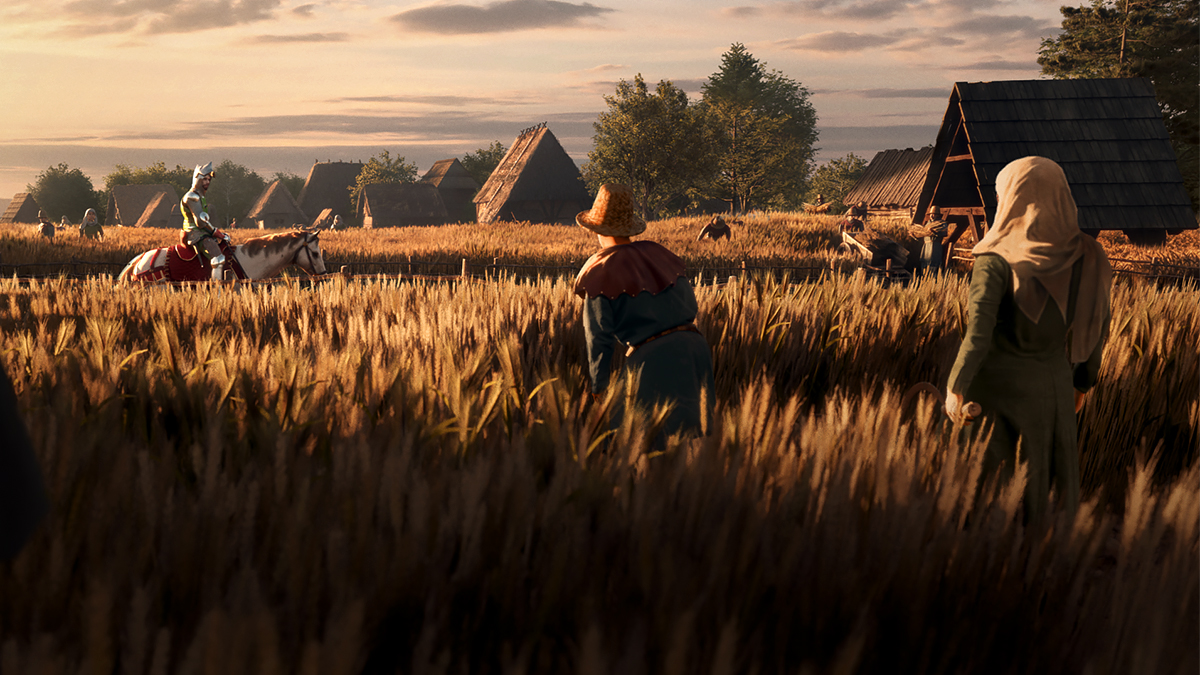
Chronology of the Farming Year: A Seasonal Cycle of Production
The agricultural cycle in Manor Lords is a deliberate reflection of medieval farming practices, demanding careful planning across the in-game seasons.
- Spring (Planting Season): As the snow melts and the ground thaws, villagers assigned to farmhouses begin the arduous task of plowing and sowing fields. This period requires significant labor allocation to ensure crops are planted in a timely manner. The efficiency of this phase can be improved through certain development upgrades.
- Summer (Growth and Maintenance): Throughout the warmer months, planted crops grow steadily. While direct player intervention is minimal during this phase, ensuring sufficient workforce and managing other village needs remains crucial. This is also a time to consider preparing new fields or allowing fallow fields to recover.
- Autumn (Harvest Season): This is the most critical period for food security. Villagers work tirelessly to harvest the ripened crops, gathering grain from the fields. A robust harvest is the difference between a thriving settlement and one facing starvation. Adequate storage in Granaries is vital to protect the bounty from spoilage and to prepare for the lean winter.
- Winter (Survival and Preparation): With fields barren, the focus shifts entirely to consuming stored provisions and planning for the next planting season. This period tests the player’s ability to manage resources, as food consumption continues without fresh production. Insufficient reserves can lead to widespread famine and settlement collapse. Winter is also an opportune time for farmers to engage in maintenance tasks or, if applicable, for animal husbandry related to field fertilization.
Detailed Crop Types and Their Strategic Applications
Manor Lords offers a select but strategically important range of crops, each serving distinct purposes within the village economy.
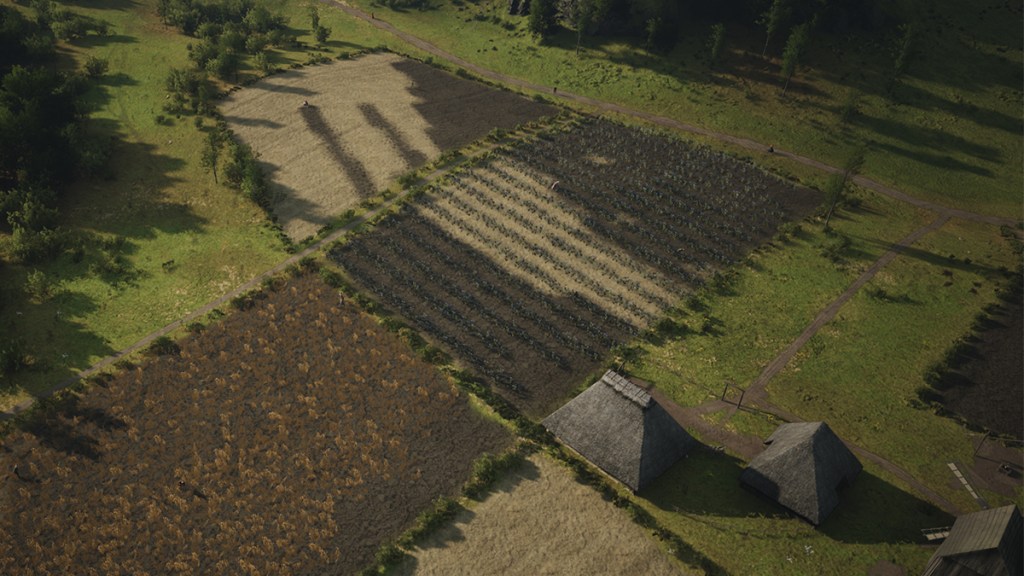
- Emmer (Wheat): As previously noted, Emmer is synonymous with Wheat in the game, a term historically accurate for many medieval European grains. It is the bedrock of your village’s diet, processed into flour and then into bread. Wheat fields require fertile ground for optimal yields and are susceptible to soil degradation over successive plantings. A consistent supply of wheat is non-negotiable for population growth and stability.
- Barley: This grain is primarily cultivated for the production of malt, which is then used to brew ale. While not a direct food source, ale plays a crucial role in villager morale and can be a valuable trade commodity. Establishing barley fields after securing food supplies provides a pathway to enhancing living standards and generating regional wealth. Its fertility requirements may differ slightly from wheat, necessitating careful field placement.
- Flax: Unlike wheat and barley, flax is not a food crop but an industrial one. It is harvested and processed into linen, a fundamental material for crafting clothing. Clothing, in turn, is essential for villager comfort and can also be a profitable item for trade with neighboring regions. Introducing flax cultivation adds a layer of complexity to your economy, requiring additional infrastructure like Weaver’s Workshops. Its growth often requires specific soil conditions, indicated by the in-game fertility overlay.
- Rye: While the initial article mentions Rye Fertility, it doesn’t elaborate on its specific use beyond being a crop type. Historically, rye was known for its hardiness, ability to grow in poorer soils, and resistance to harsh climates, often used for bread in colder regions or as a rotational crop. In Manor Lords, rye might serve as a more resilient grain option or offer slightly different yield characteristics compared to wheat, providing a strategic alternative for players managing less fertile land or diversifying against crop blights (if such mechanics exist in greater depth). Its presence on the fertility map suggests it holds a distinct, albeit potentially secondary, role in the agricultural ecosystem.
Essential Agricultural Infrastructure and Processing Chains
To transform raw agricultural produce into usable goods, several key structures are indispensable. Each building plays a specific role in the complex web of medieval production.
- Farmhouse: This is the foundational building for all agricultural operations. Villager families assigned to a farmhouse will manage designated fields, undertaking tasks such as plowing, sowing, and harvesting. Upgrading the farmhouse or building multiple units can increase the number of families dedicated to farming, thereby improving overall efficiency and capacity. The strategic placement of farmhouses near fields minimizes travel time and maximizes productivity.
- Windmill: Crucial for food production, the Windmill processes harvested wheat grain into flour. Its proximity to wheat fields and the Communal Oven can streamline the bread-making process. The efficiency of a windmill is often tied to available labor and the continuous supply of grain.
- Communal Oven: This structure takes the flour produced by the Windmill and bakes it into loaves of bread, the primary food source for your villagers. Placing it centrally within the settlement allows easy access for distribution.
- Granary: An essential storage facility, the Granary is where all harvested grains (wheat, barley, rye) are stored safely. Adequate granary capacity prevents spoilage and ensures a steady supply of raw materials for milling and brewing, especially important during the winter months.
- Malt House: This building is dedicated to processing barley. Here, barley grain is converted into malt, the precursor to ale. Like the Windmill, its location relative to barley fields and the Brewery impacts the efficiency of ale production.
- Brewery: Utilizing malt from the Malt House, the Brewery produces ale. Ale is consumed by villagers to boost their morale and can also be traded for profit. A consistent supply of ale contributes significantly to the overall happiness and stability of the settlement.
- Weaver’s Workshop: Though not directly involved in food production, the Weaver’s Workshop is crucial for processing flax. Flax fibers are spun and woven into linen, which is then used for clothing. This building highlights the interconnectedness of Manor Lords‘ economy, where agricultural output feeds industrial processes.
Understanding and Managing Soil Fertility: The Core of Sustainable Farming
A central mechanic governing agricultural success in Manor Lords is soil fertility. Unlike simpler city-builders, the game simulates the depletion of nutrients from the soil with each successive harvest.
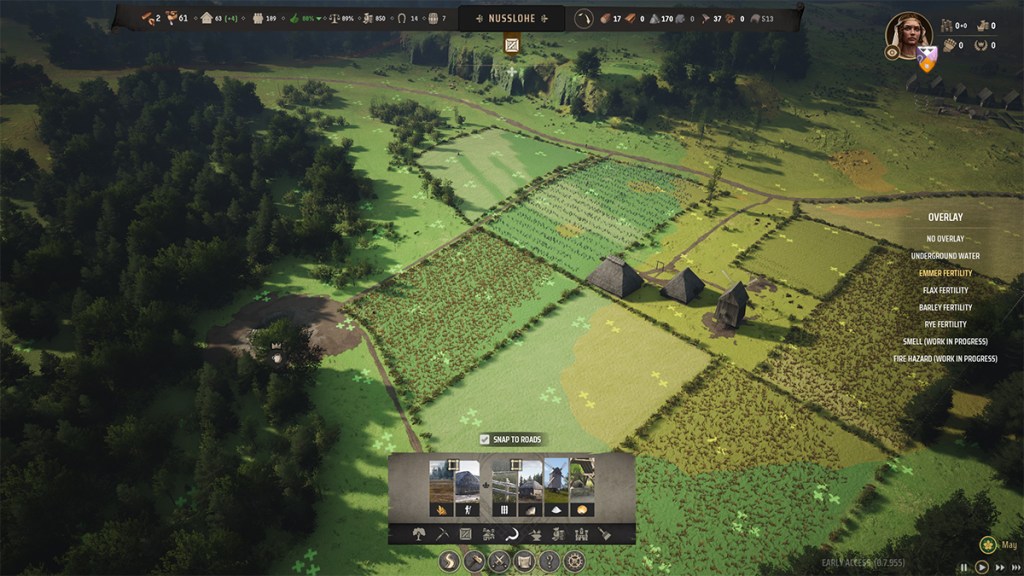
- Fertility Indicator Map: Players can access a dedicated "Farming" tab in the Construction menu, which reveals a color-coded overlay of the map. This indicator displays the fertility levels for each specific crop type: Emmer (Wheat), Flax, Barley, and Rye. Bright green areas denote highly fertile land, ideal for planting, while orange or red areas signify barren or unsuitable ground that should be avoided for that particular crop. This visual tool is invaluable for strategic field placement.
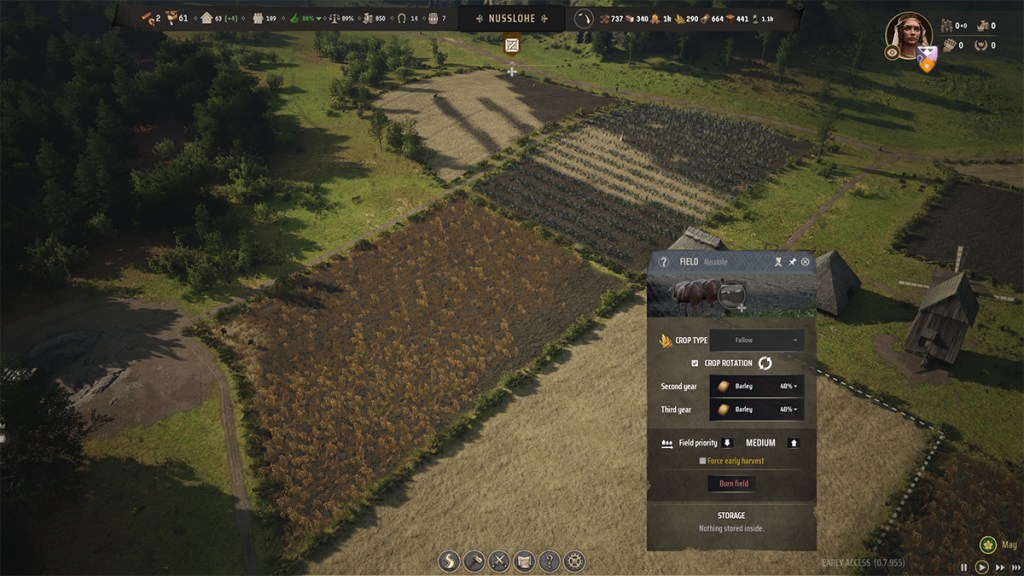
- Diminishing Returns and Crop Rotation: Continuous planting of the same crop on a single field will rapidly deplete its fertility, leading to significantly reduced yields. To counteract this, Manor Lords implements a robust crop rotation system, allowing players to schedule a field’s activity over a three-year cycle.
- Fallow Periods: The most effective method for replenishing soil fertility is to let a field lie "fallow" for at least one year within the three-year rotation. During this period, the soil naturally recovers its nutrients, preparing it for future plantings.
- Pasture Rotation: An advanced strategy involves using fallow fields as pastures for livestock (e.g., sheep). Animal grazing can further enhance soil fertility through natural fertilization, providing a dual benefit of land recovery and animal product generation. This integrates animal husbandry directly into the agricultural cycle.
- The "Morgen" Unit: Fields in Manor Lords are measured in "morgen," an archaic unit of land measurement roughly equivalent to the amount of land a single person could plow in a morning. The game suggests that one family can effectively manage approximately 2/3 of a morgen per year. A common recommendation for initial wheat fields is to create plots of 1 morgen. While a single 1-morgen wheat field might suffice for a small, nascent town, the principle of diminishing fertility dictates the necessity of multiple fields. For sustainable production, it is advisable to establish at least three fields for each primary crop: two actively growing crops in rotation, and one left fallow or utilized as pasture. This ensures a continuous yield without exhausting the land.
Strategic Development Options for Agricultural Advancement
As your settlement grows and you upgrade Burgage Plots, you earn Development Points, which can be invested into various skill trees. One dedicated branch specifically enhances agricultural productivity and efficiency. These upgrades represent technological and methodological advancements, allowing for greater yields and more resilient farming practices.
- Heavy Plow: Investing in the "Heavy Plow" development significantly improves the efficiency of field preparation. This means farmers can plow and sow fields faster, allowing for larger agricultural operations or freeing up labor for other tasks within the crucial spring planting window. It represents a vital early-game investment for scaling up food production.
- Fertilization: The "Fertilization" development enhances the rate at which soil fertility recovers. This can shorten the required fallow periods or make less fertile land more viable for cultivation. It potentially introduces methods like applying manure or composting to expedite nutrient replenishment, offering a more active role in soil management beyond simply letting fields rest. This is crucial for long-term sustainability and supporting a larger population.
- Rye Cultivation: This development specifically benefits the cultivation of Rye. It might increase Rye yields, make it more resilient to adverse conditions, or allow it to grow more effectively in areas with lower fertility ratings for other grains. For settlements on less ideal terrain, or those looking to diversify their grain production, "Rye Cultivation" offers a strategic advantage, ensuring food security even in challenging environments.
Developer’s Vision and the Broader Implications of Farming
The detailed and intricate farming system in Manor Lords reflects a deliberate design philosophy aimed at historical authenticity and strategic depth. The developer, Slavic Magic, has clearly emphasized realism, ensuring that agricultural production is not a mere click-and-forget mechanic, but a dynamic system that demands constant attention, planning, and adaptation. This commitment to historical fidelity means players must contend with the realities of medieval agriculture, from seasonal limitations to soil degradation and the crucial balance of food versus other resources.
The implications of mastering agriculture extend far beyond simply feeding your villagers:
- Economic Stability: A robust food supply underpins the entire village economy. Surplus food can be traded, generating regional wealth that can then be invested in other industries, military, or luxury goods. Conversely, food shortages can halt economic progress and lead to societal unrest.
- Population Growth and Health: Access to a consistent and varied food supply is directly linked to the health and growth of your population. Well-fed villagers are more productive, less prone to disease, and more likely to attract new families to the settlement, allowing for expansion.
- Trade and Specialization: By efficiently producing staple crops like wheat and barley, players can free up resources and labor to specialize in other areas, such as crafting or mining. Any surplus agricultural products, including bread, ale, or linen from flax, become valuable commodities for regional trade, fostering economic ties and enriching the settlement.
- Long-term Sustainability: The emphasis on crop rotation and soil fertility management instills a crucial lesson in sustainable resource management. Players are encouraged to think long-term about their land use, preventing irreversible degradation and ensuring the viability of their settlement for generations.
- Strategic Challenge: The dynamic nature of farming, with its seasonal cycles and resource management requirements, presents a continuous strategic challenge. Players must constantly evaluate their agricultural output against consumption, adapt to changing conditions, and make informed decisions about land allocation and infrastructure development.
In Manor Lords, farming is not just a necessary chore; it is the very heartbeat of your burgeoning domain. While it might be tempting to blanket the land with planted fields for aesthetic appeal, a true master of the game understands that thoughtful planning, diligent resource management, and a deep understanding of the seasonal and ecological cycles are what truly cultivate a thriving, sustainable medieval society. With a firm grasp on these agricultural principles, players can move beyond mere survival and begin to forge a prosperous legacy for their manor.