


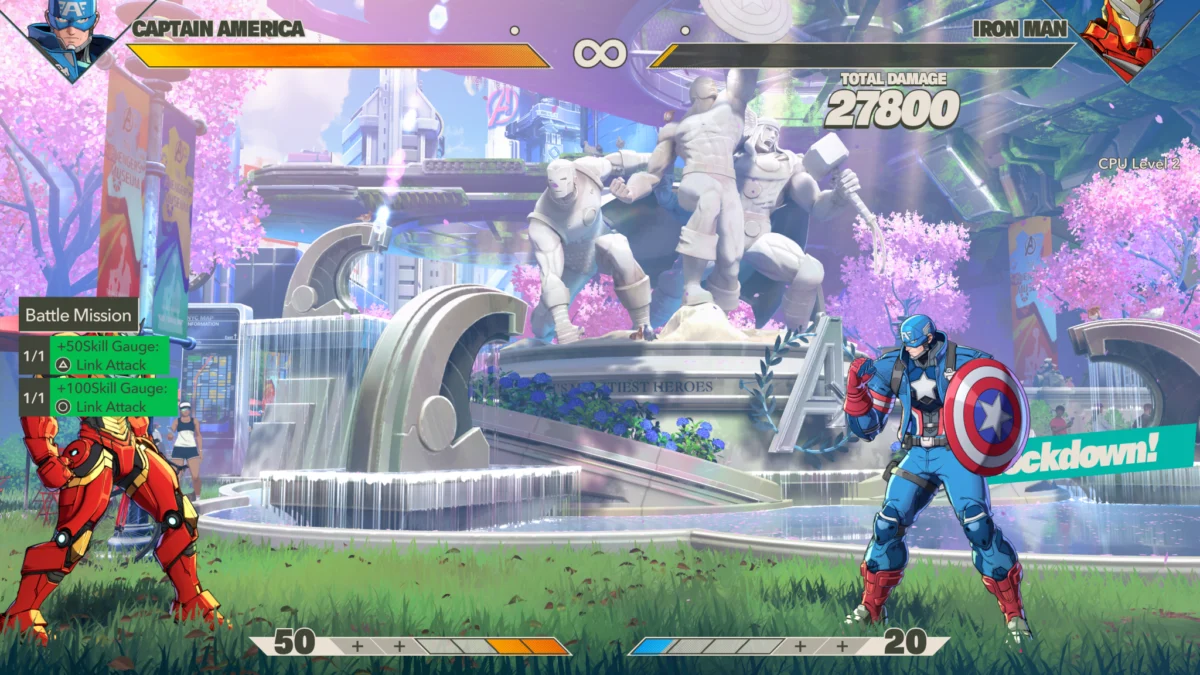
Marvel Tōkon Fighting Souls represents a significant paradigm shift in the landscape of competitive fighting games, marking the first time in three decades that the Marvel brand has moved away from its long-standing partnership with Capcom to collaborate with the developers at Arc System Works. Published by Sony Interactive Entertainment, the title arrives on the PlayStation 5 and PC platforms with the weight of immense expectation, seeking to redefine the "tag team fighting game" genre for a new generation of players. Arc System Works, the studio behind the critically acclaimed Guilty Gear and Dragon Ball FighterZ franchises, brings its signature high-fidelity aesthetic and complex mechanical depth to the Marvel Universe, offering a product that serves as both a spiritual successor to the Marvel vs. Capcom series and a bold evolution of the tag-team formula.

The Strategic Shift: From Capcom to Arc System Works
For thirty years, the Marvel name was inextricably linked with Capcom in the video game industry, producing legendary titles such as Marvel vs. Capcom 2: New Age of Heroes and Ultimate Marvel vs. Capcom 3. The announcement that the license had been handed to Arc System Works sent shockwaves through the Fighting Game Community (FGC). Arc System Works is widely regarded as a premier developer in the genre, known for pioneering a unique 2.5D visual style that utilizes 3D models to perfectly emulate hand-drawn 2D animation.
The development cycle for Marvel Tōkon Fighting Souls was characterized by a transparent, iterative process involving multiple testing phases. A closed, invite-only beta held in the previous year received mixed feedback regarding the game’s initial "feel" and mechanical balance. However, subsequent open beta tests demonstrated a significant evolution in responsiveness and system refinement. This trajectory suggests a developer highly attuned to community feedback, a hallmark of the modern live-service and competitive gaming era.

Visual Prowess and Aesthetic Innovation
Marvel Tōkon Fighting Souls is arguably the most visually striking fighting game released to date. Arc System Works has employed a "hand-drawn" art style that remains faithful to the comic book source material while injecting a unique artistic flair. Character models are rendered with meticulous detail; for instance, Iron Man features a design reminiscent of "Gundam" or "Mecha" aesthetics, providing a fresh take on the iconic Avenger without compromising his classic silhouette.
The environmental design creates a deliberate contrast, utilizing 3D backgrounds that serve as a subtle homage to the visual structure of Marvel vs. Capcom 2. This juxtaposition highlights the fluidity of the character animations, which are executed with a precision that ensures combat remains readable even during high-intensity exchanges.

Beyond the combat visuals, the game’s "design language" is a masterclass in graphic integration. The user interface is themed around the concept of a "work-in-progress" comic book. Menus are adorned with "initial sketch" textures, "do not bend" shipping markers, and bleed/trim copy indicators. This aesthetic extends to the character selection screen, where the act of choosing a four-person team builds a comic book cover in real-time, complete with a final barcode stamp upon confirmation.
Mechanical Evolution: The Four-Person Tag System
The most radical departure from genre norms is the introduction of four-person teams. While the industry standard has long fluctuated between one-on-one and three-on-three formats, Marvel Tōkon Fighting Souls expands the roster to four active combatants per match. To prevent matches from becoming overly protracted, the developers implemented a shared "Life Bar." Rather than each character possessing an individual health pool, the entire team draws from a single resource. This mechanic forces players to focus on tactical utility and assist synergy rather than simply "burning through" multiple health bars.

The control scheme is designed to accommodate both accessibility and competitive depth, utilizing a layout similar to SNK-style fighters with light, medium, and heavy attack buttons. Players can choose between two primary input frameworks:
- Quick Controls: A streamlined system (often referred to in the industry as "Modern" controls) that allows for auto-executed combos and simplified special moves. This mode is designed to lower the barrier to entry for casual fans of the Marvel Cinematic Universe or comic books.
- Motion Controls: The "Classic" input method requiring traditional directional commands (e.g., quarter-circle motions). To incentivize the use of this more difficult system, Motion Controls grant a slight damage bonus and faster gauge builds, rewarding technical mastery.
Tagging and assists are central to the experience. The "Assist" function is mapped to a primary face button, emphasizing its importance. In a unique twist, the type of assist a character provides is determined by their slot in the team order. Slot 1 typically provides projectile support, Slot 2 acts as an anti-air defense, and Slot 3 offers character-specific utility. Players do not begin a match with all four characters available; instead, additional team members are "unlocked" during the fight by meeting specific conditions, such as knocking an opponent into a new stage area or losing a round, which serves as a "comeback mechanic" for struggling players.

Robust Gameplay Modes and Single-Player Content
Marvel Tōkon Fighting Souls offers a comprehensive suite of modes designed to satisfy both the competitive and solo player.
The Episode Mode
The narrative component, titled "Episode Mode," departs from the traditional ladder-style storytelling. It is presented as a series of high-quality cinematic movies and interactive graphic novel sequences. The story is divided into five episodes, each focusing on a specific faction or team. The plot follows these groups as they confront the game’s primary antagonists, "The Champion" and his assistant, "The Promoter." While the mode is heavy on cutscenes, it provides deep context for the relationships between characters within this specific iteration of the Marvel Universe.

Arcadia Rumble
This mode incorporates elements of exploration and character growth, bearing a resemblance to the "World Tour" modes found in recent high-budget fighters. Players navigate an avatar through a digital world, collecting "Fighter Souls"—power-ups that level up team members and provide statistical boosts. Matches in this mode are time-bound, challenging players to win as many rounds as possible to climb a global leaderboard.
All Star Arena
For traditionalists, the All Star Arena contains the "Arena" and "Survival" modes. Arena functions as a branching-path arcade mode where players can select different difficulty tiers, each offering various stat buffs (such as vital gauge increases). Survival mode requires players to defeat a continuous stream of enemies with a persisting life bar, culminating in periodic boss battles.

Technical Infrastructure and Roster
At launch, the game features a balanced roster of 20 characters, categorized into distinct factions:
- The Fighting Avengers: Iron Man, Captain America, Hulk, and Black Panther.
- The Knights of Doom: Doctor Doom, Magneto, Carnage, and Green Goblin.
- X-Men and Street-Level Heroes: Including Spider-Man, Wolverine, Blade, and Magik.
The inclusion of lesser-known characters like Danger and Magik alongside heavy hitters demonstrates a commitment to the broader Marvel lore. Furthermore, Arc System Works has confirmed a robust post-launch roadmap, with "Phoenix Cyclops" announced as the first DLC combatant.

On a technical level, the game utilizes industry-standard rollback netcode to ensure a lag-free online experience. It also supports full cross-play between PlayStation 5 and PC, significantly expanding the matchmaking pool and ensuring the longevity of the competitive scene.
Broad Implications for the Fighting Game Industry
The release of Marvel Tōkon Fighting Souls marks a turning point for licensed intellectual properties in gaming. By moving the Marvel license to Arc System Works, Disney and Marvel Games have signaled a preference for high-concept art direction and "easy to pick up, hard to master" gameplay mechanics. The success of this title suggests that the monopoly Capcom once held over the "tag fighter" sub-genre has effectively ended, paving the way for a more diverse competitive landscape.

The game also addresses the "modernization" of fighting games by integrating a shared life bar and accessible controls without alienating the hardcore "Motion Control" purists. This dual-track approach is increasingly becoming the standard for the genre as developers seek to maximize commercial reach while maintaining tournament-level depth.
Final Summary of Features
Marvel Tōkon Fighting Souls successfully bridges the gap between a high-budget licensed product and a sophisticated competitive tool. Through its innovative 4-v-4 system, stunning comic-book-accurate presentation, and robust online infrastructure, it honors the legacy of its predecessors while carving out a unique identity under the Arc System Works banner. With a gallery mode featuring extensive lore, relationship trees, and character bios, the game serves as a comprehensive digital encyclopedia for Marvel fans and a top-tier experience for fighting game enthusiasts.

Review code for this analysis was provided by Sony Interactive Entertainment.