


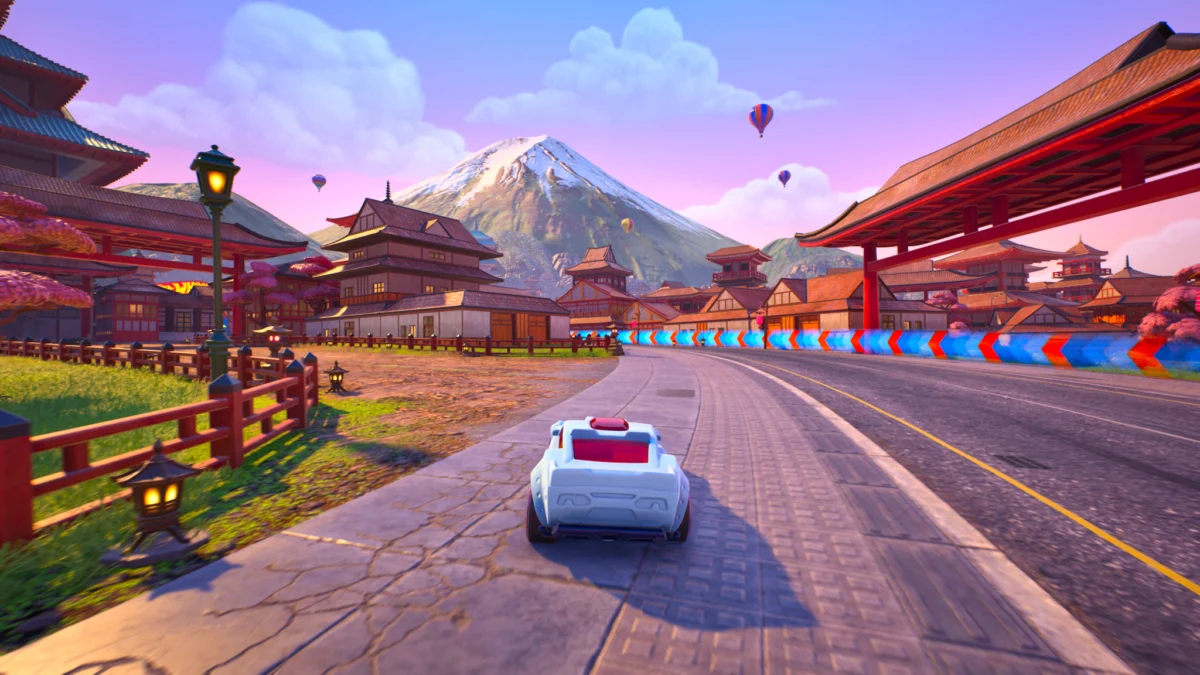
Hot Wheels Infinite Rush represents a significant pivot for the Italian development studio Milestone, transitioning the established mechanics of the Hot Wheels Unleashed series into a sprawling, open-world format. Following the critical and commercial success of Hot Wheels Unleashed 2: Turbocharged in 2023, Milestone has spent three years refining its proprietary physics engine to accommodate a broader, more exploratory gameplay loop. This latest entry, released in the competitive racing landscape of 2026, seeks to blend the high-octane, toy-car physics of its predecessors with the festival-style freedom popularized by franchises such as Forza Horizon. By introducing four distinct, acrobatic islands, Infinite Rush attempts to redefine how players interact with the iconic Mattel brand in a digital space.
The Evolution of Milestone’s Arcade Portfolio
To understand the positioning of Hot Wheels Infinite Rush, it is necessary to examine the developer’s trajectory over the past calendar year. Milestone has maintained a prolific release schedule in 2026, delivering titles across multiple racing sub-genres. The studio recently revived the anime-inspired Screamer franchise and continued its dominance in the two-wheeled sector with RIDE 6 and MotoGP 26. However, the Hot Wheels license remains Milestone’s most accessible property, bridging the gap between hardcore simulation enthusiasts and casual arcade players.

While the first two Unleashed titles were praised for their faithful recreation of die-cast vehicles and orange plastic tracks within domestic environments—such as kitchens and garages—Infinite Rush moves the action outdoors. This transition mirrors a broader industry trend toward "lifestyle" racers, where the environment is as much a character as the vehicles themselves. The technical foundations remain rooted in the high-fidelity assets and physics-driven interactions that defined the 2021 and 2023 releases, but the scale has been magnified to support non-linear exploration.
Mechanics and the Toy-Physics Paradigm
The core appeal of Milestone’s Hot Wheels series has always been its "toy-like" physics, a design philosophy that remains central to Infinite Rush. Unlike traditional arcade racers that prioritize absolute grip or predictable drift arcs, Infinite Rush simulates the fickle nature of die-cast cars on plastic surfaces. The vehicles are lightweight and prone to bouncing, meaning that a misjudged jump or a collision with a barrier can result in a chaotic, physics-based tumble.
The gameplay loop is built upon four primary mechanics: drifting, boosting, side-swiping, and jumping. Drifting is essential for navigating the wide, sweeping curves of the open world, while boosting requires strategic management of a meter filled through stylish driving. The side-swipe mechanic, introduced in the previous installment, allows players to aggressively jockey for position or knock opponents off the track.

A significant addition to the mechanical roster is the "on-the-fly" vehicle transformation system, reminiscent of the mechanics seen in LEGO 2K Drive. Players are encouraged to maintain a "garage" of four primary vehicles, each belonging to a specific class: Speeder, Drifter, Off-Road, and Heavy. As the terrain shifts from smooth urban asphalt to rugged natural valleys or elevated plastic tracks, the player’s vehicle can transform instantly to match the requirements of the environment. This system adds a layer of tactical depth to both free-roaming and competitive events, as using an inefficient class for a specific terrain significantly handicaps the player’s performance.
Geography of the Four Islands
The game world is divided into four themed islands, each offering a distinct aesthetic and topographical challenge. While the total landmass may not rival the sheer scale of Forza Horizon 6, Milestone has focused on verticality and density. The islands are characterized by rolling hills, steep mountain ranges, and "sky tracks"—massive orange plastic loops suspended hundreds of feet above the ground.
- Wheelswood: A dense urban environment featuring tight corners, skyscrapers, and a network of city streets that test a vehicle’s top speed and braking capabilities.
- Drifty Temples: A Japan-inspired region focusing on technical elevation changes and winding mountain passes. This area serves as the primary hub for drift-centric challenges.
- The Valleys: A more naturalistic setting that emphasizes off-road racing and large-scale jumps across riverbeds and canyons.
- The Sky Hub: A high-altitude zone where the traditional Hot Wheels plastic tracks are the primary means of traversal, featuring gravity-defying loops and magnetic strips.
Each island contains 300 "Gears" to collect, serving as the primary exploration incentive. These collectibles are often hidden in hard-to-reach areas that require mastery of the game’s jumping and boosting mechanics.

Progression and Event Structure
Hot Wheels Infinite Rush employs a progression system designed for accessibility, allowing players to unlock all four islands within the first few hours of gameplay. Unlocking a new area typically requires the completion of five standard races and a "Boss Encounter"—a specialized event that tests the player’s mastery of a specific island’s gimmick.
Beyond the main progression, the game is populated with several event types:
- Standard Races: 12-car bangers featuring AI opponents that scale in difficulty.
- Time Attacks: Pure tests of speed and optimal racing lines.
- Eliminator: A survival mode where the car in last place is removed at set intervals.
- Daredevil Challenges: Roaming AI rivals found in the open world. Defeating these "Daredevils" rewards the player with their specific vehicle, contributing to the game’s extensive collection aspect.
The economy of the game revolves around credits earned through these events, which can be spent in the in-game shop to purchase new vehicles or visual customization parts. Milestone has included a robust livery editor and a simplified version of their track editor, allowing players to create and share custom content within the open-world framework.

Technical Performance and Multiplayer Features
On the Xbox Series X, Hot Wheels Infinite Rush targets a stable 60 frames per second, a necessity given the high speed of the gameplay. The visual fidelity is highlighted by the material shaders used for the cars; Milestone has meticulously recreated the look of paint on metal, complete with realistic scratches and wear that accumulate during races.
The multiplayer suite includes four-player split-screen, a feature increasingly rare in modern racing titles but vital for a brand that appeals to families. Online play includes ranked lobbies and the ability to explore the islands in a "Free Roam" mode with friends. While the online population for niche arcade racers can be volatile, the inclusion of cross-platform play is intended to bolster the longevity of the multiplayer experience.
One notable omission in the current build is a comprehensive fast-travel system. While players can teleport between islands, moving to specific events within an island requires manual traversal. While this encourages exploration and the discovery of hidden Gears, it may prove tedious for players interested solely in the competitive racing aspects.

Market Impact and Industry Implications
The release of Hot Wheels Infinite Rush comes at a time when Mattel is aggressively expanding its digital footprint. By licensing the IP to a developer with Milestone’s technical pedigree, Mattel ensures that the brand is associated with high-quality software rather than "shovelware." The shift to an open-world format suggests that the publisher is looking to capture a segment of the market currently dominated by Microsoft’s Forza series.
From a development perspective, Infinite Rush demonstrates Milestone’s ability to adapt its linear racing expertise to a more complex, non-linear environment. The success of this title may dictate the future of the studio’s other licenses, potentially leading to open-world iterations of their motorcycle properties.
In conclusion, Hot Wheels Infinite Rush is a calculated expansion of a successful formula. It retains the precise, demanding physics that fans of the Unleashed series expect while providing a new context for those mechanics. By focusing on verticality, vehicle transformation, and a "chill" exploration vibe, Milestone has created a title that serves both the competitive racer and the casual fan of the iconic toy line. As the racing genre continues to evolve in 2026, Infinite Rush stands as a testament to the enduring appeal of high-speed arcade action and the creative potential of the Hot Wheels brand.