


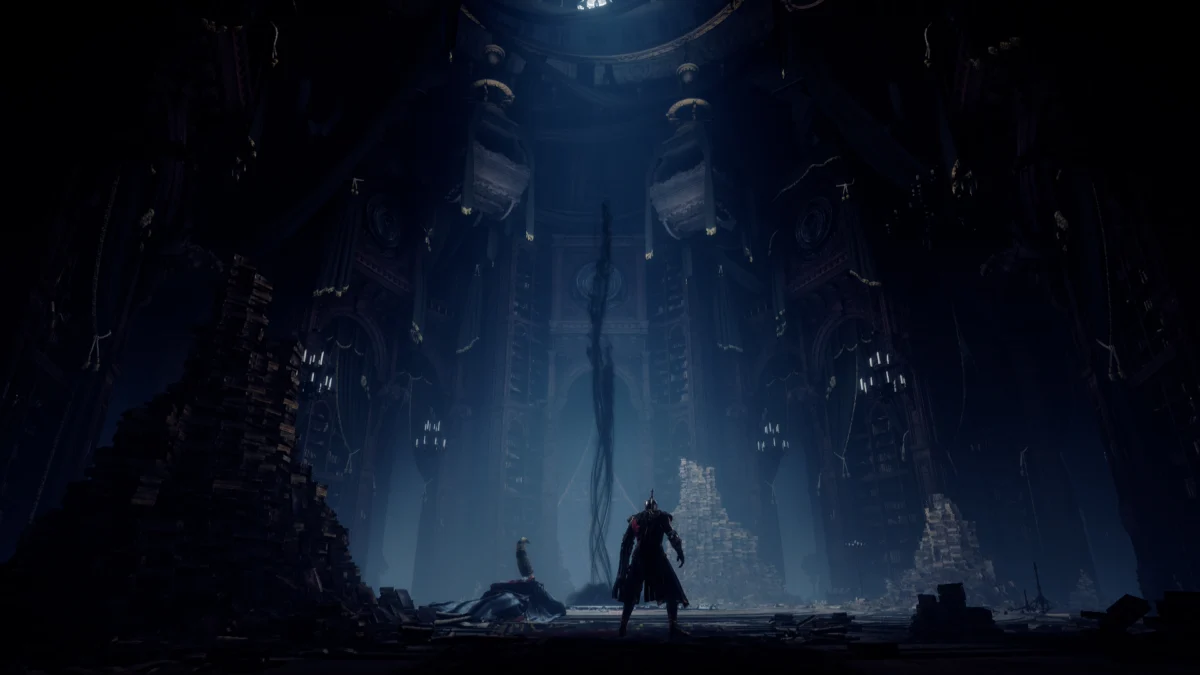
The release of Elden Ring: Tarnished Edition on the Nintendo Switch 2 marks a significant milestone in the expansion of FromSoftware’s magnum opus, consolidating one of the most successful titles of the current gaming generation into a singular, portable package. Since its initial launch in early 2022, Elden Ring has redefined the open-world action-RPG genre, amassing over 30 million sales of the base game and an additional 10 million for its massive expansion, Shadow of the Erdtree. This new iteration, titled the Tarnished Edition, serves as the definitive entry point for Nintendo’s latest hardware, bringing together the sprawling geography of the Lands Between and the dense, vertical challenges of the Land of Shadow. However, the transition to a hybrid platform has not been without technical hurdles, necessitating a detailed examination of how this colossal experience fares under the constraints and capabilities of the Switch 2.

A Comprehensive Compilation of the Elden Ring Mythos
The Tarnished Edition is not merely a port of the existing software but a curated package that includes both the 2022 Game of the Year and its 2024 expansion. For the uninitiated, Elden Ring represents the pinnacle of FromSoftware’s "Soulsborne" design philosophy, blending the tight, punishing combat of Dark Souls with a vast, interconnected open world. The inclusion of Shadow of the Erdtree adds a layer of complexity and difficulty that effectively doubles the late-game content, offering a narrative that delves deeper into the history of Miquella and the origins of the Golden Order.
Beyond the existing content, the Tarnished Edition introduces a modest but notable DLC pack, available to existing owners on other platforms for $4.99 (£3.99). This update includes several new armor sets, additional weaponry, and the long-requested "horse armor" for the player’s spectral steed, Torrent. While these additions are largely cosmetic, they provide a fresh incentive for returning players. More importantly for the Switch 2 audience, the edition introduces two new starting classes: the Idus Knight and the Heavy Knight.

The Idus Knight is designed as a versatile entry point, granting early access to light greatswords and a balanced stat distribution that favors both agility and power. Conversely, the Heavy Knight serves as a traditional "tank" class, prioritized for players who prefer high survivability and heavy armor early in the campaign. These classes appear specifically tuned to accommodate the potentially newer demographic of the Nintendo ecosystem, simplifying the often-intimidating initial hours of the game.
Technical Performance: Docked and Handheld Disparities
The primary concern surrounding any port of this magnitude is the technical sacrifice required to maintain playability on mobile hardware. On the Nintendo Switch 2, the results are a study in compromise. When the console is docked, the game targets a 1080p output that is upscaled to 4K resolution. While the upscaling technology manages to maintain the grand scale of the Erdtree and the sprawling vistas of Limgrave, the image quality suffers from a noticeable softness. As players venture into more visually complex environments, such as the submerged ruins of Liurnia of the Lakes or the cluttered streets of Leyndell, Royal Capital, the "fuzzy" nature of the reconstruction becomes more apparent.

In handheld mode, the game runs at a native 1080p, matching the Switch 2’s built-in display. While the smaller screen helps mask some of the lower-resolution textures and reduced shadow quality, the visual fidelity remains significantly below the standards set by the PlayStation 5 and Xbox Series X versions. Environmental details, such as grass density and particle effects, have been scaled back to ensure the hardware can handle the game’s demanding engine. Despite these downgrades, the core art direction—characterized by its haunting gothic architecture and surreal celestial landscapes—remains a powerful asset that transcends raw technical specifications.
The most contentious aspect of the port is its performance stability. The game utilizes an unlocked framerate that aims for 30 frames per second (fps). In practice, this target is inconsistent. Frequent dips below the 30fps mark occur during high-intensity boss encounters or when navigating through areas with heavy volumetric fog and lighting effects. For a game that relies heavily on precise timing and frame-perfect dodges, these fluctuations can impact the gameplay experience. Furthermore, despite the Switch 2 featuring a Variable Refresh Rate (VRR) screen, the Tarnished Edition does not currently support a specialized 40fps "Goldilocks" mode, which has become a popular feature in other modern handheld titles.

Hardware Integration and Control Schemes
Adapting Elden Ring’s complex control scheme to Nintendo’s proprietary inputs presents another layer of analysis. The Nintendo Switch 2 Pro Controller remains the recommended method for play. The addition of remappable back buttons on the new controller hardware provides a distinct advantage, allowing players to execute jumps or item swaps without removing their thumbs from the analog sticks. The non-analog triggers of the Pro Controller also offer a tactile benefit, facilitating faster execution of heavy attacks compared to the longer travel time of traditional analog triggers.
However, the integration is not flawless. Users have reported a discrepancy in the analog stick dead zones when using the Pro Controller. While standard movement is functional, the sensitivity required for slow walking or precise platforming—essential in areas like the Haligtree or the subterranean Shunning-Grounds—feels unoptimized. It appears the game’s input polling may be tuned more specifically for the shorter throw of the Joy-Con sticks.

Playing in handheld mode with the Joy-Cons attached is a viable, if less ergonomic, alternative. The R3 button, used for locking onto targets, can feel cumbersome during extended play sessions, and the overall ergonomics of the console may lead to hand fatigue during the game’s more stressful encounters. For players committed to the handheld experience, third-party ergonomic grips or "split-pad" controllers are likely a necessary investment to see the 100-plus-hour journey to its conclusion.
Comparative Market Analysis and Port Significance
To understand the context of this release, one must look at the broader handheld gaming market in 2026. The Nintendo Switch 2 version of Elden Ring enters a space currently occupied by high-powered PC handhelds like the Steam Deck and various ASUS ROG Ally successors. While those devices offer more raw power, they often struggle with battery life and the overhead of running a desktop operating system.

The Switch 2 port’s greatest strength is its optimization for a single set of hardware specifications. Even with its performance drops, it represents the most cost-effective way to play Elden Ring natively on a portable device without the need for constant settings adjustments. Additionally, the Switch 2’s implementation of High Dynamic Range (HDR) provides a vibrant color palette, though it has introduced some issues with black levels in darker indoor environments, such as the Catacombs or the depths of the Siofra River.
Chronology of the Port’s Development
The journey of Elden Ring to a Nintendo platform has been a subject of industry speculation since the game’s original reveal.

- February 2022: Elden Ring launches on PC, PS4/5, and Xbox consoles to critical acclaim.
- June 2024: The Shadow of the Erdtree expansion is released, completing the narrative arc of the base game.
- Early 2025: Rumors of a "Nintendo Next-Gen" port begin to circulate following leaked shipping manifests from Bandai Namco.
- Late 2025: Official announcement of the Tarnished Edition for Switch 2, initially slated for a launch-window release.
- Early 2026: A six-month delay is announced to address "optimization challenges" and performance bottlenecks in the Land of Shadow.
- September 2026: Elden Ring: Tarnished Edition officially launches, coinciding with a global firmware update for the Switch 2.
Broader Implications for the Industry
The successful, if technically compromised, arrival of Elden Ring on the Switch 2 signals a shift in how third-party developers view Nintendo hardware. For years, the "impossible port" was a rarity, reserved for titles like The Witcher 3 or Doom Eternal on the original Switch. With the Tarnished Edition, FromSoftware and Bandai Namco have demonstrated that even the most demanding open-world titles of this generation can find a home on Nintendo’s hybrid platform, provided there is a willingness to scale back visual density in favor of portability.
This release also highlights the growing importance of "complete editions" in the digital age. By bundling the expansion and adding minor incentives like new classes, the publisher has created a high-value package that justifies its premium price point even years after the initial release. For Nintendo, securing a title of this caliber is a vital component of their strategy to appeal to "core" gamers who may have previously bypassed their hardware in favor of more powerful home consoles.

In conclusion, Elden Ring: Tarnished Edition on the Nintendo Switch 2 is a monumental achievement in porting technology that nevertheless requires players to accept significant compromises. It is a version defined by the tension between the game’s immense artistic ambition and the physical limitations of mobile silicon. While it may not be the most visually stunning way to experience the fall of the Golden Order, its status as a fully portable, native version of one of history’s greatest RPGs makes it an essential, if slightly flawed, addition to the Switch 2 library. For the Tarnished who have yet to embark on this journey, the Lands Between have never been more accessible—even if the path is occasionally obscured by a lower resolution.