


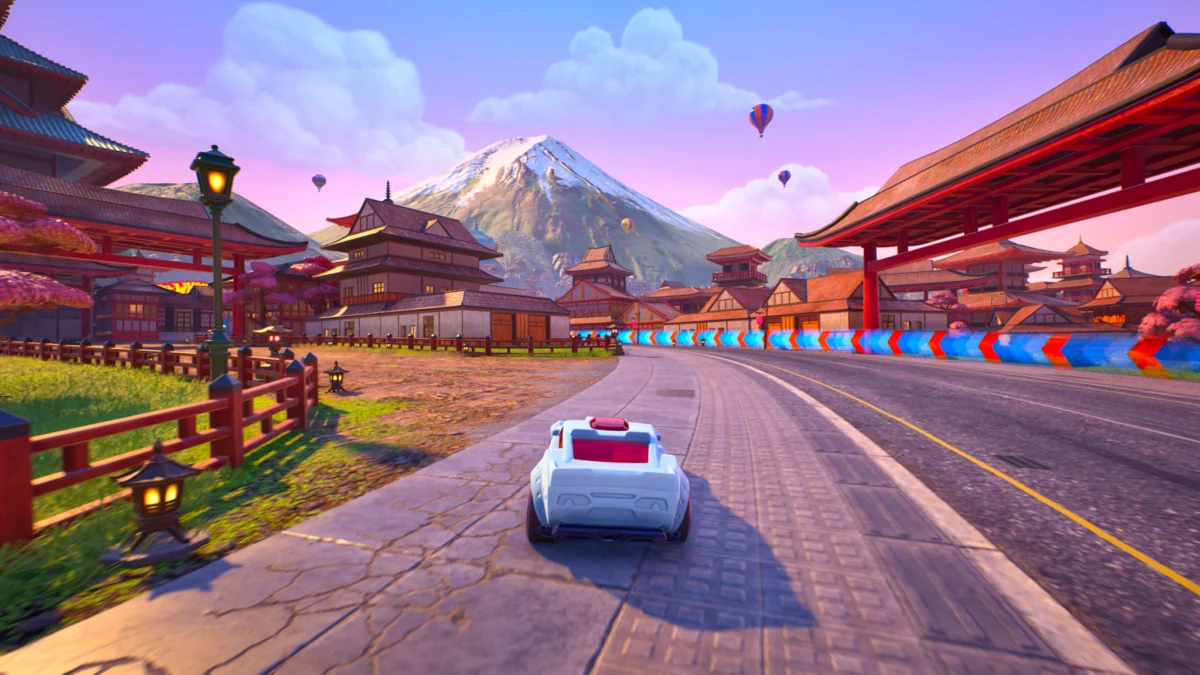
The release of Hot Wheels Infinite Rush marks a significant evolution for Milestone S.r.l., the Milan-based developer that has spent the last several years refining the digital representation of Mattel’s iconic die-cast toy line. Following the critical and commercial success of Hot Wheels Unleashed in 2021 and its sequel, Hot Wheels Unleashed 2: Turbocharged in 2023, the studio has pivoted from traditional track-based arcade racing toward an ambitious open-world framework. This latest installment integrates the high-octane, plastic-track physics established in previous titles into a sprawling sandbox environment comprised of four distinct, acrobatic islands. As Milestone’s fourth major racing release in 2026—following the anime-styled Screamer, the lifestyle-oriented RIDE 6, and the simulation-heavy MotoGP 26—Hot Wheels Infinite Rush represents a strategic move to capture the "sim-cade" audience through a mixture of nostalgic toy aesthetics and modern open-world exploration.
Evolution of the Milestone Hot Wheels Franchise
The trajectory of the Hot Wheels gaming franchise under Milestone has been defined by a commitment to physical authenticity. While earlier titles in the broader Hot Wheels license often leaned into cartoonish physics, Milestone’s 2021 entry introduced a sophisticated engine that treated vehicles as genuine die-cast toys. This meant incorporating the weight of metal chassis, the friction of plastic wheels on orange tracks, and the unpredictable nature of gravity-defying loops.

Hot Wheels Infinite Rush retains these foundational mechanics but removes the invisible walls of the traditional circuit. The transition to an open world appears influenced by contemporary genre leaders such as the Forza Horizon series. However, rather than aiming for a 1:1 recreation of a real-world geography, Milestone has opted for a stylized, toy-centric world. This world is divided into four primary biomes, each serving as a hub for both structured racing events and "chill" exploration. The shift suggests a desire to broaden the game’s appeal, catering to collectors and explorers who may find the high-pressure environment of competitive circuit racing less enticing.
Geographic Scope and World Design
The game world is segmented into four themed islands, each offering a unique aesthetic and topographical challenge. Notable among these are "Wheelswood," a dense urban environment that utilizes city streets as the "ground" while orange plastic tracks weave through skyscrapers, and "Drifty Temples," a Japan-inspired region focusing on elevation changes and technical cornering. Industry analysts note that the inclusion of a Japanese-themed environment aligns with a broader 2026 trend in the racing genre, seen in competing titles like Forza Horizon 6 and Gear.Club Unlimited 3.
While the total landmass of these four islands does not quite reach the scale of the environments found in Forza Horizon 6, Milestone has compensated through verticality. The islands utilize a layered design philosophy where the terrestrial roads serve as the base, while miles of suspended Hot Wheels tracks create a secondary, aerial network of paths. This dual-layered approach allows for seamless transitions between "flat" urban driving and the high-speed, gravity-defying maneuvers characteristic of the Unleashed series.

Technical Mechanics and Physics Modeling
At the core of Hot Wheels Infinite Rush is an arcade-style driving model that maintains a surprising level of technical depth. The game avoids the magnetized grip common in kart racers, opting instead for a physics-based system where momentum and vehicle orientation are paramount. Players must manage wide drifts, strategic boosting, and a "side-swipe" mechanic used for both combat and mid-air stabilization.
The "toy-like" physics remain the franchise’s most distinctive feature. Vehicles react to collisions and environmental hazards with the erratic energy of real-life Hot Wheels cars launched from a spring-loaded track. Misjudging a ramp or clipping a barrier can result in the vehicle bouncing or flipping realistically, necessitating a "Rewind" mechanic or a manual reset. To accommodate a wide demographic, Milestone has implemented scalable difficulty settings, ensuring that younger players can navigate the world while veteran racers face a demanding physics-driven challenge.
Progression Systems and Car Classes
Progression in Hot Wheels Infinite Rush is centered on exploration and collection. Each island contains 300 "Gears," a collectible currency hidden off the beaten path, totaling 1,200 across the entire game. These Gears, along with credits earned through events, fuel the game’s economy, allowing players to purchase new vehicles or upgrade existing ones.

The vehicle roster is categorized into distinct classes, including Speeders, Drifters, and Off-Roaders. Unlike previous entries where players were locked into a single car for a race, Infinite Rush introduces a dynamic transformation mechanic. Similar to the system seen in LEGO 2K Drive, the player’s vehicle can change on the fly to suit the terrain or the specific requirements of a challenge. This mechanic is essential for the game’s "Daredevil" encounters—roaming AI rivals found in the open world. Defeating these rivals grants the player access to their specific vehicle, encouraging a "boss-hunt" style of gameplay.
Event Diversity and Social Features
The structured content of the game is a mixture of classic racing and open-world activities. Players can participate in standard 12-car bangers, time attacks, and "Eliminator" races. The open world adds variety through speed traps, drift zones, and stunt challenges. A significant hurdle identified in early gameplay is the lack of a comprehensive fast-travel system; while players can move between islands, they must manually drive to specific event markers within those islands.
Milestone has also prioritized user-generated content and social play. The game includes:

- Track Editor: A streamlined version of the professional tools used by the developers, allowing players to build and share custom aerial tracks within the open-world environments.
- Visual Customization: A robust livery editor and options for customizing boost colors and flame effects.
- Multiplayer Modes: Support for four-player local split-screen—a rarity in modern open-world racers—alongside a cross-platform online module.
Industry Impact and Market Positioning
The release of Hot Wheels Infinite Rush signifies a maturation of the partnership between Milestone and Mattel. By moving into the open-world space, Milestone is positioning the Hot Wheels brand as a legitimate competitor to established "lifestyle" racing franchises. From a business perspective, the open-world format provides a more sustainable platform for post-launch content, such as new car packs and environmental expansions, which have historically been a staple of the Unleashed series.
The game also reflects a broader industry shift toward "comfortable" or "chill" gaming. By allowing players to ignore the race timer and simply explore the verticality of the islands to collect Gears, Milestone is tapping into the "cozy racer" sub-genre. This accessibility, combined with the technical pedigree of the studio’s more serious simulators like MotoGP, creates a unique product that appeals to both children and adult collectors.
Broader Implications and Final Analysis
Hot Wheels Infinite Rush does not attempt to reinvent the fundamental mechanics of arcade racing; rather, it successfully recontextualizes them. The integration of "plastic" physics into a "natural" open world creates a surreal, high-contrast visual experience that sets it apart from the photorealism of its competitors.

For the racing game market in 2026, Infinite Rush serves as a testament to Milestone’s versatility. The studio has successfully managed a portfolio that ranges from professional motorcycle simulation to whimsical toy-car sandboxes. While some critics point to the formulaic nature of open-world collectibles, the sheer volume of content—spanning four islands, hundreds of cars, and a deep track editor—suggests a high value proposition for the target audience.
In conclusion, Hot Wheels Infinite Rush represents a confident step forward for the franchise. It maintains the tactile, metallic charm of the original Unleashed titles while providing the freedom and scale expected of modern eighth and ninth-generation console titles. As a pure arcade experience, it prioritizes the joy of movement and the thrill of the "perfect drift," solidified by a physics engine that remains the gold standard for toy-based digital entertainment. For Mattel, the title serves as a premier digital showroom for their brand; for Milestone, it is a showcase of their ability to adapt and thrive in an increasingly crowded racing landscape.