


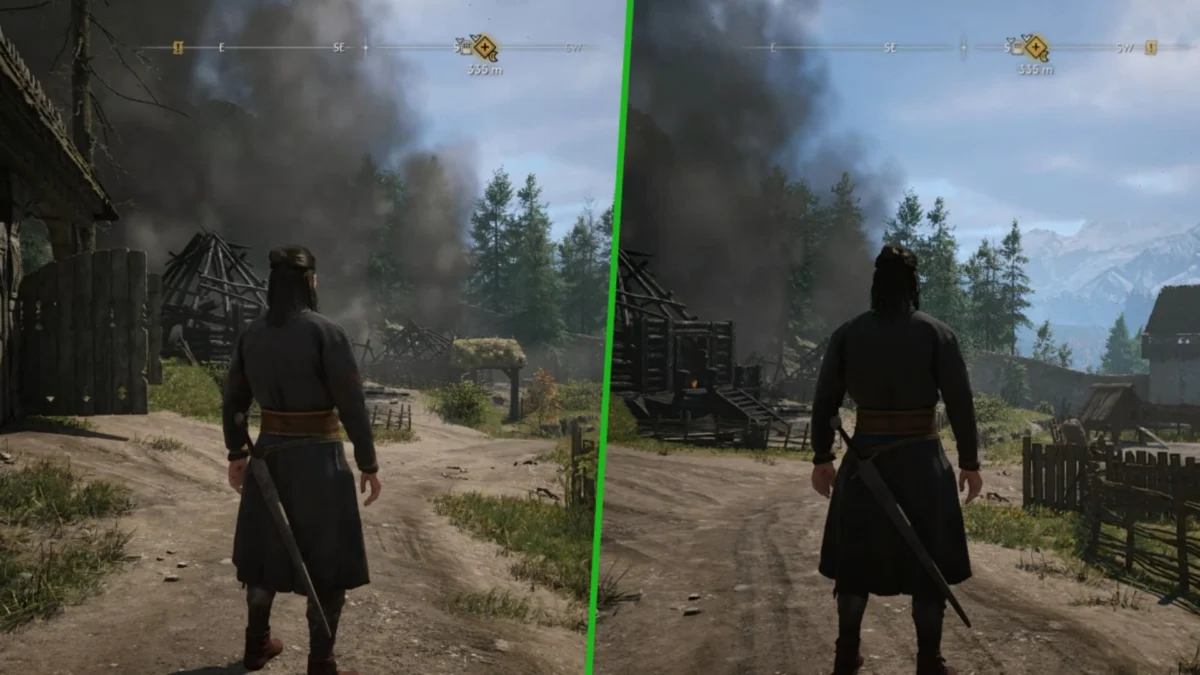
Technical Overview of the Xbox Series X Experience
On the Xbox Series X, the flagship console from Microsoft, The Blood of Dawnwalker offers a robust suite of visual options designed to cater to different player preferences. The developer has implemented three primary frame rate targets—30FPS, 40FPS, and 60FPS—all of which utilize a dynamic 4K resolution scaling system. This technique allows the internal rendering resolution to fluctuate based on the complexity of the scene, ensuring that the GPU can maintain stability during high-intensity moments, such as boss battles involving complex particle effects or sprawling vistas with high draw distances.
The 60FPS "Performance Mode" is expected to be the most popular choice for players seeking fluid combat and responsive inputs. However, technical analysis from outlets like Fuzion Xbox Testing reveals that this mode is currently prone to instability. While the game frequently hits its 60FPS target in less demanding areas, it regularly dips into the mid-50s during traversal of dense forests or populated urban hubs. For players with displays supporting Variable Refresh Rate (VRR), these fluctuations are largely mitigated, as the display synchronizes its refresh rate with the console’s output to eliminate screen tearing and stutter. Without VRR, however, these drops are noticeable to the naked eye.
The inclusion of a 40FPS mode is a sophisticated addition that targets users with 120Hz displays. Because 120 is perfectly divisible by 40, this mode provides a smoother experience than 30FPS while allowing for higher visual fidelity than the 60FPS mode. This "Balanced Mode" is increasingly becoming a standard in high-end console gaming, offering a middle ground that maintains a cinematic feel without the input lag typically associated with lower frame rates.
Conversely, the 30FPS "Graphics Mode" is intended to provide the most stable and visually pristine experience. Paradoxically, this mode currently suffers from frame pacing issues. Frame pacing refers to the consistency with which frames are delivered to the screen; even if a game maintains 30 frames per second, if those frames are not delivered at precise 33.3-millisecond intervals, the motion will appear jittery or "stuttery." This is a known issue that often requires post-launch optimization to resolve.
Performance Analysis on Xbox Series S
The Xbox Series S version of The Blood of Dawnwalker presents a more restricted technical profile, reflecting the hardware’s lower memory bandwidth and GPU compute power. Unlike its more powerful sibling, the Series S version does not offer multiple graphics modes. Instead, the game operates at a fixed 1080p resolution target with a frame rate cap intended to be 30FPS.
Initial testing indicates that the Series S version struggles to maintain this 30FPS ceiling during demanding sequences. Performance drops are most prevalent during cinematic cutscenes—which often use higher-quality assets—and during combat encounters involving multiple enemies and magic effects. Despite these dips, analysts from Video Games Chronicle (VGC) have noted that the game remains "generally playable." The 1080p output provides a clean enough image for the console’s target demographic, though it lacks the texture filtering and shadow density found on the Series X.
The "beyond 30FPS" behavior noted in some raw footage suggests that the frame rate cap may be uncapped in certain scenarios or that the engine’s internal clock is reacting inconsistently to the hardware constraints. This variability can lead to an uneven experience, further emphasizing the need for the developer to implement a more rigid frame rate limiter for the Series S to ensure a consistent cadence of play.
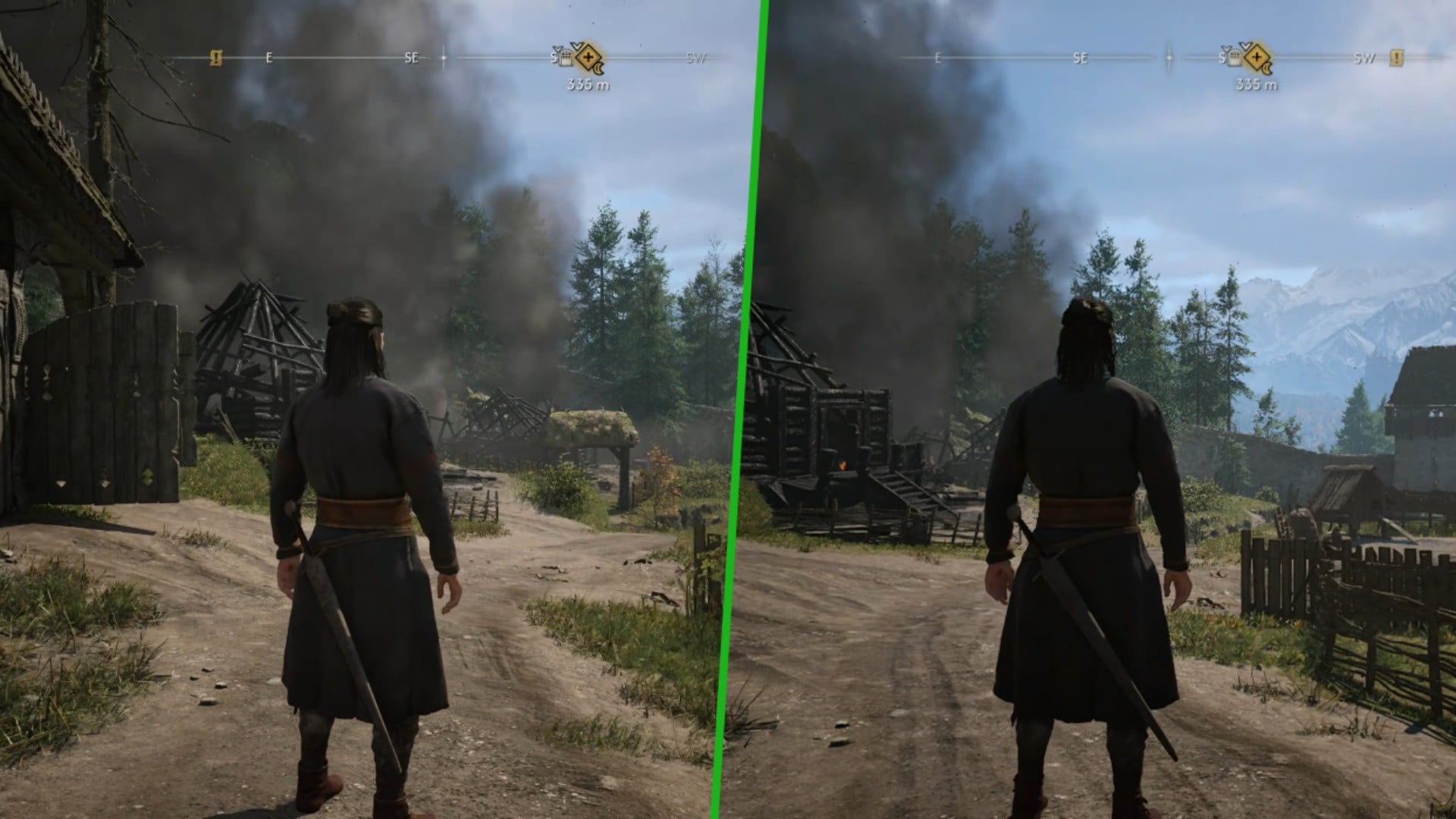
Chronology of Development and Launch Context
The development of The Blood of Dawnwalker has been closely watched since its reveal three years ago. Positioned as a "next-gen only" title, the game was built to take advantage of high-speed SSDs and modern CPU architectures, moving away from the limitations of the Xbox One and PlayStation 4 era.
- Initial Reveal: The game was showcased with a focus on its "Lumen-like" lighting system and dense world geometry, raising questions about how it would perform on the Series S.
- Beta Phase: Limited technical tests conducted six months prior to launch suggested that the 60FPS mode on Series X was the primary focus of the optimization team.
- Launch Week: The game released to positive critical acclaim for its narrative and world-building, though technical reviews immediately highlighted the performance discrepancies between the two Xbox SKUs.
- Post-Launch Roadmap: The developers have already acknowledged the feedback regarding frame pacing on the 30FPS mode and the drops on Series S, promising a series of "stability patches" in the coming weeks.
This timeline is typical for modern AAA releases, where the "Gold" master of the game is often followed by a substantial "Day One" or "Day Seven" patch to address the final layers of polish that were not possible during the primary development cycle.
Comparative Market Analysis
When compared to other recent open-world RPGs, such as Elden Ring or The Witcher 3: Wild Hunt’s next-gen update, The Blood of Dawnwalker sits in a competitive but difficult spot. Games of this scale often struggle with "CPU-limited" scenarios where the console’s processor cannot keep up with the logic of the world (AI, physics, and scripting), regardless of the resolution.
The decision to offer a 40FPS mode puts The Blood of Dawnwalker in the company of prestige titles like God of War Ragnarök and Ratchet & Clank: Rift Apart, which have successfully used the 120Hz output to provide a superior "Quality" experience. The fact that an independent or third-party developer is implementing these advanced display features on Xbox is a testament to the evolving sophistication of console development tools. However, the lack of a "Quality Mode" on Series S continues to highlight the widening gap between the two consoles, a topic of ongoing debate within the gaming industry.
Industry Implications and Future Outlook
The technical state of The Blood of Dawnwalker at launch serves as a case study for the current state of the console market. As developers push for more realistic visuals and more complex simulated worlds, the "standard" 60FPS target is becoming increasingly difficult to hit without significant compromises in image quality.
For Microsoft, the performance of such titles on the Series S is of particular importance. As the more affordable entry point into the Xbox ecosystem, the Series S must provide a competent experience to maintain consumer trust. If major third-party releases continue to see significant performance regressions on the "S" model, it may force a shift in how developers approach multi-platform optimization, perhaps leading to more aggressive use of technologies like AMD’s FidelityFX Super Resolution (FSR) to upscale lower-resolution images more effectively.
Looking ahead, the trajectory for The Blood of Dawnwalker is expected to be one of steady improvement. Modern game engines are highly modular, and many of the issues identified—such as frame pacing and minor frame rate drops—are solvable through software updates. As the development team gathers data from thousands of players across different hardware configurations, they will be able to fine-tune the dynamic resolution scaling and memory management.
In conclusion, while The Blood of Dawnwalker is a technical powerhouse that showcases the potential of the Xbox Series X, it also serves as a reminder of the complexities involved in modern game optimization. For the best current experience, Series X players are encouraged to utilize VRR-capable displays and opt for the 60FPS mode, while Series S players should prepare for a functional, if occasionally turbulent, 30FPS journey. As the industry moves further into the current console generation, the lessons learned from this launch will likely influence how future open-world epics are scaled across the diverse spectrum of gaming hardware.